
Can you sand kitchen cabinets for painting? Yes, you absolutely can and should sand kitchen cabinets before painting them. Proper sanding is the most crucial step in preparing cabinets for a smooth, durable, and professional-looking paint finish. This guide will walk you through everything you need to know to achieve excellent results.
Kitchen cabinet refinishing is a rewarding DIY project that can dramatically transform your kitchen’s appearance without the cost of full replacement. The secret to a successful cabinet paint job lies not just in the paint itself, but in the meticulous preparation of the surfaces. Sanding kitchen cabinets is the cornerstone of this preparation. It’s the process that ensures the new paint will adhere properly, resist chipping, and provide that coveted smooth finish. Whether you’re dealing with old wood cabinets, laminate, or previously painted surfaces, sanding is your key to unlocking a beautiful makeover.
This detailed guide will cover why sanding is essential, the tools you’ll need, the step-by-step process for sanding wood cabinets, and tips for handling different cabinet materials. We’ll also touch upon removing old paint from cabinets and selecting the right cabinet primer.
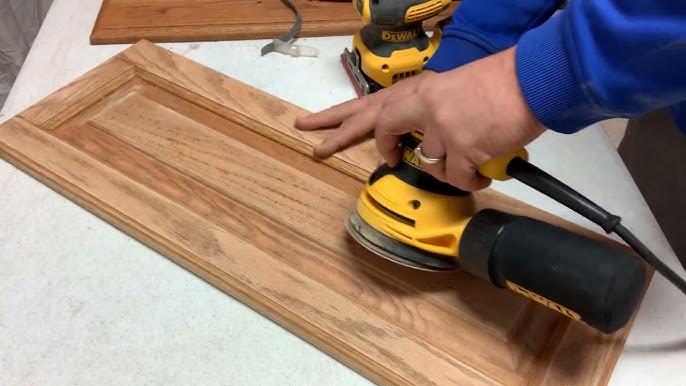
Image Source: i.ytimg.com
Why is Sanding Kitchen Cabinets So Important?
Think of sanding as creating a microscopic “tooth” on the cabinet surface. This tooth gives the primer and paint something to grip onto, much like how primer helps paint stick to a wall. Without this crucial step, your paint job is likely to be prone to peeling, chipping, and an overall dull appearance.
Key Benefits of Sanding:
- Adhesion: This is the primary reason. Sanding creates a slightly rough surface that allows primer and paint to bond effectively.
- Smoothness: Sanding removes imperfections, minor scratches, and unevenness from the original finish or previous paint layers.
- Gloss Removal: If your cabinets have a glossy or semi-gloss finish, sanding breaks down that sheen, preventing the new paint from looking splotchy or peeling.
- Leveling: It helps to smooth out any dings or rough spots that might be present.
Gathering Your Essential Tools and Materials
Before you dive into sanding kitchen cabinets, ensure you have the right gear. Using the correct tools will make the process more efficient and yield better results.
Essential Supplies:
- Sanding Sponges: These are flexible and great for getting into corners and curved areas. They come in various grits.
- Sandpaper: You’ll need a range of grits.
- Coarse Grit (60-80): Use sparingly for removing old finishes or heavy imperfections.
- Medium Grit (100-120): Good for initial smoothing after aggressive sanding or for removing light imperfections.
- Fine Grit (150-180): Ideal for preparing surfaces for primer.
- Very Fine Grit (220-320): Excellent for a final smooth finish after priming and for between coats of paint.
- Orbital Sander (Optional but Recommended): An orbital sander for cabinets can significantly speed up the process, especially for flat surfaces like cabinet doors and drawer fronts. Choose a random orbital sander for a smoother finish.
- Sanding Block: Helps distribute pressure evenly when using sandpaper, especially on flat surfaces.
- Screwdriver: To remove cabinet doors and hardware.
- Drop Cloths or Tarps: To protect your floors and countertops.
- Painter’s Tape: To mask off areas you don’t want to sand or paint.
- Vacuum Cleaner with Brush Attachment: For dust removal.
- Tack Cloths: Essential for picking up fine dust particles after sanding.
- Safety Glasses: To protect your eyes from dust and debris.
- Respirator or Dust Mask: Crucial for protecting your lungs from fine dust particles.
- Gloves: To protect your hands.
- Mild Detergent and Water or Cabinet Cleaner: For thorough cleaning.
- Denatured Alcohol (Optional): For a final degreasing wipe.
- Chemical Strippers (Optional): Only if removing thick layers of old paint or stubborn finishes.
The Step-by-Step Process of Sanding Wood Cabinets
Preparing cabinets for paint involves a methodical approach. Here’s how to tackle sanding your wood cabinets effectively.
Step 1: Disassembly and Cleaning Kitchen Cabinets
- Remove Doors and Drawers: Carefully detach all cabinet doors, drawer fronts, and any drawer boxes you plan to paint. Label each piece with masking tape so you know exactly where it goes back. This is a critical step for cabinet refinishing success.
- Remove Hardware: Unscrew all hinges, knobs, and pulls. Store them safely in labeled bags.
- Thorough Cleaning: This is non-negotiable. Even if your cabinets look clean, they likely have grease, grime, and dust buildup. Use a solution of mild dish soap and warm water, or a specialized kitchen degreaser. Scrub all surfaces, paying attention to corners and crevices. For stubborn grease, a solution of TSP (trisodium phosphate) or a TSP substitute can be effective, but always follow product instructions and wear protective gear. Rinse thoroughly with clean water and allow the cabinets to dry completely. This step is vital for preparing cabinets for paint as it removes contaminants that can interfere with adhesion.
Step 2: Dealing with Old Paint or Finishes
If your cabinets have existing paint or a thick varnish, you might need to address it before sanding.
- Removing Old Paint from Cabinets:
- Light Paint Layers: If the old paint is in good condition and well-adhered, light sanding with medium-grit sandpaper (100-120) might be enough to scuff the surface for adhesion.
- Peeling or Damaged Paint: Use a putty knife or paint scraper to gently remove any loose or peeling paint.
- Heavy Layers/Stubborn Finishes: For thick, old, or very stubborn paint or varnish, you might consider using chemical strippers for cabinets. Apply the stripper according to the manufacturer’s instructions, allowing it to work, then scrape away the softened finish. You’ll need to neutralize the stripper afterward (usually with denatured alcohol or mineral spirits, check product directions) and clean the surface thoroughly. This is a more aggressive approach and requires significant ventilation and protective gear.
- Sanding as Primary Removal: If the old paint is in decent condition, you can often skip chemical stripping and rely on sanding. Start with a coarser grit (like 80) if you need to remove a significant amount of old finish, but be careful not to gouge the wood.
Step 3: The Sanding Process
This is where the magic happens. You’ll be working through different grits of sandpaper.
Sanding Wood Cabinets: Grit Progression
| Grit Range | Purpose | When to Use |
|---|---|---|
| 60-80 Grit | Aggressive removal of old finish, deep scratches, or imperfections. | Only if absolutely necessary for removing thick paint, varnish, or to level significant damage. Use with caution. |
| 100-120 Grit | Initial smoothing after aggressive sanding, removing moderate defects. | After using coarser grits, or for initial scuff sanding of intact glossy finishes. |
| 150-180 Grit | Surface preparation for primer. Creates a good “tooth” for adhesion. | This is your go-to grit for general surface prep after removing significant defects or after initial cleaning. |
| 220-320 Grit | Final smoothing before priming or between paint coats. | Use after primer to smooth any imperfections, and between coats of paint for an ultra-smooth finish. |
Using Hand Sanding Tools:
- Sandpaper and Sanding Blocks: For flat surfaces, wrap sandpaper around a sanding block. This ensures even pressure and prevents you from sanding “dips” into the wood.
- Sanding Sponges: These are invaluable for doors with raised panels, carved details, or curved edges. They conform to the shape of the surface, allowing you to sand effectively without damaging intricate details.
- Direction: Always sand in the direction of the wood grain. Sanding against the grain will create visible scratches that are very difficult to remove.
Using an Orbital Sander for Cabinets:
- Attachment: If using an orbital sander for cabinets, ensure it has a dust collection system. Attach the appropriate grit sandpaper to the sander’s pad.
- Technique: Hold the sander flat against the surface. Move it in slow, overlapping strokes, again, always following the direction of the wood grain. Don’t press too hard; let the sander do the work.
- Edges and Details: An orbital sander is great for large flat areas, but you’ll still need sanding sponges or small sanding blocks for edges, corners, and any detailed areas.
Step 4: Dust Removal – A Critical Step
After sanding, your cabinets will be covered in fine dust. This dust MUST be removed completely before priming.
- Vacuum: Use a vacuum cleaner with a soft brush attachment to gently remove the bulk of the dust from all surfaces, including crevices and corners.
- Wipe Down: Use a clean, dry cloth or a microfiber cloth to wipe down all surfaces.
- Tack Cloths: This is where tack cloths shine. A tack cloth is a sticky material designed to pick up the finest dust particles that remain. Gently wipe down every surface with a tack cloth. Avoid pressing too hard, as this can leave a residue. Use a fresh tack cloth if the current one becomes heavily laden with dust.
Step 5: Inspection and Touch-Ups
Once you’ve cleaned the dust, carefully inspect the cabinet surfaces under good lighting.
- Look for Imperfections: Check for any missed spots, scratches, or rough areas.
- Address Issues: If you find any problems, use the appropriate grit sandpaper (usually fine-grit 150-180 or 220) to sand the area smooth. Feather the edges of your touch-up sanding to blend it in.
- Re-Clean: After any touch-up sanding, repeat the dust removal process with your vacuum, dry cloth, and tack cloth.
Preparing for Primer: The Next Crucial Phase
With the sanding complete and the surfaces impeccably clean, you are ready for the next stage of preparing cabinets for paint: priming.
Why Prime?
- Adhesion: Just like sanding, primer is essential for paint adhesion, especially on challenging surfaces like melamine or previously varnished wood.
- Uniformity: Primer creates a uniform surface color, ensuring your topcoat color looks consistent.
- Blocking Stains: High-quality primers can block wood tannins (which can bleed through paint) and other stains.
- Improved Durability: Primer acts as a bonding layer, contributing to the overall durability of the paint finish.
Choosing the Right Cabinet Primer
The type of primer you select depends on your cabinet material and the condition of the surface.
- Water-Based Primers: Generally good all-rounders, low VOCs (volatile organic compounds), and easy cleanup. They are suitable for most wood and previously painted surfaces.
- Oil-Based Primers: Excellent for blocking stains, providing superior adhesion, and creating a very hard, durable surface. They are ideal for raw wood, knots, and surfaces prone to bleeding. However, they have strong fumes, require mineral spirits for cleanup, and can take longer to dry.
- Shellac-Based Primers: The best choice for blocking severe stains (like water marks, smoke, or tannins) and for providing a super-hard surface. They dry very quickly. Also good for adhesion to tricky surfaces like laminate or old glossy paint. They have strong fumes and require denatured alcohol for cleanup.
Recommendation: For most kitchen cabinet refinishing projects, a high-quality bonding primer (often water-based but specifically formulated for adhesion to slick surfaces) or a shellac-based primer is recommended as your cabinet primer.
Applying Primer
- Application: Apply the primer evenly using a high-quality synthetic brush, a foam roller designed for cabinets, or a paint sprayer.
- Thin Coats: It’s better to apply two thin coats of primer than one thick one.
- Drying Time: Allow the primer to dry completely according to the manufacturer’s instructions.
- Light Sanding After Priming: Once the primer is dry, lightly sand the entire surface with fine grit sandpaper (220-320 grit). This step is crucial for achieving that ultra-smooth, professional finish. It knocks down any slight imperfections in the primer application and ensures a perfectly smooth surface for your paint.
- Dust Removal (Again!): After sanding the primer, repeat the thorough dust removal process: vacuum, wipe with a dry cloth, and finish with a tack cloth.
Frequently Asked Questions (FAQ)
Do I need to sand laminate cabinets?
Yes, you absolutely need to sand laminate cabinets, but with caution. Laminate is a slick surface. You’ll want to use fine grit sandpaper (around 150-180 grit) to scuff up the surface without going through the laminate. A high-quality bonding primer or shellac-based primer is essential after sanding laminate to ensure paint adhesion.
What if my cabinets have a very smooth, glossy finish?
For cabinets with a high-gloss finish, you’ll need to sand thoroughly with fine grit sandpaper (150-180 grit) to break down the sheen. Using a deglosser product before sanding can also help. Always follow up with a bonding primer or a shellac-based primer.
Can I skip sanding if I use a good primer?
No, you should not skip sanding. While a good primer is critical, sanding creates the necessary “tooth” for the primer itself to adhere to. Skipping sanding is the most common reason for paint peeling on cabinets.
How do I sand cabinet corners and details?
Use sanding sponges or small sanding blocks with fine grit sandpaper. For very intricate details, a small detail sanding tool or even a rolled-up piece of sandpaper can be helpful. Take your time and work gently to avoid damaging the details.
How much dust is too much after sanding?
Any visible dust remaining on the surface after your cleaning process is too much. You want a surface that feels perfectly smooth and looks dust-free to the naked eye. If you can see dust, the primer and paint will not adhere properly, leading to a poor finish.
Can I use steel wool for sanding kitchen cabinets?
While steel wool can be used for some cabinet refinishing tasks, it’s generally not recommended for the primary sanding step when preparing cabinets for painting. Steel wool can break apart and leave behind small metal fragments that can rust and cause unsightly spots in your paint job. Sandpaper and sanding sponges are more controlled and reliable. Fine steel wool (0000 grade) can sometimes be used very lightly for a final buff between paint coats, but extreme caution is advised.
How do I deal with gouges or deep scratches in the wood?
For small gouges or scratches, you can try using a wood filler or putty. Apply it according to the product’s instructions, let it dry completely, and then sand it smooth with medium-grit sandpaper, progressing to finer grits. Always clean the area thoroughly afterward. If the damage is severe, you might need to consider more extensive repairs or professional consultation.
Conclusion
Sanding kitchen cabinets is not a step to be rushed or overlooked. It is the foundation upon which a beautiful, lasting paint finish is built. By carefully cleaning, choosing the right sanding grits for cabinets, employing proper techniques with or without an orbital sander for cabinets, and diligently removing all dust, you set yourself up for success in your cabinet refinishing journey. Proper preparing cabinets for paint through meticulous sanding and priming will ensure your kitchen cabinets look professionally transformed and stand the test of time. Happy sanding!