
What is the standard width of a kitchen countertop? While there isn’t a single “standard width” that applies to every kitchen, most standard kitchen countertop depths are 24 inches. However, the actual width of your countertop will depend on the layout of your kitchen, the cabinets it’s attached to, and whether it’s a main counter or part of a kitchen island.
When planning your kitchen, the dimensions of your countertops are crucial. They impact functionality, workflow, and the overall aesthetic. Let’s dive deep into the world of kitchen countertop sizes, exploring what’s considered standard, common variations, and how these measurements affect your kitchen experience.
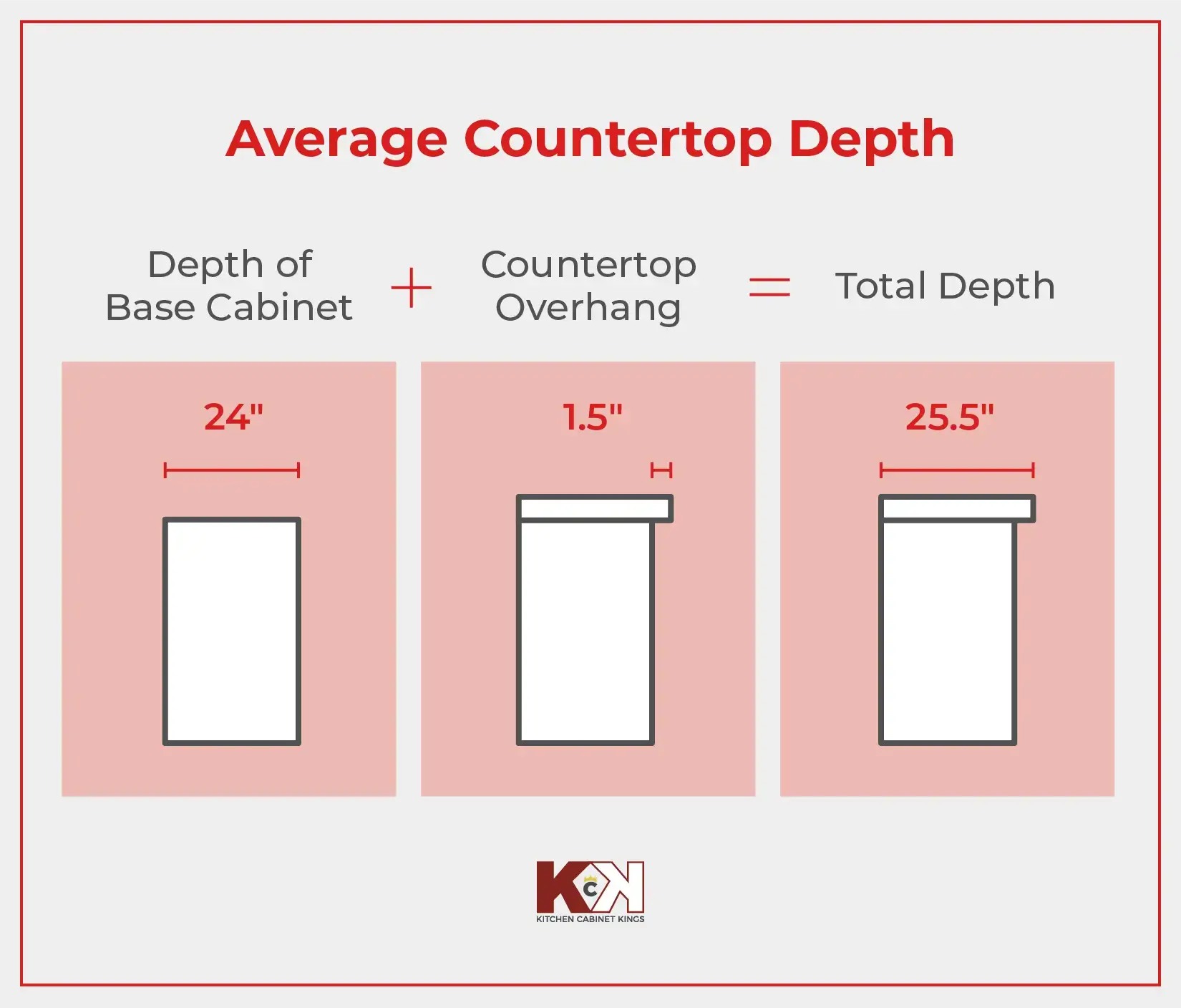
Image Source: cdn.kitchencabinetkings.com
Deciphering Standard Kitchen Countertop Depth
The depth of your kitchen countertop is a fundamental measurement that dictates how much usable workspace you have and how easily you can access items stored in your cabinets.
The 24-Inch Sweet Spot: Average Kitchen Counter Depth
The most common and widely accepted standard kitchen counter depth is 24 inches. This measurement is directly linked to the standard size of base cabinets. Most base cabinets, which form the foundation for your countertops, are 24 inches deep. This creates a cohesive and predictable system for kitchen design and manufacturing.
This average kitchen counter depth of 24 inches allows for:
- Ample Workspace: It provides enough room to prepare food, place appliances, and move around comfortably.
- Standard Appliance Fit: Many common kitchen appliances, like dishwashers and ranges, are designed to fit within a 24-inch depth, including the countertop.
- Cabinet Accessibility: A 24-inch deep countertop allows for standard cabinet depth, making it easy to reach items stored inside without excessive stretching or bending.
Variations in Depth: When 24 Inches Isn’t the Rule
While 24 inches is the norm, there are situations where countertop depth might vary:
- Deeper Cabinets: Some custom or specialty cabinets may be deeper than 24 inches. In such cases, the countertop will typically match the cabinet depth to maintain a flush appearance.
- Shallow Base Cabinets: In smaller kitchens or for specific design choices, you might encounter shallower base cabinets, which would necessitate a shallower countertop.
- Custom Designs: Bespoke kitchens often feature unique dimensions tailored to the homeowner’s needs and the kitchen’s layout.
Exploring Standard Kitchen Counter Width
The width of a kitchen countertop is far more variable than its depth. It’s determined by the length of the cabinets or the design of an island.
Cabinet Width for Counters: The Building Blocks
The cabinet width for counters is the primary driver of standard kitchen counter width. Base cabinets come in a variety of widths, typically in increments of 3 inches, starting from 12 inches and going up to 36 inches or even 48 inches for larger corner cabinets or specialty units.
- Common Cabinet Widths: 15″, 18″, 21″, 24″, 27″, 30″, 33″, 36″.
- Countertop Projection: When a countertop is installed, it typically extends beyond the cabinet face. This is known as the overhang.
Counter Overhang Depth: Function and Form
The counter overhang depth is an important consideration for both usability and aesthetics.
- Standard Overhang: A standard counter overhang depth is usually 1.5 inches. This means that a 24-inch deep cabinet will typically have a countertop that is 25.5 inches deep (24 inches cabinet + 1.5 inches overhang).
- Seating Overhang: If your countertop is designed to accommodate seating, especially on a kitchen island, the overhang needs to be significantly larger. A common seating overhang is 12 inches, providing enough legroom for comfortable seating. For bar-height seating, 15 inches is often recommended.
- Purpose of Overhang: The overhang serves several purposes:
- Ergonomics: It allows you to stand closer to the counter edge while working.
- Aesthetics: It creates a more finished and appealing look.
- Protection: It helps protect the front of your cabinets from spills and splashes.
Minimum Kitchen Counter Width: Practical Considerations
The minimum kitchen counter width you’ll find is typically dictated by the smallest available base cabinet width, which is often 12 inches. However, very narrow countertops might be used in specific situations:
- Filler Sections: Small filler sections between cabinets or appliances might have narrow countertop pieces.
- Appliance Garages: Small, built-in appliance garages might have very limited countertop space.
It’s important to note that while a 12-inch wide section might exist, it offers very limited practical workspace. For effective food preparation, wider sections are much more beneficial.
Kitchen Workspace Width: More Than Just Depth
The concept of kitchen workspace width is about more than just the measurement of a single countertop section. It encompasses the entire layout and the clearances between different work zones.
Defining Key Work Zones
A well-designed kitchen typically has three primary work zones:
- The Preparation Zone: This is where most of your food chopping, mixing, and assembly happens. It benefits from the largest contiguous countertop space.
- The Cooking Zone: This centers around the stove or cooktop, with space on either side for placing hot pans or ingredients.
- The Cleaning Zone: This includes the sink and dishwasher, requiring space for dirty dishes and drying racks.
The width of your countertops directly impacts the efficiency and comfort within these zones. Longer, uninterrupted countertop sections in the preparation zone are highly desirable.
Countertop Thickness: A Factor in Both Appearance and Durability
While we’ve focused on width and depth, countertop thickness is another critical dimension.
- Standard Thickness: The most common countertop thickness is 3 centimeters (approximately 1.2 inches). This thickness is often used for materials like granite, quartz, and marble.
- Thicker Options: Some homeowners opt for thicker countertops, such as 4 centimeters (approximately 1.5 inches) or even thicker, to achieve a more substantial and luxurious look. Laminated edges can also give the appearance of a thicker slab.
- Impact of Thickness:
- Aesthetics: Thicker countertops can lend a more solid and high-end feel.
- Durability: While most materials are strong at 3 cm, very thick slabs might offer increased resistance to cracking or breaking, especially in high-traffic areas or with heavy use.
- Weight: Thicker countertops are heavier, which can affect installation and the type of cabinetry and support needed.
- Cost: Generally, thicker countertops will be more expensive due to the increased material and labor involved.
Kitchen Island Width: A Centerpiece of Functionality
A kitchen island width is a critical design element, often serving as a multi-functional hub for food preparation, casual dining, and storage.
Standard Kitchen Island Dimensions
There’s no single “standard” width for a kitchen island, as they are often custom-designed to fit the kitchen’s size and the owner’s needs. However, common dimensions exist:
- Minimum Functional Width: For an island to be truly functional, especially if it includes cabinets or seating, a minimum kitchen island width of around 36 inches is often recommended. This allows for comfortable movement around the island and some workspace.
- Typical Widths: Many islands fall within the 36 to 48-inch range. This provides a good balance of workspace and maneuverability in most kitchens.
- Larger Islands: Larger kitchens can accommodate islands that are 60 inches, 72 inches, or even wider, offering extensive workspace and storage.
Crucial Clearances Around Kitchen Islands
The width of your island isn’t the only measurement that matters. The space around the island is equally important for a functional kitchen.
- Work Aisles: The primary walkways around the island should be at least 42 inches wide. This allows one person to work comfortably.
- Traffic Aisles: If the island is in a high-traffic area or needs to accommodate two people passing by, 48 inches to 60 inches of clearance is ideal. This ensures smooth movement and prevents bottlenecks.
- Seating Clearance: If your island includes seating, ensure adequate space behind the seated guests. Aim for at least 60 inches from the countertop edge to the nearest obstruction (like another counter or wall) if people will be walking behind seated diners. If no one will walk behind them, 36-48 inches might suffice, but more is always better for comfort.
Kitchen Island Depth Considerations
Similar to standard countertops, the kitchen island depth is often dictated by the cabinets used.
- Standard Cabinet Depth: If using standard base cabinets, the island depth will likely be around 24 inches, plus any countertop overhang.
- Custom Depths: Islands can be designed with deeper cabinets or custom-built carcasses to offer more storage or to accommodate specific features like pull-out shelves or specialized appliances.
- Seating Depth: When incorporating seating, the island depth will increase to accommodate the seating overhang and potential drawer or cabinet space behind it. A common depth for an island with seating is 36 to 42 inches or more.
Putting it All Together: Planning Your Countertop Layout
When you’re designing or renovating your kitchen, consider how countertop widths and depths play a role in your daily activities.
Maximizing Kitchen Workspace Width
- Layout Matters: The arrangement of your cabinets and appliances significantly impacts your usable kitchen workspace width. An efficient layout, such as a work triangle or a work zone approach, minimizes unnecessary steps and maximizes productive counter space.
- Corner Solutions: Corner cabinets can be tricky. Lazy Susans, pull-out shelves, or specialized corner drawers can help make this space more accessible and usable.
- Appliance Integration: Consider the width of your appliances when planning your countertops. A standard 30-inch range, for example, will dictate a certain width for the surrounding counter space.
Standard Kitchen Counter Width and Your Needs
While standard kitchen counter width is often driven by cabinet sizes, your personal needs should guide your choices.
- The Baker’s Dream: If you do a lot of baking, you’ll want long, uninterrupted stretches of countertop for rolling dough and arranging ingredients.
- The Entertainer: If you frequently host, consider wider island depths and ample counter space for serving dishes and buffet-style meals.
- The Compact Kitchen: In smaller spaces, every inch counts. You might opt for shallower cabinets or creative storage solutions to maximize your perceived and usable workspace.
Understanding Cabinet Width for Counters and its Impact
The cabinet width for counters is not just about storage; it directly dictates the potential width of your countertop sections.
- Continuous Runs: Longer runs of cabinets create longer, more continuous countertop surfaces, which are generally more desirable for workspace.
- Breaking Up Runs: Breaking up long runs with appliances or different cabinet styles can be aesthetically pleasing but might reduce contiguous workspace.
Materials and Thickness: A Deeper Dive
Beyond the basic dimensions, the material you choose for your countertops also has implications for thickness and overall appearance.
Common Countertop Materials and Their Typical Thicknesses
| Material | Typical Thickness (cm) | Typical Thickness (inches) | Notes |
|---|---|---|---|
| Granite | 2 to 3 | 0.75 to 1.2 | 1.2 inches is standard. Thicker slabs are available but heavier. |
| Quartz | 2 to 3 | 0.75 to 1.2 | Similar to granite; 1.2 inches is common. |
| Marble | 2 to 3 | 0.75 to 1.2 | Often requires professional sealing. 1.2 inches is standard. |
| Laminate | 1.5 to 2 | 0.6 to 0.8 | Often built up to appear thicker with edge profiles. |
| Butcher Block | 1.5 to 2 | 0.6 to 0.8 | Can be thicker; often available in custom sizes. |
| Solid Surface | 0.5 to 1.5 | 0.2 to 0.6 | Can be fabricated to various thicknesses; often thicker than it appears. |
| Concrete | 2 to 4+ | 0.75 to 1.5+ | Highly customizable in thickness and finish. |
| Stainless Steel | 0.75 to 1.5 | 0.3 to 0.6 | Often a thin gauge of steel mounted on a substrate. |
Note: These are typical thicknesses. Many materials can be fabricated to custom thicknesses.
The Role of Countertop Thickness in Design
Choosing a countertop thickness is a design decision that affects the visual weight and style of your kitchen.
- Modern Kitchens: Often feature slimmer profiles (e.g., 2 cm or 0.75 inches) for a sleek, minimalist look.
- Traditional Kitchens: May incorporate thicker slabs (e.g., 3 cm or 1.2 inches) or even built-up edges for a more substantial, classic appearance.
- Material Limitations: Some materials, like laminate, are naturally thinner and rely on edge treatments to achieve a thicker look.
Frequently Asked Questions (FAQ)
Q1: What is the most common kitchen countertop depth?
A1: The most common kitchen countertop depth is 24 inches, which aligns with the standard depth of base cabinets.
Q2: Can I have a kitchen countertop that is deeper than 24 inches?
A2: Yes, you can have deeper countertops if you use deeper base cabinets or have them custom-made. This can provide more workspace but ensure it fits your kitchen’s proportions.
Q3: What is the standard counter overhang depth?
A3: The standard counter overhang depth is typically 1.5 inches, extending beyond the cabinet face.
Q4: How much clearance do I need around a kitchen island?
A4: For work aisles, aim for at least 42 inches. For higher traffic areas or passing, 48-60 inches is recommended.
Q5: What is the standard width for a kitchen island?
A5: While there’s no strict standard, islands typically range from 36 to 48 inches wide for functional workspace and maneuverability.
Q6: What is the typical countertop thickness?
A6: The most common countertop thickness is 3 centimeters (approximately 1.2 inches), particularly for natural stone and quartz.
Q7: How does cabinet width for counters affect my countertop width?
A7: The width of your base cabinets directly determines the base width of your countertop. Wider cabinets allow for longer continuous countertop sections.
Q8: What is the minimum kitchen counter width I should consider for practical use?
A8: While narrow sections of 12 inches might exist, for practical food preparation, aim for continuous runs of at least 24 inches or more.
Q9: How does countertop thickness impact its durability?
A9: Thicker countertops generally offer greater durability and resistance to damage, although the material itself plays a significant role.
Q10: What is the difference between kitchen workspace width and standard kitchen counter width?
A10: Kitchen workspace width refers to the overall usable area and clearances within your kitchen for different tasks, influenced by the placement and size of all countertops. Standard kitchen counter width refers to the specific dimension of a single countertop section, often dictated by cabinet size.