
What is the standard kitchen countertop height? The standard kitchen countertop height is 36 inches from the floor to the top of the countertop. This measurement is consistent across most kitchens, but variations exist to accommodate different needs and preferences.
When planning your kitchen, the height of your countertops is a crucial consideration. It affects everything from how you prepare food to how you feel working in the space. This guide delves deep into the standard kitchen counter height, exploring the factors that influence it and the options available.
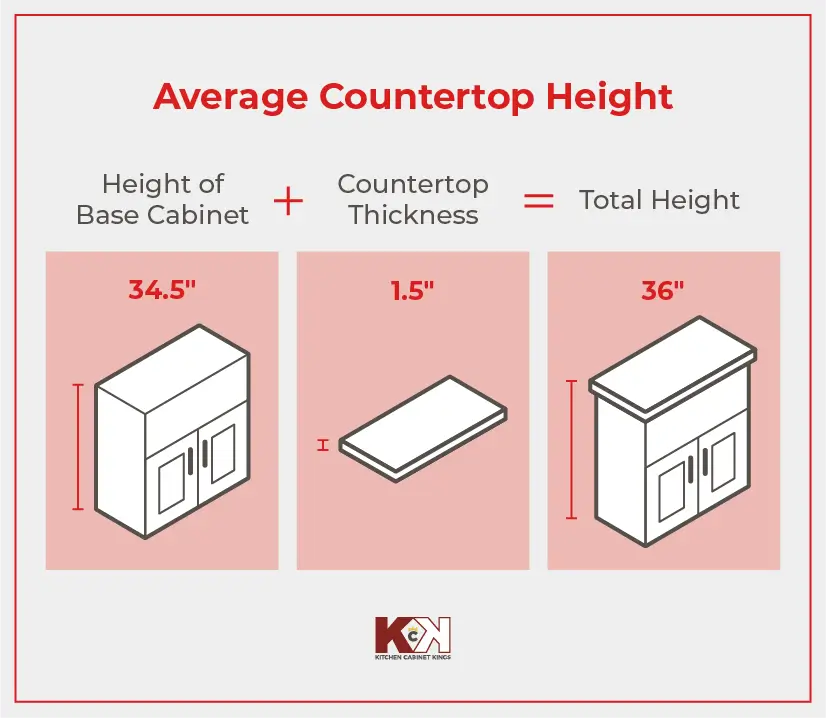
Image Source: cdn.kitchencabinetkings.com
Deciphering Standard Kitchen Counter Height
The 36-inch standard for kitchen counter height isn’t arbitrary. It’s a result of decades of design evolution, ergonomic research, and a general consensus on what works best for the average person. This height allows most adults to stand comfortably while chopping vegetables, mixing ingredients, or washing dishes without excessive bending or reaching.
Historical Context of Counter Heights
Early kitchens were quite different. Before the advent of modern kitchens, food preparation often happened on much higher tables or even on the floor. The evolution towards standardized countertop heights began in the early 20th century as kitchens became more organized and appliances became integrated. Designers and manufacturers started to standardize sizes to create more efficient and comfortable workspaces. This led to the widespread adoption of the 36-inch benchmark that we see today.
Ergonomics and User Comfort
The optimal kitchen counter height is deeply rooted in ergonomics. This field studies how humans interact with their environment to maximize comfort, efficiency, and safety. For kitchen work, an ideal workspace height kitchen minimizes strain on the back, shoulders, and wrists.
- Standing Comfort: The 36-inch height allows most individuals to stand with their elbows at roughly a 90-degree angle while working on the surface. This posture is generally considered the most comfortable for prolonged standing tasks.
- Reducing Strain: Working at a countertop that is too high can lead to shoulder and neck strain, while one that is too low can cause back pain from constant bending. The standard height aims to strike a balance for the majority of users.
Factors Influencing Countertop Height
While 36 inches is the standard, several factors might lead to adjustments:
- User Height: Taller individuals might find a slightly higher countertop more comfortable, while shorter individuals might prefer a slightly lower one.
- Specific Tasks: Some tasks, like kneading dough, can be more comfortable at a slightly lower height, allowing for better leverage.
- Appliance Integration: The height of built-in appliances, such as dishwashers or ovens, can also influence the overall countertop height to ensure a seamless look and functional workflow.
Grasping Countertop Dimensions: Beyond Height
While height is paramount, other countertop dimensions are equally important for a functional and aesthetically pleasing kitchen. These include depth and thickness.
Average Kitchen Counter Depth
The average kitchen counter depth is typically 25 inches. This measurement is from the front edge of the countertop to the back, where it meets the wall or backsplash.
- Workspace Area: This depth provides ample space for preparing food, placing appliances, and keeping frequently used items within easy reach.
- Cabinetry Fit: Standard base cabinets are usually 24 inches deep, and the countertop extends beyond them by about an inch to create an overhang. This overhang allows for easier cleaning and provides a comfortable place to lean without hitting the cabinet fronts.
Countertop Thickness
Countertop thickness can vary significantly depending on the material.
- Common Thicknesses:
- Laminate: Typically 1 ½ inches
- Solid Surface (e.g., Corian): 2 to 4 inches
- Quartz: 1 ¼ to 1 ½ inches
- Granite/Marble: 2 to 4 inches (often built up with a laminate edge to appear thicker)
- Butcher Block: 1 ½ to 3 inches
Thicker countertops can offer a more substantial look and feel, but they also add to the overall visual weight and cost of the kitchen.
Exploring Kitchen Island Height and Styles
Kitchen islands have become a central feature in many modern kitchens, offering extra prep space, storage, and casual dining. The height of a kitchen island countertop is often a topic of discussion, as it can serve multiple purposes.
Kitchen Island Height Variations
While a consistent height of 36 inches is common for kitchen islands, particularly when they primarily serve as work surfaces, variations are popular to accommodate different functions.
- Standard Work Surface Height: If the island’s main purpose is food preparation, matching the 36-inch standard is ideal for seamless integration with other countertops.
- Bar Height Countertop: Many islands incorporate a higher section for seating, creating a breakfast bar or casual dining area. These bar height countertops are typically 42 inches high, allowing diners to sit comfortably on bar stools.
- Multi-Level Islands: Some designs feature multiple levels, with one section at the standard 36-inch height for prep work and another at 42 inches for seating. This offers versatility in one cohesive unit.
Designing Functional Kitchen Islands
When planning a kitchen island, consider its primary functions:
- Prep Zone: Ensure adequate counter space and consider the placement of sinks or cooktops.
- Seating Area: If incorporating seating, the height of the countertop and the required clearance for legroom are critical. A 42-inch high bar height countertop usually requires stools with a seat height of around 30 inches.
- Storage: Integrate cabinets, drawers, or open shelving to maximize the island’s utility.
Counter Height Cabinets and Their Role
Counter height cabinets refer to the base cabinets that support the countertops. Their dimensions are intrinsically linked to the desired countertop height.
Standard Base Cabinet Dimensions
- Height: Standard base cabinets are typically 34 ½ inches tall.
- Depth: As mentioned, the average kitchen counter depth is 25 inches, meaning the base cabinets themselves are usually 24 inches deep, with a 1-inch countertop overhang.
- Width: Base cabinets come in various standard widths, such as 12, 15, 18, 24, 30, 36, and 48 inches, allowing for flexible kitchen layouts.
How Cabinets Dictate Countertop Height
The 34 ½-inch height of base cabinets is specifically designed so that when a standard countertop (typically 1 ½ inches thick) is added, the total height reaches the 36-inch standard. This coordination ensures that the work surface is at the optimal height for most users.
Creating an Optimal Kitchen Work Surface Height
Achieving the optimal kitchen counter height involves more than just adhering to a standard. It’s about creating a workspace that supports a comfortable and efficient cooking experience tailored to your needs.
Measuring for Your Ideal Height
While 36 inches is a good starting point, personalize it by performing a simple test:
- Stand Tall: Stand comfortably with your feet flat on the floor.
- Elbow Test: Bend your elbows to a 90-degree angle.
- Measure: Have someone measure the distance from the floor to your forearms. This measurement is a good indicator of your ideal counter height.
If your measurement is significantly higher or lower than 36 inches, consider custom cabinetry or specialized countertop solutions.
Customization for Unique Needs
- For Taller Individuals: Adding a thicker countertop (e.g., 2 inches or more) or using taller base cabinets (if available) can raise the work surface.
- For Shorter Individuals: Opting for shorter base cabinets or a thinner countertop can lower the work surface to a more comfortable level.
- For Specific Tasks: If you do a lot of baking that involves extensive kneading, you might consider a slightly lower section of countertop or a dedicated rolling island.
Beyond the Standard: Alternative Counter Heights
While 36 inches is the ubiquitous standard, other heights serve specific purposes in kitchen design.
Bar Height Countertop and Dining
As discussed with kitchen islands, a bar height countertop is typically 42 inches tall. This creates a more upright seating experience, akin to standing at a bar.
- Seating Clearance: To accommodate a 42-inch bar height countertop, you’ll need stools with a seat height of approximately 30 inches. This allows for comfortable legroom (around 12 inches between the seat and the underside of the counter).
- Kitchen and Dining Integration: This height is excellent for casual dining or as a secondary workspace that doubles as a social gathering point.
Counter Height for Different Generations
Consider the users of the kitchen. If multiple generations, including children or elderly individuals, will be using the kitchen regularly, a slightly lower and more accessible counter height might be beneficial.
- Accessibility: Lowering the countertop by a few inches can make it easier for those with mobility issues to reach and work comfortably.
- Child Safety: While not a primary height consideration, ensure that any lower sections are not easily accessible to very young children without supervision.
Frequently Asked Questions (FAQs)
Q1: Can I have countertops of different heights in my kitchen?
Yes, you absolutely can! Many modern kitchens incorporate different countertop heights to serve various functions. For example, a standard 36-inch height for primary prep work and a 42-inch bar height section on a kitchen island for casual dining.
Q2: What is the standard countertop overhang?
The standard countertop overhang is typically 1 to 1 ½ inches. This overhang extends beyond the base cabinets, providing a finished look and making it easier to work at the counter without bumping into the cabinet fronts.
Q3: How do I know if my current kitchen counter height is wrong for me?
If you consistently feel strain in your back, shoulders, or neck while working in the kitchen, or if you have to bend excessively or reach too high, your current counter height might not be optimal for you. The elbow test described earlier can help you determine your ideal workspace height.
Q4: What is the average kitchen counter depth?
The average kitchen counter depth is 25 inches, with the countertop material typically extending about 1 inch beyond the 24-inch deep base cabinets.
Q5: Does the material of the countertop affect its standard height?
While the standard height of 36 inches refers to the finished surface from the floor, the thickness of the countertop material does play a role in achieving that height. Base cabinets are manufactured to a specific height (usually 34 ½ inches) to accommodate standard countertop thicknesses (often 1 ½ inches) to reach the 36-inch mark. Thicker materials might require adjustments to the base cabinet height or a different standard if custom solutions are chosen.
By carefully considering the standard measurements and how they relate to your personal needs and kitchen design, you can ensure your countertops are not just a surface, but a truly functional and comfortable workspace height kitchen.