
Can you prevent falls in the kitchen? Yes, you can significantly prevent falls in the kitchen by implementing a combination of proactive measures focused on maintaining a clean, organized, and safe environment, as well as adopting safe working practices.
The kitchen, often called the heart of the home, is also a place where slips and falls are common. From spilled liquids to cluttered walkways, numerous hazards exist. Fortunately, with a little attention and some simple kitchen safety tips, you can greatly reduce kitchen injuries and make your culinary space a much safer place for everyone. This guide will delve into how to achieve slip and fall prevention and foster a culture of safe cooking practices.
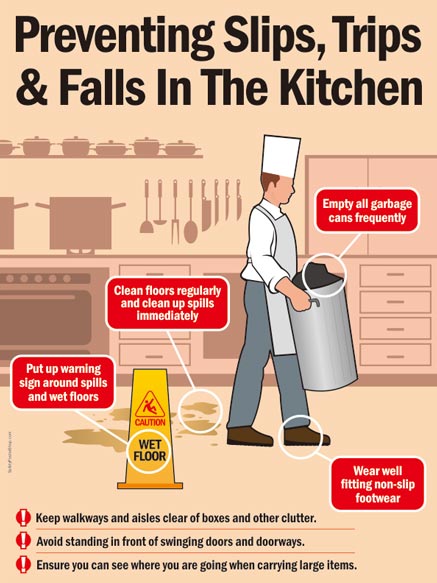
Image Source: www.safetypostershop.com
Identifying and Controlling Kitchen Hazards
The first step in prevent kitchen accidents is to become aware of potential dangers. Kitchen hazard identification is an ongoing process, not a one-time task. Regularly scan your kitchen for anything that could lead to a misstep.
Common Kitchen Hazards
- Wet Floors: Spills from cooking, washing dishes, or even condensation can create slick surfaces.
- Greasy Surfaces: Oil and grease are notorious for making floors incredibly slippery.
- Clutter: Items left on the floor, such as cooking utensils, bags, or boxes, create tripping hazards.
- Loose Rugs or Mats: Rugs that slide easily or have curled edges are a significant tripping risk.
- Poor Lighting: Dim areas can hide spills or obstacles, making them harder to see.
- Worn Flooring: Damaged or uneven tiles and flooring can create trip points.
- Obstructions in Walkways: Chairs, carts, or other furniture that impede free movement.
- Water Leaks: Leaks under sinks or from appliances can create unseen wet spots.
- Open Cabinet Doors: Doors left ajar, especially at lower levels, can be easily walked into.
Implementing Kitchen Hazard Control
Once you know what to look for, you can implement kitchen hazard control measures to eliminate or minimize these risks.
Managing Wet Surfaces
- Immediate Cleanup: Spills should be wiped up immediately. Keep a dedicated cloth or paper towel readily available for this purpose.
- Use Absorbent Materials: For larger spills, especially oily ones, use paper towels or an absorbent cloth to soak up as much as possible before wiping.
- Dry Thoroughly: Ensure the area is completely dry after cleaning. Don’t just mop; use a dry cloth to finish.
- Footwear: Consider wearing shoes with good grip in the kitchen, especially if you’re prone to spills or have elderly family members.
Tackling Grease and Oil
- Ventilation: Use your kitchen’s exhaust fan when cooking with oil to reduce grease buildup on surfaces.
- Regular Cleaning: Deep clean your stovetop, backsplash, and surrounding areas regularly to prevent grease accumulation.
- Specialized Cleaners: Use degreasers to break down stubborn grease on floors and counters.
Decluttering Walkways
- “A Place for Everything”: Ensure all utensils, appliances, and food items have designated storage spots.
- Clear Pathways: Make sure the main walkways between the refrigerator, sink, and stove are always clear.
- Avoid Floor Storage: Do not store items directly on the kitchen floor, especially in high-traffic areas.
- Tidy Up as You Go: Clean up small messes and put away ingredients and tools as you finish using them.
Securing Rugs and Mats
- Non-Slip Mats Kitchen: Invest in good quality non-slip mats kitchen designed for kitchen use. Look for mats with rubber backing or a textured grip.
- Secure Rugs: If you use decorative rugs, ensure they have a non-slip backing or use rug grippers to keep them in place.
- Check Edges: Regularly check that rug edges are not curled up. Smooth them down or secure them if they are.
Improving Lighting
- Adequate Illumination: Ensure your kitchen is well-lit, especially during cooking and cleaning.
- Task Lighting: Install under-cabinet lighting to illuminate countertops and work surfaces.
- Check Bulbs: Replace any burnt-out light bulbs promptly.
Maintaining Flooring
- Inspect Regularly: Periodically check your flooring for loose tiles, cracks, or uneven surfaces.
- Prompt Repairs: Address any flooring issues immediately to prevent tripping hazards.
Managing Cabinet Doors and Appliances
- Close Doors: Make a habit of closing cabinet and appliance doors as soon as you are finished with them.
- Awareness: Be mindful of where doors are when you are moving around the kitchen.
Safe Cooking Practices for Fall Prevention
Beyond the physical environment, how you move and work in the kitchen plays a crucial role in preventing falls. Adopting safe cooking practices is as important as keeping your floors clean.
Safe Movement and Work Habits
- Focus on Your Task: Avoid distractions while cooking or moving around the kitchen, especially when carrying hot items or sharp objects.
- Move Deliberately: Don’t rush. Walk calmly and steadily, paying attention to where you are going.
- Carry Items Safely: When carrying trays or bowls, ensure you have a clear path and a good grip. If an item is too heavy or bulky, make multiple trips.
- Use Step Stools: For reaching items on high shelves, use a sturdy step stool or ladder. Never stand on chairs, especially swivel chairs.
- Keep Appliances Tucked In: Ensure cords for toasters, blenders, and other appliances are neatly tucked away to prevent tripping.
- Clean Knives Safely: Wash knives separately and immediately after use. Place them in the drying rack with the sharp edge down and pointing away from the sink drain.
Footwear for Kitchen Safety
The type of footwear you wear can significantly impact your stability.
- Non-Slip Soles: Choose shoes or slippers with rubber or other non-slip materials on the soles.
- Closed-Toe Shoes: Protect your feet from dropped items and provide better support.
- Avoid Slippers: Loose, worn-out, or slipper-style footwear with smooth soles should be avoided in the kitchen.
- Barefoot Caution: While tempting, going barefoot can increase the risk of stepping on sharp objects or slipping on spills.
The Role of Assistive Devices in the Kitchen
For individuals with mobility challenges or those recovering from injuries, assistive devices kitchen can be invaluable tools for maintaining independence and safety. These devices are designed to support and enhance capabilities.
Types of Assistive Devices
- Grab Bars: Installing grab bars near the sink or in other strategic locations can provide extra support and stability.
- Jar Openers: Easy-to-use jar openers reduce the risk of strain and accidental slips when opening containers.
- Reachers/Grabbers: These tools allow you to retrieve items from high shelves or the floor without bending or stretching precariously.
- Long-Handled Mops and Brooms: Reduce the need to bend over, which can be a tripping hazard for some.
- Non-Slip Mats: As mentioned before, these are crucial for providing secure footing around sinks and appliances.
- Ergonomic Utensils: Utensils with larger, easier-to-grip handles can improve control and reduce hand strain.
- Sturdy Step Stools with Handrails: Offer enhanced stability when reaching for items.
Kitchen Safety for Different Age Groups
Kitchen safety tips can be adapted for different age groups, from young children to seniors.
Young Children
- Supervision: Never leave young children unattended in the kitchen.
- Hot Surfaces: Teach them about hot stoves, ovens, and appliances.
- Sharp Objects: Keep knives, graters, and other sharp utensils out of reach.
- Spill Prevention: Encourage them to sit while eating and drinking to prevent spills.
- Stove Safety: Use back burners whenever possible and turn pot handles inward.
- Childproofing: Consider using cabinet locks and oven guards.
Seniors
- Mobility Aids: Encourage the use of assistive devices kitchen as needed.
- Lighting: Ensure excellent lighting in all areas of the kitchen.
- Clear Pathways: Maintain clutter-free floors and walkways.
- Easy-to-Grip Utensils: Provide tools that are easier to hold and manipulate.
- Stool Stability: Ensure any stools used are stable and have non-slip feet.
- Medication Awareness: Be aware that some medications can cause dizziness or drowsiness, increasing fall risk.
Creating a Comprehensive Kitchen Safety Plan
To truly prevent kitchen accidents and reduce kitchen injuries, a holistic approach is necessary.
Key Elements of a Safety Plan
- Regular Hazard Audits: Schedule weekly or bi-weekly checks of your kitchen for potential hazards.
- Family Meeting: Discuss kitchen safety tips with everyone who uses the kitchen. Make it a shared responsibility.
- Designated Spill Kit: Have a readily accessible kit with paper towels, a mop, a bucket, and a floor cleaner.
- Footwear Policy: Encourage appropriate footwear for kitchen activities.
- Maintenance Schedule: Regularly inspect appliances, flooring, and lighting.
- Assistive Device Assessment: If needed, consult with an occupational therapist or a medical professional about appropriate assistive devices kitchen.
- Emergency Preparedness: Know where your first-aid kit is and how to handle minor injuries.
Case Study: The Slippery Stovetop
Imagine Mrs. Davison, an avid baker, who loves making cookies every Saturday. One morning, she was frying bacon for breakfast before her baking session. She finished cooking and left the greasy pan to cool on the stovetop, planning to clean it later. She then proceeded to her baking preparations, not noticing a small amount of bacon grease that had dripped onto the floor near the stove. Later, while reaching for her flour canister, she stepped onto the greasy spot and slipped. Fortunately, she only suffered a minor bruise, but it was a wake-up call.
Lessons Learned from Mrs. Davison’s Case:
- Immediate Cleanup is Key: The grease should have been cleaned up immediately after cooking.
- Beware of Grease: Even small amounts of grease can create an incredibly slippery surface.
- Awareness of Surroundings: She was focused on reaching the flour and didn’t notice the hazard underfoot.
Mrs. Davison implemented new safe cooking practices after this incident. She now always cleans up any spills, especially greasy ones, before moving on to another task. She also invested in a good quality non-slip mat kitchen for the area in front of her stove.
The Importance of Lighting in Fall Prevention
Lighting plays a more significant role in slip and fall prevention than many realize. Poorly lit kitchens can hide spills, clutter, and uneven surfaces.
Optimizing Kitchen Lighting
- General Illumination: Ensure overhead lights provide bright, even light throughout the kitchen.
- Task Lighting: Install lights under cabinets to illuminate countertops where food preparation occurs. This also highlights any dropped food particles or spills.
- Accent Lighting: While not directly for safety, well-placed accent lights can improve the overall ambiance and visibility.
- Natural Light: Maximize natural light during the day by keeping windows clean.
- Night Lights: Consider motion-activated night lights for kitchens used at night, especially for seniors.
Maintaining Your Kitchen for Optimal Safety
A well-maintained kitchen is inherently safer. This involves regular cleaning, prompt repairs, and keeping things organized.
Daily, Weekly, and Monthly Safety Checks
- Daily: Wipe down counters, sweep or quickly mop up visible spills, and put away clutter.
- Weekly: Deep clean the stovetop, wash the floor thoroughly, check that non-slip mats kitchen are clean and in place, and ensure all cabinet doors are closing properly.
- Monthly: Inspect appliances for any leaks or cord damage, check the condition of your flooring, clean out the refrigerator and pantry, and check light bulbs.
Frequently Asked Questions (FAQ)
Q1: What is the most common cause of kitchen falls?
A1: The most common causes are wet floors due to spills, particularly from water or oil, and tripping over clutter or unsecured rugs.
Q2: Can I use regular towels to clean up spills to prevent slips?
A2: While towels can be used, it’s best to have a dedicated spill cleanup kit. Thick, absorbent cloths or paper towels are ideal for soaking up spills. Ensure the area is thoroughly dried afterward to prevent re-slipping.
Q3: How often should I check for kitchen hazards?
A3: It’s best to be vigilant daily, tidying as you go. However, a thorough hazard audit should be performed at least weekly.
Q4: Who is most at risk for falls in the kitchen?
A4: While anyone can fall, seniors, young children, individuals with mobility issues, and those who are unwell or have recently taken certain medications are at higher risk.
Q5: Are there specific types of flooring that are safer for kitchens?
A5: Yes, materials like non-slip vinyl, textured tiles, or linoleum can offer better traction than very smooth or polished surfaces. Ensure any flooring is well-maintained and free from damage.
By incorporating these comprehensive kitchen safety tips, you can create a safer cooking environment and significantly reduce kitchen injuries. Remember, a little vigilance and consistent effort go a long way in prevent kitchen accidents and ensuring slip and fall prevention. Prioritizing safe cooking practices, performing regular kitchen hazard identification, and implementing effective kitchen hazard control will help you maintain a secure and enjoyable kitchen space. Utilizing non-slip mats kitchen and considering assistive devices kitchen can further enhance floor safety kitchen for all users.