
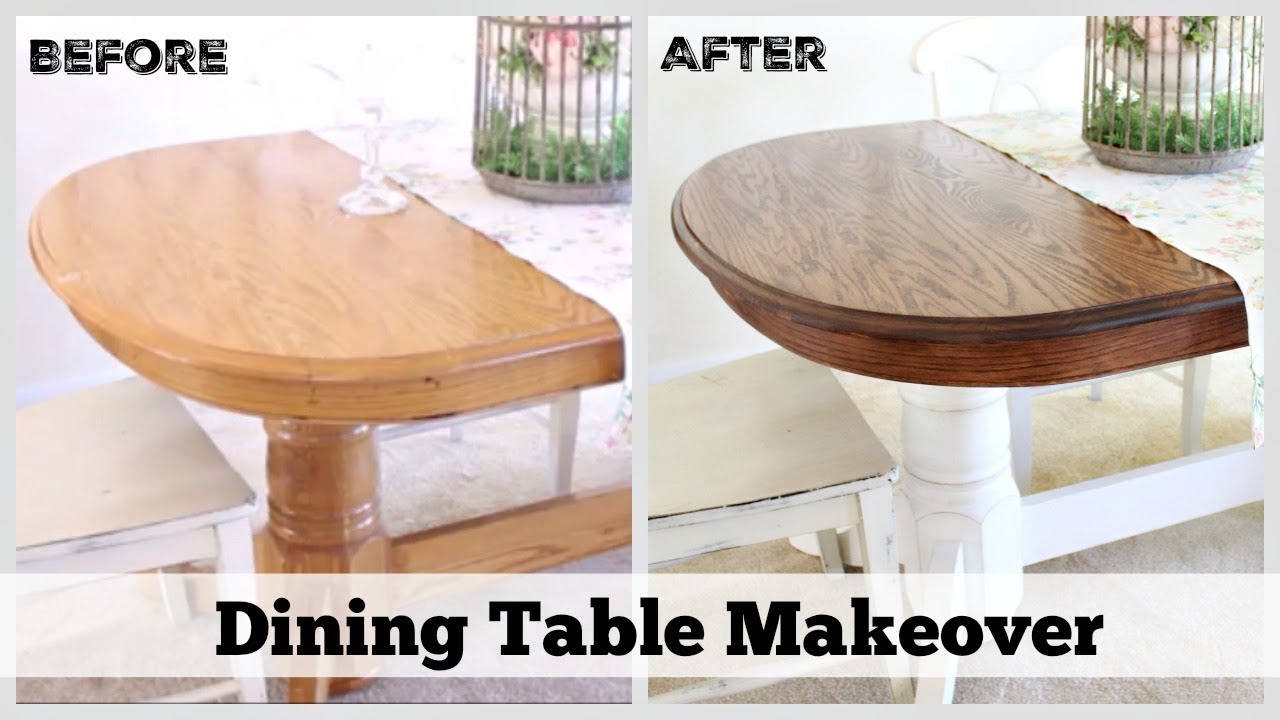
Image Source: i.ytimg.com
How to Stain a Kitchen Table: Easy Steps for a DIY Kitchen Table Makeover
Can you stain a kitchen table yourself? Yes, absolutely! With the right tools and a little patience, you can transform your old kitchen table with a fresh coat of stain, giving it a beautiful new look. This guide will walk you through the entire process of wood table staining and furniture refinishing, making your kitchen table makeover achievable for any DIYer.
Getting Ready for Your Wood Table Staining Project
Before you can start applying wood stain, thorough preparation is key. This is arguably the most important step for a professional-looking finish.
Choosing Your Stain: What is Wood Stain?
Wood stain is a coloring agent that penetrates the wood’s surface, enhancing its natural grain and color without obscuring it, unlike paint. The type of stain you choose will significantly impact the final look and durability.
Exploring Different Wood Stain Types
There’s a variety of wood stain types available, each with its own characteristics:
- Oil-Based Stain: This is a traditional and very popular choice. Oil-based stains penetrate deeply into the wood, offering a rich, durable color. They are known for their excellent adhesion and resistance to moisture and wear.
- Pros: Deep penetration, rich color, good durability, longer working time.
- Cons: Longer drying times, requires mineral spirits for cleanup, can have strong fumes.
- Water-Based Stain: These stains are newer and offer a more eco-friendly option. They dry faster and have less odor than oil-based stains. While they don’t penetrate as deeply as oil-based varieties, they are excellent for achieving lighter, more translucent finishes.
- Pros: Faster drying, low odor, easy water cleanup, wider range of colors.
- Cons: Can raise wood grain, may require more coats for deep color, less durable than oil-based if not properly sealed.
- Gel Stain: This is a thicker, more viscous stain that sits on the surface of the wood rather than penetrating deeply. It’s ideal for covering existing finishes, laminates, and even some painted surfaces without extensive stripping. Gel stain offers more control during application, reducing drips and blotching.
- Pros: Great for covering existing finishes, excellent control, rich color, good for vertical surfaces.
- Cons: May not show wood grain as prominently, can be more expensive.
- Dye Stain: Dye stains are transparent and add color without obscuring the wood grain. They offer very vibrant and deep colors.
- Pros: Highly transparent, vibrant colors, brings out wood grain.
- Cons: Can be prone to fading, requires a protective topcoat, can be tricky to apply evenly.
For a classic, rich look on a kitchen table, oil-based stain is often a preferred choice due to its depth of color and durability. However, if you’re sensitive to fumes or need a quicker project, water-based stain is a great alternative.
Gathering Your Supplies
Having all your materials ready before you begin is crucial for a smooth process. Here’s what you’ll need for your kitchen table makeover:
- Drop cloths or old newspapers: To protect your work area.
- Screwdriver or drill: To remove tabletop and legs if necessary.
- Orbital sander or sanding blocks: For sanding wood table surfaces.
- Sandpaper: Various grits (e.g., 80, 120, 220).
- Tack cloth: To remove dust after sanding.
- Stain: Your chosen wood stain type.
- Applicators: Foam brushes, natural bristle brushes, clean lint-free rags.
- Gloves: To protect your hands.
- Safety glasses: To protect your eyes.
- Mineral spirits (for oil-based stains) or water (for water-based stains): For cleanup.
- Wood conditioner (optional but recommended for softwoods): Helps ensure even stain absorption.
- Topcoat/Sealer: Such as polyurethane finish or a furniture wax.
- Fine-grit sandpaper (e.g., 220 or 320): For between topcoat layers.
Step-by-Step Guide to Staining Your Kitchen Table
Now that you’re prepared, let’s get started on the actual wood table staining process.
Step 1: Prepare the Table for Sanding
First, decide if you need to disassemble the table. Removing the tabletop from the legs makes it easier to access all surfaces and ensures a more even finish. Use a screwdriver or drill to carefully detach the tabletop.
Step 2: Sanding Wood Table Surfaces
This is a critical step for achieving a smooth, even stain. The goal of sanding wood table surfaces is to remove the old finish, smooth out any imperfections, and open the wood pores to accept the stain.
Initial Sanding (Rough Grit)
- Start with a coarser grit sandpaper, such as 80 or 100 grit. This grit is effective for removing old paint, varnish, or deep scratches.
- If using an orbital sander, move it in the direction of the wood grain. For tight spots or detailed areas, use a sanding block.
- Ensure you sand the entire surface evenly. Don’t forget the edges and any carved details.
Intermediate Sanding (Medium Grit)
- Once the old finish is removed, switch to a medium grit sandpaper, like 120 grit. This step smooths out the marks left by the coarser grit.
- Continue sanding in the direction of the wood grain.
Fine Sanding (Smooth Grit)
- Finish with a fine grit sandpaper, usually 220 grit. This will create a very smooth surface, ready for applying wood stain. A smoother surface will result in a more even and professional-looking stain application.
- Important: Always sand in the direction of the wood grain. Going against the grain will create visible scratches that will be highlighted by the stain.
Step 3: Clean Up Dust After Sanding
After sanding, there will be a lot of fine dust. This dust needs to be completely removed before you can stain.
- Vacuum: Use a shop vacuum with a brush attachment to remove as much dust as possible.
- Tack Cloth: Wipe down the entire surface with a tack cloth. A tack cloth is a sticky cloth designed to pick up fine dust particles that vacuuming might miss. Work in sections, pressing gently, and fold the cloth regularly to expose a clean surface.
Step 4: Apply Wood Conditioner (Optional but Recommended)
For some types of wood, especially softer woods like pine, stain can be absorbed unevenly, leading to a blotchy appearance. A pre-stain wood conditioner helps to ensure a more uniform color.
- Apply: Brush on the wood conditioner following the grain.
- Wait: Let it penetrate for the time recommended on the product can (usually 15-30 minutes).
- Wipe Excess: Wipe off any excess conditioner with a clean, lint-free rag.
Step 5: Applying Wood Stain
This is where your kitchen table makeover really starts to take shape.
- Stir, Don’t Shake: Open your can of stain and stir it thoroughly with a stir stick. Avoid shaking the can, as this can introduce air bubbles that can transfer to the wood.
- Test Your Stain: If possible, test your stain on an inconspicuous area of the table or on a scrap piece of wood from the same type of tree. This allows you to see how the color will look.
- Application Method:
- Rag Application: For a more natural, wiped-on look, dip a clean, lint-free rag into the stain and wipe it onto the wood in the direction of the grain. Work in small sections.
- Brush Application: For more even coverage, especially on larger surfaces, use a good quality natural bristle brush (for oil-based stains) or a synthetic brush (for water-based stains). Apply the stain evenly along the grain.
- Allow to Penetrate: Let the stain sit on the wood for the time recommended on the product can. This is typically 5-15 minutes. The longer you leave it, the darker the color will be.
- Wipe Off Excess: Using a clean, lint-free rag, wipe off the excess stain by following the direction of the wood grain. Ensure you wipe evenly to prevent dark streaks.
Step 6: Applying Additional Coats (Optional)
If you desire a deeper or richer color, you can apply a second (or even third) coat of stain.
- Drying Time: Allow the first coat to dry completely according to the manufacturer’s instructions. This can range from a few hours to overnight.
- Light Sanding: Lightly sand with 220-grit sandpaper between coats if recommended by the stain manufacturer. This helps the next coat adhere better and creates a smoother finish. Wipe away dust with a tack cloth.
- Repeat: Apply subsequent coats of stain and wipe off excess as before.
Step 7: Applying a Topcoat for Protection
Once you’re happy with the color, it’s time to protect your beautifully stained wood table. A topcoat seals the stain and protects the wood from moisture, spills, and everyday wear and tear. Polyurethane finish is a popular and durable choice for kitchen tables.
Choosing Your Topcoat
- Polyurethane: Available in oil-based and water-based formulas. Oil-based polyurethane is more durable and offers a warmer amber tone. Water-based polyurethane dries clearer and is less prone to yellowing over time. Both offer excellent protection.
- Varnish: Similar to polyurethane, often with added oils for flexibility.
- Lacquer: Dries very quickly and provides a hard finish, but can be more prone to chipping.
- Wax: Offers a softer, more natural look and feel, but provides less protection. Often used over other finishes for added sheen.
For a kitchen table, a polyurethane finish is highly recommended for its durability.
Applying the Topcoat
- Preparation: Ensure the table is completely dry and free of dust.
- Application: Apply the topcoat using a high-quality synthetic brush or a foam applicator. Work in thin, even coats, following the direction of the wood grain. Avoid over-brushing, which can create bubbles.
- Drying Time: Allow each coat to dry completely according to the manufacturer’s instructions. This is crucial for a smooth, professional finish.
- Light Sanding Between Coats: After each coat of topcoat has dried, lightly sand the surface with very fine-grit sandpaper (220 or 320 grit). This step is essential for removing any dust nibs or imperfections and ensuring good adhesion for the next coat. Wipe away dust with a tack cloth after each sanding.
- Number of Coats: Apply at least 2-3 coats of topcoat for adequate protection on a kitchen table. For maximum durability, you might consider 4-5 coats.
Step 8: Reassemble and Cure
Once the final coat of topcoat is applied and dried, you can reassemble the table if you disassembled it earlier.
- Curing Time: While the table may feel dry to the touch after 24 hours, most finishes require a longer curing time to reach their full hardness and durability. This can take anywhere from 7 to 30 days. During the curing period, avoid placing heavy objects on the table or wiping it down aggressively. Treat it gently to ensure the finish fully hardens.
Tips for a Flawless Wood Table Staining Finish
Achieving a professional look involves paying attention to the small details.
- Ventilation: Always work in a well-ventilated area, especially when using oil-based stains or polyurethane. Open windows and doors, or use fans.
- Work in Good Light: Good lighting helps you see imperfections and ensure even application.
- Keep Stirring: If you’re taking a break, stir the stain and topcoat again before resuming.
- Don’t Rush: Patience is key. Allow adequate drying time between steps.
- Protect Your Workspace: Use drop cloths liberally to protect floors and surrounding areas from spills and drips.
- Clean Up Promptly: Clean brushes and tools immediately after use with the appropriate solvent (mineral spirits for oil-based, water for water-based). Dried stain and finish are much harder to remove.
Frequently Asked Questions About Staining a Kitchen Table
Here are some common questions people have when undertaking a kitchen table makeover involving wood table staining:
What is the best way to prepare a table for staining?
The best way to prepare a table for staining is to thoroughly clean it, remove any old finish or blemishes through sanding wood table surfaces, and ensure all dust is removed with a tack cloth. For softwoods, applying a pre-stain wood conditioner is also highly recommended for even color absorption.
Can I stain over an existing finish?
Yes, you can stain over an existing finish, but only if it’s a compatible finish and the surface is properly prepared. Gel stains are particularly good for this purpose as they adhere well and don’t require complete removal of the old finish. For traditional oil-based stain or water-based stain, you’ll typically need to strip or sand down to bare wood.
How many coats of stain should I apply?
The number of stain coats depends on the desired color intensity and the type of stain used. Start with one coat and let it dry. Then, assess the color. You can apply additional coats, allowing each to dry and wiping off excess, until you achieve your desired hue.
How many coats of polyurethane are needed?
For a kitchen table, which experiences a lot of wear and tear, it’s advisable to apply at least 3-4 coats of polyurethane finish. Each coat should be applied thinly and evenly, with light sanding and dust removal between coats.
Will stain protect my table?
No, stain itself does not offer significant protection. Its primary purpose is to color the wood. A protective topcoat, such as polyurethane finish, is essential to shield the wood and the stain from moisture, scratches, and daily use.
What’s the difference between oil-based and water-based polyurethane?
Oil-based polyurethane is generally more durable and offers a warmer, amber tone that can enhance the wood’s natural color. It has a longer drying time and requires mineral spirits for cleanup. Water-based polyurethane dries clearer, is less prone to yellowing over time, and cleans up with water. It typically has lower VOCs (volatile organic compounds).
How long does it take to stain a kitchen table?
The entire process, from preparation to the final coat of topcoat, can take anywhere from 2-4 days, depending on drying times between coats and the number of coats applied. Remember to factor in the curing time, which can extend for several weeks, during which you should handle the table with care.
By following these detailed steps and tips, you can confidently embark on your furniture refinishing project and achieve a stunning kitchen table makeover that you’ll be proud of for years to come. Enjoy your beautifully stained new table!