
So, how high is a kitchen countertop? The standard kitchen counter height in most North American kitchens is 36 inches (91.4 cm) from the finished floor to the top of the countertop. This height is designed to accommodate a majority of adults for common kitchen tasks. However, this is just a starting point, and the ideal height can vary significantly based on individual needs, ergonomics, and the specific function of the countertop.
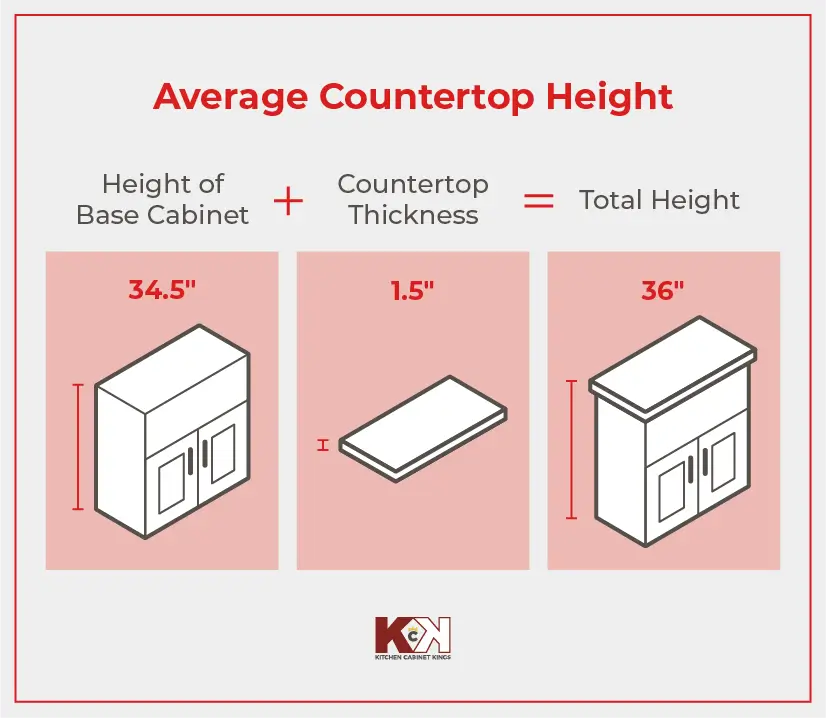
Image Source: cdn.kitchencabinetkings.com
Deciphering Standard Kitchen Countertop Dimensions
When you’re planning a kitchen renovation or simply curious about the most common measurements, knowing the standard kitchen counter height is a great starting point. This established measurement is the result of decades of design and user experience, aiming to provide a comfortable and efficient workspace for the average person.
The Foundation: Typical Kitchen Cabinet Height
The height of your base cabinets forms the bedrock for your countertop. In the US, typical kitchen cabinet height for base cabinets is 34.5 inches. This measurement is crucial because the countertop is installed on top of these cabinets.
Adding the Surface: Standard Countertop Thickness
The thickness of the countertop material itself also plays a role in the final height. Standard countertop thickness can vary depending on the material.
- Laminate: Often around 1.5 inches (3.8 cm) thick.
- Solid Surface (e.g., Corian): Typically 3/4 inch (1.9 cm) to 1.5 inches (3.8 cm).
- Quartz: Commonly 3/4 inch (1.9 cm) or 1.25 inches (3.2 cm).
- Granite/Marble: Usually 1.25 inches (3.2 cm) or 2 inches (5 cm).
- Butcher Block: Can range from 1.5 inches (3.8 cm) to 3 inches (7.6 cm) or more.
When you add the cabinet height (34.5 inches) to the countertop thickness (e.g., 1.5 inches), you arrive at the common 36-inch standard kitchen counter height. This calculation highlights how the material choice directly impacts the overall usability of your kitchen.
Beyond the Standard: Average Kitchen Counter Depth
While height is critical, the average kitchen counter depth is equally important for functionality. Most standard countertops have a depth of 24 inches (61 cm). This depth allows ample space for appliances that are typically built-in, such as dishwashers and trash compactors, to fit underneath. It also provides a good working surface for chopping, mixing, and food preparation. Deeper countertops, sometimes found in custom kitchens or for specific needs, can offer more workspace but might also make it harder to reach the backsplash.
Crafting the Comfortable Kitchen Counter Height
The standard kitchen counter height is a guideline, not a rigid rule. Achieving a comfortable kitchen counter height is paramount for an enjoyable and efficient cooking experience. This involves considering who will be using the kitchen most often and what tasks they will perform.
Ergonomic Kitchen Design: A Key to Comfort
Ergonomic kitchen design focuses on creating a workspace that minimizes strain and maximizes efficiency for the user. The height of your work surfaces is a cornerstone of this principle. A countertop that is too high can cause shoulder and back pain, while one that is too low can lead to stooping and neck strain.
Assessing Your Needs: Who Uses the Kitchen?
- For the Average Adult: The 36-inch standard works well for individuals between 5’5″ and 5’11” (165-180 cm).
- For Taller Individuals: Those over 6 feet (183 cm) might find a slightly higher countertop more comfortable, perhaps 37 to 38 inches (94-96.5 cm). This reduces the need to bend over as much.
- For Shorter Individuals: People under 5’4″ (163 cm) might benefit from a lower countertop, around 34 to 35 inches (86-89 cm). This makes reaching and working at the counter easier.
The Optimal Kitchen Work Surface Height
The concept of an optimal kitchen work surface height is deeply tied to individual body measurements and the specific tasks performed at each station. For instance, the ideal height for chopping vegetables might differ slightly from the ideal height for kneading dough or for a general-purpose landing zone.
- Kneading Dough: Many chefs and bakers prefer a slightly lower surface for kneading, as it allows them to use their body weight more effectively. A height that allows your elbows to be at a 90-degree angle when your hands are on the dough is often ideal. This might translate to a countertop that is 2-4 inches (5-10 cm) below your standard elbow height.
- General Prep Work: For most general food preparation, a height that allows your arms to rest comfortably at your sides with your elbows at a slight bend (around 15-20 degrees) is often considered optimal.
To find your personal optimal height:
1. Stand with your feet flat on the floor.
2. Relax your shoulders and bend your elbows to a 90-degree angle.
3. Measure the distance from the floor to the underside of your forearm.
4. Subtract 2-4 inches (5-10 cm) for tasks like kneading, or use the measurement as is for general prep work. This will give you a personalized countertop height recommendation.
Kitchen Island Height Dimensions: A Separate Conversation
Kitchen islands often have different height considerations, especially if they incorporate seating or serve multiple functions. Kitchen island height dimensions can be more varied than standard countertop heights.
Standard Island Height vs. Seating Height
- Standard Island Countertop: Similar to the main kitchen countertops, islands can be designed with a standard height of 36 inches (91.4 cm). This provides a consistent work surface that matches the rest of the kitchen.
- Bar Height: Many islands feature a raised section for bar stool seating. This is typically around 42 inches (106.7 cm) high, allowing comfortable seating for patrons or family members.
- Counter Height Seating: Some islands offer a more integrated seating area at the standard 36-inch height, making it feel more like an extension of the kitchen rather than a separate dining space. This requires stools that are roughly 24 inches (61 cm) high.
- Dining Height: Less common for kitchen islands, but some might incorporate a dining-height table at 30 inches (76.2 cm), requiring chairs that are around 18 inches (46 cm) high.
Island Depth and Width
- Depth: Island depths can also vary. A standard depth for a work island is 24 inches (61 cm) to match base cabinets. However, islands that incorporate seating or overhangs for dining can be deeper, often ranging from 36 inches (91.4 cm) to 42 inches (106.7 cm) or more, depending on the required legroom and seating arrangement.
- Width: The width of an island is highly dependent on the kitchen’s layout and available space. It needs to be wide enough to be functional but not so wide that it impedes movement. A minimum walkway of 36 inches (91.4 cm) is recommended around an island, with 42-48 inches (106.7-122 cm) being ideal for comfortable passage and appliance use.
ADA Compliant Counter Height: Accessibility for All
For kitchens designed with accessibility in mind, adhering to the ADA compliant counter height is essential. The Americans with Disabilities Act (ADA) sets specific standards to ensure that facilities are usable by individuals with disabilities.
Key ADA Countertop Guidelines
- Maximum Height: The ADA specifies a maximum counter height of 34 inches (86.4 cm) from the finished floor to the top of the counter.
- Knee Clearance: A crucial element for wheelchair users is adequate knee clearance. The ADA requires a minimum of 27 inches (68.6 cm) of clear knee space, measured from the floor to the underside of the counter.
- Forward Approach: The depth of the counter space should allow for a forward approach. For seated individuals, this means having enough space in front of the counter.
- Clear Floor Space: A minimum clear floor space of 30 inches by 48 inches (76 cm by 122 cm) must be provided for a wheelchair to maneuver.
When designing an ADA compliant kitchen, it’s important to consider that these kitchen counter height measurements are not just for seated users but can also benefit people of shorter stature or those who simply prefer a lower working surface.
Customizing Your Kitchen: Beyond the Standard
While the standard kitchen counter height of 36 inches serves as a reliable benchmark, many homeowners opt for custom solutions to perfectly tailor their kitchens to their lifestyle and physical needs.
Multi-Level Countertops
A popular trend in custom kitchen design is the use of multi-level countertops. This approach allows for different heights to be incorporated into a single kitchen, catering to various tasks and users. For example, you might have a standard 36-inch prep area, a slightly lower section for baking or working with children, and a higher section on an island for casual dining or entertaining.
Considering Your Appliances
The height of your appliances also influences countertop choices.
- Wall Ovens: The height of a wall oven’s controls and opening can dictate how high your adjacent countertops are placed.
- Cooktops: While most cooktops are designed to be flush with standard countertops, their installation depth and surrounding clearances need to be factored in.
- Built-in Microwaves: If you have a built-in microwave, its position relative to the countertop will impact the overall workflow and visual balance.
The Impact of Flooring
Don’t forget that changes in flooring can affect your standard kitchen counter height. If you’re replacing flooring in an existing kitchen, the new material might be thicker or thinner than the old, requiring adjustments to cabinet or countertop installation to maintain the desired final height.
FAQ: Frequently Asked Questions About Kitchen Countertop Height
Q1: What is the most common kitchen counter height?
A1: The most common standard kitchen counter height in North America is 36 inches (91.4 cm) from the finished floor to the top of the countertop.
Q2: Can I have different countertop heights in my kitchen?
A2: Yes, absolutely! Many modern kitchens feature multi-level countertops to accommodate different tasks and users, enhancing ergonomic kitchen design.
Q3: How does countertop thickness affect the final height?
A3: The standard countertop thickness varies by material (typically 3/4 inch to 2 inches). This thickness is added to the height of the base cabinets (usually 34.5 inches) to achieve the final countertop height. For example, 34.5-inch cabinets + 1.5-inch countertop = 36-inch standard height.
Q4: What is the ideal counter height for baking?
A4: For tasks like kneading dough, a comfortable kitchen counter height might be 2-4 inches lower than your standard prep height. This allows you to use your body weight more effectively. Finding your personal optimal kitchen work surface height is key.
Q5: What are the ADA-compliant counter heights?
A5: The ADA specifies a maximum counter height of 34 inches (86.4 cm) with a minimum of 27 inches (68.6 cm) of knee clearance from the floor for forward approaches.
Q6: How deep are kitchen countertops typically?
A6: The average kitchen counter depth is 24 inches (61 cm), which is standard for most base cabinets and allows for appliance installation.
Q7: What is the standard height for a kitchen island with seating?
A7: Kitchen islands with bar-style seating are typically around 42 inches (106.7 cm) high. If the island doubles as a dining table, it might be closer to 30 inches (76.2 cm). A standard island workspace height remains 36 inches (91.4 cm).
Q8: Who benefits from a lower countertop height?
A8: Shorter individuals, children, and people who find standing at standard heights uncomfortable can benefit from lower countertops, perhaps in the 34-35 inch range.
Q9: Can I change my countertop height if my cabinets are already installed?
A9: Adjusting countertop height significantly after cabinets are installed can be complex. It usually involves either replacing the base cabinets with ones of a different height or building up the base of the existing cabinets. Consult with a contractor for the best approach.
Q10: What is the typical kitchen cabinet height before the countertop is added?
A10: The typical kitchen cabinet height for base cabinets is 34.5 inches (87.6 cm).
By carefully considering these kitchen counter height measurements, depths, and ergonomic principles, you can create a kitchen that is not only beautiful but also highly functional and comfortable for everyone who uses it.