
Wondering how much CFM your kitchen hood needs? Generally, you’ll want at least 100 CFM for every 10,000 BTUs of heat output from your cooktop. For electric ranges, aim for at least 100 CFM for a standard stovetop.
A clean kitchen means healthy air. When you cook, especially with gas, you release all sorts of things into your air. Think grease, smoke, and even gases. A good kitchen hood is like your kitchen’s lungs, breathing out the bad stuff and bringing in fresh air. But not all hoods are created equal. The power of a hood is measured in CFM, or cubic feet per minute. This tells you how much air it can move. Getting the right CFM is key to a fresh-smelling and healthy kitchen.
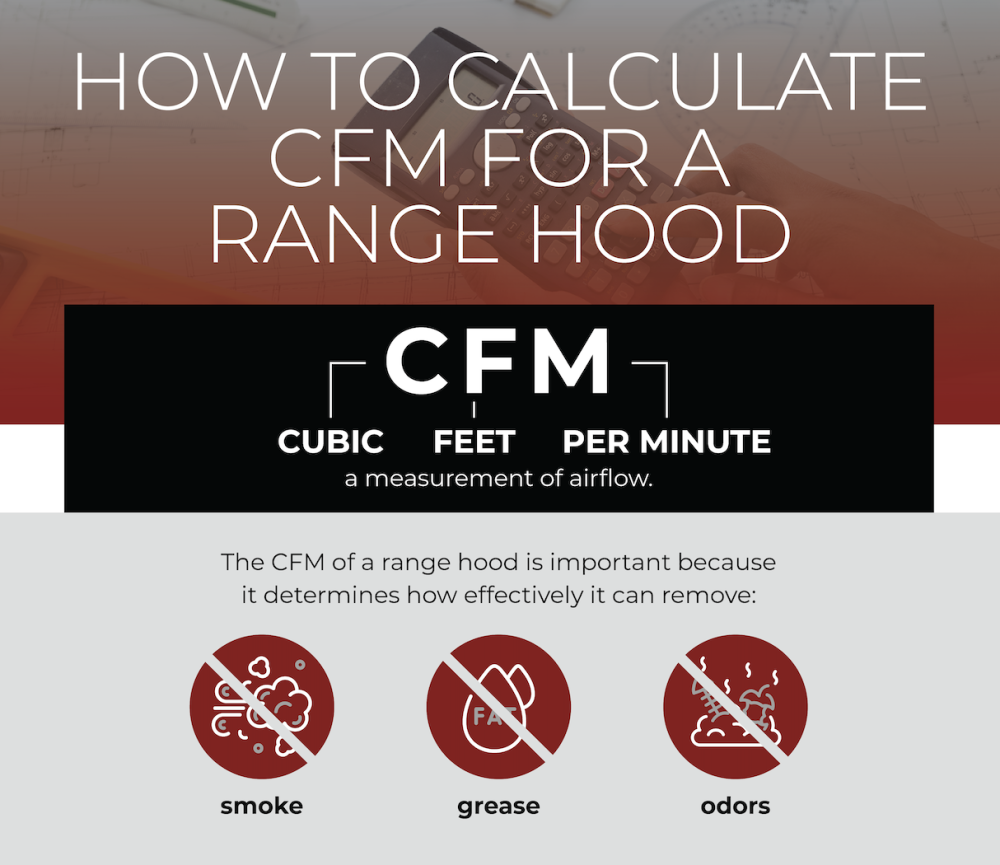
Image Source: www.worldcoppersmith.com
Deciphering Kitchen Ventilation CFM
Kitchen ventilation CFM is the measure of how effectively your range hood can clear the air in your kitchen. It’s a crucial factor in ensuring a comfortable and healthy cooking environment. The higher the CFM rating, the more air the hood can pull out of your kitchen per minute. This is vital for removing cooking fumes, grease particles, moisture, and odors that are produced when you cook. Without adequate CFM, these airborne contaminants can linger, leading to greasy surfaces, stale air, and potential respiratory issues.
Factors Guiding Ventilation Hood Sizing
Several key elements influence the ideal CFM for your kitchen hood. It’s not a one-size-fits-all answer. Here’s what you need to consider:
- Cooktop Type: Gas stoves produce more byproducts than electric ones.
- BTU Output (for Gas Stoves): The British Thermal Units (BTUs) measure the heat output of your gas burners. Higher BTUs mean more cooking power and more fumes to remove.
- Kitchen Size: Larger kitchens require hoods with higher CFM to effectively circulate and clean the air.
- Cooking Habits: If you often do high-heat searing, frying, or wok cooking, you’ll need more CFM.
- Ductwork: The length and complexity of your ductwork can affect the hood’s performance.
- Make-up Air: For powerful hoods, bringing fresh air back into the kitchen is often necessary.
Calculating Your Hood CFM Needs
Let’s get down to the numbers. Using a range hood CFM calculator can be helpful, but knowing the underlying principles is even better.
The Basic CFM Calculation Method
A common rule of thumb for calculating the minimum CFM for your kitchen hood is:
- Measure your kitchen: Find the length, width, and height of your kitchen in feet.
- Calculate the volume: Multiply these three numbers together (Length × Width × Height = Cubic Feet).
- Aim for air changes: For good kitchen ventilation, you generally want to exchange the air in your kitchen at least 15 times per hour.
-
Calculate CFM: Divide the total cubic feet of your kitchen by 60 (minutes in an hour) and then multiply by 15 (air changes per hour).
- Formula: (Kitchen Volume in Cubic Feet / 60) × 15 = Minimum CFM
Example:
Let’s say your kitchen is 15 feet long, 12 feet wide, and 8 feet high.
- Kitchen Volume = 15 ft × 12 ft × 8 ft = 1440 cubic feet
- Minimum CFM = (1440 cubic feet / 60 minutes) × 15 air changes = 24 CFM × 15 = 360 CFM
So, for this kitchen, a hood with at least 360 CFM would be a good starting point.
CFM for Gas Stove Requirements
When you’re dealing with a gas stove, the amount of heat it generates, measured in BTUs, becomes a primary factor. Gas stoves emit more pollutants, including carbon monoxide and nitrogen dioxide, which need efficient removal.
- Rule of Thumb: For every 10,000 BTUs your gas cooktop produces, you should aim for at least 100 CFM of ventilation.
How to find your stove’s BTU output:
- Check your stove’s manual or manufacturer’s website.
- Look for a label on the appliance itself, often found under the cooktop or on the back.
Calculation Example for a Gas Stove:
Suppose your gas stove has the following burners:
- 1 x 15,000 BTU burner
- 2 x 12,000 BTU burners
- 1 x 9,000 BTU burner
Total BTU Output = 15,000 + (2 × 12,000) + 9,000 = 15,000 + 24,000 + 9,000 = 48,000 BTUs
Now, apply the rule of thumb:
- CFM needed = (Total BTU Output / 10,000) × 100 CFM
- CFM needed = (48,000 / 10,000) × 100 CFM = 4.8 × 100 CFM = 480 CFM
This means you should look for a range hood with at least 480 CFM for this gas stove. It’s often wise to choose a hood with a slightly higher CFM than the minimum calculated value to ensure optimal performance.
CFM for Electric Range Needs
Electric ranges are generally less polluting than gas stoves. They produce heat and steam, but typically not the same level of combustion byproducts.
- General Guideline: For most electric ranges, a hood with 100-200 CFM is often sufficient, depending on the size of your kitchen and your cooking habits.
- Consider Higher CFM: If you have a larger kitchen or frequently engage in high-heat cooking methods like searing or frying, you might need a higher CFM rating.
A simple starting point for an electric range is to use the kitchen volume calculation we discussed earlier. If your kitchen volume calculation yields a minimum of, say, 300 CFM, even with an electric range, you’d aim for at least that.
The Range Hood CFM Calculator: A Handy Tool
When you search for “range hood CFM calculator,” you’ll find many online tools that simplify the process. These calculators usually ask for:
- Cooktop type (gas or electric)
- Total BTU output (if gas)
- Kitchen dimensions (length, width, height)
- Whether your kitchen is open or closed to other rooms
- Duct length and type (straight, with elbows)
These calculators often incorporate a few more nuanced factors, like the impact of elbows in ductwork, which can reduce airflow. They can provide a more precise recommendation than basic rules of thumb.
Beyond the Basics: Fine-Tuning Your CFM Choice
Once you have a baseline CFM number, several other factors can influence your final decision.
Hood CFM for Gas Stove: Enhancements and Considerations
For gas stoves, in addition to the BTU calculation, consider these points:
- Deeper Hoods: Hoods with deeper canopies (e.g., 24 inches or more) offer better capture efficiency, meaning they can grab more of the rising fumes before they escape into the kitchen.
- Capture Area: The width and depth of the hood’s capture area are critical. A wider hood that extends beyond the edges of your cooktop will be more effective.
- Fan Speed Settings: Most good range hoods offer multiple fan speeds. You might not need the maximum CFM all the time, but it’s good to have it available for intense cooking sessions.
Duct Size CFM: The Airflow Relationship
The size of your ductwork significantly impacts the actual CFM your hood can deliver. This is a crucial aspect of duct size CFM performance.
- Duct Diameter: Standard duct sizes for range hoods are typically 6 inches, 8 inches, or 10 inches in diameter.
- Airflow Resistance: Larger ducts allow for greater airflow with less resistance. If your hood has a high CFM rating but is connected to undersized ductwork, its actual performance will be significantly reduced.
-
CFM and Duct Diameter Chart: Manufacturers often provide charts that show the maximum CFM a hood can support with a given duct size, considering duct length and the number of elbows.
Duct Diameter (inches) Max CFM (Approximate) 6 300-400 8 500-700 10 800-1000+ -
Elbows: Each elbow in your ductwork adds resistance, effectively reducing the hood’s CFM. A straight run of duct is ideal. For every 90-degree elbow, you might lose 25-50 CFM of potential airflow.
Why this matters: If you buy a 600 CFM hood but only have 6-inch ductwork, you might only achieve 300-400 CFM in reality. It’s essential to match your duct size to your hood’s CFM rating.
Ductless Hood CFM: A Different Approach
Ductless hood CFM works differently because these hoods don’t vent air outside. Instead, they use filters, typically charcoal filters, to clean the air before recirculating it back into the kitchen.
- Filter Effectiveness: The effectiveness of a ductless hood relies heavily on the quality and maintenance of its filters. Grease filters capture particles, while charcoal filters absorb odors.
- Lower CFM Often Sufficient: Because they aren’t fighting against duct resistance and aren’t expelling air from the home, ductless hoods often require lower CFM ratings. A hood with 100-200 CFM might be adequate for general cooking.
- Limitations: Ductless hoods are less effective at removing moisture and grease compared to ducted systems. They are best suited for light cooking or in situations where ducting is impossible.
Cubic Feet Per Minute Kitchen: Clarifying the Terminology
Cubic feet per minute kitchen simply refers to the volume of air the hood can move within your kitchen space over one minute. When we talk about CFM for kitchen ventilation, we are directly referencing this measurement. It’s the core specification that tells you how powerful your hood is at clearing the air.
The Importance of Make-up Air
When your range hood is powerful, it pulls a significant amount of air out of your kitchen. If your home is tightly sealed (as many modern homes are), this can create a negative pressure environment. This is where make-up air requirements come into play.
- What is Make-up Air? Make-up air systems are designed to replace the air that your range hood exhausts, preventing a vacuum effect.
- When is it Needed? Building codes often mandate make-up air for hoods exceeding a certain CFM rating, typically around 400 CFM, though this can vary by location. Even if not mandated, it’s highly recommended for powerful hoods.
- How it Works: A make-up air system can be as simple as a passive vent that allows outside air to enter the kitchen, or it can be an active system with a fan that heats or cools the incoming air to a comfortable temperature.
- Impact on Performance: Without adequate make-up air, a powerful hood’s performance can be compromised. It might struggle to pull air efficiently, and the reduced air pressure can even cause combustion appliances (like furnaces or water heaters) in the house to draw air from the wrong places, potentially leading to safety hazards.
If your calculated CFM is high (e.g., 500 CFM or more), you should definitely research local building codes regarding make-up air and consider incorporating it into your kitchen design.
CFM Rating Kitchen Hood: What to Look For
The CFM rating kitchen hood is usually prominently displayed on the product packaging or specifications. When choosing a hood, look for:
- Advertised vs. Actual CFM: Be aware that the advertised CFM might be measured under ideal conditions. Check specifications for details on how CFM is measured, especially in relation to duct size.
- Multiple Speed Settings: A hood with at least 3 speed settings offers flexibility. You can use lower speeds for simmering and higher speeds for searing or frying.
- Noise Level (Sones): High CFM doesn’t have to mean high noise. Look for hoods with lower sone ratings, especially on lower speed settings. A sone is a unit of loudness. 1 sone is roughly the sound of normal conversation.
- Capture Area and Depth: As mentioned, a wider and deeper hood is generally more effective at capturing cooking fumes.
Ventilation Hood Sizing: Putting It All Together
Ventilation hood sizing involves balancing your cooking needs with your kitchen’s characteristics and installation constraints.
Sizing for Different Cooktops
- Electric Induction: These are very efficient and produce less steam and airborne grease than traditional electric coil or gas. A standard calculation based on kitchen volume is often sufficient, with 100-200 CFM being a common range.
- Electric Smooth Top: Similar to induction, but can sometimes generate slightly more steam. Again, 100-200 CFM is a good starting point, adjusted for kitchen size.
- Gas Cooktops: As we’ve detailed, the BTU output is paramount. Use the 100 CFM per 10,000 BTU rule as a minimum, and always consider a slightly higher CFM.
- Professional-Style Ranges: These high-powered gas ranges (often exceeding 60,000 BTUs) require robust ventilation. You’ll likely need hoods with 600 CFM, 900 CFM, or even higher, often with dedicated make-up air systems.
Considering Ductwork and Installation
- Ducted vs. Ductless: If you can vent outside, always opt for a ducted system. It’s far more effective.
- Duct Run: Shorter, straighter duct runs are always best. If you have a long duct run (over 20-25 feet) or multiple elbows, you may need a hood with a higher CFM rating than your initial calculation suggests to compensate for airflow loss.
- Hood Type: Consider the physical type of hood:
- Under-cabinet: Mounts beneath a cabinet.
- Wall-mount: Attaches directly to a wall.
- Island: Hangs from the ceiling above a kitchen island. Island hoods often need to be more powerful because they are exposed to airflow from all sides.
Hood CFM for Gas Stove: Extra Power Considerations
For gas stoves, especially those with high BTU outputs, it’s not just about the CFM number. It’s also about how efficiently that air is captured and directed.
- Baffle Filters: These are often more effective than mesh filters at trapping grease and are easier to clean. They also create less airflow resistance.
- Fan Type: Centrifugal fans are generally more powerful and quieter than axial fans, making them a better choice for higher CFM hoods.
- Motor Quality: A well-built motor will ensure consistent performance and longevity.
Frequently Asked Questions (FAQ)
Q1: What is the minimum CFM for a kitchen hood?
A1: The minimum CFM depends on your cooktop. For electric ranges, a minimum of 100-150 CFM is often recommended for smaller kitchens. For gas stoves, you should aim for at least 100 CFM for every 10,000 BTUs of heat output.
Q2: Can I use a ductless hood if I can’t vent outside?
A2: Yes, you can use a ductless hood. However, they are less effective at removing grease and moisture compared to ducted hoods. They rely on filters (grease and charcoal) to clean the air before recirculating it. Regular filter maintenance is crucial.
Q3: Do I need a make-up air system for my range hood?
A3: You likely need a make-up air system if your range hood has a CFM rating above 400 CFM, as required by many building codes. Even below this threshold, it’s recommended for powerful hoods to prevent negative air pressure in your home.
Q4: How does duct size affect CFM?
A4: Duct size significantly impacts airflow. Larger ducts (8-10 inches) allow for higher CFM with less resistance compared to smaller ducts (6 inches). Using undersized ductwork will reduce your hood’s actual performance below its rated CFM.
Q5: Is a higher CFM always better?
A5: Not necessarily. While higher CFM is good for powerful cooking, using a hood with excessively high CFM for a low-heat electric cooktop in a small kitchen can be overkill, potentially leading to drafts and discomfort. It’s about finding the right balance for your specific needs.
Q6: How often should I clean my range hood filters?
A6: Grease filters should be cleaned regularly, typically every 1-3 months depending on cooking frequency and intensity. Charcoal filters in ductless hoods also need to be replaced periodically, usually every 6-12 months.
By carefully considering these factors and using the calculations provided, you can confidently determine the appropriate CFM for your kitchen hood, ensuring a cleaner, healthier, and more enjoyable cooking experience.