
Can I fix a leaking kitchen sink myself? Yes, in many cases, you can fix a leaking kitchen sink yourself with common tools and a little know-how. This guide will help you identify the source of the leak and provide step-by-step instructions to get your sink back in working order quickly.
A dripping or leaking kitchen sink can be more than just an annoyance; it’s a waste of water and can lead to higher utility bills and even water damage if left unaddressed. Fortunately, most common sink leaks are relatively simple to fix. Let’s dive into how to tackle these issues head-on and stop that drip in its tracks.
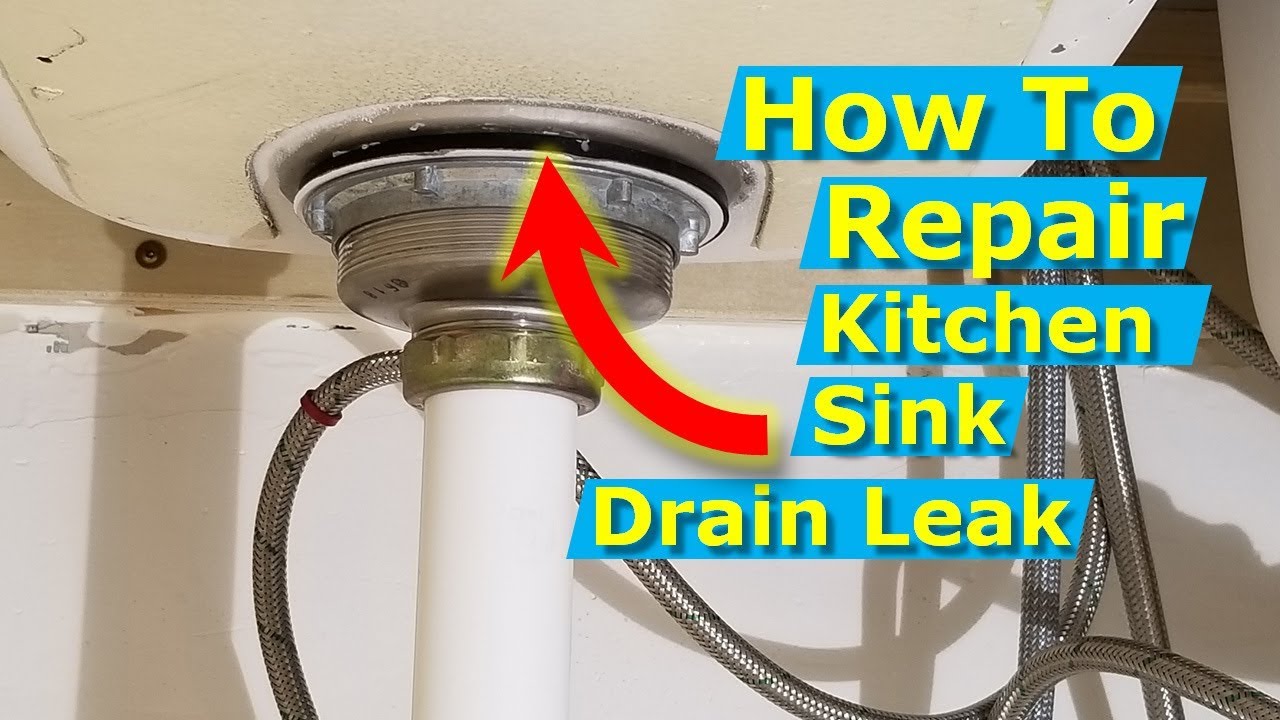
Image Source: i.ytimg.com
Pinpointing the Leak’s Origin
Before you can fix the leak, you need to find where it’s coming from. Kitchen sinks can leak from several places. Common culprits include the faucet, the pipes beneath the sink, the drain, and the garbage disposal.
Faucet Leaks: The Usual Suspects
The faucet is often the most common source of kitchen sink leaks. Leaks can manifest as a drip from the spout or water pooling around the base of the faucet.
Why Faucets Leak
- Worn Washers: Older faucets often use rubber washers to seal the valve seat. Over time, these washers can harden, crack, or wear out, allowing water to seep through.
- Faulty Cartridge: Many modern faucets, especially single-handle models, use a cartridge to control water flow and temperature. A worn or damaged cartridge can lead to leaks.
- Worn O-Rings: O-rings are small rubber rings that create a seal around moving parts within the faucet, like the spout. If an O-ring wears out, it can cause leaks.
- Loose Connections: Sometimes, the connections where the water supply lines meet the faucet can become loose, leading to drips.
How to Address Faucet Leaks
1. Shut Off the Water Supply:
The very first step for any sink repair is to turn off the water. Look for shut-off valves located under the sink, usually on the hot and cold water lines leading to the faucet. Turn them clockwise until they stop. If you can’t find these valves or they don’t work, you’ll need to shut off the main water supply to your house.
2. Tighten Faucet Connections:
Sometimes, a leak at the base of the faucet is simply due to loose connections.
- Check the Spout Base: If water is leaking around the base of the spout, try gently tightening the mounting nuts beneath the sink that hold the faucet in place.
- Examine Supply Lines: Ensure the connections for the hot and cold water supply lines are snug. Use a wrench to tighten them slightly, but be careful not to overtighten, as this can damage the fittings.
3. Repair Dripping Faucet (Spout Drips):
This often involves replacing internal parts.
- Identify Your Faucet Type: Knowing whether you have a compression faucet, cartridge faucet, ball faucet, or ceramic disc faucet will help you get the right replacement parts.
- Disassemble the Faucet: For compression faucets, you’ll likely need to remove the handle, then unscrew a packing nut and the stem. For cartridge faucets, you’ll typically remove the handle and then a retaining clip or nut to pull out the cartridge.
- Replace Washer or Cartridge:
- For Washers: If your faucet has a stem with a washer, locate the old washer at the bottom of the stem. Remove the screw holding it in place and replace it with a new, identical washer. You might also want to replace the O-ring on the stem at this time.
- For Cartridges: If you have a faulty cartridge, take the old one to a hardware store to find an exact match. Once you have the new cartridge, insert it into the faucet body, ensuring it’s oriented correctly.
- Reassemble and Test: Put the faucet back together, turn on the water supply slowly, and check for leaks.
Table 1: Common Faucet Leak Causes and Solutions
| Leak Location | Likely Cause | Solution |
|---|---|---|
| Drip from Spout | Worn washer/O-ring | Replace washer and/or O-ring in the faucet stem. |
| Drip from Spout | Faulty cartridge | Remove and replace the faucet cartridge. |
| Water at Faucet Base | Loose mounting nuts | Tighten nuts holding the faucet to the sink. |
| Water at Faucet Base | Loose supply line | Slightly tighten connections of water supply lines to the faucet. |
| Leak from Handle | Worn O-ring | Disassemble handle and replace worn O-ring. |
| Leak from Handle | Loose packing nut | Tighten packing nut under the handle. |
Leaky Pipes Under the Sink
The network of pipes beneath your kitchen sink is another common place for leaks. These can range from minor drips to more significant leaks.
Why Pipes Leak
- Loose Connections: Pipe fittings, especially those made of plastic, can loosen over time.
- Cracked or Damaged Pipes: Pipes can develop cracks due to age, freezing temperatures, or physical impact.
- Worn Seals or Gaskets: The seals and gaskets at various connection points can degrade.
- Corrosion: Metal pipes can corrode, leading to leaks.
How to Address Leaky Pipes
1. Shut Off the Water Supply:
As always, ensure the water is turned off.
2. Identify the Source:
Dry all the pipes and fittings thoroughly with a rag. Then, place dry paper towels around all connections and watch carefully to see where the first drop of water appears.
3. Tighten Connections:
For plastic PVC pipes, gently try to tighten the slip nuts or threaded connections. For metal pipes, use a pipe wrench to snug up any loose fittings. Be cautious not to overtighten.
4. Temporary Fixes:
If tightening doesn’t work, or if the pipe itself is cracked, you might need a temporary fix while you plan for a permanent repair.
- Plumber’s Tape (PTFE Tape): This is excellent for sealing threaded pipe connections. Unscrew the fitting slightly, wrap plumber’s tape clockwise around the threads, and then retighten.
- Pipe Repair Clamps: These are metal clamps with a rubber lining that can be placed over a small crack or hole in a pipe to create a temporary seal.
- Repair Tape: Specialized waterproof repair tapes can be wrapped tightly around a leaking pipe.
5. Permanent Repairs:
For more serious pipe issues, you’ll likely need to replace the faulty section of pipe or fitting. This might involve cutting out the damaged part and installing new components. If you’re not comfortable with this, it’s time to call a plumber.
The Drain: A Frequent Source of Drips
Leaks around the drain assembly, particularly at the sink’s flange or where the drain connects to the P-trap, are common.
Why Drains Leak
- Loose Strainer/Flange: The metal strainer at the bottom of the sink basin might be loose, allowing water to seep out.
- Damaged Plumber’s Putty: Plumber’s putty is used to seal the gap between the sink basin and the drain flange. If it dries out or cracks, leaks can occur.
- Loose P-Trap Connections: The P-trap (the U-shaped pipe) has several slip nuts that can loosen.
- Cracked or Damaged P-Trap: The P-trap itself can crack, especially if made of plastic.
How to Address Drain Leaks
1. Place a Bucket:
Put a bucket under the P-trap and any other drain connections to catch any water.
2. Tighten Drain Connections:
Try gently tightening the large plastic slip nuts that connect the P-trap to the tailpiece (the pipe coming directly from the sink drain) and the wall drainpipe.
3. Re-sealing the Drain Flange:
If the leak is around the drain opening in the sink basin:
* Remove the Strainer: Unscrew the retaining nut under the sink that holds the drain assembly in place. You might need a pipe wrench or a special drain wrench for this. Once the nut is off, you should be able to lift the drain strainer out from the top of the sink.
* Clean and Re-apply Putty: Scrape away all the old plumber’s putty from the underside of the sink and around the drain opening. Clean the area thoroughly. Roll a new rope of plumber’s putty and place it around the underside of the new drain flange or strainer.
* Install New Drain Assembly: Press the new drain assembly firmly into the sink opening. From underneath, install the new gasket, washer, and retaining nut, tightening them securely. Wipe away any excess putty that squeezes out around the flange in the sink basin.
* Reconnect and Test: Reassemble the P-trap and other drain pipes. Turn on the water and check for leaks.
4. Unclog Drain Issues:
While not directly a leak, a clogged drain can cause water to back up and overflow, leading to a perceived leak.
- Simple Methods: Try using a plunger or a mixture of baking soda and vinegar followed by hot water.
- Drain Snake: For tougher clogs, a drain snake can be effective.
- Chemical Drain Cleaners: Use these sparingly and follow instructions carefully, as some can damage pipes over time.
Table 2: Common Drain Leak Causes and Solutions
| Leak Location | Likely Cause | Solution |
|---|---|---|
| Around Sink Drain | Loose strainer nut | Tighten the nut holding the drain assembly under the sink. |
| Around Sink Drain | Dried/cracked plumber’s putty | Remove old putty, re-seal the drain flange with new plumber’s putty. |
| P-Trap Connections | Loose slip nuts | Tighten the slip nuts connecting the P-trap to the tailpiece and wall pipe. |
| P-Trap Connections | Worn gasket/washer | Replace the rubber gaskets inside the slip nuts. |
| P-Trap Itself | Crack in the pipe | Replace the damaged section of the P-trap. |
| Water Backing Up | Clogged drain | Use a plunger, baking soda/vinegar, or a drain snake to clear the obstruction. |
Garbage Disposal Leaks
Garbage disposals can also be a source of leaks, often originating from the connection to the sink or the disposal unit itself.
Why Garbage Disposals Leak
- Leaking Flange Seal: The seal between the disposal and the sink flange can fail.
- Cracked Disposal Housing: The unit itself might develop a crack.
- Loose Connections: Plumbing connections to the disposal can loosen.
- Faulty Dishwasher Hose Connection: If your dishwasher drains into the disposal, the hose connection can leak.
How to Repair Garbage Disposal Leaks
1. Turn Off Power:
Crucially, before working on a garbage disposal, turn off the power to the unit at your electrical panel (breaker box). This is a vital safety step.
2. Shut Off Water Supply:
Turn off the water supply valves under the sink.
3. Identify the Leak Source:
Dry the disposal unit and the surrounding pipes. Look for the origin of the water.
- Leaking from Top: If water is leaking from the very top, where it connects to the sink, the flange seal or mounting assembly might be the issue. This often requires disassembling the disposal from the sink.
- Leaking from Side/Bottom: Leaks from the side or bottom could indicate a crack in the housing or a loose plumbing connection. Check the connections for the drain pipe and the dishwasher hose if applicable.
4. Tighten Connections:
Check and gently tighten any visible plumbing connections.
5. Repair Garbage Disposal Leaks:
* Leaking Flange Seal: This is a common issue. You’ll need to detach the disposal from the sink mounting assembly. This usually involves loosening a mounting ring. Once detached, clean off old putty and sealant from the sink flange and the disposal’s mounting surface. Apply new plumber’s putty or a silicone sealant to the flange, reattach the disposal, and tighten the mounting ring securely.
* Loose Drain Pipe Connection: If the leak is from the pipe connected to the disposal’s side outlet, ensure the slip nut is tight and the gasket is in good condition.
* Dishwasher Hose Connection: Check the clamp securing the dishwasher hose to the disposal’s inlet. Tighten the clamp or replace it if it looks worn.
* Cracked Housing: If the disposal unit itself is cracked, it usually needs to be replaced. This is a more involved repair and might be best handled by a professional.
6. Reassemble and Test:
Reconnect all pipes, turn the water supply back on, and then restore power to the disposal. Test the disposal with a small amount of water.
Table 3: Garbage Disposal Leak Causes and Solutions
| Leak Location | Likely Cause | Solution |
|---|---|---|
| From Top (under sink) | Loose mounting ring | Tighten the mounting ring assembly. |
| From Top (under sink) | Failed sink flange seal | Detach disposal, clean flange and disposal, re-seal with plumber’s putty, reassemble and tighten mount. |
| From Side Outlet | Loose drain pipe connection | Tighten slip nut, check/replace gasket. |
| From Dishwasher Hose | Loose hose clamp | Tighten or replace the clamp connecting the dishwasher hose. |
| From Disposal Unit | Crack in the housing | Replace the garbage disposal unit. |
| Leaking Water | Faulty O-ring on disposal body | May require disassembly and replacement of O-ring, or replacement of the unit. |
Essential Tools and Materials for Sink Repairs
Having the right tools and materials on hand can make the repair process much smoother and faster.
Common Tools You’ll Need:
- Adjustable Wrench: For various nuts and fittings.
- Pipe Wrench: For larger pipe fittings.
- Basin Wrench: A specialized tool for reaching nuts in tight spaces behind the sink.
- Pliers: Standard pliers and needle-nose pliers are useful.
- Screwdrivers: Both Phillips and flathead.
- Bucket: To catch water.
- Rags or Old Towels: For drying and cleaning.
- Utility Knife: For cutting old sealant or putty.
- Plumber’s Tape (PTFE Tape): For sealing threaded pipe connections.
- Plumber’s Putty or Silicone Sealant: For sealing drain flanges.
- Replacement Parts: Washers, O-rings, cartridges, or pipe sections, depending on the problem.
When to Call a Professional
While many sink leaks are DIY-friendly, there are times when it’s best to call a plumber:
- Major Pipe Damage: If you discover significant corrosion or cracks in your main water supply pipes or drain lines.
- Uncertainty: If you’ve tried to diagnose the leak but are unsure of the cause or the repair process.
- Lack of Proper Tools: If you don’t have the specialized tools like a basin wrench and don’t want to buy them for a one-time fix.
- Persistent Leaks: If you’ve attempted a repair and the leak continues, a professional can identify what might have been missed.
- Water Damage: If the leak has already caused significant water damage to your cabinets or subfloor.
Preventative Measures to Avoid Future Leaks
Once you’ve fixed your leaky sink, taking steps to prevent future problems is wise.
- Regular Inspections: Periodically check under your sink for any signs of moisture or drips.
- Avoid Harsh Chemicals: Be mindful of the drain cleaners you use. Harsh chemicals can degrade pipes and seals over time.
- Don’t Force the Faucet: Avoid running the faucet too hard or leaving it on unnecessarily.
- Address Minor Leaks Promptly: Don’t ignore small drips. A small leak can often be a precursor to a larger problem.
- Check Aerators: Unscrew and clean faucet aerators periodically. Mineral buildup can sometimes affect water flow and put pressure on internal components.
Frequently Asked Questions (FAQ)
Q1: How often should I replace faucet washers?
A: Faucet washers don’t have a set replacement schedule. They should be replaced when they start to wear out and cause a drip. You’ll notice the drip as the primary indicator.
Q2: Can I use Teflon tape on all pipe connections?
A: Teflon tape (plumber’s tape) is best used on threaded pipe connections, particularly metal ones. For compression fittings or plastic slip-nut connections, ensure the rubber gaskets or seals are in good condition rather than relying on tape.
Q3: What’s the difference between plumber’s putty and silicone sealant for drains?
A: Plumber’s putty is a soft, pliable compound traditionally used to seal the gap between the sink basin and the drain flange. It remains somewhat flexible. Silicone sealant is a more rigid adhesive sealant that can also be used for this purpose and is often preferred for materials like granite or quartz countertops where putty might stain. Always check the manufacturer’s recommendation for your specific sink material.
Q4: My garbage disposal is humming but not grinding. Is this a leak issue?
A: A humming but not grinding disposal usually indicates a jam. Ensure the power is off at the breaker box first. Then, use an Allen wrench (often supplied with the disposal) in the center hole on the bottom of the unit to manually turn the motor shaft and dislodge the obstruction. If it’s still humming after clearing a potential jam, the motor might be failing, which is a more serious issue. Leaks are a separate problem from a jammed disposal.
Q5: How do I know if I need a new faucet or just a repair part?
A: If your faucet is old, corroded, or difficult to operate, replacing the entire faucet might be more cost-effective in the long run than repeatedly replacing worn-out parts. However, if the faucet body is in good condition and the leak is due to a specific component like a worn O-ring or faulty cartridge, a simple repair is usually sufficient.
By following these steps, you can confidently tackle many common kitchen sink leaks and keep your kitchen dry and functional. Remember to always prioritize safety by turning off the water and power when necessary.