
The ideal amount of room around a kitchen island is at least 36 inches (91.4 cm) for walkways and 42-48 inches (107-122 cm) for work zones and seating areas. Getting the spacing right is crucial for a functional and comfortable kitchen. This guide will help you navigate the specifics of island spacing requirements and ensure your kitchen island traffic flow is smooth and safe. We’ll cover everything from the minimum space for kitchen island setups to detailed kitchen island dimensions guide and essential kitchen island layout guidelines.
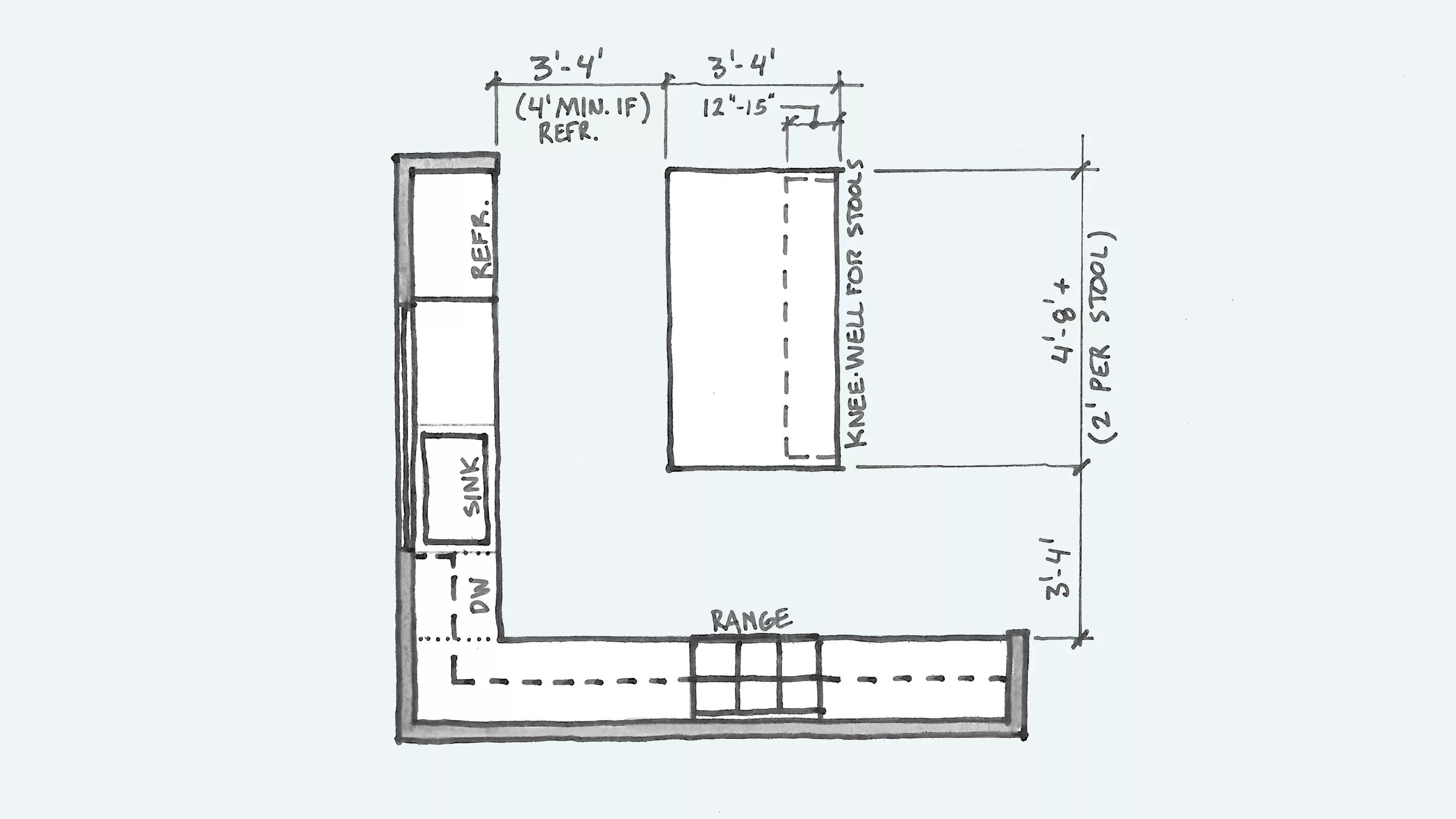
Image Source: www.boardandvellum.com
Deciphering Kitchen Island Clearance Needs
A kitchen island is often the heart of a home, a central hub for cooking, gathering, and socializing. However, without adequate kitchen island clearance, it can quickly become a bottleneck, hindering movement and causing frustration. Proper spacing ensures that your kitchen remains a pleasure to use, not a hazard.
The Importance of Walkway Around Island
The space you leave for a walkway around island is arguably the most critical element. This is the path people will take to move between the island, countertops, appliances, and doorways. Cramped walkways lead to bumped elbows, dropped items, and a general feeling of being confined.
- Minimum Walkway Width: Aim for a minimum of 36 inches (91.4 cm). This allows for one person to comfortably walk past.
- Ideal Walkway Width: 42-48 inches (107-122 cm) is even better. This width allows for two people to pass each other or for someone to walk past while another person is working at the island.
- High-Traffic Areas: If your kitchen is a major thoroughfare or has multiple cooks, consider widening walkways to 54 inches (137 cm) or more.
Island Work Zone Size Considerations
The “work zone” refers to the areas around the island where you’ll be actively preparing food, cooking, or cleaning. This includes the space needed to open appliance doors (like ovens or dishwashers), pull out drawers, and have enough room to stand and work comfortably.
- Primary Work Zone: This is the space directly in front of your main island prep area. You’ll need at least 42 inches (107 cm) here to allow for comfortable movement and access.
- Appliance Clearance: Ensure you have enough space to open appliance doors fully. For a dishwasher, this means at least 48 inches (122 cm) from the edge of the island to the appliance. For an oven, this also typically requires 48 inches (122 cm).
- Secondary Walkways: Even if not a primary work zone, areas where people might stand briefly, like waiting for water to boil or chatting, should ideally have at least 36 inches (91.4 cm) of space.
Seating Clearance for Island Needs
If you plan to incorporate seating at your kitchen island, this adds another layer of spatial planning. People need room to pull out chairs, sit comfortably, and stand up without bumping into the island or the wall behind them.
- Chair Pull-Out Space: Allow 15 inches (38 cm) for the depth of the chair when pushed in.
- Seating Clearance: You need an additional 24-30 inches (61-76 cm) behind the pulled-out chair for people to sit and move around comfortably. This means a total of 39-45 inches (99-114 cm) from the edge of the island to the wall or obstacle behind the seating.
- Aisle Width with Seating: If seating is on a primary walkway, aim for a total of 60 inches (152 cm) from the island edge to the wall/obstacle for comfortable flow.
Island Work Zone Size: Beyond the Countertop
It’s not just about the counter space. Think about the island work zone size as the entire area you’ll use to perform tasks. This includes the depth of your island and the surrounding clearance.
- Standard Island Depth: Most islands are 24-36 inches deep.
- Counter Overhang Space: When planning seating, remember to factor in counter overhang space. A typical overhang for comfortable seating is 12 inches. This means if your island base is 24 inches deep, with a 1.5-inch countertop, and a 12-inch overhang, the total depth from the front of the island to the seating edge is 37.5 inches. You still need that 24-30 inches behind that for seating.
Key Kitchen Island Dimensions Guide
The physical size of your island plays a direct role in how much space you need around it. A massive island in a small kitchen will inevitably lead to cramped conditions, while a tiny island in a large kitchen might feel lost and offer little functionality. This kitchen island dimensions guide will help you visualize.
Standard Island Sizes
- Small Islands: Often around 3 feet (91 cm) by 6 feet (183 cm). These are suitable for smaller kitchens or as a secondary prep area.
- Medium Islands: Typically 3 feet (91 cm) by 7 feet (213 cm) to 4 feet (122 cm) by 8 feet (244 cm). These offer a good balance of prep space and seating.
- Large Islands: Can be 5 feet (152 cm) by 9 feet (274 cm) or even larger. These are best for spacious, open-plan kitchens.
The Impact of Island Shape on Spacing
The shape of your island also influences the necessary clearances.
- Rectangular Islands: The most common. Spacing requirements are straightforward as outlined above.
- L-Shaped Islands: These can offer more prep space but require careful consideration of corner clearances to avoid awkward dead zones.
- U-Shaped Islands: Often integrated with cabinetry, these are more like peninsulas but can function as islands. Spacing between the “arms” of the U and adjacent cabinets is critical.
- Round or Oval Islands: These can sometimes allow for tighter clearances in certain areas due to their lack of sharp corners, but ensure enough space for chairs to rotate and for people to walk around.
Kitchen Island Layout Guidelines: Creating Flow
Effective kitchen island layout guidelines are essential for maximizing functionality and ensuring a pleasant user experience. It’s about more than just placing an island; it’s about integrating it seamlessly into your kitchen’s overall design.
The Kitchen Work Triangle and Island Placement
Historically, the kitchen work triangle (sink, refrigerator, stove) guided layout. While still relevant, islands can alter this dynamic.
- Island as a Work Zone: An island can serve as a primary prep zone, a cooking station (with a cooktop), or a cleanup hub (with a sink).
- Maintaining Flow: Ensure the island doesn’t block direct access between the main work triangle elements. For instance, if the island is between the sink and the refrigerator, make sure there’s ample space to move past it.
Optimizing Kitchen Island Traffic Flow
Good kitchen island traffic flow means no one is constantly bumping into each other or having to navigate tight squeezes.
- Key Pathways: Identify the main paths people will take:
- Refrigerator to Sink
- Sink to Stove
- Refrigerator to Prep Area
- Dining Area to Kitchen
- Clearance Between Island and Perimeter Cabinets:
- Minimum: 36 inches (91.4 cm) is the absolute minimum for a one-person walkway.
- Recommended: 42-48 inches (107-122 cm) is ideal for comfortable passage and working.
- Between Island and Appliances: Ensure at least 48 inches (122 cm) clearance when appliance doors (refrigerator, oven, dishwasher) need to be open.
Considerations for Counter Overhang Space
The counter overhang space isn’t just for aesthetics; it’s crucial for comfortable seating and can impact the perceived size of your island.
- Seating Overhang: As mentioned, 12 inches is standard for comfortable seating. This means the countertop extends 12 inches beyond the island base cabinetry.
- Knee Space: Ensure there’s enough knee space. For standard seating, 15 inches of knee space is generally sufficient.
- Appliance Overhang: If your island houses appliances like a microwave or a pull-out trash bin, ensure the overhang doesn’t interfere with their operation.
Island Work Zone Size and Functionality
The island work zone size needs to support the intended use.
- Prep Zone: If you do a lot of chopping, a larger island surface with ample surrounding clearance (42-48 inches) is beneficial.
- Cooking Zone: If you have a cooktop on the island, you’ll need extra clearance around it for safety and to prevent burns from hot pans. This often means a minimum of 48 inches on all sides where people can stand.
- Cleanup Zone: If a sink is on the island, ensure there’s space for a dishwasher and that the workflow from prep to sink is logical.
Calculating Your Minimum Space for Kitchen Island
To determine the minimum space for kitchen island, you need to consider the island’s dimensions and the required clearances.
Formula for Total Kitchen Space Needed:
Island Length + (Clearance on Side 1) + (Clearance on Side 2) = Total Length Needed
Island Depth + (Clearance on Front) + (Clearance on Back) = Total Depth Needed
Let’s break this down with examples:
Example 1: Standard Walkway and Seating
- Island Dimensions: 3 ft (36 inches) wide x 6 ft (72 inches) long
- Seating: On one long side.
-
Requirements:
- Walkway on one long side: 36 inches
- Seating clearance on the other long side (includes chair pull-out and standing room): 42 inches (24 inches for sitting + 18 inches for walkway)
- Walkway on both short sides: 36 inches
-
Total Length Needed: 72 inches (island) + 36 inches (one short side) + 36 inches (other short side) = 144 inches (12 ft)
- Total Depth Needed: 36 inches (island) + 42 inches (seating side) + 36 inches (walkway side) = 114 inches (9.5 ft)
Therefore, for this island with seating, you would need a minimum kitchen space of approximately 12 ft x 9.5 ft.
Example 2: Kitchen Island with Two Working Sides
- Island Dimensions: 3 ft (36 inches) wide x 5 ft (60 inches) long
- No Seating, but active prep on both long sides.
-
Requirements:
- Walkway on one long side: 42 inches (work zone)
- Walkway on the other long side: 42 inches (work zone)
- Walkway on both short sides: 36 inches
-
Total Length Needed: 60 inches (island) + 36 inches (one short side) + 36 inches (other short side) = 132 inches (11 ft)
- Total Depth Needed: 36 inches (island) + 42 inches (work zone 1) + 42 inches (work zone 2) = 120 inches (10 ft)
For this island used primarily for working, you’d need a minimum kitchen space of approximately 11 ft x 10 ft.
Fathoming Different Kitchen Layouts with Islands
The best kitchen island layout guidelines depend heavily on your kitchen’s shape, size, and how you intend to use the island.
The Galley Kitchen with an Island
Galley kitchens are narrow. Adding an island here requires careful planning to avoid making the space unusable.
- Island Size: Opt for a narrower island.
- Clearances: Prioritize at least 36 inches for walkways on both sides of the island. Ideally, aim for 42 inches if possible, but this might be challenging in very narrow galleys.
- Functionality: A narrow island in a galley kitchen often serves as a prep surface or a place for a microwave, rather than a full dining spot.
The Open-Plan Kitchen with an Island
Open-plan kitchens offer more flexibility, but a poorly placed island can still disrupt the flow between kitchen, dining, and living areas.
- Defining Zones: An island can effectively define the kitchen zone within a larger open space.
- Clearances: Maintain generous clearances (42-48 inches) to ensure smooth movement between the kitchen and other living areas.
- Island as a Feature: Islands in open plans often double as a visual divider and a social hub, so ample space around it is key for entertaining.
The L-Shaped Kitchen with an Island
This layout can be very efficient, but the corner where the “L” meets needs attention.
- Island Placement: Avoid placing the island too close to the corner where it obstructs access to cabinetry or appliances.
- Clearances: Ensure adequate clearance between the island and both legs of the “L,” especially if seating is involved on the side facing the second leg.
Essential Island Spacing Requirements Summary
To consolidate, let’s recap the key island spacing requirements for various scenarios:
| Area | Minimum Clearance | Recommended Clearance | Notes |
|---|---|---|---|
| Walkway (One person passing) | 36 inches (91 cm) | 42 inches (107 cm) | Essential for basic movement. |
| Walkway (Two people passing/work zone) | 42 inches (107 cm) | 48 inches (122 cm) | Ideal for comfortable two-way traffic and working around the island. |
| Appliance Door Clearance | 42 inches (107 cm) | 48 inches (122 cm) | Crucial for opening dishwashers, ovens, and refrigerator doors fully without obstruction. |
| Seating Clearance (from island edge) | 36 inches (91 cm) | 39-45 inches (99-114 cm) | Includes chair pull-out (15 inches) and space behind the seated person (24-30 inches). |
| Walkway with Seating Adjacent | 48 inches (122 cm) | 60 inches (152 cm) | If seating is on a main walkway, this total distance is needed for comfortable passage around seated guests. |
| Island to Wall/Cabinetry | 36 inches (91 cm) | 42-48 inches (107-122 cm) | Same as walkway requirements. |
| Island to Cooktop (if on island) | 48 inches (122 cm) | 48 inches (122 cm) | Safety first! Provides space to move around a hot surface. |
| Counter Overhang Space (Seating) | 12 inches (30 cm) | 15 inches (38 cm) | Standard for comfortable dining. |
Frequently Asked Questions (FAQ)
Q1: What is the absolute minimum space for a kitchen island?
The absolute minimum for a functional walkway around a kitchen island is 36 inches. However, for a comfortable and safe kitchen, aim for at least 42 inches.
Q2: Can I fit a kitchen island in a small kitchen?
Yes, you can, but it requires careful planning. Opt for a smaller, narrower island (e.g., 24-30 inches wide). Ensure you maintain at least 36 inches of clearance on all sides for walkways. Consider a mobile island or a narrower, peninsula-style island if space is extremely limited.
Q3: How much counter overhang space do I need for seating?
For comfortable seating, you need at least a 12-inch counter overhang. If you want more legroom or a more luxurious feel, you can extend this to 15 inches.
Q4: What if my kitchen island has a sink and dishwasher?
If your island includes a sink and dishwasher, you’ll need to ensure ample clearance for the dishwasher door to open fully. This means a minimum of 48 inches between the island’s edge and the dishwasher. Also, ensure the workflow from prep to sink is logical.
Q5: How much space should be between my kitchen island and the stove?
If your stove is on the perimeter and your island is in the center, you need at least 42-48 inches of clearance to allow for comfortable movement and to avoid accidents. If the stove is on the island, you need 48 inches of clearance on all sides for safety.
Q6: What are typical kitchen island dimensions?
Typical island dimensions vary greatly, but common sizes range from 3×5 feet for smaller kitchens to 4×8 feet for medium to larger kitchens. The size is dictated by the kitchen space and the desired functionality.
Q7: Does the island work zone size differ if I’m just prepping versus cooking?
Yes. A prep zone typically needs 42-48 inches of clearance for comfortable movement. If your island has a cooktop, you’ll need 48 inches of clearance on all sides for safety and accessibility.
Q8: How do I ensure good kitchen island traffic flow?
Prioritize clear, unobstructed pathways. Ensure at least 36-42 inches of space around the island. Avoid placing the island where it blocks access to key areas like the refrigerator, sink, or oven.
By carefully considering these kitchen island dimensions guide points and kitchen island layout guidelines, you can create a beautiful, functional, and safe kitchen that you’ll love for years to come. Remember, proper kitchen island clearance is the key to a well-loved and well-used space.