
The standard kitchen counter height in most homes is 36 inches (91.44 cm) from the finished floor to the top of the counter. This standard countertop height is a widely accepted norm that aims to accommodate the average adult comfortably for most kitchen tasks. However, the question of “How tall is a standard kitchen counter?” is just the starting point for creating a truly functional and ergonomic kitchen space. While 36 inches is the common answer, knowing why this measurement is so prevalent and when you might deviate from it is crucial for any kitchen renovation or new build.
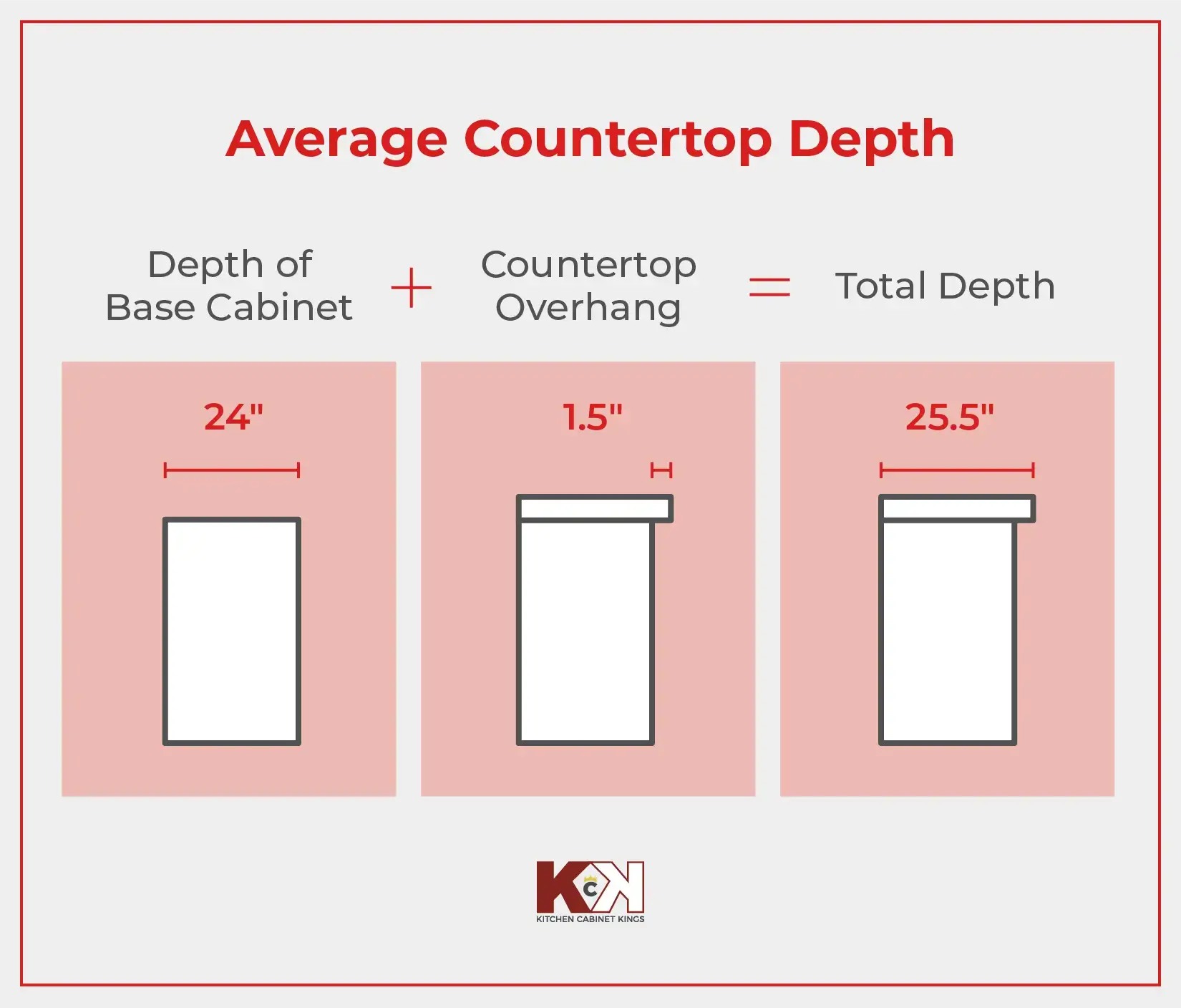
Image Source: cdn.kitchencabinetkings.com
Fathoming the 36-Inch Benchmark
The 36-inch kitchen work surface height isn’t an arbitrary number. It’s a measurement born out of decades of ergonomic research and practical experience. This height is designed to allow most adults to stand and work comfortably without excessive bending or reaching.
Why 36 Inches?
- Ergonomics for the Average User: The 36-inch height is ideal for the average adult when performing tasks like chopping vegetables, mixing ingredients, or rolling dough. It promotes a more upright posture, reducing strain on the back and shoulders.
- Universal Appeal: This standard countertop height ensures that most people, regardless of their height, can use the counter surface without major discomfort. It’s a safe bet for resale value and general usability.
- Appliance Integration: Many standard kitchen appliances, such as dishwashers and base cabinets, are designed to fit seamlessly under a 36-inch counter. This simplifies the design and installation process.
- Cabinetry Compatibility: Standard base cabinets are typically 34.5 inches tall. When you add a standard countertop thickness of 1.5 inches, you arrive at the 36-inch kitchen counter height.
Historical Context
The evolution of kitchen design has seen various countertop dimensions. Early kitchens often featured much lower work surfaces, reflecting the needs and activities of the time. As kitchens became more sophisticated and appliances more common, the need for a consistent and ergonomic standard workspace height emerged. The 36-inch standard solidified as a practical and user-friendly compromise.
Beyond the Standard: Customizing Your Kitchen Counter Height
While 36 inches is the average kitchen counter height, it’s not a one-size-fits-all solution. Your personal needs, the heights of those who will primarily use the kitchen, and the types of tasks performed can all influence the ideal kitchen counter height.
Adapting to Your Needs
- For Shorter Individuals: If the primary cook is significantly shorter than average, a slightly lower counter might be more comfortable. Lowering the counter can reduce the need to hunch over, promoting better posture and reducing fatigue.
- For Taller Individuals: Conversely, taller individuals may find a standard 36-inch counter too low. Working at a counter that is too low can lead to back pain and discomfort. Raising the counter can provide a more natural working position.
- Multi-Generational Households: In homes where people of varying heights regularly use the kitchen, consider the needs of the shortest and tallest individuals. Sometimes, a compromise height is best, or perhaps a kitchen island with a different counter height could offer an alternative.
Considering Specific Tasks
Certain kitchen activities benefit from different working heights:
- Baking: Many bakers prefer a slightly lower counter for tasks like kneading dough or rolling out pastry. This allows them to use their body weight more effectively.
- High-Reach Tasks: If you frequently use high cabinets or need to reach for items stored above, a slightly higher counter might provide a more comfortable reach.
Variations in Countertop Thickness and Base Cabinets
The kitchen counter height is a combination of the base cabinet height and the countertop material’s thickness. Understanding these components is key to achieving your desired counter height guidelines.
Base Cabinet Heights
Standard base cabinets typically come in heights of:
- 30 inches: Often used for wall cabinets that extend to the floor.
- 34.5 inches: This is the most common height for standard base cabinets, designed to reach 36 inches with a typical countertop.
- 36 inches: Less common for standard base cabinets but available for specific designs or when a taller counter is desired without modification.
Countertop Thickness
Countertop materials vary in thickness, which directly impacts the final kitchen work surface height:
- Laminate: Typically 1.5 inches thick.
- Solid Surface (e.g., Corian): Often 0.75 inches or 1.5 inches thick.
- Granite, Quartz, Marble: Commonly available in 0.75 inches (2 cm) or 1.25 inches (3 cm) thickness.
- Butcher Block: Can range from 1.5 inches to 3 inches or more.
- Concrete: Often poured to 1.5 inches or 2 inches thick.
Table 1: Calculating Standard Kitchen Counter Height
| Base Cabinet Height | Countertop Thickness | Total Kitchen Counter Height |
|---|---|---|
| 34.5 inches | 1.5 inches | 36 inches |
| 34.5 inches | 0.75 inches | 35.25 inches |
| 34.5 inches | 1.25 inches | 35.75 inches |
| 30 inches | 1.5 inches | 31.5 inches |
| 30 inches | 0.75 inches | 30.75 inches |
This table illustrates how different combinations of cabinet and countertop thickness affect the final standard countertop height.
Exploring Different Counter Heights and Their Uses
While 36 inches is the standard, experimenting with other heights can unlock greater comfort and functionality.
Lower Countertops (e.g., 30-34 inches)
- Benefits:
- Ergonomics for Shorter Users: Excellent for individuals under 5’4″.
- Baking and Kneading: Provides a more natural height for tasks requiring leverage.
- Children’s Areas: A lower section can be designated for children’s activities, like homework or food prep at their level.
- Considerations:
- May require custom base cabinets or thicker countertop materials to achieve.
- Standard appliance heights might need careful consideration.
Higher Countertops (e.g., 37-42 inches)
- Benefits:
- Ergonomics for Taller Users: Ideal for individuals over 6’0″.
- Reduced Bending: Can make tasks like chopping and stirring more comfortable for taller people.
- Integrated Seating: Higher counters are often used for breakfast bars or islands with stools, providing a comfortable perch.
- Considerations:
- May require custom cabinetry or using thicker countertop materials.
- Can make reaching lower cabinets more challenging.
Key Countertop Dimensions Beyond Height
While height is paramount, other dimensions of your kitchen counters play a significant role in their usability and aesthetics.
Counter Depth
The standard counter depth for kitchen countertops is 25 inches for base cabinets. This depth provides ample space for:
- Appliance Placement: Standard appliances like ranges, dishwashers, and refrigerators are designed to fit within this depth.
- Work Area: It offers a generous work surface in front of the backsplash, allowing for comfortable prep work and appliance use.
- Cabinet Accessibility: This depth ensures that upper cabinets and wall cabinets are easily accessible without obstruction.
Variations in Counter Depth:
- Standard Base Cabinets: Typically 24 inches deep. This, combined with a 1-inch overhang on the front and sometimes a slight overhang at the back, results in a 25-inch counter depth.
- Wider Counters: In some cases, especially for islands or peninsulas, a deeper counter (e.g., 30 inches or more) can provide extra workspace or seating.
- Shallow Counters: In very small kitchens or for specific applications, shallower counters might be used, but this can limit workspace and appliance options.
Counter Overhang
The overhang refers to the portion of the countertop that extends beyond the face of the base cabinets.
- Standard Front Overhang: Typically 1.5 inches. This provides a comfortable edge to work against and helps hide the cabinet face.
- Side Overhang: Often around 1 inch, but can be adjusted for aesthetic reasons or to align with adjacent features.
- Seating Overhang: For breakfast bars or islands where people will sit, a deeper overhang is necessary, usually ranging from 10 inches to 15 inches, depending on the seating height and legroom required.
Designing for Different Zones in Your Kitchen
A well-designed kitchen often incorporates different kitchen work surface height zones to cater to various tasks and users.
The Prep Zone
This is where most chopping, slicing, and dicing occur. The standard kitchen counter height of 36 inches is generally ideal here. If you do a lot of baking, you might consider a section of countertop that is 2-3 inches lower.
The Cooking Zone
The counter space around the range or cooktop is the cooking zone. Here, the standard 36-inch height is usually preferred to allow comfortable access to the cooking surface and to easily place pots and pans.
The Cleaning Zone
The area around the sink can also benefit from the standard 36-inch height, allowing for comfortable loading and unloading of the dishwasher and easy access to the sink basin.
The Serving/Eating Zone
For islands or peninsulas designed for casual dining, a counter height of 40-42 inches (often referred to as bar height) is common, as it pairs well with standard bar stools. Alternatively, a counter height of 30-31 inches (table height) is suitable for dining chairs.
Implementing Custom Counter Height Guidelines
When planning your kitchen, consider these steps to ensure your countertop dimensions are perfectly suited to you.
- Measure Yourself and Primary Users: Stand comfortably and measure the distance from your elbow to the floor. A good starting point for an ergonomic counter height is often 3-6 inches below your elbow height.
- Consider Your Activities: Think about the tasks you perform most often. Do you bake frequently? Do you do a lot of chopping? Your activities can inform your ideal height.
- Envision Your Space: How will the counters integrate with your appliances and cabinetry? Consider the overall flow and aesthetic.
- Consult Professionals: Kitchen designers and cabinet makers can provide invaluable advice and help you translate your needs into practical design solutions, ensuring adherence to good counter height guidelines.
Frequently Asked Questions About Kitchen Counter Height
What is the standard kitchen counter height?
The standard kitchen counter height is 36 inches (91.44 cm) from the finished floor to the top of the counter.
Can I have different counter heights in my kitchen?
Yes, absolutely! It’s increasingly common and often beneficial to have varied counter heights in different zones of your kitchen to improve ergonomics and functionality for specific tasks or users.
What is the ideal kitchen counter height for baking?
Many bakers find an ideal kitchen counter height that is 2-3 inches lower than the standard 36 inches. This typically falls between 33 and 34 inches, making it easier to knead dough and use body weight for rolling.
What are the standard counter depths?
The standard counter depth for base cabinets is typically 25 inches, which includes the cabinet depth (usually 24 inches) and an overhang.
How do I choose the right counter height if I’m tall?
If you are tall (over 6 feet), you may find a standard countertop height of 36 inches to be too low. Consider increasing the height to 37-40 inches by using taller base cabinets or thicker countertop materials.
What is the difference between standard, bar, and counter height?
- Standard Counter Height: 36 inches.
- Counter Height Dining: Around 30-31 inches, used with dining chairs.
- Bar Height: Around 40-42 inches, used with bar stools.
- Spectator/Gathering Height: Around 44-46 inches, used with taller stools.
Does countertop thickness affect the final height?
Yes, the thickness of your countertop material is a critical factor in achieving the desired final kitchen counter height. A thicker material will result in a higher overall work surface.
By carefully considering these countertop dimensions and counter height guidelines, you can create a kitchen that is not only beautiful but also a joy to work in, perfectly tailored to your unique needs and preferences.