
What is Kitchen Bouquet used for in gravy? Kitchen Bouquet is primarily used as a natural browning agent and flavor enhancer for gravies, sauces, stews, and roasted meats, giving them a rich, appetizing brown color and a deeper, more savory taste. This guide will help you master the art of using Kitchen Bouquet to achieve the perfect hue for your gravy.
Achieving that ideal, rich brown color in your gravy can sometimes be a culinary challenge. While the base ingredients like pan drippings, stock, and flour contribute to the color, they don’t always deliver the deep, inviting shade that makes a dish truly shine. This is where Kitchen Bouquet comes in, a trusted ally for home cooks and professional chefs alike. But the question that often arises is: how much Kitchen Bouquet to use in gravy? It’s a simple query with a nuanced answer, as the “perfect” amount depends on your desired color intensity, the volume of your gravy, and the specific ingredients you’re working with.
This comprehensive guide will delve deep into the world of Kitchen Bouquet and its role in gravy making. We’ll explore everything from the basics of what this popular product is and what it does for your gravy, to practical tips on dosage, application, and achieving various shades of brown. Whether you’re aiming for a light, subtle tan or a deep, mahogany hue, we’ll equip you with the knowledge to use Kitchen Bouquet effectively, transforming your gravy from bland to beautifully bronzed.
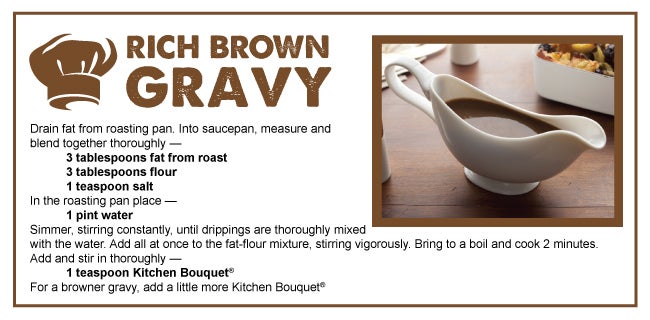
Image Source: www.thecloroxcompany.com
Deciphering the Magic of Kitchen Bouquet
Before we talk about how much to use, let’s get a clear picture of what Kitchen Bouquet is and why it’s so effective.
What is Kitchen Bouquet?
Kitchen Bouquet is a liquid browning sauce made from caramelized vegetables and spices. Its primary ingredients typically include water, caramel color, salt, vegetable juice concentrate (like onion, celery, and parsley), and spices. It’s important to note that it does not contain any artificial flavors or preservatives.
What is Kitchen Bouquet Used For in Gravy?
In gravy, Kitchen Bouquet serves two main purposes:
- Color Enhancement: Its most prominent function is to provide a rich, appealing brown color. Natural pan drippings can sometimes be too light, especially if you’re not roasting a dark meat or if you’ve had to degrease the pan heavily. Kitchen Bouquet fills this gap, giving your gravy that classic, appetizing look.
- Flavor Deepening: While its coloring properties are most recognized, Kitchen Bouquet also adds a subtle savory depth to gravies and other dishes. The caramelized vegetables and spices contribute a slight umami note that complements the overall flavor profile without overpowering it.
The Science Behind the Shade
The caramel color in Kitchen Bouquet is derived from a controlled heating process of sugars. This process creates complex flavor compounds and a deep brown pigment. When added to gravy, this pigment disperses, lending its color to the liquid. The other vegetable ingredients contribute subtle earthy and savory undertones, enhancing the overall taste.
How Much Kitchen Bouquet for Brown Gravy: Dosage and Application
Now, let’s get to the heart of the matter: the dosage. The general consensus is to start small and build up.
Starting Point: A Few Drops
For a standard batch of gravy (approximately 2-3 cups), begin with just 2-3 drops of Kitchen Bouquet. It’s incredibly concentrated, and a little goes a very long way. You can always add more, but you can’t take it out once it’s in.
Gradual Addition for Control
The best way to use Kitchen Bouquet for gravy is through gradual addition.
- Prepare Your Gravy Base: Make your gravy as you normally would, thickening it with flour or cornstarch and adding your liquid (stock, broth, water).
- Add Kitchen Bouquet: Stir in your initial 2-3 drops.
- Mix Thoroughly: Whisk the gravy well to ensure the Kitchen Bouquet is evenly distributed.
- Observe the Color: Let the gravy sit for about 30 seconds to a minute. The color will deepen slightly as it melds with the gravy.
- Assess and Adjust: Check the color against your desired shade. If it’s not brown enough, add another 1-2 drops, whisk, and observe again. Repeat this process until you achieve your target color.
Factors Influencing Dosage
Several factors can affect how much Kitchen Bouquet you might need:
- Volume of Gravy: A larger batch will naturally require more drops than a smaller one to achieve the same color intensity.
- Base Color: If your gravy base is already quite dark from rich pan drippings or a dark stock, you’ll need less Kitchen Bouquet. Conversely, if your base is very pale, you might need a bit more.
- Desired Darkness: This is the most crucial factor. Are you aiming for a light, golden-brown gravy or a deep, rich, almost mahogany color?
How Much Kitchen Bouquet for Darkest Gravy Color with Kitchen Bouquet?
To achieve the darkest gravy color with Kitchen Bouquet, you’ll still follow the gradual addition method, but you’ll continue adding drops until you reach your desired intensity. For a very dark gravy, you might end up using anywhere from 8 to 15 drops, or even slightly more, for a large batch (4-6 cups). Always remember to add one or two drops at a time and mix thoroughly. The key is patience and observation. You’re looking for that deep, inviting color that signals a robust flavor.
When to Add Kitchen Bouquet to Gravy
The timing of adding Kitchen Bouquet to gravy is also important for achieving the best results.
The Best Way to Use Kitchen Bouquet for Gravy
The best way to use Kitchen Bouquet for gravy is towards the end of the cooking process, after the gravy has been thickened and is simmering gently.
- Why the End? Adding it early might cause the color to subtly fade or change during prolonged simmering, although Kitchen Bouquet is quite stable. More importantly, adding it at the end allows you to accurately judge the color as the gravy is nearly complete. This way, you can fine-tune the shade precisely before serving.
- Avoid Boiling Vigorousy: Once you’ve added Kitchen Bouquet, avoid boiling the gravy vigorously. A gentle simmer is fine, but a rolling boil isn’t necessary and could potentially impact the color or flavor if too much is added.
Alternative Timing Considerations
While the end is generally best, some cooks prefer to add it earlier:
- With Pan Drippings: Some chefs add a drop or two to the pan drippings before adding flour to help caramelize the drippings further and build color from the start. This can add another layer of complexity, but it requires a bit more estimation.
- During Simmering: Adding it during the initial simmering phase after adding liquid and before thickening can also work, but again, it makes final color adjustments slightly more difficult.
For most home cooks, adding it in the final stages ensures the most control and predictable results.
Kitchen Bouquet Gravy Recipe: A Practical Example
Let’s illustrate with a basic Kitchen Bouquet gravy recipe to show you how it fits in.
This recipe is for a classic turkey gravy, but the principles apply to any gravy.
Yields: Approximately 3 cups
Prep time: 5 minutes
Cook time: 10 minutes
Ingredients:
- 3 tablespoons pan drippings (from roasted turkey, chicken, or beef)
- 3 tablespoons all-purpose flour
- 2 cups turkey or chicken stock (preferably homemade or low-sodium)
- 1/2 cup water or additional stock
- Salt and freshly ground black pepper to taste
- 2-5 drops Kitchen Bouquet (or more, to desired color)
Equipment:
- Medium saucepan
- Whisk
Instructions:
- Drain Drippings: If you have excess fat in your pan drippings, pour them through a fine-mesh sieve into a heatproof bowl. Spoon off about 3 tablespoons of the drippings into your saucepan, leaving the rest for another use or discarding. (If you don’t have pan drippings, you can use 3 tablespoons of butter).
- Make the Roux: Place the saucepan over medium heat. Add the flour to the drippings (or butter) and whisk constantly for about 1-2 minutes until a smooth paste forms. Cook the roux until it’s lightly golden brown. This step helps cook out the raw flour taste.
- Add Liquid Gradually: Slowly whisk in the stock, a little at a time, ensuring no lumps form. Once about half the liquid is incorporated and smooth, add the remaining stock and water.
- Simmer and Thicken: Bring the mixture to a gentle simmer, whisking constantly. Continue to simmer and whisk for 5-7 minutes, or until the gravy has thickened to your desired consistency. The roux needs time to cook and thicken properly.
- Color and Season: This is where adding Kitchen Bouquet to gravy becomes crucial. Remove the saucepan from the heat. Add 2 drops of Kitchen Bouquet and whisk thoroughly. Let it sit for 30 seconds to a minute. Assess the color. If you desire a darker shade, add another 1-2 drops, whisk again, and observe. Continue this process until you achieve your perfect brown hue.
- Season: Taste the gravy and season with salt and freshly ground black pepper as needed. Remember that pan drippings and stock can already be salty, so season cautiously.
- Serve: Serve the rich, brown gravy hot over your favorite dishes.
Variations for Different Gravies
- Beef Gravy: Use beef drippings and beef broth. You might need slightly more Kitchen Bouquet to match the natural color of beef.
- Chicken Gravy: Use chicken drippings and chicken broth. The color might be lighter naturally, so Kitchen Bouquet is very helpful here.
- Mushroom Gravy: Sauté mushrooms first for added flavor and color. You can even add a bit of mushroom broth for an extra earthy taste.
Achieving Specific Shades: A Visual Guide
The beauty of using Kitchen Bouquet is the control it offers. Here’s a rough guide to help you aim for specific shades:
| Desired Shade | Approximate Drops (per 2 cups liquid base) | Notes |
|---|---|---|
| Light Tan | 1-2 drops | Just enough to add a hint of warmth and polish. Often sufficient for lighter stocks or chicken. |
| Golden Brown | 3-5 drops | The classic, inviting color for most brown gravies. |
| Rich Brown | 6-10 drops | Deeper and more robust, excellent for beef or pork gravies. |
| Mahogany/Deep | 10-15+ drops | For those who love a very dark, intensely colored gravy, often seen with rich meat drippings. |
Important Note: These are approximate numbers. Always start with fewer drops than you think you’ll need and add more gradually. The color of your gravy base, the lighting in your kitchen, and your personal preference will all play a role.
Tips for Perfect Gravy Coloring with Kitchen Bouquet
Beyond just knowing how much to use, a few extra tips can elevate your gravy game.
Incorporating Kitchen Bouquet Effectively
- Dilute if Nervous: If you’re still hesitant about direct drops, you can mix your desired number of drops into a tablespoon of warm water or stock before adding it to the main gravy. This helps ensure a more even distribution, especially if you’re aiming for a very subtle color.
- Stirring is Key: Vigorous whisking ensures the Kitchen Bouquet disperses evenly. Avoid just pouring it in and expecting it to magically color the entire batch.
- Consistency Matters: Make sure your gravy is at the right consistency before you start adding Kitchen Bouquet. If it’s too thin, thicken it first. If it’s too thick, add a splash more liquid. The color will appear differently in a thinner versus thicker gravy.
Troubleshooting Common Issues
- Too Dark: Unfortunately, there’s no easy fix if you add too much Kitchen Bouquet. Your best bet is to try diluting the entire batch by adding more unsalted stock or water. You may need to re-thicken and re-season.
- Uneven Color: This usually happens if the Kitchen Bouquet isn’t whisked in thoroughly. If you notice streaks, keep whisking until it’s uniform.
- Color Fades: While rare, if you simmer the gravy intensely for a very long time after adding Kitchen Bouquet, the color might slightly fade. Adding it at the end minimizes this risk.
Does Kitchen Bouquet Affect Flavor?
In the recommended quantities, Kitchen Bouquet should not significantly alter the flavor of your gravy. Its purpose is primarily color, with a subtle background savory note. If you add too much, you might detect a slight caramelized or slightly bitter note, which is why starting low and slow is essential.
Frequently Asked Questions About Kitchen Bouquet in Gravy
Here are some common questions people have about using this popular browning agent.
Q1: Can I use Kitchen Bouquet for all types of gravy?
A: Yes, Kitchen Bouquet is versatile and can be used in turkey gravy, beef gravy, chicken gravy, pork gravy, and even vegetarian gravies where a richer color is desired.
Q2: Does Kitchen Bouquet contain MSG?
A: Traditional Kitchen Bouquet formulations do not contain MSG. Always check the product label for the most up-to-date ingredient information.
Q3: How long does Kitchen Bouquet last?
A: Once opened, Kitchen Bouquet can typically last for several years if stored in a cool, dark place, such as a pantry. Its concentrated nature means a little goes a long way, so a bottle often lasts a long time.
Q4: Can I make my own Kitchen Bouquet substitute?
A: Yes, you can create a DIY browning agent by caramelizing sugar yourself. Heat sugar in a dry pan until it melts and turns a deep brown (caramel). Carefully add a small amount of hot water to create a syrup. You can also add a pinch of salt and a splash of soy sauce or Worcestershire sauce for umami. However, achieving the exact balanced flavor and color of commercial Kitchen Bouquet can be tricky.
Q5: Is Kitchen Bouquet the only way to color gravy brown?
A: No, other methods include:
* Dark Roasting: Roasting meats at higher temperatures or for longer periods can create darker drippings.
* Dark Stocks/Broths: Using beef or dark chicken stock can contribute to a richer color.
* Worcestershire Sauce/Soy Sauce: A dash of these can add color and umami, but they also impart a distinct flavor that might not be desired in all gravies.
* Red Wine: Reducing red wine can add depth of color and flavor.
* Mushroom Powders/Extracts: These can add a deep brown hue and savory notes.
Kitchen Bouquet offers a convenient and flavor-neutral way to control the color specifically.
Conclusion: Mastering the Art of Gravy Color
Achieving the perfect color in your gravy is an attainable goal with the help of Kitchen Bouquet. By understanding its purpose, starting with minimal amounts, and adding it gradually, you can precisely control the shade to complement your culinary creations. Remember that practice makes perfect. The next time you whip up a batch of gravy, take the time to experiment with Kitchen Bouquet, and you’ll soon find your signature shade for that flawlessly browned, delicious gravy. It’s a small addition that makes a big visual and flavorful impact.