
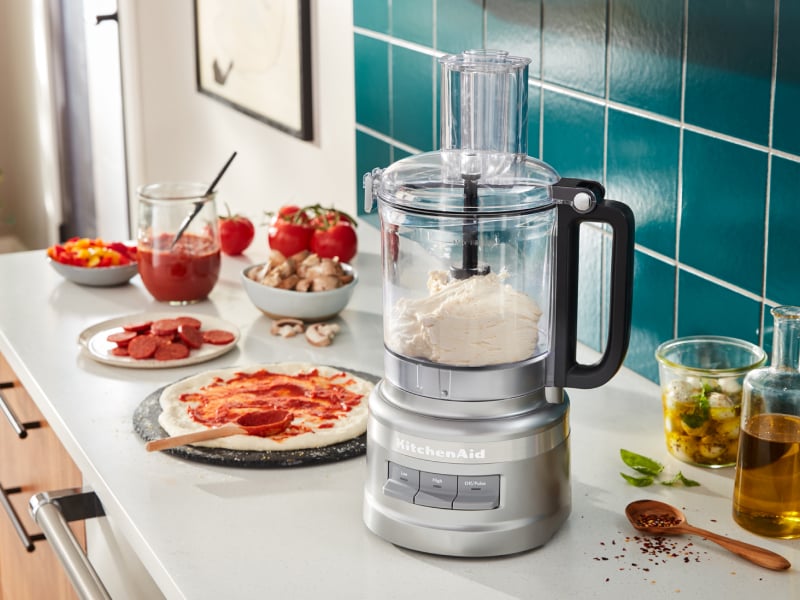
Image Source: www.kitchenaid.com
How to Use Your KitchenAid Food Processor Like a Pro
So, what is the best way to use a KitchenAid food processor? The best way is to get to know its parts, practice with simple tasks, and then explore its many capabilities. Can you chop vegetables in a KitchenAid food processor? Yes, absolutely! It’s one of its primary functions. Who is a KitchenAid food processor for? It’s for anyone who wants to save time and effort in the kitchen, from busy parents to aspiring chefs.
Your KitchenAid food processor is more than just a gadget; it’s a kitchen workhorse designed to simplify countless culinary tasks. From chopping onions in seconds to kneading dough with ease, this appliance can transform your cooking experience. But to truly unlock its potential, you need to understand its components and how to use them effectively. This guide will walk you through everything you need to know to become a master of your KitchenAid food processor.
Getting to Know Your KitchenAid Food Processor
Before you dive into making elaborate meals, it’s crucial to familiarize yourself with the different parts of your KitchenAid food processor. Each component plays a specific role in achieving perfect results.
The Essential Parts of Your Food Processor
- The Motor Base: This is the heart of your food processor. It houses the powerful KitchenAid food processor motor that drives the blades and other attachments. Always ensure the motor base is placed on a stable, flat surface before use.
- The KitchenAid Food Processor Bowl: This is where all the magic happens. The bowl is typically made of durable, BPA-free plastic and comes in various capacities depending on your model. It features a locking mechanism to securely attach it to the motor base.
- The KitchenAid Food Processor Lid: The lid fits snugly onto the bowl, often with a twist-and-lock system. It ensures ingredients stay contained during processing and usually has a feed tube.
- The Feed Tube: Located in the lid, the feed tube allows you to add ingredients while the processor is running. It’s also where the KitchenAid food processor slicing disc or other discs are housed.
- The Pusher: This fits into the feed tube and is used to safely guide ingredients down towards the blades or discs. Never use your fingers!
KitchenAid Food Processor Blades and Discs
The versatility of your food processor comes from its various blades and discs. Each is designed for a specific task.
- The Multi-Purpose Blade (S-Blade): This is your go-to blade for most tasks. It’s sharp and versatile, perfect for chopping, mincing, pureeing, and mixing.
- The Reversible Shredding/Slicing Disc: This dual-purpose disc is incredibly useful. One side is for shredding cheese or vegetables, while the other is for slicing. You can often adjust the thickness of your slices.
- The Spheroid/Parmesan Shredding Disc: Some models come with a specialized disc for finely shredding hard cheeses like Parmesan.
- The Dough Blade: If your model includes one, this blade is designed for kneading dough, saving you a lot of manual effort.
Understanding KitchenAid Food Processor Attachments
Beyond the standard blades and discs, KitchenAid offers a range of KitchenAid food processor attachments that significantly expand your appliance’s capabilities. These accessories can turn your food processor into a pasta maker, a citrus juicer, or even a meat grinder. Always check your model’s compatibility with specific attachments.
Mastering Basic Food Processor Techniques
Once you’re familiar with the parts, it’s time to get hands-on. Start with simple tasks to build your confidence.
Chopping and Mincing
This is a fundamental skill. For even chopping, cut larger ingredients into uniform pieces before adding them to the KitchenAid food processor bowl.
How-To:
- Place the motor base on a flat surface.
- Secure the KitchenAid food processor bowl onto the base.
- Insert the multi-purpose blade. Make sure it’s seated correctly.
- Add your ingredients to the bowl. Don’t overfill it.
- Place the KitchenAid food processor lid on the bowl and lock it securely.
- Plug in the appliance.
- Press the “On” or “Pulse” button. For chopping, pulse in short bursts until you reach your desired consistency. For mincing, process continuously for a shorter period.
- Turn off the processor and unplug it before removing the lid and accessing the ingredients.
Tips for Perfect Chopping:
- Pulse Power: For control, use the pulse function. This allows you to stop the processing at any time, preventing over-processing.
- Even Sizes: Cut ingredients into roughly equal sizes for consistent chopping.
- Don’t Overload: Overfilling the bowl can lead to uneven chopping and strain the KitchenAid food processor motor. Process in batches if necessary.
Slicing and Shredding
The KitchenAid food processor slicing disc and shredding discs make quick work of fruits, vegetables, and cheeses.
How-To:
- Assemble the motor base, bowl, and lid as usual.
- Instead of the multi-purpose blade, insert the desired disc (slicing or shredding) onto the spindle. Ensure it’s properly seated.
- Place the pusher into the feed tube.
- Plug in and turn on the processor.
- Gently feed ingredients through the feed tube using the pusher. Let gravity and the processor do the work.
Tips for Slicing and Shredding:
- Disc Choice: Use the thinner side of the slicing disc for delicate items like cucumbers and the thicker side for carrots or potatoes. Similarly, choose the fine or coarse shredding side as needed.
- Consistent Feeding: Apply steady, even pressure with the pusher to ensure uniform slices or shreds.
- Prepping Produce: Wash and trim produce before feeding it into the processor. For root vegetables, peeling is usually recommended.
Pureeing and Mashing
Create smooth purees for soups, sauces, or baby food with ease.
How-To:
- Insert the multi-purpose blade.
- Add your cooked ingredients to the KitchenAid food processor bowl.
- Secure the lid and plug in the unit.
- Process continuously until the desired smoothness is achieved. You may need to scrape down the sides of the bowl a few times to ensure everything is incorporated.
Tips for Pureeing:
- Liquid Content: For smoother purees, ensure your ingredients have enough liquid. You can add broth, water, or oil as needed during processing.
- Cooling Hot Ingredients: If pureeing hot ingredients, allow them to cool slightly before processing. You can also fill the KitchenAid food processor bowl only halfway and vent the lid (if your model allows) to prevent steam buildup.
Kneading Dough
If your model includes a dough blade, it’s a game-changer for bread and pizza dough.
How-To:
- Insert the dough blade.
- Add your dry ingredients to the KitchenAid food processor bowl, then add wet ingredients.
- Process according to your recipe’s instructions. Dough typically needs to be processed for a specific amount of time until it forms a smooth ball.
Tips for Dough Kneading:
- Recipe Adherence: Follow your recipe precisely regarding ingredient amounts and processing times.
- Dough Consistency: The dough should pull away from the sides of the bowl and form a cohesive ball.
- Don’t Over-Knead: Over-kneading can make dough tough.
Exploring Advanced Food Processor Uses and KitchenAid Food Processor Recipes
Once you’ve mastered the basics, it’s time to explore the vast array of KitchenAid food processor recipes and advanced uses.
Making Pesto and Sauces
A food processor is perfect for quickly creating flavorful pestos, dips, and sauces.
Quick Pesto Recipe Example:
- 2 cups fresh basil leaves, packed
- 1/2 cup grated Parmesan cheese
- 1/3 cup pine nuts, toasted
- 2-3 cloves garlic
- 1/2 cup olive oil
- Salt and pepper to taste
How-To:
- Place basil, Parmesan, pine nuts, and garlic in the KitchenAid food processor bowl with the multi-purpose blade.
- Pulse until coarsely chopped.
- With the processor running, slowly drizzle in the olive oil through the feed tube until the pesto is smooth.
- Season with salt and pepper.
Preparing Hummus and Dips
Whip up creamy hummus or other dips in minutes.
Simple Hummus Recipe Example:
- 1 (15-ounce) can chickpeas, drained and rinsed
- 1/4 cup tahini
- 2 tablespoons lemon juice
- 1 clove garlic, minced
- 2-4 tablespoons ice water
- Salt to taste
How-To:
- Combine chickpeas, tahini, lemon juice, garlic, and salt in the KitchenAid food processor bowl with the multi-purpose blade.
- Process until smooth, scraping down the sides as needed.
- Gradually add ice water, one tablespoon at a time, while the processor is running, until the desired creamy consistency is reached.
Making Nut Butters
Homemade nut butters are healthier and tastier.
How-To:
- Toast your nuts (almonds, peanuts, cashews) for enhanced flavor.
- Place the nuts in the KitchenAid food processor bowl with the multi-purpose blade.
- Process continuously. Initially, the nuts will become crumbs, then a paste, and finally a smooth butter. This can take several minutes, and you’ll need to scrape down the sides frequently. Be patient; the KitchenAid food processor motor is designed for this.
Creating Breadcrumbs
Save stale bread by turning it into fresh breadcrumbs.
How-To:
- Cut stale bread into chunks.
- Place chunks in the KitchenAid food processor bowl with the multi-purpose blade.
- Pulse until you achieve the desired breadcrumb consistency.
Whipping Cream and Making Butter
Some models can even whip cream and churn butter. Check your manual for specific instructions, as this often involves using the whisk attachment.
Caring for Your KitchenAid Food Processor
Proper maintenance ensures your appliance runs efficiently for years.
KitchenAid Food Processor Cleaning
Cleaning is straightforward, but it’s important to do it correctly.
- Immediate Cleaning: It’s best to clean components right after use to prevent food from drying and sticking.
- Bowl, Lid, and Blades: Most of the KitchenAid food processor accessories, including the KitchenAid food processor bowl, lid, and blades, are dishwasher safe (top rack recommended). However, always check your owner’s manual to confirm.
- Motor Base: Never immerse the motor base in water. Wipe it down with a damp cloth. For stubborn grime, use a mild detergent and a soft cloth.
- Discs: Wash discs carefully, as they are sharp. Use a brush to clean any food residue.
- Thorough Drying: Ensure all parts are completely dry before reassembling or storing to prevent mold or mildew.
KitchenAid Food Processor Troubleshooting
Encountering an issue? Here are some common KitchenAid food processor troubleshooting tips:
| Problem | Possible Cause | Solution |
|---|---|---|
| Processor won’t turn on | Not plugged in; Bowl or lid not properly locked; Overheat protection activated. | Ensure it’s plugged in. Check that the bowl and lid are securely locked according to the manual. Allow the KitchenAid food processor motor to cool for 15-20 minutes if it has overheated. |
| Uneven chopping/processing | Overfilling the bowl; Ingredients cut too large; Using the wrong blade. | Process in smaller batches. Cut ingredients into uniform, smaller pieces. Ensure you are using the correct blade for the task (multi-purpose blade for chopping). |
| Food sticks to the sides | Not enough liquid; Bowl needs scraping. | Add a little liquid (water, oil) to help with processing. Stop the processor and scrape down the sides of the KitchenAid food processor bowl with a spatula. |
| Slices are not uniform | Inconsistent feeding pressure; Dull blade/disc. | Apply steady pressure with the pusher. Ensure your discs are clean and sharp. If they appear dull, you may need to replace them. |
| Motor sounds strained or overheats | Overloading the bowl; Processing very hard ingredients for too long. | Reduce the amount of food in the bowl. Process hard ingredients in smaller batches or for shorter durations. Allow the KitchenAid food processor motor to rest between uses. |
| Lid won’t lock | Not aligned correctly; Debris in the locking mechanism. | Ensure the KitchenAid food processor lid is properly aligned with the bowl. Clean any food debris from the locking grooves. |
Maximizing Your Food Processor’s Potential with Accessories
To truly use your KitchenAid food processor like a pro, explore the range of KitchenAid food processor accessories. These add-ons expand what your machine can do, making it even more indispensable in your kitchen.
Specialized Discs and Blades
- Fine Shredding Disc: For finer textures, perfect for coleslaw or hash browns.
- Adjustable Slicing Disc: Offers multiple slice thicknesses for greater control.
- Whip Attachment: For whipping cream, egg whites, and other light mixtures.
- Citrus Juicer Attachment: Extract fresh juice from lemons, limes, and oranges.
Pasta Attachments
Some KitchenAid food processors are compatible with specific pasta roller and cutter attachments, allowing you to make fresh pasta from scratch.
Meat Grinder Attachment
Transform your food processor into a meat grinder, perfect for making homemade sausages or ground meats.
Safety First: Essential Precautions
While powerful, food processors require careful handling.
- Always unplug the appliance before assembling, disassembling, or cleaning.
- Keep fingers away from blades and discs. Use the pusher to guide food.
- Ensure the bowl and lid are securely locked before operating.
- Never force ingredients into the feed tube. Cut them into manageable sizes.
- Do not operate the KitchenAid food processor motor without the bowl and lid in place.
- Be cautious when handling the sharp KitchenAid food processor blades.
Frequently Asked Questions (FAQ)
Q: Can I freeze ingredients in the KitchenAid food processor bowl?
A: No, the KitchenAid food processor bowl is not designed for freezing. It’s made of plastic that could crack.
Q: How do I clean the KitchenAid food processor lid securely?
A: Most lids can be washed by hand with warm, soapy water. Some are top-rack dishwasher safe; check your manual. Ensure the feed tube area is clean.
Q: My KitchenAid food processor is making a strange noise. What should I do?
A: This could indicate an issue with the KitchenAid food processor motor or a misaligned part. Ensure everything is assembled correctly. If the noise persists or is loud, consult the troubleshooting section of your manual or contact customer support.
Q: Can I use any brand of food processor blades with my KitchenAid?
A: It’s always recommended to use genuine KitchenAid KitchenAid food processor blades and accessories for optimal performance and safety. Non-genuine parts may not fit correctly or could damage your appliance.
By following these guidelines and practicing with a variety of KitchenAid food processor recipes, you’ll soon be using your appliance with the skill and confidence of a seasoned chef. Enjoy the ease and versatility it brings to your kitchen!