A cloud kitchen is a professional food preparation facility that focuses solely on preparing meals for delivery or takeaway. This model allows businesses to operate without a physical storefront or dine-in space, leveraging technology and online food delivery platforms to reach customers.
The culinary world is changing fast. Many new ways to get your favorite meals are popping up. One of the most exciting is the cloud kitchen. You might have heard of virtual restaurants, ghost kitchens, or dark kitchens. These all describe the same idea: a kitchen that cooks food just for delivery.
Think about your favorite takeout. You order it on your phone or computer, right? Then, someone brings it to your door. The food was made somewhere, but you probably never saw it. That “somewhere” is often a cloud kitchen. It’s a smart way to run a food business without all the costs of a regular restaurant.
This guide will help you understand how this business works. We’ll look at what makes it tick and why it’s becoming so popular.
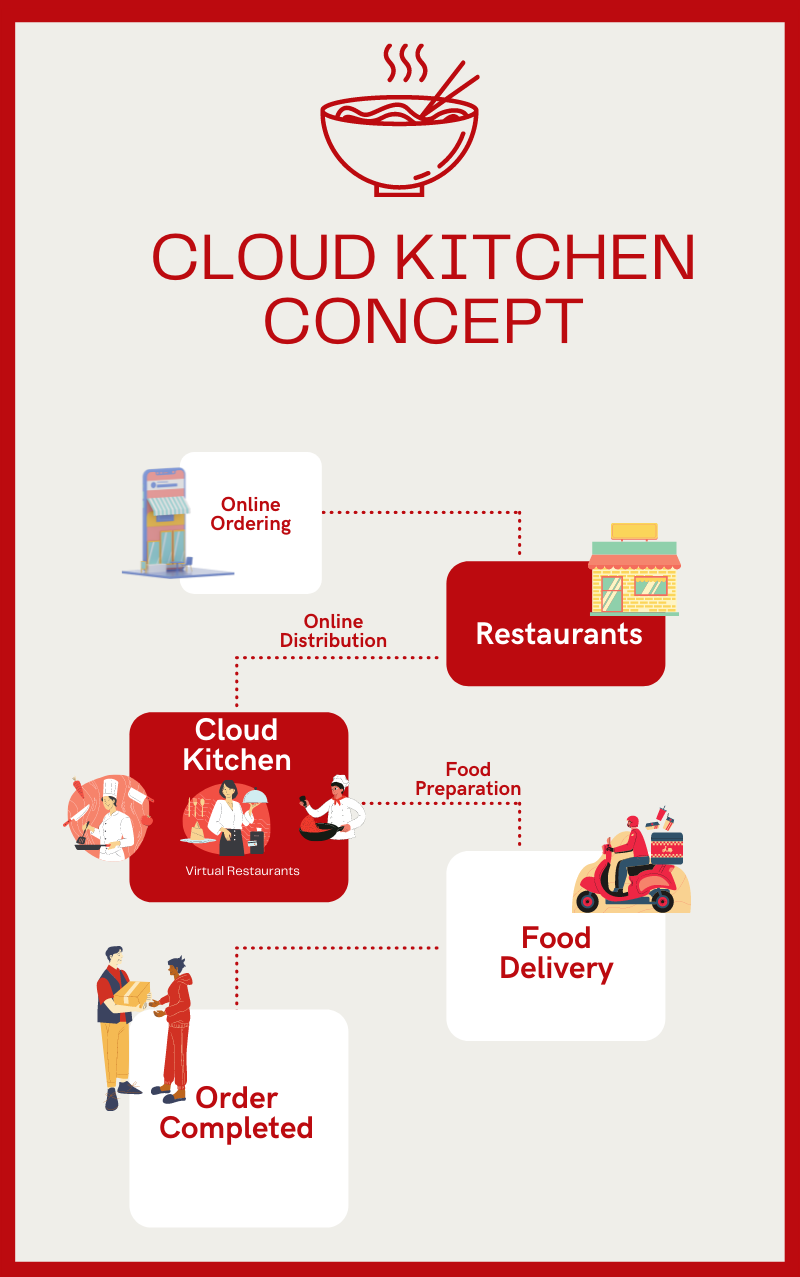
Image Source: www.code-brew.com
Deciphering the Cloud Kitchen Concept
At its core, a cloud kitchen is a restaurant without a dining room. It’s a delivery-only kitchen designed purely for cooking and dispatching food. These kitchens don’t have tables, waiters, or a customer-facing counter. Their entire operation is geared towards fulfilling orders that come in through online channels.
The cloud kitchen business model is built on efficiency and scalability. By removing the overhead of a traditional brick-and-mortar establishment, such as rent for prime real estate, front-of-house staff, and decor, businesses can significantly reduce costs. This allows them to focus resources on the quality of food and the speed of delivery.
Key Components of a Cloud Kitchen
- Kitchen Space: This is the heart of the operation. It can range from a single, dedicated kitchen within a larger facility to a fully equipped, standalone unit.
- Technology: Cloud kitchens rely heavily on technology. This includes online ordering systems, kitchen display systems (KDS), inventory management software, and integration with third-party delivery apps.
- Staff: The staff are primarily chefs, cooks, and kitchen support. There might also be dispatch staff, depending on whether the kitchen handles its own deliveries.
- Delivery Logistics: This is managed either by in-house delivery drivers or, more commonly, by partnering with popular online food delivery services.
Different Types of Cloud Kitchens
The cloud kitchen landscape isn’t uniform. There are several variations, each with its own advantages:
1. Independent Cloud Kitchens
These are standalone kitchens owned and operated by a single food brand. They might be part of a larger restaurant chain expanding its delivery reach, or a new brand created specifically for the online market.
2. Shared Kitchen Spaces (Multi-brand Kitchens)
This model involves renting out kitchen stations or bays within a larger facility to multiple different food brands. This is often referred to as a shared kitchen space or commissary kitchen. It’s a cost-effective solution for smaller brands or startups.
- Benefits of Shared Spaces:
- Lower startup costs.
- Shared utilities and maintenance.
- Access to established infrastructure.
- Potential for collaboration and knowledge sharing among tenants.
3. Cloud Kitchen Operators
These companies build, equip, and manage food preparation hubs for other businesses. They essentially rent out fully functional kitchen spaces, often providing additional services like marketing, order management, and delivery coordination.
4. Hybrid Cloud Kitchens
Some traditional restaurants also operate a cloud kitchen alongside their dine-in service. This allows them to leverage their existing kitchen infrastructure to fulfill a higher volume of delivery orders without impacting the dine-in experience.
How a Cloud Kitchen Operates: Step-by-Step
Let’s walk through the typical journey of an order in a cloud kitchen.
1. Order Placement
- A customer browses menus on various third-party delivery apps (like Uber Eats, DoorDash, Deliveroo) or a brand’s own website/app.
- They select their desired dishes and place an order, specifying their delivery address.
2. Order Reception and Processing
- The order is transmitted to the cloud kitchen. This is usually done electronically through an integrated system.
- The kitchen’s order management software or a Kitchen Display System (KDS) displays the order details.
3. Food Preparation
- Kitchen staff receive the order and begin preparing the food.
- The focus is on speed and accuracy, as delivery times are crucial for customer satisfaction.
- Packaging is also a critical step. Food must be packaged securely and in a way that maintains its temperature and quality during transit.
4. Dispatch and Delivery
- Once the food is ready, it’s handed over to a delivery driver.
- If the brand uses third-party delivery apps, a driver from that service will pick up the order.
- Some cloud kitchens manage their own delivery fleet, in which case their own drivers handle the dispatch.
- The driver delivers the food to the customer’s doorstep.
5. Customer Feedback
- After delivery, customers often have the option to rate their experience and leave reviews on the online food delivery platforms. This feedback is vital for the cloud kitchen’s reputation and for identifying areas for improvement.
The Technology Backbone of Cloud Kitchens
Technology is not just a convenience for cloud kitchens; it’s a necessity. Several technological elements are critical for their smooth operation:
Online Ordering Platforms and Aggregators
- These are the primary channels through which customers discover and order food.
- Third-party delivery apps provide a ready-made customer base and marketing reach.
- However, they also come with commission fees, which are a significant cost for cloud kitchen businesses.
Kitchen Display Systems (KDS)
- KDS replace paper tickets, displaying orders digitally to the kitchen staff.
- They improve accuracy, reduce errors, and provide real-time updates on order status.
- KDS can also help in optimizing kitchen workflow and managing preparation times.
Order Management Systems (OMS)
- An OMS consolidates orders from various sources (multiple delivery apps, direct orders) into a single dashboard.
- This centralized system streamlines operations, allowing kitchen staff to manage orders more efficiently.
- It often integrates with KDS and inventory management software.
Delivery Management Software (DMS)
- For kitchens that manage their own deliveries, DMS is essential.
- It helps optimize delivery routes, track drivers in real-time, and provide customers with delivery status updates.
Data Analytics
- Cloud kitchens generate a wealth of data, from popular menu items to peak ordering times and customer preferences.
- Analyzing this data helps in making informed decisions about menu engineering, marketing, staffing, and operational efficiency.
Benefits of the Cloud Kitchen Business Model
The rise of cloud kitchens is driven by a compelling set of advantages for food businesses:
Lower Startup Costs
- No Front-of-House Expenses: Eliminates the need for dining area decor, furniture, and customer-facing staff.
- Flexible Location: Kitchens can be set up in less expensive, industrial areas rather than prime retail spots.
- Reduced Equipment Needs: Focus on cooking equipment, eliminating bar setups or specialized dining ware.
Increased Efficiency and Focus
- Streamlined Operations: Kitchen staff can concentrate solely on food preparation and quality.
- Optimized Workflow: Kitchen layouts can be designed for maximum efficiency in a delivery-only environment.
Scalability and Flexibility
- Easier Expansion: Brands can launch new virtual restaurants or expand to new geographical areas with less capital investment compared to traditional restaurants.
- Menu Adaptability: It’s easier to test new menu items or adapt offerings based on customer demand and market trends.
Wider Reach
- Access to Large Customer Bases: Partnering with third-party delivery apps instantly exposes the brand to a vast number of potential customers.
- Geographic Expansion: Delivery allows businesses to serve customers beyond their immediate vicinity.
Cost Savings
- Reduced Labor Costs: No need for servers, hosts, or extensive front-of-house management.
- Lower Utility Bills: Smaller footprint compared to a restaurant with a dining area.
Challenges Faced by Cloud Kitchens
Despite the numerous advantages, the cloud kitchen model is not without its hurdles:
High Commission Fees from Delivery Platforms
- Erosion of Margins: The percentage charged by third-party delivery apps can significantly eat into profit margins.
- Dependence on Platforms: Over-reliance on these platforms can be risky if commission rates increase or platform policies change.
Intense Competition
- Crowded Market: The low barrier to entry means many businesses are entering the cloud kitchen space, leading to fierce competition.
- Brand Visibility: Standing out among numerous virtual restaurants on delivery apps can be challenging.
Maintaining Food Quality During Transit
- Delivery Time Impact: Long delivery times can affect the temperature and texture of food.
- Packaging Innovations: Requires careful selection and testing of packaging to ensure food arrives in optimal condition.
Building Brand Loyalty Without a Physical Presence
- Customer Connection: It’s harder to build a personal connection with customers when they never visit the establishment.
- Brand Storytelling: Requires creative marketing strategies to convey the brand’s identity and values.
Managing Multiple Platforms
- Operational Complexity: Juggling orders and managing menus across several online food delivery services can be complex and prone to errors.
- Inconsistent Branding: Maintaining a consistent brand experience across different platforms can be difficult.
Setting Up a Cloud Kitchen: A Practical Guide
If you’re considering launching a cloud kitchen, here’s a roadmap to get you started:
1. Market Research and Concept Development
- Identify Your Niche: What type of cuisine will you offer? Who is your target audience?
- Competitive Analysis: Research existing cloud kitchens and traditional restaurants in your target delivery area.
- Menu Engineering: Develop a menu that is delivery-friendly, cost-effective to produce, and appealing to your target market. Consider dishes that travel well.
2. Business Plan and Legalities
- Financial Projections: Outline startup costs, operational expenses, and revenue forecasts.
- Legal Structure: Decide on your business structure (sole proprietorship, LLC, etc.).
- Permits and Licenses: Secure all necessary food business permits, health department approvals, and any other local licenses required to operate a commercial kitchen.
3. Location Selection
- Delivery Radius: Choose a location that allows you to effectively serve your target delivery areas.
- Accessibility: Ensure easy access for delivery drivers and suppliers.
- Infrastructure: Verify that the location has the necessary utilities (gas, electricity, water, ventilation) for a commercial kitchen.
4. Kitchen Design and Equipment
- Layout Optimization: Design the kitchen for efficient workflow, separating prep, cooking, and packaging areas.
- Essential Equipment: Invest in high-quality cooking equipment, refrigeration, storage, and packaging supplies. Consider a food preparation hub layout that maximizes space and efficiency.
- Technology Integration: Set up your point-of-sale (POS) system, KDS, and ensure reliable internet connectivity.
5. Staffing
- Skilled Culinary Team: Hire experienced chefs and kitchen staff who can work efficiently in a fast-paced environment.
- Delivery Coordination: If managing your own deliveries, hire and train reliable delivery drivers.
6. Partnerships and Technology
- Delivery App Integration: Partner with popular third-party delivery apps. Carefully review their commission structures and terms.
- Online Presence: Develop a user-friendly website or app for direct orders to reduce reliance on third-party platforms.
- Marketing Strategy: Plan how you will reach customers, build brand awareness, and encourage repeat business.
The Future of Cloud Kitchens
The cloud kitchen business model is poised for continued growth and evolution. As consumer habits shift further towards convenience and digital ordering, cloud kitchens will play an increasingly central role in the food industry.
Key Trends to Watch
- Ghost Kitchens for Established Brands: More traditional restaurants will launch ghost kitchens to expand their delivery reach without cannibalizing their dine-in business.
- Virtual Restaurant Brands: Expect to see more virtual restaurant concepts operating out of cloud kitchens, catering to specific dietary needs or trending cuisines.
- Technology Advancements: Automation, AI-powered order management, and advanced delivery logistics will become more common.
- Direct-to-Consumer (DTC) Focus: Brands will invest more in their own online ordering platforms to capture more revenue and build direct relationships with customers.
- Sustainability: Growing consumer demand will push cloud kitchens to adopt more sustainable practices in sourcing, packaging, and waste management.
- Specialized Cloud Kitchens: Niche kitchens focusing on specific diets (e.g., vegan, gluten-free) or meal types (e.g., meal prep, catering) will emerge.
Frequently Asked Questions (FAQ)
What is a cloud kitchen?
A cloud kitchen is a professional kitchen facility that prepares food exclusively for delivery or takeaway orders. It operates without a physical dining space for customers.
What’s the difference between a cloud kitchen and a ghost kitchen?
The terms are often used interchangeably. “Cloud kitchen” is a broader term encompassing various delivery-only models. “Ghost kitchen” specifically refers to a kitchen that exists purely online, with no physical storefront at all.
What are the main benefits of a cloud kitchen business model?
Key benefits include lower startup costs, reduced overhead, increased operational efficiency, greater flexibility, and the ability to reach a wider customer base through online channels.
What are the biggest challenges for cloud kitchens?
Challenges include high commission fees from delivery platforms, intense competition, maintaining food quality during transit, and building brand loyalty without a physical customer interaction point.
How do cloud kitchens get orders?
Cloud kitchens primarily receive orders through third-party delivery apps (like Uber Eats, DoorDash) and their own branded websites or apps.
Can I start a cloud kitchen with minimal capital?
Yes, the cloud kitchen business model is known for its lower startup costs compared to traditional restaurants. However, it still requires investment in kitchen equipment, technology, and initial marketing. Renting a space in a shared kitchen space can further reduce initial capital needs.
How do cloud kitchens handle delivery?
They typically partner with third-party delivery apps that have their own network of drivers. Some larger cloud kitchen operations may also manage their own delivery fleet.
What makes a kitchen suitable for the cloud kitchen model?
A suitable kitchen needs to be designed for efficiency in food preparation and packaging for delivery. It must have adequate space for cooking equipment, storage, and dispatch. The location should be strategic for delivery reach.
Is a commissary kitchen the same as a cloud kitchen?
A commissary kitchen is a licensed facility where food businesses can prepare food. Many cloud kitchens operate out of commissary kitchens, which can be a cost-effective way to access professional kitchen space and equipment, often as part of a shared kitchen space.
How important is technology in a cloud kitchen?
Technology is crucial. It includes online ordering platforms, order management systems, kitchen display systems, and delivery tracking. It drives efficiency and customer experience.
What kind of food travels best in a cloud kitchen setup?
Foods that maintain their texture and temperature well during transit are ideal. Examples include pizzas, burgers, pasta dishes, curries, stir-fries, and certain types of desserts.
Conclusion
The cloud kitchen represents a significant shift in the food industry, driven by technology and changing consumer preferences. By understanding how this model works, its benefits, and its challenges, aspiring restaurateurs and existing businesses can better navigate this dynamic space. Whether operating as a virtual restaurant, a ghost kitchen, or a delivery-only kitchen, the core of success lies in efficient operations, quality food, and effective use of technology and online food delivery channels.