
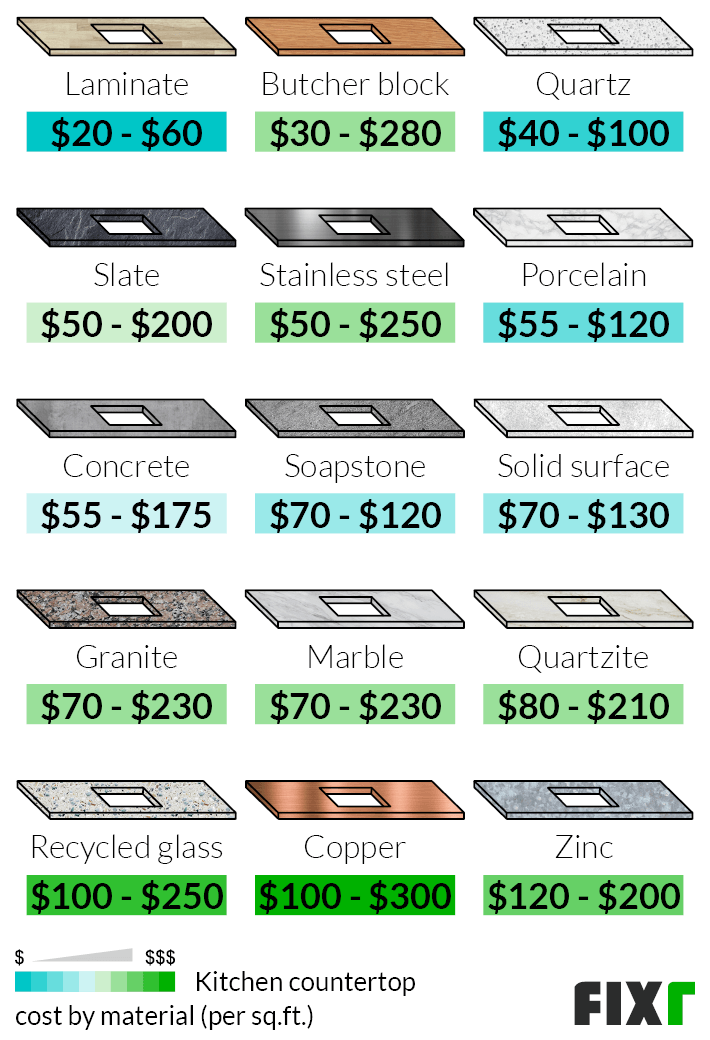
Image Source: assets.fixr.com
How Much Does It Cost To Install Kitchen Countertops?
The price of installing kitchen countertops can range from $1,500 to $7,000 or more, depending on the material, the size of your kitchen, and any special features you choose. What is the average cost for kitchen countertop installation? Typically, you can expect to pay around $2,500 to $3,500 for a standard kitchen countertop installation. This cost includes both the material and the labor. Several factors influence the final kitchen countertop installation price, making it crucial to plan your kitchen remodel countertop budget carefully.
Deciphering the Expense: Factors Affecting Your Kitchen Countertop Cost
When you’re planning a kitchen renovation, one of the biggest decisions you’ll make is choosing new countertops. The cost of new kitchen countertops is a significant part of your overall budget. Many variables come into play, from the type of material you select to the complexity of the installation. Let’s break down these elements to help you make an informed decision.
Material Matters: The Heart of the Cost
The material you choose for your kitchen countertops is arguably the most significant factor in determining the overall expense. Different materials offer varying levels of durability, aesthetics, and maintenance requirements, each with its own price tag.
Granite Countertop Installation Cost
Granite is a natural stone, quarried and then cut into slabs. Its beauty lies in its unique patterns and color variations, making each piece a one-of-a-kind work of art.
- Price Range: The cost of granite countertops typically falls between $50 to $200 per square foot, installed. This broad range depends on the rarity of the granite color and pattern, as well as the complexity of the installation.
- Installation Specifics: Granite is heavy and requires professional installation. The kitchen countertop installation price for granite will include templating, cutting, fabrication (edge profiles, sink cutouts), and the actual installation. Sealing granite is also essential to protect it from stains, which might be an additional cost or part of the installation service.
- Pros: Durable, heat-resistant, scratch-resistant, increases home value, unique aesthetic.
- Cons: Porous (requires sealing), can chip or crack if hit with a heavy object, some patterns can be very expensive.
Quartz Countertop Installation Cost
Quartz countertops are engineered, made from about 90% natural quartz crystals mixed with polymer resins and pigments. This manufacturing process results in a non-porous, highly durable surface.
- Price Range: Quartz countertops generally cost between $70 to $150 per square foot, installed. The price can vary based on the brand, the complexity of the design (e.g., veining patterns that mimic marble), and the edge profile.
- Installation Specifics: Like granite, quartz requires professional installation due to its weight and the need for precise cutting and fitting. The kitchen countertop installation price will cover templating, fabrication, and fitting. Because quartz is non-porous, it doesn’t require sealing, which can simplify the long-term maintenance and sometimes the initial installation cost compared to porous materials.
- Pros: Extremely durable, non-porous (stain and bacteria resistant), low maintenance, wide variety of colors and patterns, consistent appearance.
- Cons: Can be damaged by extreme heat, not as unique as natural stone, can be more expensive than some other options.
Marble Countertop Installation Cost
Marble is a luxurious natural stone known for its elegant veining and timeless appeal. It brings a classic, sophisticated look to any kitchen.
- Price Range: Marble countertops can range from $60 to $250 per square foot, installed. The cost is highly dependent on the type of marble, its origin, and the complexity of the veining. High-end or exotic marbles will command higher prices.
- Installation Specifics: Marble is softer and more porous than granite or quartz, making it more susceptible to etching and staining. The kitchen countertop installation price will include professional templating, fabrication, and installation, often with an emphasis on careful handling. Regular sealing is crucial for marble, and the cost of this maintenance should be factored in.
- Pros: Beautiful and luxurious appearance, natural material with unique patterns, cool surface ideal for baking.
- Cons: Prone to staining and etching (especially from acidic foods like citrus and vinegar), can chip or scratch more easily than granite or quartz, requires frequent sealing and careful maintenance.
Butcher Block Countertop Installation Cost
Butcher block countertops are made from strips of wood glued together. They offer a warm, natural aesthetic and can be a functional surface for food preparation if properly maintained.
- Price Range: Butcher block countertops are generally more affordable, costing between $30 to $100 per square foot, installed. The price varies based on the type of wood (e.g., maple, walnut, cherry) and the construction of the block (e.g., edge grain, face grain).
- Installation Specifics: Installation can sometimes be a DIY project, but professional installation ensures proper fitting, sealing, and edge finishing. The kitchen countertop installation price for butcher block will cover cutting to size, edge treatments, and oiling or sealing the wood. If you opt for a DIY kitchen countertop installation cost, you’ll need to account for materials like wood glue, sandpaper, and food-safe finishes.
- Pros: Warm, natural look, can be sanded and refinished, relatively inexpensive, can be used as a cutting surface (with proper care).
- Cons: Prone to staining, scratching, and water damage; requires regular sealing and oiling to maintain; can warp or crack if not properly maintained.
Laminate Countertop Installation Cost
Laminate countertops are a budget-friendly option, made from layers of plastic bonded to particleboard or fiberboard. They are available in a vast array of colors, patterns, and textures, often mimicking natural stone or wood.
- Price Range: Laminate countertops are the most economical choice, typically costing between $20 to $50 per square foot, installed.
- Installation Specifics: Laminate can often be installed by DIYers, leading to significant savings on the kitchen countertop installation price. However, professional installation ensures a perfect fit and a clean finish. The installation process is generally simpler and less labor-intensive than for stone countertops.
- Pros: Very affordable, wide variety of designs, lightweight, easy to clean.
- Cons: Not as durable as stone or quartz, susceptible to scratches, heat, and moisture damage; cannot be repaired if damaged; seams can be visible.
Beyond Material: Other Cost Factors
While the material is key, several other elements contribute to the overall cost of installing new kitchen countertops.
Kitchen Size and Complexity
The total square footage of your kitchen that needs countertops is a direct driver of cost. Larger kitchens naturally require more material, increasing the overall price. Beyond sheer size, the complexity of the layout also plays a role.
- Edge Profiles: Simple, straight edges are usually included in the base price. More intricate edge profiles, such as bullnose, ogee, or waterfall edges, will add to the fabrication cost.
- Sink Cutouts: The number and type of sink cutouts affect the price. Undermount sinks, which require more precise fabrication, might cost more than drop-in sinks.
- Backsplashes: If you plan to extend your countertop material up the wall as a backsplash, this will increase the material and labor costs.
- Island Features: Kitchen islands often have unique designs, overhangs, or specialized edges that can increase the complexity and cost of installation.
Fabrication and Installation Labor
The skill and experience of the fabricator and installer are crucial for a beautiful and durable result.
- Templating: A professional will measure your kitchen precisely to create a template for your new countertops. This is essential for a perfect fit.
- Cutting and Shaping: The slabs are cut to size, and edges are finished according to your chosen profile.
- Seams: For larger kitchens or L-shaped runs, seams are unavoidable. The skill of the installer in minimizing and expertly joining these seams impacts the final look.
- Plumbing and Cabinetry: The installation might require minor adjustments to existing cabinetry to ensure the countertops sit level. The installer will also need to disconnect and reconnect plumbing for sinks.
Removal of Old Countertops
If you’re replacing existing countertops, the cost of removal and disposal of the old ones needs to be factored in. This can add $200 to $600 or more, depending on the material of the old countertops and the labor involved.
Estimating Your Kitchen Remodel Countertop Budget
Creating a realistic kitchen remodel countertop budget involves careful planning and research.
Steps to Budgeting:
- Measure Your Kitchen: Accurately measure the length and width of all countertop surfaces. Don’t forget to measure for islands and backsplashes.
- Research Material Costs: Get price estimates for your preferred countertop materials per square foot. Remember to include fabrication and installation in your estimates.
- Factor in Additional Costs: Consider costs for sink cutouts, edge profiles, backsplash material, removal of old countertops, and any plumbing or electrical work needed.
- Get Multiple Quotes: Obtain detailed quotes from at least three different reputable countertop suppliers and installers. Ensure the quotes clearly outline all costs.
- Add a Contingency: It’s wise to add a 10-15% contingency to your budget for unexpected issues or desired upgrades.
DIY Kitchen Countertop Installation Cost vs. Professional Installation
The decision to undertake a DIY kitchen countertop installation cost can significantly impact your budget, but it comes with its own set of considerations.
DIY Installation
- Potential Savings: You can save on labor costs, which can be a substantial portion of the total price.
- Required Skills & Tools: DIY installation requires carpentry skills, precision measuring, specialized tools (like a wet saw for stone, edge routers, and heavy-duty adhesives), and a good understanding of how to handle heavy and fragile materials.
- Risks: Mistakes can be costly, potentially ruining expensive material and leading to even higher costs to fix. Improper installation can lead to issues like uneven surfaces, visible seams, or premature damage.
- Time Commitment: DIY installation is time-consuming, requiring significant effort and attention to detail.
Professional Installation
- Expertise: Professionals have the experience and specialized tools to ensure a perfect fit and finish.
- Warranties: Reputable installers often offer warranties on their workmanship, providing peace of mind.
- Convenience: They handle all aspects of the installation, saving you time and physical effort.
- Higher Upfront Cost: While more expensive initially, the quality and reduced risk of error often make professional installation a worthwhile investment.
Average Kitchen Countertop Replacement Cost
The average kitchen countertop replacement cost is heavily influenced by the factors mentioned above. For a standard-sized kitchen (around 50-60 square feet of countertop space), you might see:
- Laminate: $1,000 – $3,000
- Butcher Block: $1,500 – $4,000
- Granite: $2,000 – $6,000
- Marble: $3,000 – $7,000+
- Quartz: $3,000 – $7,000+
These figures are general estimates and can vary significantly by region and specific project details.
Comparing Material Costs: A Closer Look
To help visualize the differences, let’s look at a comparative table for common countertop materials.
| Material | Average Price Per Square Foot (Installed) | Durability | Maintenance | Aesthetics | Installation Complexity |
|---|---|---|---|---|---|
| Laminate | $20 – $50 | Low | Easy | Versatile | Low |
| Butcher Block | $30 – $100 | Medium | High | Warm, Natural | Medium |
| Granite | $50 – $200 | High | Medium | Unique, Natural | High |
| Marble | $60 – $250 | Medium | Very High | Luxurious, Classic | High |
| Quartz | $70 – $150 | Very High | Low | Consistent, Modern | High |
| Solid Surface | $50 – $100 | Medium | Medium | Seamless, Modern | Medium |
| Stainless Steel | $75 – $150 | Very High | Medium | Industrial, Sleek | High |
Note: Prices are approximate and can vary based on brand, origin, edge profiles, and installation complexity.
Frequently Asked Questions About Kitchen Countertop Installation
Here are some common questions people have when considering new kitchen countertops.
How long does kitchen countertop installation take?
The installation itself typically takes 1-3 days, depending on the size of the kitchen, the material, and the complexity of the design. However, the entire process, from measurement and fabrication to installation, can take anywhere from one to three weeks, as custom countertops need to be fabricated off-site.
Can I install countertops myself?
While some materials like laminate or butcher block can be a DIY project for experienced individuals, natural stone (granite, marble) and engineered stone (quartz) are heavy, brittle, and require specialized tools and skills for precise cutting, fitting, and installation. It is generally recommended to hire professionals for stone and quartz countertops to ensure quality and prevent damage.
What is the most durable kitchen countertop material?
Quartz is generally considered the most durable option due to its engineered nature, making it highly resistant to scratches, stains, and heat. Granite is also very durable, but it is porous and requires sealing.
What is the cheapest kitchen countertop material?
Laminate countertops are typically the most budget-friendly option. They offer a wide variety of looks at a fraction of the cost of stone or quartz.
Does the cost of new kitchen countertops include the sink?
Usually, the cost of new kitchen countertops includes the fabrication and installation of the countertop slab and any necessary cutouts for a sink. However, the sink itself and its plumbing connection are often separate costs. Always clarify this with your installer.
How much does it cost to remove old kitchen countertops?
The cost to remove and dispose of old countertops can range from $200 to $600 or more. This depends on the material of the old countertops, how they are attached, and the labor involved in safely removing and hauling them away.
Is it worth it to upgrade kitchen countertops?
Upgrading kitchen countertops is often one of the most impactful renovations you can make. It can significantly improve the aesthetics and functionality of your kitchen, increase its resale value, and enhance your enjoyment of your home. The return on investment for kitchen countertops is typically very high.
By carefully considering your material choices, understanding the contributing cost factors, and planning your kitchen remodel countertop budget meticulously, you can achieve beautiful and functional new kitchen countertops that you’ll love for years to come.