
Can I remove a Moen single-handle kitchen faucet myself? Yes, you can remove a Moen single-handle kitchen faucet yourself with basic tools and this step-by-step guide. This guide will also help you with Moen faucet repair and single handle faucet maintenance. We’ll cover everything from identifying the problem to the actual removal process, and even touch on Moen faucet troubleshooting if you’re facing specific issues like a Moen faucet handle won’t lift.
Replacing or repairing your Moen kitchen faucet can seem daunting, but with the right instructions, it’s a manageable DIY project. Whether you’re dealing with a persistent drip, a stiff handle, or simply want to upgrade to a newer model, knowing how to remove the old one is the first crucial step. This in-depth guide will walk you through each stage of Moen kitchen faucet replacement, ensuring you can tackle this task with confidence. We’ll break down the Moen faucet disassembly process, focusing on the single-handle variety, which is common in many modern kitchens.
Before diving into the removal, it’s important to identify the type of Moen faucet you have. While this guide focuses on single-handle models, Moen offers various designs. The internal mechanisms, particularly the cartridge, are key components when discussing Moen faucet parts and cartridge removal Moen faucet.
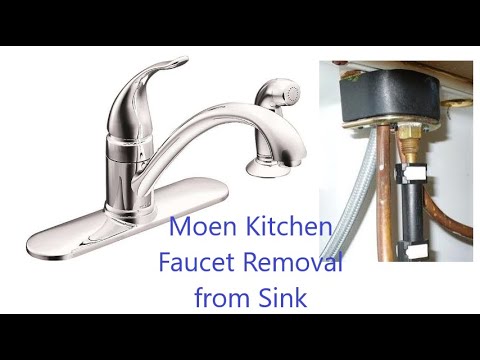
Image Source: i.ytimg.com
Gathering Your Tools and Supplies
Before you begin the process of Moen faucet disassembly, it’s essential to have all your tools and supplies ready. This will save you time and frustration.
Essential Tools:
- Adjustable Wrench: This is your primary tool for loosening and tightening nuts and bolts.
- Pliers (Slip-joint or Channel-lock): Useful for gripping and turning stubborn parts.
- Phillips Head Screwdriver: Many faucet handles are secured with screws.
- Flathead Screwdriver: For prying or gently loosening certain components.
- Allen Wrench Set: Some Moen handles use Allen screws for mounting.
- Bucket or Container: To catch any residual water in the pipes.
- Towel or Rags: To wipe up spills and protect your sink area.
- Safety Glasses: To protect your eyes from debris or water.
- Gloves: For a better grip and to keep your hands clean.
- Flashlight or Headlamp: To see clearly under the sink.
Optional but Helpful Supplies:
- Penetrating Oil (e.g., WD-40): Can help loosen corroded or stuck parts.
- Plumber’s Tape: Useful if you’re reinstalling or connecting new plumbing.
- New Faucet: If you’re replacing the entire unit.
- Replacement Cartridge: If you’re performing a Moen faucet leak fix on a dripping faucet and plan to reuse the faucet body.
Having these items on hand will make the single handle faucet maintenance and removal process much smoother.
Preparing for Faucet Removal
Proper preparation is key to a successful DIY project. This involves shutting off the water supply and clearing the workspace.
Step 1: Turn Off the Water Supply
This is the most critical step. You don’t want water spraying everywhere!
- Locate Shut-Off Valves: Underneath your sink, you’ll find two shut-off valves connected to the water lines leading to your faucet. They are typically red for hot water and blue for cold water.
- Turn Off the Valves: Turn the handles of both valves clockwise until they are fully closed.
- Test the Faucet: Turn on the faucet handle to drain any remaining water in the lines and to confirm that the water supply has been successfully shut off. If water still flows, the main water supply to your house might need to be turned off, or the shut-off valves may be faulty.
Step 2: Clear the Workspace
- Remove Items from Under the Sink: Take everything out from the cabinet beneath your sink to give yourself ample room to work.
- Place a Bucket and Towels: Position a bucket or container directly under the water supply lines and P-trap. Lay down some old towels or rags to catch any drips and protect your cabinet floor.
Fathoming the Faucet Assembly: Key Components
Before you begin Moen faucet disassembly, it’s helpful to know the main parts you’ll be interacting with. This is especially relevant for Moen faucet troubleshooting.
Understanding the Single Handle Mechanism
A single-handle Moen faucet typically uses a valve cartridge. This cartridge controls the flow and temperature of the water by moving internal ceramic discs or a ball mechanism. When you move the handle, you’re actuating this cartridge.
- Handle: The part you lift and turn.
- Decorative Cap/Escutcheon: A cover plate that hides the mounting hardware and often has the Moen logo.
- Mounting Nut: A large nut that secures the faucet body to the sink or countertop from underneath.
- Water Supply Lines: Flexible hoses connecting the shut-off valves to the faucet.
- Cartridge: The internal mechanism that controls water flow and temperature. This is often the culprit in Moen faucet leak fix situations.
- Retaining Clip/Nut: A component that holds the cartridge in place.
Knowing these parts will help you follow the Moen faucet disassembly steps accurately, especially when dealing with cartridge removal Moen faucet.
Step-by-Step Guide to Removing a Moen Single-Handle Kitchen Faucet
Now, let’s get down to the actual process of removing your faucet. This guide assumes a standard installation.
Step 3: Remove the Faucet Handle
This is often the first step in replacing Moen faucet handle or performing other Moen faucet repair.
- Locate the Set Screw: Most Moen single-handle faucets have a small set screw that secures the handle to the valve stem. This screw is usually hidden under a decorative cap or plug on the front, side, or back of the handle.
- Pry Off the Cap (if present): Use a small flathead screwdriver or a thin knife to gently pry off the decorative cap. Be careful not to scratch the finish.
- Loosen the Set Screw: Once the cap is off, you’ll see the set screw. This screw often requires an Allen wrench. Select the correct size Allen wrench and turn the screw counter-clockwise to loosen it. You don’t usually need to remove the screw completely, just loosen it enough for the handle to slide off.
- Lift Off the Handle: With the set screw loosened, gently wiggle and lift the handle straight up and off the valve stem. If the handle is stuck, you can try applying a small amount of penetrating oil and letting it sit for a few minutes. You might also have a Moen faucet handle won’t lift issue; in this case, ensure the screw is fully loosened.
Step 4: Remove the Decorative Cover (Escutcheon)
Underneath the handle, you’ll often find a decorative cap or escutcheon that covers the main faucet body and the mounting components.
- Unscrew or Unscrew: This piece might be threaded onto the faucet body, or it might be held in place by a retaining nut from underneath.
- Threaded Cover: If it’s threaded, try unscrewing it by hand. If it’s tight, use a rag to protect the finish and gently grip it with pliers or an adjustable wrench, turning counter-clockwise.
- Retained Cover: In some models, this piece might simply slide off after the handle is removed, or it could be part of the main body.
Step 5: Disconnect the Water Supply Lines
This step is crucial for Moen kitchen faucet replacement.
- Access the Connections: Reach under the sink and locate where the flexible water supply lines connect to the faucet.
- Loosen the Supply Line Nuts: Use your adjustable wrench to loosen the nuts connecting the supply lines to the faucet shanks. Turn counter-clockwise. Be prepared for a small amount of residual water to drip out, which is why your bucket is essential.
- Disconnect Lines: Once loosened, disconnect the supply lines from the faucet.
Step 6: Loosen and Remove the Mounting Nut(s)
This is usually the most challenging part, as these nuts can be difficult to reach and can be tight.
- Locate the Mounting Nut: Look directly under the sink, where the faucet body passes through the sink deck. You’ll see a large nut (or sometimes two nuts if it’s a widespread faucet, but for a single handle, it’s usually one) holding the faucet in place.
- Use the Right Tool: An adjustable wrench or a basin wrench (if space is very tight) is ideal here.
- Turn Counter-Clockwise: Apply the wrench and turn the mounting nut counter-clockwise to loosen it. This might require a bit of force. If it’s very stubborn, a shot of penetrating oil can help.
- Remove the Nut and Any Washers: Once the nut is free, remove it along with any accompanying washers or mounting brackets.
Step 7: Lift the Faucet Out
With all connections and mounting hardware removed, the faucet should now be free.
- Pull Up Gently: From above the sink, gently lift the faucet straight up and out of the mounting holes. If it feels stuck, there might be old plumber’s putty or sealant causing it to adhere.
- Pry if Necessary: If it’s really stuck, you can try to carefully wedge a flathead screwdriver or putty knife between the faucet base and the sink surface to break the seal. Be very gentle to avoid damaging the sink.
Congratulations! You have successfully removed your Moen single-handle kitchen faucet.
Dealing with Common Issues During Removal
Sometimes, the Moen faucet disassembly process isn’t straightforward. Here are some common problems and how to address them.
Moen Faucet Handle Won’t Lift
If you find your Moen faucet handle won’t lift after loosening the set screw, the problem often lies with the handle itself being corroded or stuck to the valve stem.
- Ensure Set Screw is Fully Loosened: Double-check that the set screw is truly loose and not just partially backed out.
- Penetrating Oil: Apply penetrating oil directly to the area where the handle meets the valve stem. Let it soak in for 10-15 minutes.
- Gentle Wiggling: Try gently wiggling the handle side to side or up and down while pulling upwards.
- Handle Puller Tool: For very stubborn handles, a specialized faucet handle puller tool might be necessary. These can be rented or purchased from hardware stores.
Stuck Mounting Nut
The mounting nut under the sink can be challenging to loosen due to mineral buildup or corrosion.
- Penetrating Oil: Apply penetrating oil liberally to the threads of the mounting nut. Allow it to work for at least 15-30 minutes, or even overnight for very stubborn nuts.
- Heat (Use with Caution): In extreme cases, a heat gun (used carefully, avoiding plastic components and flammable materials) can help expand the metal slightly, making it easier to turn.
- Basin Wrench: A basin wrench provides better leverage and reach in tight spaces under the sink.
Cartridge Removal Moen Faucet
If your goal is cartridge removal Moen faucet as part of a Moen faucet leak fix, the process is slightly different after removing the handle.
- Identify Cartridge Retainer: After removing the handle and any decorative parts, you’ll see the top of the cartridge. It might be held in by a retaining clip or a threaded retaining nut.
- Remove the Retaining Clip: For clip-style retainers, use needle-nose pliers or a flathead screwdriver to pull the clip straight out.
- Remove the Retaining Nut: If there’s a threaded nut, use an adjustable wrench to unscrew it counter-clockwise.
- Extract the Cartridge: Once the retainer is removed, you can usually pull the cartridge straight up. Some Moen cartridges have a specialized cartridge puller tool designed to grip the cartridge and make removal easier, especially if it’s seized. Moen offers different types of cartridges (e.g., Moen 1200, 1222, 1225), and the specific tool might vary.
Knowing these steps for cartridge removal Moen faucet is crucial if you are looking to perform Moen faucet repair without replacing the entire fixture. You’ll need to identify the correct Moen faucet parts for your specific model.
Table: Common Moen Cartridge Types and Their Characteristics
| Cartridge Type | Common Faucet Series | Key Features | Notes for Removal |
|---|---|---|---|
| Moen 1200 | Chateau, Classic | Single handle, older designs | Often has a retaining clip. |
| Moen 1222 | Brant, Arbor, Eva | Single handle, modern designs | Typically has a larger retaining nut. |
| Moen 1225 | Brant, Arbor, Eva | Single handle, updated version of 1222 | Similar removal to the 1222, may have slight design differences. |
| Moen 1234 | Bath, some kitchen | Single handle, often found in tub/shower | Might have a different retainer or cartridge body. |
This table is a general guide; always confirm your specific cartridge type before purchasing replacement Moen faucet parts.
What to Do After Faucet Removal
Once the old faucet is out, you have a few options.
Installing a New Faucet
- Clean the Sink Surface: Thoroughly clean the area where the old faucet was mounted. Remove any old putty, caulk, or debris.
- Follow New Faucet Instructions: Each new faucet will come with its own installation instructions. Read them carefully.
- Connect Supply Lines: Reconnect your water supply lines to the new faucet.
- Secure the Faucet: Mount the new faucet according to the manufacturer’s directions.
- Turn Water Back On: Slowly turn the shut-off valves back on and check for leaks.
Reinstalling the Same Faucet
If you removed the faucet for cleaning or minor repairs and plan to put it back:
- Clean All Parts: Clean the faucet body and all mounting hardware.
- Replace Worn Parts: If you were performing Moen faucet repair, now is a good time to replace the cartridge or any other worn Moen faucet parts.
- Use New Sealant: Apply fresh plumber’s putty or silicone sealant around the base of the faucet before reinstalling to ensure a watertight seal.
- Reassemble: Follow the removal steps in reverse.
Frequently Asked Questions (FAQ)
Q1: How do I know which Moen cartridge I have?
A1: The best way is to remove the old cartridge and look for a model number printed on it, or compare it to images online. You can also check your faucet’s original documentation or the Moen website using your faucet’s model name. For Moen faucet repair, identifying the correct Moen faucet parts is essential.
Q2: My faucet is leaking from the base. What could be the problem?
A2: A leak from the base of the faucet, especially around the handle, often indicates a problem with the internal cartridge or worn O-rings. Following the cartridge removal Moen faucet steps to replace the cartridge can usually fix this Moen faucet leak fix. Also, check that the mounting nut is snug.
Q3: Can I fix a dripping faucet without removing the entire faucet?
A3: Yes, in many cases. If the drip is caused by a worn cartridge, you can often remove just the handle and then the cartridge to replace it. This is a common form of single handle faucet maintenance and a good way to address a Moen faucet leak fix.
Q4: What if my faucet is old and corroded?
A4: If parts are heavily corroded, be patient. Use penetrating oil and allow it to work. If a part is truly seized, you might need to consider replacing the entire faucet, especially if it’s an older model with potentially obsolete Moen faucet parts.
Q5: My new faucet doesn’t fit the existing holes. What should I do?
A5: This is more common with Moen kitchen faucet replacement if you’re switching from a widespread to a single-hole faucet, or vice-versa. You might need to buy a mounting plate or escutcheon to cover the extra holes, or you may need to drill new holes in your countertop or sink, which often requires professional help.
This comprehensive guide should empower you to confidently tackle the removal of your Moen single-handle kitchen faucet. Whether it’s for a simple repair or a complete upgrade, these steps will ensure a smooth process.