
What is the typical gallon size of kitchen trash bags? Most kitchen trash bags are designed to fit standard kitchen trash cans, which commonly range from 10 to 13 gallons. This means the most common kitchen trash bag capacity is indeed around 13 gallons.
Choosing the right kitchen trash bag size is more important than you might think. It’s not just about fitting the bin; it’s about efficiency, preventing leaks, and making trash disposal easier. Let’s dive into the world of kitchen trash bags and figure out just how many gallons they hold.
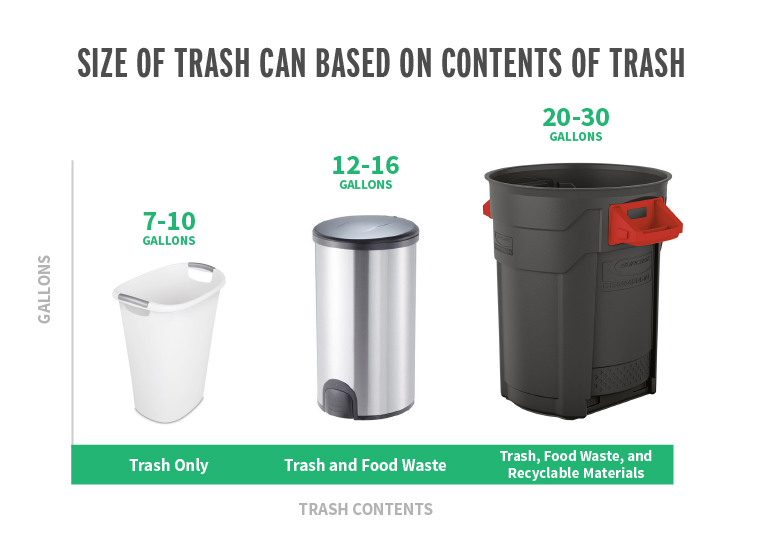
Image Source: trashcansunlimited.com
Deciphering Kitchen Trash Bag Capacity
When you’re at the store, or even just looking at your kitchen bin, you might wonder about the actual trash bag volume these liners can handle. The term “gallon” for a trash bag refers to the volume of the bin it’s designed to fit, not necessarily the exact volume of trash the bag can hold before breaking. This is a crucial distinction.
The kitchen trash bag capacity is directly tied to the standard kitchen trash can size. Think of it like buying shoes; you need the right size to fit comfortably. A bag that’s too small will strain and tear, while one that’s too large will bunch up and be difficult to tie.
Common Kitchen Trash Bag Sizes: A Closer Look
While 13 gallons is the most popular size for kitchen waste disposal bags, there’s a spectrum of options available. This ensures that whether you have a compact bin or a larger one, you can find a suitable liner.
Here’s a breakdown of common kitchen trash bag gallons and the bin sizes they are typically designed for:
Small Kitchen Trash Bag Capacity
- 4-gallon trash bags: These are often used for smaller bins, like those found in bathrooms or small offices. They might also be used for specific purposes like composting in the kitchen.
- 5-gallon trash bags: Similar to 4-gallon bags, these are good for smaller kitchen bins or for specific tasks like collecting food scraps separately.
- 8-gallon trash bags: These are a step up from the very small bags. They are suitable for compact kitchen trash cans that might be found in RVs, small apartments, or as secondary bins in a larger kitchen.
Typical Kitchen Trash Bag Gallons
- 10-gallon trash bags: These are a popular choice for slightly larger kitchen trash cans, perhaps those in smaller households or for individuals who generate less waste.
- 13-gallon trash bags: This is the undisputed champion of kitchen bin liner size. It’s the gallon size kitchen trash bag that most people think of when they picture a kitchen trash bag. These are designed to fit most standard kitchen trash can sizes found in average-sized homes.
Large Kitchen Trash Bag Capacity
- 18-gallon trash bags: For larger kitchens or households with more members, an 18-gallon trash bag can be a better fit. These are for bigger trash cans, often found in commercial kitchens or larger family homes.
- 30-gallon trash bags: While less common for standard kitchen use, these are sometimes used for larger outdoor kitchen bins or for significant clean-up jobs within the home where a lot of waste is generated at once.
Factors Influencing Trash Bag Volume
It’s important to remember that these gallon numbers are guidelines. Several factors can influence the actual trash bag volume you can comfortably fit:
- Bag Shape: Most kitchen trash bags are designed to be a relatively flat, rectangular sheet that folds around the inside of a cylindrical or rectangular bin. The way the bag is constructed – how it folds and seals – affects how much it can expand.
- Bag Material and Stretch: Thicker, more durable plastic might have less stretch, meaning it can hold a precise volume. Thinner, more flexible plastic can often be stretched to hold a bit more than its stated capacity, but this also increases the risk of tearing.
- Bin Shape and Taper: Kitchen trash cans aren’t always perfect cylinders. Many have a tapered design, wider at the top and narrower at the bottom. This taper can affect how snugly a bag fits and how much it can stretch to accommodate waste.
- How You Pack the Bag: Simply dumping trash into a bag until it’s full is different from compacting the trash. If you press down the waste, you can often fit more into a bag than its stated gallon capacity, but this also puts more stress on the bag.
Why Gallon Size Matters for Your Kitchen Bin Liner
Understanding kitchen trash bag capacity is crucial for several practical reasons:
Preventing Leaks and Spills
- The Right Fit: A bag that’s too small will stretch thin over the edges of the trash can, increasing the likelihood of tears and leaks. This can lead to messy spills inside your bin and on your floor.
- Secure Closure: A bag that fits well allows for a secure tie-off at the top, preventing odors from escaping and keeping pests out.
Ease of Use and Disposal
- Easy Removal: Bags that are the correct size slide out of the trash can easily without snagging or ripping.
- No Overstuffing: When a bag is too small for the amount of trash you have, you’re tempted to overstuff it. This makes it difficult to tie and can lead to the bag breaking when you try to lift or carry it.
Durability and Strength
- Avoiding Breakage: Using a bag that matches your bin size and your waste volume reduces the stress on the plastic. This means fewer unexpected bag breaks during use.
- Weight Distribution: A bag with appropriate trash bag volume will distribute the weight of the trash more evenly, further reducing the chance of rips or tears.
Fathoming the Different Types of Kitchen Waste Disposal Bags
The “gallon” measurement is standard, but the actual design and features of kitchen waste disposal bags can vary, impacting their usefulness:
Material Differences
- Plastic Type: Most kitchen trash bags are made from polyethylene. The density of this plastic (measured in mils) affects its strength. Higher mil count generally means a stronger, more puncture-resistant bag.
- Recycled Content: Many brands now offer bags made with recycled plastic, which is a more eco-friendly option.
Features for Convenience
- Drawstrings: This is a common feature on many gallon size kitchen trash bags. Drawstrings make the bag easier to tie and carry.
- Reinforced Bottoms: Some bags have a reinforced seal at the bottom to provide extra strength, especially important for heavier loads.
- Odor Control: Certain bags are infused with baking soda or other agents to help neutralize unpleasant kitchen odors.
Choosing the Right Kitchen Trash Bag Size for Your Needs
To make an informed choice, consider these questions:
What is Your Standard Kitchen Trash Can Size?
This is the most critical factor. Measure the height, diameter (or length and width for rectangular bins), and circumference of your trash can. Most manufacturers provide the internal dimensions of their bins.
- How to Measure:
- Height: Measure from the base to the top rim.
- Diameter (Round Bin): Measure across the widest part of the opening.
- Length & Width (Rectangular Bin): Measure across the longest and shortest sides of the opening.
- Circumference (Round Bin): Measure around the outside of the opening.
Once you have these measurements, you can compare them to the dimensions provided by trash bag manufacturers. Generally, the bag’s height should be slightly more than the bin’s height, and its circumference should be slightly more than the bin’s circumference at the top.
How Much Waste Do You Typically Generate?
- Small Households/Light Waste: If you’re a single person or a couple, and you don’t produce a lot of trash, a 4-gallon or 8-gallon bag might suffice, especially if you have a smaller bin or empty it frequently.
- Average Households/Moderate Waste: For families of 2-4, the typical kitchen trash bag gallons of 13 gallons is usually ideal. This size offers a good balance for most daily kitchen waste.
- Large Households/Heavy Waste: If you have a large family, or you do a lot of cooking and generate significant food scraps and packaging, a larger capacity bag (18 gallons or even 30 gallons) might be necessary, especially if you have a larger-capacity trash can.
What Kind of Trash Do You Dispose Of?
- Sharp Objects: If you frequently throw away items with sharp edges, like broken glass or bones, opt for a thicker, more durable bag (higher mil count) regardless of the gallon size kitchen trash bags.
- Wet Waste: For very wet trash, a bag with a strong bottom seal is preferable to prevent leaks.
The Relationship Between Bag Gallons and Bin Dimensions
Let’s clarify how the gallon measurement relates to physical dimensions. A gallon is a unit of volume. For trash bags, the stated gallon size is an approximation of the volume the bag is designed to hold when fitted into a standard bin of that size.
A rough estimation for converting gallons to cubic inches for a cylindrical bag might be:
- 1 Gallon = 231 cubic inches
However, trash bags aren’t perfect cylinders, and trash cans have different shapes. Here’s a more practical way to think about it:
Typical Trash Bag Dimensions vs. Bin Dimensions
While manufacturers don’t always list exact dimensions for every bag, here’s a general idea of how bag dimensions often correspond to bin sizes for common kitchen trash bags:
| Stated Bag Gallon Size | Approximate Bag Width (Flat) | Approximate Bag Height | Common Bin Size (Gallons) |
|---|---|---|---|
| 4 Gallons | 16-18 inches | 18-20 inches | 4-5 Gallons |
| 8 Gallons | 18-20 inches | 24-26 inches | 7-8 Gallons |
| 13 Gallons | 20-22 inches | 27-30 inches | 10-13 Gallons |
| 18 Gallons | 23-25 inches | 30-33 inches | 15-18 Gallons |
| 30 Gallons | 28-30 inches | 36-38 inches | 20-30 Gallons |
Important Note: These are approximate. Always check the packaging for specific bag dimensions and recommended bin sizes. The “width” listed is when the bag is laid flat, so you need to account for it folding around the bin.
Calculating Required Bag Size
A simple rule of thumb for finding the right kitchen bin liner size:
- Measure the bin’s height. Add 6-10 inches to this for the overhang needed to tie the bag.
- Measure the bin’s circumference. Double this measurement (to account for the bag’s flat width).
- Compare your calculated dimensions to the bag’s stated flat width and height.
Example Calculation for a 13-Gallon Bag:
Let’s say your trash can is:
* Height: 25 inches
* Circumference: 40 inches
Required bag height = 25 inches + 8 inches (overhang) = 33 inches.
Required bag width (flat) = 40 inches / 2 = 20 inches.
So, you’d look for a bag with a flat width of around 20 inches and a height of around 33 inches. A standard 13-gallon kitchen trash bag often has these approximate dimensions.
Beyond the Gallon: Other Considerations for Kitchen Waste Disposal Bags
While gallon size kitchen trash bags is the primary metric, don’t overlook these other important aspects:
Strength and Durability
- Mil Thickness: For kitchens, especially with families, a bag that’s too thin can be frustrating. Look for bags with a mil thickness of at least 0.7 to 1.0 mil for everyday use. Heavy-duty options can go up to 1.5 mils or more. This is especially important when dealing with food waste that can become heavy and potentially have sharp points.
Elasticity and Stretch
- Flexibility: A bag with good elasticity can stretch to accommodate oddly shaped items or to fill the corners of your bin more effectively. This can prevent air pockets and allow for more efficient use of the bag’s capacity.
Environmental Impact
- Recycled Content: As mentioned, choosing bags made from recycled materials is a great way to reduce your environmental footprint.
- Biodegradable/Compostable Options: For specific composting needs, there are bags designed to break down naturally. Ensure these are certified for your local composting facilities if you plan to use them that way.
Frequently Asked Questions About Kitchen Trash Bags
Here are some common questions people have about kitchen trash bag capacity and sizes:
Q1: Can I use a larger trash bag than my bin size?
Yes, you can. Using a larger bag than your bin size, such as a 13-gallon bag in a 10-gallon bin, is often recommended. It allows the bag to fit snugly without stretching thin over the rim and provides enough excess to fold over the edges and tie securely. However, using a bag that is drastically larger can result in excessive bunching and wasted material.
Q2: What happens if I use a trash bag that’s too small?
If you use a bag that’s too small, it will likely stretch too thin, especially at the bottom and sides. This greatly increases the risk of tears and leaks, leading to messes inside your trash can and on your floors. It also makes it difficult to tie the bag shut securely.
Q3: How often should I change my kitchen trash bag?
This depends on your household size and habits. For most households, changing the kitchen trash bag daily or every other day is recommended to prevent odors and hygiene issues. If you produce a lot of food waste or have a large family, daily changes are often necessary.
Q4: What’s the difference between kitchen trash bags and other types of trash bags?
Kitchen trash bags are specifically designed to handle the variety of waste generated in a kitchen, which often includes food scraps, packaging, and sometimes liquids. They are typically made with a balance of strength and flexibility. Other trash bags, like heavy-duty contractor bags, are designed for much heavier loads or sharp objects, while smaller bathroom trash bags are for minimal waste.
Q5: Are all “13-gallon” kitchen trash bags the same size?
Not exactly. While they are all designed to fit a 10-13 gallon bin, there can be slight variations in the flat width and height dimensions between brands. Some might be slightly taller, others slightly wider. It’s always a good idea to check the dimensions on the packaging, especially if you’ve found a brand that fits your bin perfectly.
Q6: What does “stretchable” mean on a trash bag package?
“Stretchable” indicates that the plastic material has been engineered to be more flexible and resistant to tearing when stretched. These bags can often accommodate more waste or conform better to the shape of the bin and its contents, reducing the likelihood of rips.
By carefully considering your trash can size, the amount and type of waste you produce, and the features offered by different brands, you can confidently select the perfect kitchen trash bag for your needs, ensuring a cleaner and more efficient kitchen waste disposal process.