
Can you measure a kitchen sink easily? Yes, with a few simple tools and steps, you can accurately measure your kitchen sink. This guide will walk you through exactly how to do it, whether you’re replacing an old sink, buying a new one, or just curious about your current setup. Getting the right sink dimensions is crucial for a smooth installation and a great-looking kitchen. We’ll cover everything from kitchen sink size to specific measurement techniques.
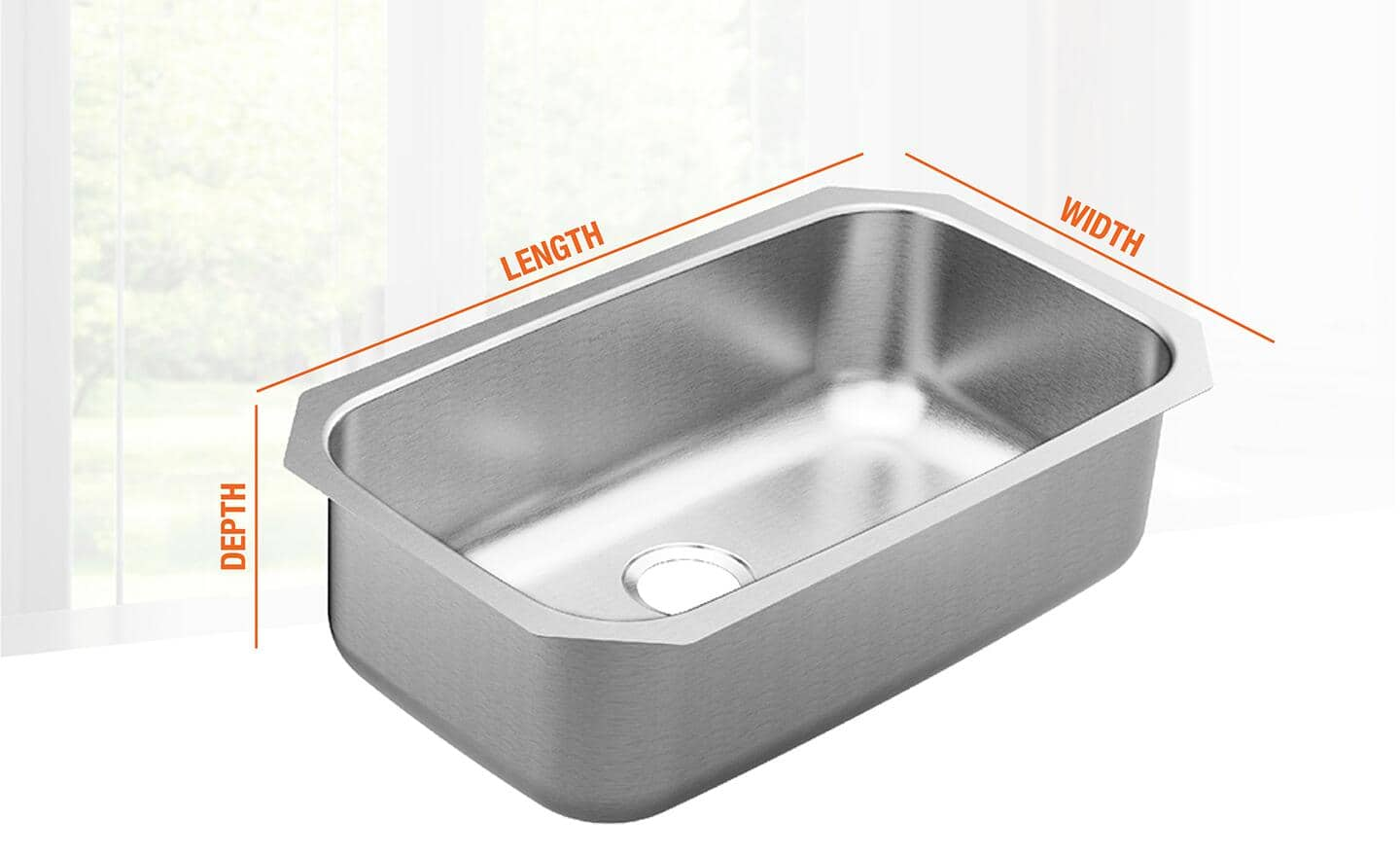
Image Source: dam.thdstatic.com
Why Accurate Sink Measurements Matter
Getting precise measurements for your kitchen sink is more than just a detail; it’s a necessity for a successful kitchen renovation or replacement. An incorrectly measured sink can lead to significant problems:
- Fit Issues: The most common problem is a sink that doesn’t fit the existing countertop cutout or cabinet base. This can mean costly modifications or the need to buy a completely different sink.
- Installation Headaches: Whether it’s an undermount sink dimensions guide or drop-in sink measurements, knowing the exact size prevents frustration during installation. A sink that’s too big won’t fit; one that’s too small might require extra work to secure.
- Countertop Compatibility: The sink cutout size is determined by your sink’s specifications. Mismatched measurements can damage your countertop or lead to an insecure sink installation.
- Faucet Placement: While not directly part of sink measurement, knowing your sink’s layout helps determine faucet compatibility and placement. You might even need to consider measuring a kitchen faucet hole if you’re replacing just the faucet.
- Aesthetics and Functionality: The right size sink enhances the look and usability of your kitchen. Too large can overwhelm the space; too small can be impractical.
Essential Tools for Measuring Your Sink
Before you start, gather these simple tools. They’ll make the process much easier and more accurate:
- Measuring Tape: A standard retractable metal measuring tape is best. Fabric tapes can stretch.
- Pen and Paper (or Digital Device): To jot down your measurements clearly.
- Someone to Help (Optional but Recommended): An extra pair of hands can make it easier to hold the tape measure steady, especially for larger sinks or awkward angles.
Measuring a Standard Kitchen Sink: The Basics
Most kitchen sinks are measured in three key ways: length, width, and depth. Let’s break down each one.
Sink Length Measurement
The length is the measurement from one outer edge of the sink to the opposite outer edge, usually across the longest dimension.
How to Measure:
- Open your measuring tape.
- Place the end of the tape measure on the outside edge of the sink, at one corner.
- Extend the tape measure across the sink to the outside edge of the opposite corner.
- Read the measurement at the furthest point.
- Record this number.
Sink Width Measurement
The width is the measurement from one outer side of the sink to the opposite outer side, typically across the shorter dimension.
How to Measure:
- Align the end of your measuring tape with the outside edge of the sink on one side.
- Stretch the tape measure straight across to the outside edge of the opposite side.
- Note the measurement.
- Write it down.
Measuring Sink Depth
Depth is crucial as it affects how much you can fit into the sink and how it sits within your countertop.
How to Measure:
- Measure from the top edge of the sink (where it meets the countertop) down to the bottom of the sink basin.
- If you have a double-basin sink, measure the depth of each basin individually, as they can sometimes vary slightly.
- Record these depths.
Important Note: For most sinks, you’ll be measuring the overall exterior dimensions. If you’re replacing a sink and want to ensure it fits the existing countertop opening, you’ll also need to measure the interior dimensions of that opening.
Measuring Different Sink Types
Different sink styles require slightly different approaches to measurement. Here’s how to handle common types:
How to Measure a Drop-In Sink
A drop-in sink, also known as a top-mount or self-rimming sink, sits on top of the countertop with its rim resting on the counter surface.
Key Measurements for Drop-In Sinks:
- Overall Exterior Dimensions (Length & Width): These are the most important for ensuring the sink fits the countertop opening. Measure from the very outside edge of the rim to the opposite outside edge.
- Sink Cutout Size: This is critical. You need to measure the size of the hole in your countertop where the sink will drop into. Measure the length and width of this opening from the underside of the countertop if possible, or from the inside edge of the existing sink rim. Ensure you measure the cutout size accurately.
- Depth: Measure from the top of the rim down to the bottom of the basin.
- Faucet Holes: Count and measure the diameter of any pre-drilled faucet holes. Some people need to know how to measure a kitchen faucet hole for a new faucet.
Steps for Drop-In Sinks:
- Exterior Length and Width: Measure the full length and width of the sink, including the rim.
- Cutout Measurements: This is vital for replacement.
- If the old sink is still in place, measure the opening under the rim. Measure the length and width of this hole.
- If the sink is removed, measure the length and width of the actual hole in the countertop.
- Depth: Measure the depth of the sink basin.
- Number of Faucet Holes: Note how many holes are present and their approximate spacing if you plan to reuse your current faucet.
How to Measure an Undermount Sink
An undermount sink is installed below the countertop, offering a seamless look. This means the countertop edge is exposed around the sink.
Key Measurements for Undermount Sinks:
- Overall Exterior Dimensions (Length & Width): You’ll still measure the total length and width of the sink itself.
- Bowl Dimensions: Since the rim is not visible, the actual size of the sink bowls is very important. Measure the length and width of each individual bowl.
- Rim Width/Flange: For undermount sinks, the flange is the part that sits against the underside of the countertop. You need to know how much of the countertop the sink will overlap from underneath. This is usually a small amount, typically 1/2 inch to 1 inch.
- Countertop Clearance: You need to ensure there’s enough space between the sink and the backsplash or wall, and between adjacent sinks or the countertop edge. Measure the distance from the sink’s outer edge to the cabinet edge or backsplash.
- Depth: Measure the depth of the sink basin.
Steps for Undermount Sinks:
- Sink Length and Width: Measure the absolute longest and widest points of the sink, from the outer edge of the flange.
- Bowl Measurements: Measure the length and width of the interior of each sink basin. This is often more important than the exterior for fitting within certain cabinet sizes.
- Depth: Measure the depth of the basin.
- Cabinet Space: Measure the width of the cabinet base that the sink will fit into. Most undermount sinks require a specific minimum cabinet width.
- Front-to-Back Measurement: Measure the distance from the front edge of the sink to the back edge, considering how it will fit against a backsplash or wall.
How to Measure a Farmhouse Sink
Farmhouse sinks, also known as apron-front sinks, have a distinctive exposed front panel. They can be made of various materials like fireclay, stainless steel, or cast iron.
Key Measurements for Farmhouse Sinks:
- Overall Exterior Dimensions (Length, Width, and Height/Projection): These are critical, especially the length and the projection from the wall.
- Apron Front Width: Measure the width of the exposed apron front.
- Depth: This is measured from the countertop level down to the bottom of the sink. For farmhouse sinks, the projection or how far it “sticks out” from the cabinet face is also important.
- Drainboard (if applicable): If your sink has an integrated drainboard, measure its dimensions.
- Sink Cutout/Cabinet Fit: You need to ensure the sink fits the cabinet opening and that the apron front aligns correctly with the cabinet face.
Steps for Farmhouse Sinks:
- Total Length: Measure the entire length of the sink from one outer edge to the other.
- Total Width/Projection: Measure from the very front of the apron to the back edge where it meets the countertop or wall. This is often called the projection.
- Depth of Basin: Measure the depth of the usable sink basin.
- Apron Height: Measure the height of the exposed apron panel.
- Cabinet Compatibility: Measure the width of the cabinet you intend to install it in. Farmhouse sinks often require specialized cabinetry or modifications.
Measuring Your Countertop Cutout Size
The sink cutout size is the opening in your countertop designed to accommodate the sink. For drop-in sinks, this is the hole the sink “drops” into. For undermount sinks, this is the opening the sink is mounted under.
How to Measure the Cutout:
- For Drop-In Sinks:
- Best Method (If Sink is Removed): Measure the length and width of the actual hole in the countertop. Measure from the inside edge of the existing rim to the opposite inside edge.
- Alternative Method (If Sink is Installed): Carefully measure the length and width of the opening under the sink rim. You might need to reach under the lip to get an accurate measurement. A flexible measuring tape or even a piece of string that you then measure against a rigid tape can be helpful.
- For Undermount Sinks:
- Best Method (If Sink is Removed): Measure the length and width of the opening in the countertop. This is the same as the sink’s overall exterior dimensions minus the flange width.
- If Sink is Installed: This can be trickier. You’ll need to measure the length and width of the opening from underneath the countertop. The measurement should be from the edge of the opening to the opposite edge. Make sure you account for the countertop material’s thickness.
Key Considerations for Cutout Size:
- Rim Overlap: For drop-in sinks, the rim needs to overlap the countertop edge. Ensure your cutout measurement allows for this overlap.
- Countertop Support: The cutout size affects the structural integrity of your countertop. Don’t make it too large.
- Sink Specifications: Always compare your cutout measurements to the manufacturer’s recommended cutout size for the new sink.
Measuring Sink Dimensions for Specific Needs
Beyond the basic length, width, and depth, you might need to consider other dimensions depending on your project.
Measuring Double Basin Sinks
If you have a double basin sink, you’ll need to measure each basin individually, as well as the overall sink dimensions.
What to Measure:
- Overall Sink Length and Width: Same as before.
- Individual Basin Length and Width: Measure the inside length and width of each separate basin.
- Divider Width: Measure the width of the material separating the two basins.
- Depth of Each Basin: As mentioned earlier, measure the depth of each basin.
Table: Double Basin Measurement Example
| Dimension | Measurement (Inches) |
|---|---|
| Overall Sink Length | 33 |
| Overall Sink Width | 22 |
| Left Basin Length | 16 |
| Left Basin Width | 19 |
| Right Basin Length | 14 |
| Right Basin Width | 19 |
| Divider Width | 2 |
| Left Basin Depth | 9 |
| Right Basin Depth | 9 |
Measuring Sink Spacing and Clearance
When installing a new sink, especially a double basin or a large single basin, you need to consider clearance around the sink.
What to Measure:
- Space Between Sinks: If you have a double sink, measure the distance between the two basins.
- Space to Backsplash/Wall: Measure the distance from the back edge of the sink to the wall or backsplash.
- Space to Countertop Edge: Measure the distance from the front edge of the sink to the front edge of the countertop.
- Space to Side Edges: Measure the distance from the side edges of the sink to the side edges of the countertop or cabinets.
These clearance measurements are important for ensuring your faucet, soap dispenser, and even cabinet doors can operate without hitting the sink.
How to Measure a Kitchen Faucet Hole
While not a sink dimension, measuring a kitchen faucet hole is often part of the process when replacing a sink or faucet.
How to Measure:
- Identify the Hole: Locate the pre-drilled hole in your sink or countertop for the faucet.
- Measure Diameter: Use your measuring tape to measure the diameter of the hole. If the hole is already drilled, measure across its widest point. If it’s a rough opening, measure the diameter of the intended circle. Standard faucet holes are typically 1 1/2 inches (38 mm) in diameter.
- Count Holes: Note the number of holes available, as different faucets require different configurations (e.g., single-hole, 3-hole, 4-hole).
This information is crucial for selecting a compatible faucet.
Using Your Measurements for Purchase
Once you have all your sink dimensions, you can confidently shop for a replacement or a new sink.
- Match Existing Cutout: If you’re replacing a sink, prioritize finding a new sink with exterior dimensions that match your existing countertop cutout size. This will save you from having to modify your countertop.
- Consider Cabinet Size: For undermount sinks, ensure the sink’s dimensions (especially width) fit within your existing cabinet base. Check the manufacturer’s specifications for minimum cabinet requirements.
- Material and Style: While you’re measuring, think about the material (stainless steel, fireclay, granite composite) and style (drop-in, undermount, farmhouse) that best suits your kitchen and budget.
- Double Check: Always double-check the measurements and compare them against the product specifications listed by the manufacturer. Don’t rely solely on generic size labels; actual dimensions are key.
Common Mistakes to Avoid
Even with a guide, it’s easy to make a mistake. Here are some common pitfalls:
- Measuring Only Interior Dimensions: For drop-in sinks, the exterior dimensions and cutout size are often more critical than just the interior basin size.
- Not Measuring Depth: Forgetting to measure the sink’s depth can lead to issues with garbage disposals or plumbing connections.
- Ignoring Faucet Hole Configuration: Buying a sink with the wrong number or placement of faucet holes can be a major inconvenience.
- Not Accounting for Countertop Thickness: For undermount sinks, the thickness of your countertop material can affect how the sink sits and how much overhang you have.
- Assuming Standard Sizes: While there are common sizes, sinks vary greatly. Always measure your specific sink or cutout.
- Not Measuring Twice: It’s an old adage for a reason. Measure each dimension at least twice to ensure accuracy.
Frequently Asked Questions (FAQ)
Q: What is the standard kitchen sink size?
A: Standard kitchen sinks typically range from 22 to 33 inches in length and 20 to 22 inches in width. However, there is no single “standard” size, as many variations exist.
Q: Can I install a new sink without changing my countertop?
A: Yes, if you are replacing a sink, you can often install a new sink that matches the existing countertop cutout size and faucet hole configuration. For undermount sinks, you’ll need to ensure the sink fits the existing opening from below.
Q: How do I measure my existing sink for replacement?
A: You need to measure the overall exterior length and width of your current sink, the size of the countertop cutout (if it’s a drop-in), the depth of the sink basin(s), and the configuration of faucet holes.
Q: What does undermount sink dimensions refer to?
A: Undermount sink dimensions refer to the overall size of the sink itself (length, width, depth) and the size of the opening it requires in the countertop from below.
Q: How is a drop-in sink measured differently than an undermount sink?
A: For a drop-in sink measurements, you focus on the exterior dimensions that will rest on the countertop and the size of the cutout it fits into. For an undermount sink, the focus shifts to the overall sink size and the precise opening needed under the counter, as there is no visible rim.
Q: What is the sink cutout size I need for a new sink?
A: The sink cutout size is determined by the specific sink you purchase. Manufacturers provide a template or exact dimensions for the required cutout in their installation instructions. You’ll need to measure your existing cutout to ensure compatibility or prepare the correct size for a new countertop.
Q: How important is measuring sink depth?
A: Measuring sink depth is very important. It affects your ability to wash large pots and pans, the amount of storage space below the sink, and plumbing clearances.
Q: What if my sink has a different shape, like a corner sink?
A: For oddly shaped sinks, like corner sinks, you’ll need to adapt your measurement approach. Measure the longest and widest points, and sketch the shape to record key dimensions for each section.
By following these steps and paying close attention to the details, you can accurately measure your kitchen sink and ensure a smooth and successful project. Happy measuring!