
The standard kitchen counter height is 36 inches from the floor to the top of the countertop. This measurement is a widely accepted norm that balances comfort and functionality for most adults performing kitchen tasks. This comprehensive guide will delve into the specifics of kitchen counter heights, exploring variations, considerations for different needs, and the factors that influence these dimensions.
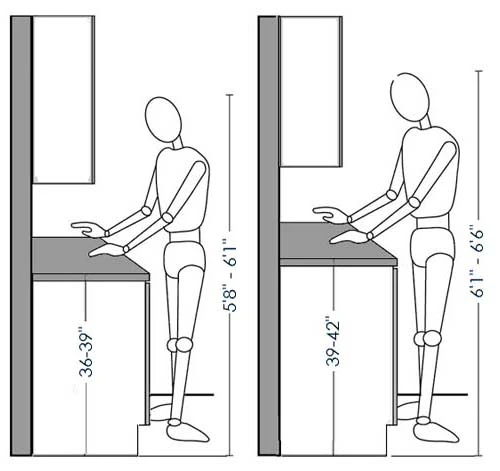
Image Source: www.regattaexports.com
Deciphering the Standard Kitchen Counter Height
The 36-inch standard for kitchen counter height has evolved over decades, driven by ergonomic studies and practical considerations. This height allows for comfortable standing and working for a majority of the population, facilitating activities like chopping vegetables, kneading dough, and washing dishes. It’s a universal benchmark that designers and builders adhere to, ensuring a baseline level of usability in most kitchens.
Factors Influencing Countertop Height Dimensions
While 36 inches is the standard, several factors can influence the final countertop height dimensions. These include the overall kitchen design, the height of the base cabinets, the thickness of the countertop material, and the specific needs of the users.
The Base of the Operation: Cabinet Height
Base cabinets form the foundation of your countertops. Standard base cabinets typically stand 34.5 inches tall. When you add a countertop material, such as granite, quartz, or laminate, which can range from 1.5 to 2 inches thick, you reach the 36-inch finished height.
- Cabinet Box Height: Generally 34.5 inches.
- Countertop Thickness: Typically 1.5 inches (this can vary).
- Total Height: 34.5 inches + 1.5 inches = 36 inches.
Material Matters: Countertop Thickness and Its Impact
The choice of countertop material is not just about aesthetics; it also plays a role in the final height. Thicker materials will naturally increase the overall countertop height if the base cabinet height remains the same.
- Laminate: Usually 1.5 inches thick.
- Solid Surface (e.g., Corian): Can range from 0.75 to 1.5 inches.
- Granite/Quartz: Often 1.25 to 1.5 inches thick, though thicker slabs are available.
- Butcher Block: Typically 1.5 to 2 inches thick.
- Marble: Similar to granite and quartz, usually 1.25 to 1.5 inches.
If you opt for a significantly thicker material, say 3 inches, and maintain standard base cabinets, your countertop height will increase, potentially exceeding the comfortable 36-inch standard for some.
Beyond the Standard: Variations in Kitchen Counter Height
While 36 inches is the common height, several situations call for different measurements. These variations are crucial for maximizing comfort, accessibility, and functionality within a kitchen space.
The Versatile Kitchen Island Height
Kitchen island height often mirrors the standard countertop height of 36 inches, providing a continuous work surface and eating area. However, islands can also be designed at different heights to serve multiple purposes.
- Standard Work Surface: 36 inches.
- Bar Height Counter: An island can incorporate a raised section at 42 inches for bar seating, creating a distinct eating or socializing zone.
- Lowered Sections: Some designs might feature a lower section, around 30 inches, to accommodate sitting at a table for dining or food preparation.
The key is to consider the primary function of the island when determining its height.
Adapting for Accessibility: ADA Compliant Counter Height
The Americans with Disabilities Act (ADA) provides guidelines for accessible design, including kitchen counter heights. These are crucial for individuals with disabilities or mobility impairments.
- ADA Compliant Counter Height: The ADA specifies a minimum clear knee space of 27 inches high, 30 inches wide, and 19 inches deep for accessible work surfaces. The top of the accessible counter should be no more than 34 inches from the floor. This allows wheelchair users to comfortably maneuver and work at the counter.
Designing with ADA compliance in mind ensures your kitchen is inclusive and usable by a wider range of people.
Considering Your Stature: Workspace Counter Height for You
Your personal height is a significant factor in determining the most comfortable workspace counter height. While 36 inches works for many, individuals who are significantly taller or shorter may benefit from custom heights.
- For Taller Individuals: Increasing the counter height by 1-3 inches can reduce bending and strain. A height of 37-39 inches might be more suitable.
- For Shorter Individuals: Lowering the counter height by 1-3 inches can improve comfort and reduce the need to overreach. A height of 33-35 inches could be ideal.
It’s often recommended to try out different heights by temporarily stacking books or boxes on a table to simulate custom counter heights before committing to a renovation.
Tackling Space Constraints: Counter Height for Small Kitchens
In small kitchens, functionality and efficient use of space are paramount. The standard 36-inch height remains a viable option, but designers might consider slight adjustments to optimize workflow.
- Maximizing Vertical Space: Instead of altering the primary counter height, focus on storage solutions above and below the counters.
- Compact Island or Peninsula: A smaller island or a peninsula can offer additional workspace without overwhelming the space. Their height can still align with the standard 36 inches.
- Fold-Down Counters: For ultimate space-saving, consider fold-down counters that can be deployed when needed and stowed away when not in use. These can be designed to match the standard height when open.
The goal in small kitchens is often to create a cohesive and efficient layout, and adhering to the standard height generally helps with this.
Essential Kitchen Counter Spacing
Beyond the height, the spacing between different kitchen elements is critical for a smooth and safe workflow. Proper kitchen counter spacing ensures you can move freely, open cabinets and appliances, and work without feeling cramped.
The Work Triangle: A Classic Layout Principle
The work triangle connects the sink, refrigerator, and stove/cooktop. Maintaining adequate spacing within this triangle is key to efficient kitchen operation.
- Sink to Stove: Ideally between 4 and 9 feet.
- Sink to Refrigerator: Ideally between 4 and 9 feet.
- Stove to Refrigerator: Ideally between 4 and 9 feet.
Navigating the Kitchen: Clearance Zones
Adequate clearance around countertops and appliances is essential for safety and ease of use.
- Main Walkways: Minimum of 36 inches for comfortable passage.
- Between Parallel Counters/Islands: Minimum of 42 inches for comfortable working space and passage.
- In Front of Appliances (e.g., Oven, Dishwasher): At least 36-48 inches to allow for doors to open fully and for someone to stand in front of them while in use.
- Working Clearance Behind Island: A minimum of 36 inches, but 42-48 inches is preferred if traffic will pass behind the island.
Creating Zones: Dedicated Counter Areas
Different tasks in the kitchen often benefit from dedicated counter areas with specific heights and functionalities.
- Baking Station: A slightly lower counter might be beneficial for rolling out dough.
- Coffee Bar: Can be at standard height but might include specific shelving or niches.
- Prep Area: Usually at the standard 36-inch height for versatile use.
Customizing Your Kitchen Counter Height
While the standard 36-inch kitchen counter height is a reliable guideline, customization can lead to a kitchen that is perfectly tailored to your needs and preferences.
When to Consider Custom Heights
- Significant Height Differences: If you or your primary kitchen users are considerably taller or shorter than average.
- Specific Health Conditions: Arthritis, back problems, or other conditions that affect posture or require less bending.
- Unique Design Vision: To create a multi-level workspace or a specialized area.
- Accommodating Children: A lower, dedicated prep area for younger family members.
Practical Steps for Customization
- Measure and Test: Use temporary setups to determine your ideal working height. Stand at your prospective counter height with your elbows bent at a 90-degree angle. Your hands should rest comfortably on the surface.
- Consult with Professionals: Kitchen designers and cabinet makers can offer expert advice on achieving custom heights, ensuring structural integrity and aesthetic appeal.
- Cabinet Modifications: Custom base cabinets can be ordered to different heights, or standard cabinets can sometimes be modified.
- Countertop Thickness: Selecting a thicker or thinner countertop material can also help achieve a desired final height.
The Appeal of a Bar Height Counter
A bar height counter, typically 40-42 inches high, is a popular addition for casual dining and entertaining. It creates a distinct zone separate from the main prep areas and offers a more elevated social gathering point.
- Seating: Requires bar stools that are approximately 28-30 inches high.
- Functionality: Excellent for quick meals, serving appetizers, or as a serving buffet during parties.
- Design Integration: Can be integrated into an island, a peninsula, or as a standalone counter.
Frequently Asked Questions (FAQ)
Q1: What is the most common kitchen counter height?
A1: The most common kitchen counter height is 36 inches from the floor to the top of the countertop.
Q2: Can I have different counter heights in my kitchen?
A2: Yes, you can have different counter heights. This is often done for functional reasons, such as creating a lower baking station or a higher bar area, or for accessibility (ADA compliant counter height).
Q3: What is the standard kitchen counter depth?
A3: The standard kitchen counter depth is typically 25 inches for the base cabinets, with the countertop extending an additional 1 to 1.5 inches, resulting in an overall depth of 26 to 27 inches.
Q4: How much space should be between kitchen counters?
A4: For efficient workflow and passage, the general recommendation is at least 36 inches of clearance between parallel counters or between a counter and an island. 42-48 inches is preferred in high-traffic areas or behind an island.
Q5: Is 34 inches a valid kitchen counter height?
A5: Yes, 34 inches is a valid kitchen counter height, particularly for ADA compliant counter height requirements, allowing for wheelchair accessibility. It can also be a comfortable height for shorter individuals.
Q6: What are the dimensions for a kitchen island height?
A6: A kitchen island height can vary based on its function. Standard work surface height is 36 inches. However, a bar height counter section for seating would be around 40-42 inches.
Q7: How do I determine the best counter height for my small kitchen?
A7: For a counter height for small kitchens, sticking to the standard 36 inches is often best for a cohesive look and functionality. Focus on maximizing space with smart storage and efficient layout rather than drastically altering counter heights, unless specific ergonomic needs dictate otherwise.
Q8: What is the standard height for a bar counter?
A8: A standard bar height counter is typically between 40 and 42 inches from the floor to the top surface. This height is designed for use with bar stools.
Q9: Does countertop thickness affect the final height?
A9: Yes, countertop thickness directly impacts the final height. A thicker countertop material, when added to the base cabinet height, will result in a higher overall counter. For example, a 2-inch thick countertop on a 34.5-inch base cabinet will create a 36.5-inch counter.
Q10: Who determines the standard kitchen counter height?
A10: The standard kitchen counter height of 36 inches is a result of common practice, ergonomic studies, and industry standards developed over time by kitchen designers, cabinet manufacturers, and builders to accommodate the average adult.