
The standard kitchen countertop depth is typically 24 inches, but the width can vary significantly based on cabinet width, kitchen layout dimensions, and the overall design of your kitchen. This guide will delve into the various dimensions of kitchen countertops, helping you make informed decisions for your home.
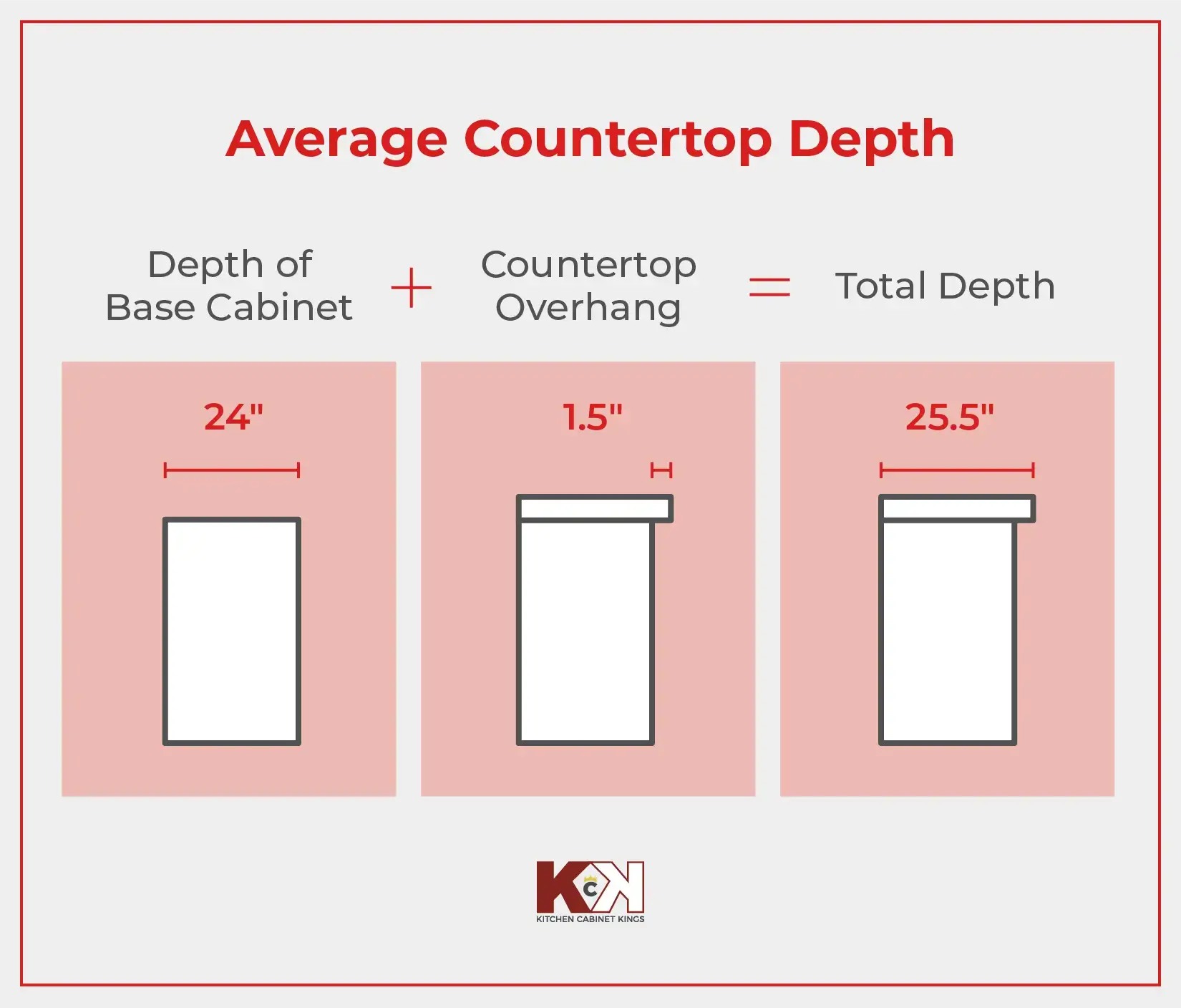
Image Source: cdn.kitchencabinetkings.com
Deciphering Standard Countertop Dimensions
When planning a kitchen renovation or a new build, understanding the standard measurements of kitchen countertops is crucial. These dimensions directly impact functionality, workflow, and the overall aesthetic of your kitchen. We’ll explore the typical sizes you’ll encounter and the factors that influence them.
Standard Kitchen Counter Width: More Than Meets the Eye
The term “standard kitchen counter width” often refers to the length of the countertop running along a wall, typically aligned with base cabinets. While there isn’t a single universal “standard” width because it’s dictated by the length of the cabinets it covers, the common cabinet width is often 24 inches for base cabinets. This means a single cabinet section might have a 24-inch wide countertop. However, kitchen layouts are rarely composed of just one cabinet. Kitchens are typically designed with multiple base cabinets placed side-by-side, creating longer runs of countertop space.
For instance, a kitchen might have a base cabinet run that is 60 inches (5 feet), 72 inches (6 feet), or even much longer, depending on the available wall space and the number of cabinets. This means your standard kitchen counter width can easily extend to several feet. The actual width of your countertop is primarily determined by the combined width of the base cabinets it sits upon.
The Essential Countertop Depth: Your Workspace Foundation
The countertop depth is a critical measurement, as it defines the primary work surface area. The most common countertop depth measurements for residential kitchens are:
- 24 inches (60 cm): This is the most prevalent depth for standard base cabinets. A 24-inch deep countertop provides ample space for most kitchen tasks, from meal preparation to appliance placement.
- 30 inches (76 cm): Some custom or deeper base cabinets can accommodate a 30-inch deep countertop. This offers an extended workspace depth, which can be beneficial in larger kitchens or for those who need more room for specialized cooking or prep areas.
- 25 inches (63.5 cm) and 25.5 inches (64.77 cm): These are also common depths, often seen with slightly deeper cabinets that can offer a bit more workspace depth than the standard 24 inches without being excessively large.
The choice of countertop depth often aligns with the depth of the base cabinets. Manufacturers typically produce base cabinets with standard depths that pair with these countertop dimensions. When selecting your cabinets, ensure you also consider the corresponding countertop depth to maximize your usable workspace.
Countertop Thickness: Adding Style and Substance
While width and depth are about surface area, countertop thickness contributes to the visual weight and perceived quality of your kitchen. Common countertop thickness options include:
- 3/4 inch (2 cm): Often used for laminate or thinner stone veneers, this is a more budget-friendly option.
- 1 1/4 inches (3 cm): This is the most popular thickness for natural stone like granite and quartz. It offers a substantial look and is very durable.
- 2 inches (5 cm) and thicker: Thicker countertops, often achieved by “laminating” or stacking slabs, provide a dramatic, high-end appearance. This is particularly popular for statement pieces like kitchen islands.
The chosen thickness can influence the overall look and feel of your kitchen. Thicker countertops tend to make a stronger visual statement and can convey a sense of luxury and durability.
The Crucial Countertop Overhang: Balancing Form and Function
The countertop overhang refers to the portion of the countertop that extends beyond the face of the base cabinets or island support. This overhang serves both functional and aesthetic purposes.
- Standard Base Cabinet Overhang: Typically, there’s a countertop overhang of about 1 to 1.5 inches (2.5 to 3.8 cm) on the front of base cabinets. This provides a comfortable space for your hands when working at the counter and helps protect the cabinet doors from spills and knocks.
- Kitchen Island Overhang: Kitchen islands often feature more generous overhangs, especially on the seating side. An overhang of 10 to 12 inches (25 to 30 cm) is common for comfortable seating with stools. This allows diners to tuck their legs under the counter without bumping into the cabinets.
- Edge Treatment: The overhang also plays a role in how edge profiles are applied. A thicker countertop will naturally have a more pronounced overhang compared to a thinner one, assuming the same cabinet depth.
Consider the intended use of your countertop when deciding on the overhang. For a primary prep area, a modest overhang is practical. For a seating area, a substantial overhang is necessary for comfort.
Exploring Kitchen Island Dimensions: A Central Hub
Kitchen islands are often the focal point of a kitchen, and their dimensions are carefully considered to integrate seamlessly into the kitchen layout dimensions.
Standard Kitchen Island Size
There’s no single “standard” size for a kitchen island as they are highly customizable to fit the available space and the homeowner’s needs. However, common starting points include:
- Width: Islands can range from 24 inches wide for a small prep island to over 60 inches (5 feet) wide for a large multi-functional island.
- Depth: Typically, the countertop depth of an island will be similar to base cabinets, around 24 to 36 inches. Deeper islands can incorporate specialized storage or appliances.
- Length: This is the most variable dimension, determined by the kitchen’s overall footprint. Islands can be as short as 36 inches or as long as 10 feet or more.
Workspace Depth on Islands
The workspace depth on an island is crucial for its functionality. A standard island depth of 24 inches provides a decent prep area. However, many homeowners opt for deeper islands, often 30 inches or even 36 inches, to accommodate:
- More extensive prep space.
- Storage cabinets or drawers on both sides.
- Integrated appliances like cooktops or sinks.
When designing an island, ensure adequate workspace depth to comfortably perform tasks without feeling cramped.
Seating Considerations for Kitchen Islands
If your island will include seating, you’ll need to factor in specific dimensions for comfort:
- Clearance: Allow at least 36 inches of clearance behind seating areas for people to walk around comfortably. If the island is a primary thoroughfare, aim for 42-48 inches.
- Seating Overhang: As mentioned, a 10-12 inch countertop overhang is ideal for comfortable legroom when seated at an island.
- Stool Height: Counter-height stools (around 24-26 inches seat height) are typically used with standard 36-inch high countertops, while bar-height stools (around 30-32 inches seat height) are for 42-inch high bars.
Factors Influencing Countertop Size
Several key elements dictate the final dimensions of your kitchen countertops.
Cabinet Width and Configuration
The cabinet width is the most direct determinant of countertop length. Base cabinets come in standard widths, typically increments of 3 inches, starting from 12 inches and going up to 36 inches or even 48 inches. Custom cabinetry offers even more flexibility.
- Common Base Cabinet Widths: 12″, 15″, 18″, 21″, 24″, 27″, 30″, 33″, 36″.
- Corner Cabinets: These require special considerations for countertop measurement and installation due to their angled or “L” shape.
The arrangement of these cabinets in your kitchen layout dimensions will create the overall length of your countertop runs.
Kitchen Layout Dimensions: Designing for Flow
The kitchen layout dimensions play a significant role in determining how much countertop space you can effectively incorporate and the optimal placement of different countertop sections.
- Galley Kitchens: These narrow kitchens often feature two parallel runs of countertops and cabinets, maximizing workspace depth on both sides.
- L-Shaped Kitchens: These layouts utilize two adjacent walls, creating a continuous countertop run and often incorporating a corner sink or appliance.
- U-Shaped Kitchens: With countertops on three walls, these layouts offer abundant workspace and storage but require careful planning for traffic flow.
- Kitchens with Islands: Islands add a significant amount of countertop real estate and can break up large open spaces, but they require sufficient surrounding clearance to maintain functionality.
The overall dimensions of your kitchen, including wall lengths, the placement of windows and doors, and the desired clearance between elements, all contribute to the final countertop measurements.
Appliance Integration
The size and type of appliances you plan to integrate will also influence countertop dimensions.
- Standard Ranges: These are typically 30 inches or 36 inches wide and often sit flush with the countertop.
- Refrigerators: Built-in refrigerators require specific cabinet widths, which in turn dictate the adjacent countertop lengths. Freestanding refrigerators often sit beside a countertop run, with a small filler piece or a specific cabinet designed to meet them.
- Dishwashers: Most dishwashers are 24 inches wide and are installed adjacent to a base cabinet, influencing the adjacent countertop length.
- Cooktops and Wall Ovens: These appliances are installed into countertop or cabinet cutouts, and their specific dimensions will require precise measurement and planning.
Customization and Special Needs
Beyond standard sizes, homeowners often opt for custom solutions. This could involve:
- Extended Depth: For those who need more workspace depth, cabinets and countertops can be ordered in deeper dimensions (e.g., 30 inches).
- Unique Shapes: Countertops can be fabricated in various shapes to fit specific kitchen designs, such as curved countertops or L-shaped corner sections that extend beyond standard cabinet lengths.
- Appliance Garages and Built-in Cutting Boards: These elements might require custom countertop extensions or cutouts.
Practical Applications and Considerations
Knowing the typical measurements is one thing; applying them to your specific kitchen is another.
Optimizing Workspace Depth
The workspace depth is paramount for comfortable and efficient cooking. A standard 24-inch countertop depth usually provides sufficient space between the front edge and the backsplash. However, consider how you use your kitchen:
- Heavy Prep: If you do a lot of chopping and mixing, a deeper countertop (e.g., 30 inches) can provide significantly more room.
- Appliance Placement: Larger appliances like stand mixers or food processors can occupy a considerable portion of your workspace depth. Ensure you have enough uninterrupted space for your most-used tools.
- Narrow Kitchens: In smaller or narrower kitchens, maximizing every inch is crucial. Even a slight increase in countertop depth can make a difference, but ensure it doesn’t impede traffic flow.
The Importance of Countertop Overhang
A properly calculated countertop overhang enhances usability.
- Seating Areas: For islands intended for seating, a 10-12 inch overhang allows for comfortable legroom.
- Working Areas: A 1-1.5 inch overhang on standard base cabinets prevents you from hitting cabinet fronts and provides a natural handhold.
- Appliance Clearance: Ensure the overhang doesn’t interfere with the opening of appliance doors, such as oven doors or dishwasher doors.
Ensuring Proper Clearance in Kitchen Layout Dimensions
Adequate clearance is vital for a functional and safe kitchen.
- Between Countertops: In kitchens with parallel runs of countertops or a countertop and an island, maintain at least 36 inches of clearance for comfortable movement. If the island is a major traffic path, 42-48 inches is recommended.
- Around Appliances: Ensure there’s enough space to open appliance doors, drawers, and oven doors fully without hitting other surfaces.
- Against Walls: Maintain a small gap (often filled with a bead of caulk or a specialized backsplash piece) between the countertop and the wall to prevent moisture ingress and allow for expansion/contraction.
Material Impact on Dimensions
The material you choose for your countertops can subtly influence the dimensions and installation.
- Laminate: Typically available in standard 1 1/4-inch thickness, though custom options exist.
- Natural Stone (Granite, Marble, Quartzite): Most commonly available in 3 cm (approximately 1 1/4 inches) thickness. Thicker looks can be achieved through lamination.
- Engineered Quartz: Similar to natural stone, usually 2 cm or 3 cm thickness.
- Solid Surface (Corian, etc.): Can be fabricated in various thicknesses, often starting at 3/4 inch and can be built up to appear thicker.
- Wood/Butcher Block: Available in various thicknesses, from 1 1/2 inches up to 4 inches or more, often used for islands.
Consider how the material’s thickness might affect the overall height of your countertop if you are replacing existing countertops or integrating them with existing cabinetry.
Common Countertop Widths in Detail
As we’ve established, the “width” of a kitchen countertop is essentially its length. This length is determined by the linear feet of cabinetry it covers. Here’s a breakdown of how cabinet width translates to countertop length:
| Cabinet Width | Typical Countertop Length (without seams) | Notes |
|---|---|---|
| 12 inches | 12 inches | Often used for narrow filler cabinets or spice racks. |
| 15 inches | 15 inches | Common for trash pull-out cabinets or narrower storage. |
| 18 inches | 18 inches | Frequently used for base cabinets with drawers or doors. |
| 24 inches | 24 inches | A very common width for base cabinets, dishwashers, and sink bases. |
| 30 inches | 30 inches | Used for larger base cabinets, providing more storage. |
| 36 inches | 36 inches | Standard width for many base cabinets, often a good size for sinks. |
| 48 inches | 48 inches | Larger base cabinets, can accommodate wider sinks or appliances. |
| Custom Widths | Varies | Allows for precise fitting to unique kitchen layouts. |
Important Note: While individual cabinets have specific widths, the countertop can often span across multiple cabinet widths without a seam, depending on the material and manufacturing capabilities. For example, a 10-foot countertop might be fabricated from a single slab or multiple slabs joined seamlessly.
Fathoming Countertop Depth Measurements
The countertop depth measurements are more standardized than the lengths. Let’s reiterate the common depths and their implications:
| Countertop Depth | Typical Cabinet Depth | Primary Use | Advantages |
|---|---|---|---|
| 24 inches (60 cm) | 24 inches | Standard base cabinets, general work surface | Cost-effective, widely available, fits most kitchens |
| 25 inches (63.5 cm) | 25 inches | Slightly deeper base cabinets | More workspace depth, better appliance fit |
| 25.5 inches (64.77 cm) | 25.5 inches | Deeper base cabinets | Increased workspace depth, can accommodate larger items |
| 30 inches (76 cm) | 30 inches | Custom or specialty base cabinets, islands | Significant workspace depth, ideal for large prep areas |
| 36 inches (91.44 cm) | 36 inches | Kitchen islands, large prep stations | Maximum workspace depth, excellent for entertaining |
When selecting cabinets, the specified cabinet depth will directly dictate the available countertop depth. Always ensure the cabinet can support the chosen countertop depth and any intended features like a significant countertop overhang.
Frequently Asked Questions About Kitchen Countertop Sizes
Here are answers to common questions about kitchen countertop dimensions:
What is the standard countertop height?
The standard standard countertop height in most residential kitchens is 36 inches (91.4 cm) from the finished floor to the top surface of the countertop. This height is ergonomically designed to be comfortable for most adults performing tasks like cooking and washing dishes.
What is the standard countertop depth?
The standard countertop depth is typically 24 inches (60 cm) for countertops installed over standard base cabinets. However, deeper options like 25, 25.5, and 30 inches are also common, especially for islands or custom cabinetry, to provide more workspace depth.
Can I have countertops that are wider than 24 inches?
Yes, absolutely! The “width” of a countertop refers to its length. This length is determined by the cabinet width and the arrangement of your cabinets. A single countertop run can easily be 5, 10, or even more feet long, depending on your kitchen layout dimensions. The 24-inch measurement refers to the depth of the countertop.
What is the standard countertop overhang?
For standard base cabinets, the typical countertop overhang is about 1 to 1.5 inches (2.5 to 3.8 cm) on the front edge. For kitchen islands with seating, the overhang is usually 10 to 12 inches (25 to 30 cm) to allow for comfortable legroom.
How much clearance do I need around a kitchen island?
You should aim for at least 36 inches of clearance around a kitchen island to allow for comfortable passage. If the island is in a high-traffic area or if multiple people will be moving around it simultaneously, 42-48 inches is preferable.
Does countertop thickness affect the overall height?
Yes, countertop thickness contributes to the overall finished height. If your cabinets are 34.5 inches tall (a common cabinet box height), adding a 1.5-inch thick countertop (including any build-up or laminated edge) will bring the total height to 36 inches, the standard. Always account for your chosen countertop material’s thickness when planning your kitchen’s vertical dimensions.
What is the most common countertop depth measurement?
The most common countertop depth measurement is 24 inches, aligning with the standard depth of base cabinets. This measurement directly influences the workspace depth.
How wide are kitchen islands typically?
Kitchen island widths can vary greatly, but they commonly range from 24 inches for a small prep island to 36 inches, 48 inches, or even 60 inches and wider for larger, multi-functional islands. The width is dictated by the available space and the desired functionality.
By carefully considering these dimensions, you can design a kitchen with countertops that are both beautiful and highly functional, offering ample workspace depth and a comfortable countertop overhang where needed. Remember that every kitchen is unique, and these guidelines are starting points for creating your ideal culinary space.