
What is the standard kitchen sink drain size? The most common sink drain diameter in North America is 3.5 inches (89 mm) for the opening itself, though the plumbing pipe size it connects to is typically 1.5 inches (38 mm) or sometimes 2 inches (51 mm). This guide will help you accurately measure your kitchen sink drain, a crucial step whether you’re replacing a drain assembly, fixing a clog, or installing a new sink.
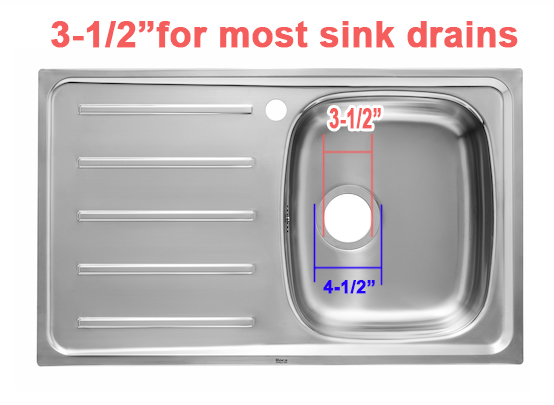
Image Source: www.aresheng.com.tw
Why Measuring Your Sink Drain Size Matters
Knowing your kitchen sink drain size is essential for several reasons:
- Purchasing Replacement Parts: If your drain stopper is broken, or your strainer basket is clogged and needs replacing, you need the correct size. Buying the wrong size means it won’t fit, leading to leaks or the inability to seal properly.
- Plumbing Repairs: When dealing with leaks or clogs, knowing the drain assembly measurement helps you buy the right fittings for your P-trap connection size and the pipes leading to your main drain.
- Garbage Disposal Installation: If you’re installing or replacing a garbage disposal, it needs to connect to the sink drain. The disposal unit will have a specific inlet size that must match your sink’s drain outlet.
- Sink Strainer and Basket Purchasing: The little mesh baskets that catch food scraps come in various sizes. A correctly sized strainer will sit flush and prevent larger debris from entering the drain.
- General Maintenance: Having the right tools and parts readily available for sink maintenance saves time and frustration.
Tools You’ll Need for Accurate Measurement
Gathering the right tools before you start will make the process smooth and accurate.
- Tape Measure: A standard retractable metal tape measure is ideal.
- Ruler: A metal ruler can be useful for smaller measurements or if a tape measure is too bulky.
- Paper and Pen/Pencil: To jot down your measurements.
- Gloves (Optional): For hygiene, especially if dealing with a dirty drain.
- Flashlight (Optional): To get a better look inside the drain if it’s dark.
Measuring the Sink Drain Opening: Step-by-Step
This is the most common measurement people need. It refers to the actual hole in your sink where the water goes down.
Step 1: Clear the Sink
Remove any dishes, cleaning supplies, or debris from the sink. Ensure the drain area is clean and dry if possible.
Step 2: Locate the Drain Hole
The drain hole is at the bottom of your sink basin.
Step 3: Measure the Diameter
There are two main ways to measure the drain hole measurement itself:
Method A: Measuring the Visible Opening (Most Common)
- Place the Tape Measure: Carefully lay the end of your tape measure across the widest part of the drain opening, ensuring it goes straight across from one inner edge to the opposite inner edge.
- Read the Measurement: Note the measurement in inches or centimeters. For most kitchen sinks, you’ll find this measurement is around 3.5 inches (89 mm). This is the size of the standard sink drain opening.
Method B: Measuring the Drain Flange (If Installed)
Sometimes, you might want to measure the part that sits in the sink. This is often called the drain flange or strainer body.
- Remove the Strainer Basket (If Possible): If you have a removable strainer basket, lift it out.
- Measure the Outer Diameter of the Flange: Place your tape measure around the outside edge of the metal flange that is permanently attached to the sink. This measurement might be slightly larger than the opening itself. You’re looking for the diameter of the part that seals against the sink. This often corresponds to the same 3.5-inch standard, but it’s good to confirm.
Tip: If you can’t get a clear reading across the diameter, try measuring the circumference (the distance around the edge) and then divide that number by pi (approximately 3.14) to get the diameter.
Measuring the Drain Pipe Size and Connections
This measurement is critical for understanding how the sink drain connects to your plumbing system. This involves the tailpiece and the pipe that leads to the P-trap.
Step 1: Access the Drain Pipes
You’ll need to look underneath your sink at the pipes connected to the drain. This usually involves a vertical pipe (the tailpiece) coming down from the sink drain assembly, leading to a U-shaped pipe (the P-trap), which then connects to the wall pipe.
Step 2: Identify the Key Components
- Tailpiece: The straight pipe directly below the sink drain.
- P-trap: The curved section of pipe designed to hold water and prevent sewer gases from entering your home.
- Drain Waste Vent (DWV) Pipe: The larger pipe that carries wastewater away.
Step 3: Measure the Pipe Diameter
This is where you’ll be measuring the outside diameter of the pipes.
Measuring the Tailpiece Diameter
- Measure the Tailpiece: Use your tape measure to measure the outside diameter of the tailpiece pipe.
- Common Sizes: For most kitchen sinks, the tailpiece and subsequent plumbing will be 1.5 inches (38 mm) in outer diameter. Some older homes or larger sinks might use 2 inches (51 mm). This is the sink waste diameter you’ll be concerned with.
Measuring the P-Trap Connection Size
The P-trap connects to both the tailpiece and the wall pipe. The connection points are usually threaded fittings.
- Measure the Fitting: Measure the outside diameter of the threaded fitting on the P-trap where it connects to the tailpiece.
- Measure the Wall Pipe Connection: Measure the outside diameter of the fitting where the P-trap connects to the pipe coming out of the wall.
- Common Sizes: These connections will almost always match the plumbing pipe size of your tailpiece and the wall pipe, typically 1.5 inches or 2 inches.
Important Note on Pipe Size: Plumbing pipes are often referred to by their nominal size, not their actual outer diameter. For example, a “1.5-inch” pipe often has an actual outer diameter of around 1.625 inches. When buying fittings, it’s best to match the nominal size. If you measure and get something like 1.625 inches, you’ll likely need 1.5-inch nominal size fittings.
Measuring for Drain Assembly Components
When you replace your entire drain assembly, you’ll need to know a few more measurements. The drain assembly typically includes the strainer body, gasket, locknut, and tailpiece.
Measuring the Sink Hole for the Drain Assembly
This is essentially the same as measuring the sink drain diameter we discussed earlier.
- Measure the Hole: Use your tape measure to find the diameter of the opening in your sink.
- Confirm the Standard: A 3.5-inch opening is the most common for kitchen sinks.
Measuring the Threaded Portion of the Strainer Body
The strainer body that screws into the drain flange needs to have a tailpiece with a specific thread size.
- Locate the Threads: Look at the part of the drain assembly that will go through the sink hole and into the P-trap assembly. It usually has a threaded section.
- Measure the Threads: Use your tape measure or a ruler to measure the diameter of these threads.
- Common Thread Sizes: These threads are typically designed to fit standard plumbing fittings, meaning they will correspond to your 1.5-inch or 2-inch nominal pipe sizes.
Measuring the Tailpiece Length
The tailpiece is the straight pipe extending from the bottom of the strainer body.
- Measure the Existing Tailpiece: If you’re replacing a drain assembly, measure the length of the current tailpiece.
- Consider Your Needs: If installing new, measure the distance from the underside of your sink to your P-trap connection, allowing for proper slope and clearance.
Measuring Drain Pipe Gauge
While you won’t typically “measure” the drain pipe gauge directly with a tape measure, it’s an important factor to be aware of when purchasing plumbing parts. The gauge refers to the thickness of the pipe wall.
- Material: Kitchen sink drains and tailpieces are commonly made of plastic (PVC or ABS) or metal (brass, stainless steel).
- Impact: Thicker-walled pipes (higher gauge) are more durable and less prone to damage. Metal pipes are generally thicker than plastic ones.
- When it Matters: When buying a complete drain assembly or tailpiece, the material and its inherent strength will dictate its durability. You don’t usually need to measure this, but be aware that different materials have different gauges and strengths. For example, a heavy-duty brass faucet drain fitting might be more robust than a standard plastic one.
Measuring for a Garbage Disposal Connection
If you’re installing a garbage disposal, it connects directly to the sink drain opening.
- Garbage Disposal Inlet Size: Garbage disposals are designed to fit the standard 3.5-inch sink drain opening. The disposal unit itself will come with a mounting flange that sits inside your sink drain, and the disposal unit then attaches to this.
- Disposal Outlet Size: The outlet on the garbage disposal that connects to your P-trap is typically 1.5 inches or 2 inches, matching standard plumbing pipe sizes. You might need a special adapter if your plumbing is a different size.
Common Sink Drain Sizes and What They Mean
Let’s summarize the typical measurements you’ll encounter.
| Measurement Point | Common Size (North America) | What it Affects |
|---|---|---|
| Sink Drain Opening | 3.5 inches (89 mm) | Stopper size, strainer basket, disposal fit |
| Tailpiece/Sink Waste | 1.5 inches (38 mm) Nominal | P-trap connection, drain pipe size |
| Wall Pipe Connection | 1.5 inches (38 mm) or 2 inches (51 mm) Nominal | Main drain connection, P-trap compatibility |
| P-trap Connection Size | Matches tailpiece/wall pipe size | Ensuring a secure and leak-free connection |
| Faucet Drain Fitting | Varies, but connects to sink drain | Style and function of the drain assembly |
Troubleshooting Common Measurement Issues
Sometimes, measurements don’t quite line up. Here’s how to handle it:
My Measurement Doesn’t Match the Standard Size
- Older Homes: Plumbing standards can change. Older homes might have slightly different plumbing pipe size measurements.
- Non-Standard Sinks: Some custom or imported sinks might have non-standard drain openings.
- Accuracy: Double-check your measurements. A slight angle can throw off your reading.
- Measure Multiple Points: If you suspect an oval or irregular opening, measure across several points and take an average, or use the smallest diameter for purchasing parts that need to seal.
What if the Pipe Size is Different?
- Adapters: If your sink drain is 1.5 inches but your wall pipe is 2 inches (or vice-versa), you can use adapter fittings. These are readily available at hardware stores.
- Professional Help: If you’re unsure about adapting pipes, it’s best to consult a plumber.
Frequently Asked Questions (FAQ)
Q: Do I need to remove anything to measure the sink drain?
A: For the initial sink drain diameter measurement of the opening, no. If you need to measure the drain assembly measurement of the flange or threads, you might need to remove the strainer basket. For pipe sizes, you’ll need to look under the sink.
Q: Can I use a flexible measuring tape?
A: A flexible tape measure can work, but a rigid metal tape measure or ruler is generally more accurate for flat surfaces and straight pipe measurements.
Q: What if my sink drain isn’t perfectly round?
A: Measure the narrowest diameter across the opening. This is the most critical measurement for ensuring a proper seal with a new drain or stopper.
Q: How do I measure the drain pipe gauge?
A: You generally don’t measure the drain pipe gauge. It refers to the thickness of the pipe wall, which is determined by the material and manufacturing process. Focus on measuring the outer diameter for compatibility.
Q: What is a P-trap connection size?
A: The P-trap connection size refers to the diameter of the pipe fittings that connect the P-trap to the sink’s tailpiece and the wall pipe. This usually matches the nominal plumbing pipe size, typically 1.5 or 2 inches.
Q: Does the faucet drain fitting size matter?
A: The faucet drain fitting usually refers to the decorative top piece of the drain assembly. Its size is dictated by the standard sink drain opening (3.5 inches). The crucial measurement here is how it connects to the tailpiece, which aligns with the sink waste diameter.
By following these steps, you can accurately measure your kitchen sink drain size, ensuring you purchase the correct parts and make any necessary plumbing repairs with confidence.