
A standard kitchen countertop width is typically 24 inches deep. However, this can vary based on the specific cabinet base it’s attached to and the desired aesthetic or functionality. Let’s dive deeper into the world of countertop dimensions to help you make informed decisions for your kitchen.
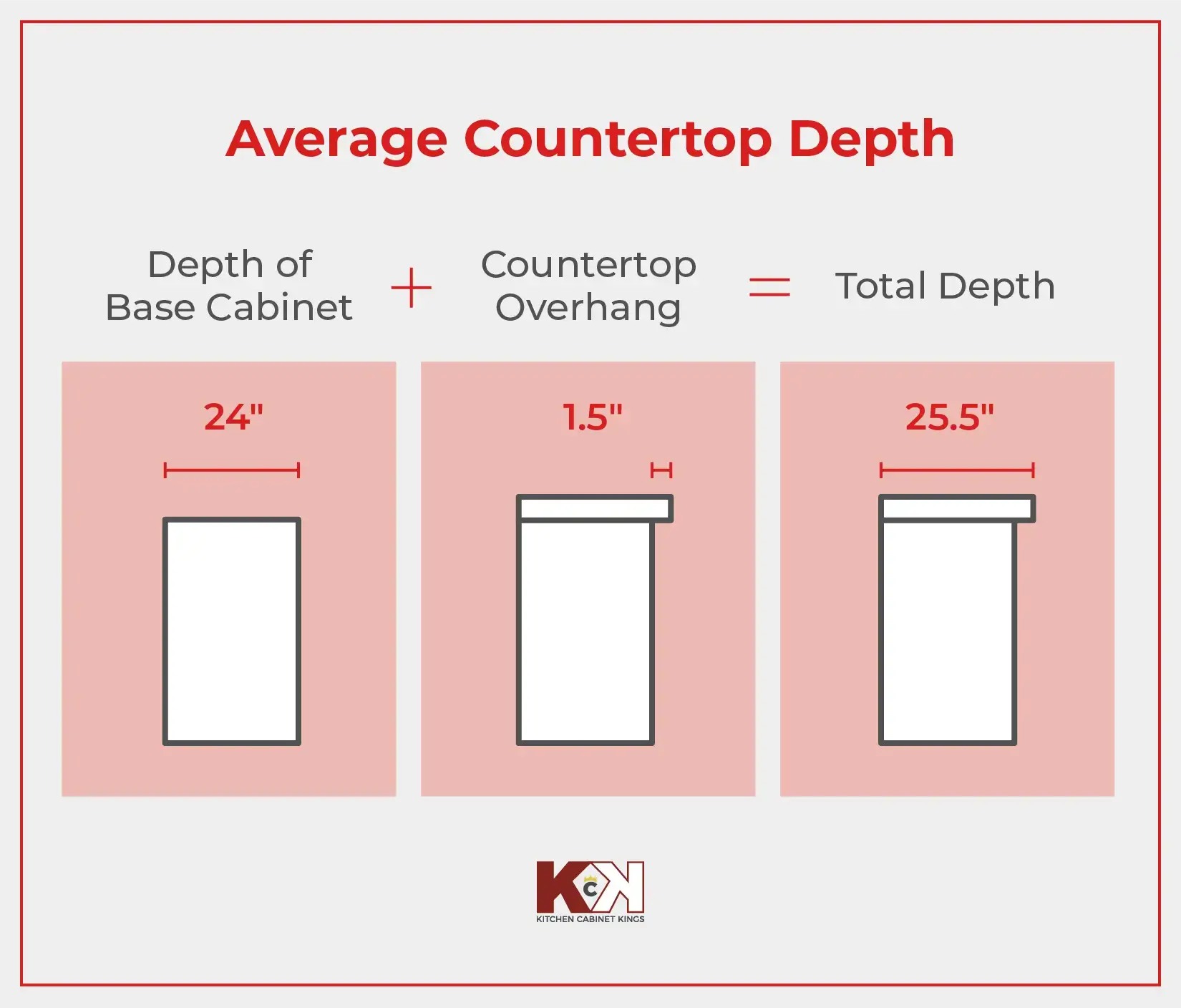
Image Source: cdn.kitchencabinetkings.com
The Foundation: Standard Cabinetry and Countertop Depth
When we talk about countertop width, it’s crucial to first consider the cabinets that support them. The kitchen counter depth is intrinsically linked to the standard cabinet depth. Most base cabinets in kitchens are 24 inches deep. This standard depth provides a solid foundation for the countertop and offers ample storage within the cabinets.
Cabinet Depth: The Supporting Structure
- Standard Base Cabinet Depth: As mentioned, 24 inches is the most common depth for base cabinets. These are the cabinets that sit on the floor and typically house drawers, shelves, or appliances like dishwashers.
- Depth Variations: While 24 inches is the norm, you might encounter or choose shallower or deeper cabinets depending on specific needs or unique kitchen layouts. For instance, smaller kitchens might utilize 18-inch deep cabinets to save space, or custom designs might opt for 30-inch deep cabinets for increased storage or a more substantial look.
Countertop Depth: Extending Beyond the Cabinet
The countertop typically extends beyond the front of the base cabinet to create an ergonomic and functional working surface. This extension is known as the overhang.
- Standard Countertop Overhang: A standard kitchen countertop overhang is usually between 1 to 1.5 inches. This overhang allows for comfortable elbow room when working at the counter and provides a slight buffer to prevent spills from dripping directly onto cabinet doors.
- Functionality of Overhang: The overhang isn’t just for looks. It contributes significantly to the kitchen workspace size. A well-proportioned overhang means you can stand comfortably at the counter without banging your knees against the cabinet doors or drawer fronts.
Fathoming Countertop Dimensions: Beyond Just Depth
While depth is a primary consideration, understanding the full scope of countertop dimensions involves looking at other factors like length and thickness.
Countertop Length: The Horizontal Span
The length of a countertop section is highly variable and dictated entirely by the kitchen design and the available wall space or cabinet run.
- Continuous Runs: Countertops can span many feet in a straight line, connecting multiple base cabinets.
- Modular Sections: In many kitchens, countertops are installed in sections that correspond to individual cabinet bases or groupings.
- Customization: The beauty of countertops is their customizability. You can have a countertop made to fit any length required by your kitchen layout dimensions.
Countertop Thickness: The Vertical Dimension
The thickness of a countertop refers to its vertical measurement. This dimension affects the perceived sturdiness and aesthetic appeal.
- Common Thicknesses: Standard countertop thickness often ranges from ¾ inch to 1.5 inches (2 cm to 4 cm). Thicker countertops, especially those made from materials like granite, quartz, or marble, can give a more luxurious and substantial feel to the kitchen.
- Material Influence: The type of material chosen can influence the typical thickness. Some materials are inherently stronger and can be used in thinner profiles, while others require greater thickness for structural integrity.
- Impact on Height: It’s important to remember that countertop thickness contributes to the overall standard kitchen counter height. If you have a standard 36-inch counter height and a 1.5-inch thick countertop, the base cabinets will be approximately 34.5 inches tall.
The Crucial Role of Usable Counter Space
Ultimately, the goal of these standard dimensions is to maximize usable counter space. This is the area where you chop vegetables, mix ingredients, prepare meals, and place small appliances.
Maximizing Workspace
- The 24-inch Depth: The standard 24-inch kitchen counter depth provides a good amount of immediate workspace.
- The Overhang’s Contribution: Adding the 1 to 1.5-inch overhang to this depth increases the immediate workspace to 25 to 25.5 inches, offering more comfort and utility.
- Beyond the Immediate Workspace: It’s also vital to consider the kitchen workspace size in relation to workflow. Areas between the sink and stove, or between the refrigerator and prep areas, are critical for efficient cooking.
Exploring Kitchen Island Width and Design
Kitchen islands are a popular feature that can significantly impact the functionality and flow of a kitchen. The kitchen island width is a key design element.
Island Depth Considerations
- Standard Island Depth: Similar to base cabinets, a standard kitchen island often has a depth of 24 inches for its primary cabinet or countertop section.
- Extended Depths: Islands can be wider than 24 inches, incorporating features like seating overhangs, appliance cabinets, or decorative elements. An island with a seating overhang might have a total depth of 36 inches or more.
- Island Width vs. Depth: While we’re discussing width here, it’s important to distinguish it from depth. Island width refers to its length from one end to the other.
Island Width: Design and Functionality
The kitchen island width is determined by the available space in the kitchen and its intended purpose.
- Minimum Functional Width: For an island to be truly functional, it needs sufficient width to house cabinets, drawers, or appliances, and still offer usable prep space. A minimum practical width for an island with cabinets is often around 36 inches, allowing for both the cabinet depth (typically 24 inches) and some workspace.
- Seating Overhangs: If seating is incorporated, the island’s width will need to accommodate the seating area, which usually requires at least 15 inches of clear legroom per person. This means an island designed for seating will likely be wider than a standard 24-inch deep island.
- Traffic Flow: The width of the island also plays a role in ensuring adequate kitchen layout dimensions for traffic flow. There should be enough space around the island for people to move freely, typically a minimum of 36 inches on walkways.
The Interplay of Countertop Dimensions in Kitchen Layout
All these dimensions – depth, width, overhang, and thickness – work together to define the overall kitchen layout dimensions and the functionality of your kitchen.
Creating Efficient Work Zones
- Prep Zone: The area between the sink and the cooking surface is critical. Ample usable counter space here is essential for efficient meal preparation. A common recommendation is at least 36 inches of continuous prep space.
- Cooking Zone: This zone includes the cooktop or range and the counter space immediately surrounding it for placing utensils, spices, and hot dishes.
- Cleaning Zone: Centered around the sink and dishwasher, this zone benefits from ample counter space for drying dishes or staging dirty ones.
Standard Heights for Ergonomics
- Standard Kitchen Counter Height: The standard kitchen counter height is typically 36 inches from the floor to the top of the countertop. This height is designed to be comfortable for most adults when standing and performing kitchen tasks.
- Adjusting for Users: However, this is just a standard. For kitchens with users of significantly different heights, consider custom counter heights. Lower counters (e.g., 30-34 inches) can be more comfortable for shorter individuals, while higher counters (e.g., 38-40 inches) might suit taller individuals better.
Material Choices and Their Dimensional Impact
The material you choose for your countertops can influence not only the aesthetics but also the practical dimensions and how they are fabricated.
Common Countertop Materials and Their Characteristics
| Material | Typical Thickness (inches) | Depth Considerations | Width/Length Considerations |
|---|---|---|---|
| Laminate | 0.75 – 1.5 | Standard 25″ (24″ cabinet + 1″ overhang) | Available in long rolls; seams are common. |
| Granite | 1.25 – 2.0 | Can be fabricated to match cabinet depth or extend. | Available in large slabs; length limited by quarry. |
| Quartz | 0.75 – 1.5 | Similar to granite, adaptable to needs. | Available in large slabs; length limited by manufacturing. |
| Solid Surface | 0.5 – 1.5 | Seamlessly extendable; can be coved with sink. | Can be fabricated into very long, seamless pieces. |
| Butcher Block | 1.5 – 3.0 | Typically matches cabinet depth plus overhang. | Available in various plank widths and lengths. |
| Stainless Steel | 0.75 – 1.5 | Can be fabricated to any depth, often with a marine edge. | Can be fabricated to any length; seams are welded. |
Countertop Thickness: A Deeper Dive
- Structural Integrity: Thicker countertops often feel more substantial and are less prone to flexing or cracking, especially with natural stone materials.
- Aesthetic Appeal: A thicker profile can lend a more luxurious and robust appearance to your kitchen.
- Cost: Generally, thicker countertops come at a higher price point due to the increased material and fabrication required.
Beyond the Standard: Customization and Special Considerations
While standards provide a helpful guide, many kitchens benefit from customization to meet specific needs.
Adapting to Small Spaces
In very compact kitchens, you might consider:
- Shallower Base Cabinets: Opting for 18-inch deep cabinets can free up valuable floor space, though it reduces cabinet storage. The countertop depth would then be around 19-20 inches.
- Minimal Overhangs: Reducing the overhang to 0.75 inches can gain an inch of precious space.
- Multi-functional Islands: A narrow, rolling cart can serve as a movable island, providing extra prep space when needed and easily stored away.
Catering to Specific Needs
- Accessibility: For individuals using wheelchairs, counter heights might be lowered to 30-34 inches, with ample knee space provided by specially designed cabinets.
- Baking Stations: Some avid bakers prefer a slightly lower counter height for tasks like kneading dough.
- Appliance Integration: Specific appliance depths (e.g., freestanding ranges versus slide-in ranges) can influence cabinet and countertop depth choices.
Frequently Asked Questions (FAQ)
Q1: What is the standard depth of a kitchen countertop?
A standard kitchen countertop is typically 25 inches deep, comprising 24 inches for the base cabinet depth and an additional 1 to 1.5 inches for the overhang.
Q2: Can I have a countertop deeper than 25 inches?
Yes, you can have a deeper countertop. This is often achieved by using deeper base cabinets (e.g., 30 inches) or by incorporating a larger overhang, which can be useful for seating at a kitchen island.
Q3: What is the standard height for a kitchen counter?
The standard kitchen counter height is 36 inches from the floor to the top of the countertop.
Q4: How much overhang should a kitchen countertop have?
A standard kitchen countertop overhang is typically between 1 to 1.5 inches to provide comfortable elbow room and prevent spills from reaching cabinet fronts.
Q5: How wide is a standard kitchen island?
While there isn’t a strict “standard width” for kitchen islands as they are highly customizable, a functional island with cabinets often requires a minimum width of around 36 inches to accommodate cabinet depth and workspace. Islands designed for seating will be wider to allow for the seating overhang and legroom.
Q6: Does countertop thickness affect the overall counter height?
Yes, countertop thickness contributes to the overall standard kitchen counter height. For example, a 36-inch counter height with a 1.5-inch thick countertop means the base cabinets are approximately 34.5 inches tall.
Q7: How much usable counter space do I need?
The amount of usable counter space needed varies per individual. However, a minimum of 36 inches of continuous prep space between the sink and stove is highly recommended for efficient cooking.
Q8: What is cabinet depth?
Cabinet depth refers to the measurement from the front of the cabinet to the back. The standard depth for base cabinets is 24 inches.
Q9: How does kitchen layout dimensions affect countertop choices?
The kitchen layout dimensions are crucial. They dictate how much countertop space can be allocated, where it needs to be placed for optimal workflow, and how wide or long sections can be without hindering movement or functionality.
By carefully considering these standard dimensions and how they relate to your specific kitchen needs and design, you can create a functional, beautiful, and comfortable cooking environment.