
The most common kitchen countertop thickness ranges from 1.5 inches to 2 inches for most materials. However, the ideal thickness can vary based on the countertop material thickness, your aesthetic preferences, and the structural requirements of your kitchen design. This guide will explore the various thicknesses available, helping you make an informed decision for your home.
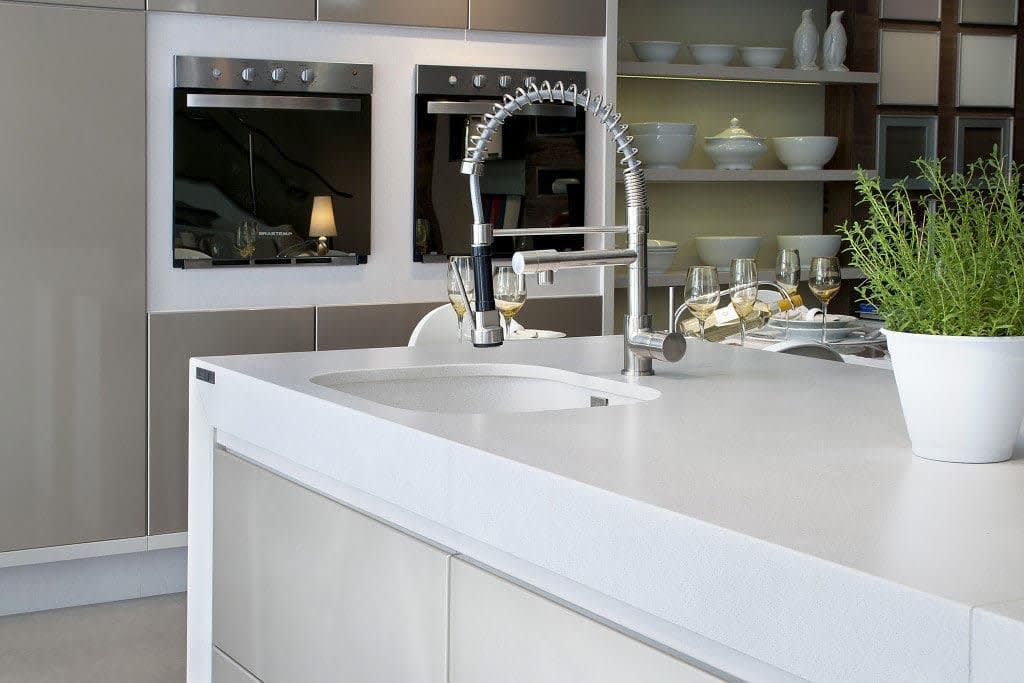
Image Source: images.ctfassets.net
Deciphering Countertop Thickness: More Than Just a Number
When planning a kitchen renovation or build, selecting the right kitchen countertop thickness is a crucial step often overlooked in the excitement of choosing colors and patterns. It’s not just about how a countertop looks; its thickness significantly impacts its durability, perceived value, and even its installation. A thicker countertop often conveys a sense of luxury and robustness, while thinner profiles can offer a more minimalist and modern aesthetic.
Let’s delve into the specifics of why thickness matters and what you can expect from different materials.
The Impact of Thickness on Durability and Strength
The physical thickness of your countertop plays a direct role in its strength and resilience. A thicker slab is generally less prone to cracking or chipping, especially in high-traffic areas or where heavy items might be placed or dropped. For materials like natural stone, thickness adds a structural integrity that can prevent breakage during fabrication, transport, and installation. For engineered stones and solid surfaces, thickness can also influence how well they resist bending or sagging over longer spans without additional support.
Visualizing Thickness: The Aesthetic Appeal
Beyond functionality, countertop thickness significantly influences the visual weight and style of your kitchen.
- Thicker Countertops: Often perceived as more substantial, luxurious, and high-end. They can create a bold statement, particularly with materials like granite or marble, and complement traditional or grand kitchen designs. They can also be the perfect canvas for intricate edge profiles, adding another layer of customization.
- Thinner Countertops: Tend to offer a sleeker, more contemporary, and minimalist look. They can make a kitchen feel more open and airy, especially in smaller spaces. Materials like quartz or some solid surfaces are often available in thinner profiles to achieve this modern aesthetic.
Understanding Standard Countertop Depth
While we’re focusing on thickness (vertical measurement), it’s worth noting the standard countertop depth. Typically, kitchen countertops have a depth of 25 inches, extending from the front edge of your base cabinets to the backsplash. This depth is designed to provide ample workspace and allow for standard cabinet construction. The thickness then adds to this dimension, with the countertop edge extending slightly beyond the cabinet face.
Exploring Countertop Material Thickness by Type
Different countertop material thickness options are available depending on the substance itself. Each material has its own optimal thickness range for both structural integrity and aesthetic appeal.
Granite Countertop Thickness
Granite is a popular choice for its natural beauty and durability. When it comes to granite countertop thickness, the industry standard is typically 3 centimeters (about 1.18 inches). This is often referred to as “3cm” granite.
- 3cm Granite: This is the most common and generally preferred thickness for granite countertops. It offers excellent durability and a substantial look without being excessively heavy, making it easier to handle and install. Most granite slabs quarried are already around this thickness, minimizing the need for additional fabrication to thicken them.
- 2cm Granite: Sometimes available, 2cm granite (approximately 0.79 inches) is thinner and lighter. While still durable, it may require plywood sub-tops or additional support to prevent sagging, especially on longer runs. It can be a more budget-friendly option but may not offer the same visual impact as thicker granite.
- Laminated Granite: To achieve a thicker look without the cost and weight of a solid slab, granite can be laminated. This involves bonding a thinner piece of granite (often 2cm) to another piece to create the appearance of a thicker edge, typically resulting in a 3-inch or 4-inch “built-up” edge.
Table: Granite Countertop Thickness Options
| Thickness (cm) | Thickness (inches) | Pros | Cons |
|---|---|---|---|
| 3 | 1.18 | Durable, substantial look, common | Heavier than 2cm, slightly more costly |
| 2 | 0.79 | Lighter, potentially more affordable | May require extra support, less substantial |
| Laminated | Varies (e.g., 3-4) | Thicker appearance, customizable edge | Can be more complex to fabricate/install |
Quartz Countertop Thickness
Quartz countertops, engineered from natural quartz crystals and resins, are known for their consistency and non-porous nature. Quartz countertop thickness options are similar to granite, with 2cm and 3cm being the most prevalent.
- 3cm Quartz: This is the premium and most common thickness for quartz countertops. It provides exceptional strength and a robust appearance, eliminating the need for plywood sub-tops in most installations. It’s the preferred choice for many homeowners seeking a high-quality, durable surface.
- 2cm Quartz: This option is also widely available. It’s lighter and can be less expensive than 3cm quartz. However, like thinner granite, it might require additional support to ensure long-term stability, especially for island countertops or areas with significant load-bearing requirements.
Table: Quartz Countertop Thickness Options
| Thickness (cm) | Thickness (inches) | Pros | Cons |
|---|---|---|---|
| 3 | 1.18 | Very strong, luxurious look, no sub-top needed | Heavier, slightly higher cost |
| 2 | 0.79 | Lighter, potentially more affordable | May need additional support, less robust look |
Marble Countertop Thickness
Marble, with its elegant veining, is a luxurious choice. Marble countertop thickness often follows similar patterns to granite and quartz, with 2cm and 3cm being standard. However, due to marble’s natural softness and porosity compared to granite or quartz, thickness can be more critical for its longevity.
- 3cm Marble: This thickness is highly recommended for marble countertops. It offers greater resistance to chipping and cracking, which is important for a material that can be more susceptible to damage from impact or heavy use. The added thickness provides a more substantial and luxurious feel.
- 2cm Marble: While available, 2cm marble is generally less recommended for kitchen applications due to its fragility. It’s more prone to damage and often requires significant reinforcement, such as plywood backing, to prevent breakage. It might be suitable for less demanding areas or decorative purposes.
Table: Marble Countertop Thickness Options
| Thickness (cm) | Thickness (inches) | Pros | Cons |
|---|---|---|---|
| 3 | 1.18 | Increased durability, luxurious appearance | Heavier, higher cost |
| 2 | 0.79 | Lighter, potentially more affordable | More fragile, requires significant support |
Butcher Block Countertop Thickness
Butcher block countertops, made from solid wood, offer a warm and natural aesthetic. The thickness of butcher block is often more varied and can depend on the wood species and construction method.
- Standard Butcher Block Thickness: Common thicknesses for butcher block range from 1.5 inches to 2 inches. This provides a solid and functional surface for food preparation.
- Thicker Butcher Block: You can also find butcher block countertops that are 3 inches or even 4 inches thick. These exceptionally thick slabs offer a statement piece, a very robust work surface, and can be easily planed down if minor damage occurs over time. They are ideal for heavy-duty chopping and can double as a built-in cutting board.
Table: Butcher Block Countertop Thickness Options
| Thickness (inches) | Pros | Cons |
|---|---|---|
| 1.5 – 2 | Standard, functional, good work surface | Less depth for sanding/refinishing |
| 3 – 4 | Very durable, statement piece, good for carving | Heavier, more expensive, may require stronger cabinet bases |
Laminate Countertop Thickness
Laminate countertops are a budget-friendly and versatile option. Their thickness is typically more uniform across the industry, and they often have a core of particleboard or MDF.
- Standard Laminate Thickness: Most laminate countertops are approximately 1.5 inches thick. This includes the laminate material and the core substrate.
- Built-up Edges: Laminate can be manufactured with a thicker-looking edge profile, often achieving an appearance of 2 inches or more, by applying an extra strip of laminate to the edge. However, the core material remains the same thickness.
Table: Laminate Countertop Thickness Options
| Thickness (inches) | Pros | Cons |
|---|---|---|
| 1.5 | Standard, affordable, lightweight | Less substantial feel, can be prone to chipping |
| Built-up Edge | Thicker appearance, can mimic stone edges | Core thickness remains the same |
Factors Influencing Countertop Thickness Choices
Beyond material type, several other factors play a role in determining the ideal countertop thickness.
Budget Considerations
Generally, thicker countertops will cost more than thinner ones, primarily due to the increased amount of material required. For natural stones like granite and marble, thicker slabs are often more expensive to quarry and transport. For engineered materials like quartz, the manufacturing process for thicker slabs can also contribute to a higher price point. Laminate and butcher block can offer thicker options at a more accessible price point compared to stone.
Cabinetry Support
The cabinets beneath your countertops need to be strong enough to support their weight. While granite and quartz in 3cm thickness are quite robust, they are still heavy. Thicker slabs, especially if they are very long or have significant overhangs (like for an island), will require robust cabinet construction and potentially additional support beams or braces. Thinner countertops might be an option if your existing cabinetry is not designed for extreme weight.
Installation and Handling
Heavier and thicker countertops are more challenging to transport and install. This can lead to higher installation costs. Professional fabricators and installers have the equipment and expertise to handle these materials, but the extra effort and specialized tools can be reflected in the labor charges. For DIY installations, lighter and thinner options are usually more manageable.
Edge Profile Choices
The type of edge profile you choose can also influence the perceived and actual thickness of your countertop.
- Square Edge: A simple square edge will showcase the material’s inherent thickness.
- Beveled, Ogee, or Bullnose Edges: These more decorative edges add dimension and can make a thinner slab appear thicker by creating visual depth or layering. For instance, a laminated edge can create a substantial appearance on a thinner slab.
Design and Style Preferences
Ultimately, your personal design vision is a primary driver. Do you want a sleek, modern look that emphasizes clean lines, or a more traditional, substantial feel?
- Modern/Minimalist: Thinner profiles (around 2cm or 1.5 inches) often suit this aesthetic, paired with simple edge profiles.
- Traditional/Luxurious: Thicker profiles (3cm or more) tend to complement these styles, especially when combined with decorative edge treatments.
- Rustic/Farmhouse: Butcher block countertops, often in thicker dimensions, fit perfectly with these styles.
The Countertop Thickness Chart: A Quick Reference
To summarize, here’s a quick reference for common countertop thickness chart expectations:
| Material | Common Thickness (inches) | Notes |
|---|---|---|
| Granite | 1.18 (3cm) | Standard, durable. 0.79 (2cm) available but may need more support. |
| Quartz | 1.18 (3cm) | Standard, very durable. 0.79 (2cm) available with potential support needs. |
| Marble | 1.18 (3cm) | Recommended for kitchens due to durability. 0.79 (2cm) is less ideal. |
| Butcher Block | 1.5 – 4 | Varies by style; thicker offers more robustness and refinishing potential. |
| Laminate | 1.5 | Standard thickness; built-up edges can create a thicker appearance. |
| Solid Surface | 0.5 – 1.25 | Typically thinner than stone, often installed flush with cabinets. |
| Stainless Steel | 1.5 – 2 | Common thickness for a sleek, industrial look. |
| Concrete | 1.5 – 3+ | Thickness varies greatly with custom designs; often thicker for structural integrity. |
| Soapstone | 2 – 3 | Usually thicker than granite for a substantial feel and durability. |
Frequently Asked Questions About Countertop Thickness
Q: What is the average countertop thickness?
A: The average countertop thickness for natural stone and engineered stone in kitchens is typically around 1.18 inches (3cm). Laminate countertops are usually around 1.5 inches.
Q: Can I use a thinner countertop material in my kitchen?
A: Yes, you can use thinner countertop materials, such as 2cm granite or quartz. However, it’s crucial to ensure your cabinetry provides adequate support, and you may need to install additional bracing or a plywood sub-top to prevent sagging or cracking over time, especially for islands or countertops with overhangs.
Q: Does a thicker countertop mean it’s more durable?
A: Generally, yes. A thicker slab of a given material will be more resistant to chipping, cracking, and breaking. For materials like marble, increased thickness is particularly important for kitchen durability.
Q: What is standard countertop depth?
A: The standard countertop depth for kitchen base cabinets is 25 inches, providing ample workspace. This is distinct from the thickness of the countertop itself.
Q: Is 3cm granite always better than 2cm granite?
A: For kitchen use, 3cm granite is often preferred because it’s more robust, has a more substantial look, and typically doesn’t require a sub-top. 2cm granite can be a good option if budget is a major concern or if you need to reduce weight, but it requires careful installation with proper support.
Q: How thick should butcher block be for a cutting surface?
A: For a butcher block that will be actively used for cutting, a thickness of 2 inches or more is ideal. This allows for multiple instances of resurfacing or planing over the years to remove knife marks and stains.
By considering the countertop material thickness, your budget, design aspirations, and the structural needs of your kitchen, you can select the perfect countertop thickness that is both beautiful and functional for years to come.