
So, how much does it cost to reface kitchen cabinets? Typically, you can expect to spend between $1,500 and $10,000 or more, with the average cost of cabinet refacing falling somewhere between $3,000 and $7,000. This price range depends heavily on the size of your kitchen, the materials you choose, and whether you hire a professional or tackle it yourself. Refacing your kitchen cabinets offers a significant upgrade without the full expense and disruption of a complete replacement.
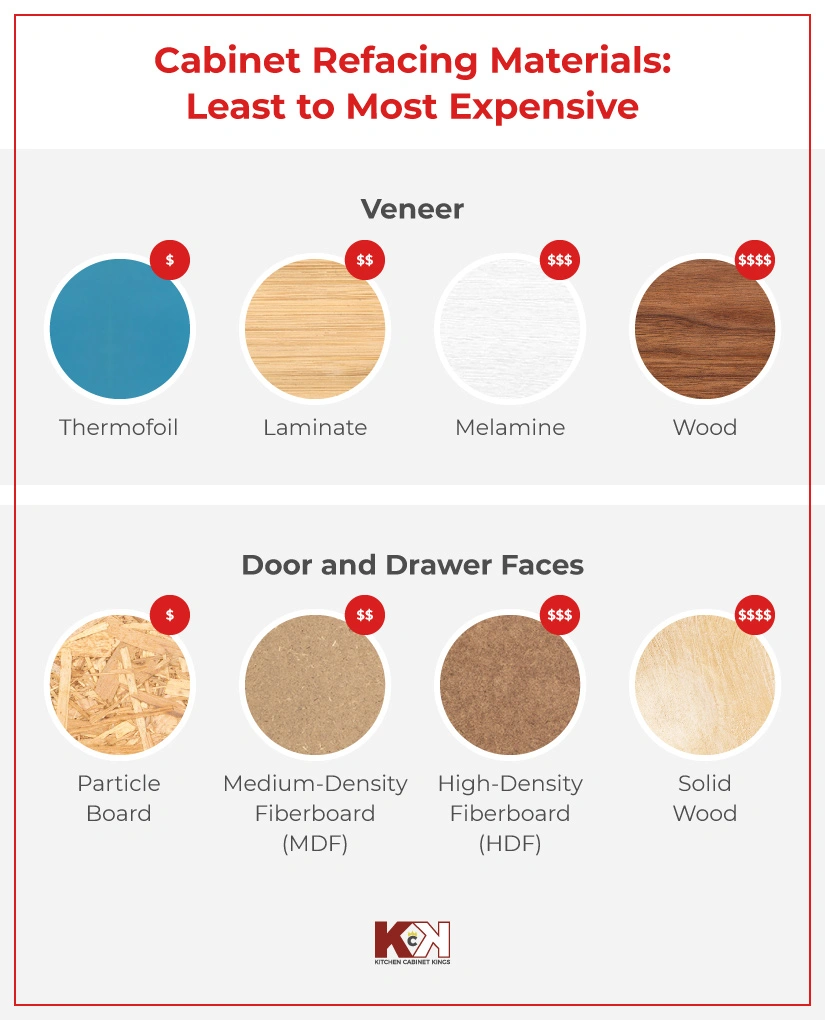
Image Source: cdn.kitchencabinetkings.com
Why Reface Your Cabinets?
Cabinet refacing is a popular choice for homeowners looking to update their kitchen’s appearance and functionality. It’s a smart middle ground between a full kitchen remodel and simple cosmetic touch-ups. Instead of replacing the entire cabinet box structure, which is often still sound, refacing involves updating the visible parts – the doors, drawer fronts, and the cabinet exteriors. This process gives your kitchen a fresh, modern look without the hefty price tag of entirely new cabinets.
There are several compelling reasons why homeowners opt for cabinet refacing:
- Cost Savings: This is often the primary driver. Compared to cabinet refacing vs replacing, refacing can save you 50% or more.
- Speed and Convenience: The process is generally much quicker than a full cabinet replacement, minimizing disruption to your daily life.
- Environmental Friendliness: By keeping the existing cabinet boxes, you reduce waste and the need for new lumber.
- Aesthetic Transformation: You can completely change the style, color, and material of your cabinets for a dramatic kitchen makeover.
- Durability: Refacing often involves applying new, durable veneers or solid wood to the cabinet frames and replacing doors and drawer fronts with high-quality materials.
Deciphering the Costs: What Influences Cabinet Refacing Prices?
The kitchen cabinet refacing cost is not a one-size-fits-all figure. Numerous factors contribute to the final price you’ll pay. It’s essential to understand these elements to get an accurate budget for cabinet refacing and compare quotes effectively.
Kitchen Size and Number of Cabinets
The most significant factor influencing the cost to reface kitchen cabinets is the sheer volume of cabinets you have. A larger kitchen with more upper and lower cabinets will naturally cost more to reface than a smaller one.
- Number of Doors and Drawer Fronts: Each door and drawer front is a separate item that needs to be factored into the cost.
- Cabinet Box Surface Area: The exterior surfaces of the cabinet boxes (the sides, bottoms, and visible fronts) also need to be covered with veneer or laminate.
Material Choices
The materials used for your new doors, drawer fronts, and cabinet veneers play a crucial role in determining the overall kitchen cabinet refacing cost.
Door and Drawer Front Materials:
- Laminate/Veneer: These are the most budget-friendly options. They offer a wide range of colors and wood-grain patterns.
- Pros: Affordable, durable, easy to clean, consistent look.
- Cons: Can look less premium than solid wood, potential for chipping if low quality.
- Estimated Cost: Can add $50 – $150 per door/drawer front.
- Thermo-foil: This is a vinyl film heated and molded over MDF (Medium-Density Fiberboard).
- Pros: Smooth, seamless finish, resistant to moisture, affordable.
- Cons: Can be prone to peeling or yellowing over time, especially with heat exposure.
- Estimated Cost: Similar to laminate/veneer, $50 – $150 per door/drawer front.
- Solid Wood: Offers a classic and premium look. Common woods include maple, cherry, oak, and birch.
- Pros: Beautiful, durable, can be stained or painted, adds value.
- Cons: Most expensive option, can be susceptible to expansion/contraction with humidity changes.
- Estimated Cost: Can range from $100 – $300+ per door/drawer front, depending on the wood species.
- Wood Veneer: Thin slices of real wood applied over a substrate like plywood or MDF.
- Pros: Offers the look of solid wood at a lower cost, more stable than solid wood.
- Cons: Still more expensive than laminates, requires careful handling.
- Estimated Cost: $75 – $200 per door/drawer front.
- MDF (Medium-Density Fiberboard) with Paint: MDF is a stable material that takes paint very well, creating a smooth, furniture-like finish.
- Pros: Excellent surface for painting, affordable, consistent finish.
- Cons: Can be damaged by excessive moisture, not as durable as solid wood against dents.
- Estimated Cost: $70 – $180 per door/drawer front.
Cabinet Box Covering Materials:
- Wood Veneer: Thin sheets of real wood (like oak, maple, cherry) applied to the existing cabinet frames. This is a popular choice for a high-end look.
- Laminate/Melamine: Durable, affordable plastic-based materials that come in various colors and wood grains.
- Vinyl Wrap: A cost-effective option that can mimic wood grains or solid colors, but may not be as durable as laminate or veneer.
Hardware and Accessories
The cost of new hardware – hinges, knobs, and pulls – can add to the overall kitchen cabinet refacing cost. While not the largest expense, choosing high-end hardware can increase the budget.
- Knobs/Pulls: Prices can range from $2-$20+ each.
- Hinges: Depending on the type (e.g., soft-close, concealed), they can range from $5-$20+ per pair.
Labor Costs vs. DIY
Whether you hire professionals or do it yourself significantly impacts the final price.
Professional Refacing:
- Pros: Expertise, efficient work, quality assurance, often come with warranties.
- Cons: Higher overall cost.
- Estimated Labor Cost: Typically accounts for 40-60% of the total project cost. This includes measurement, templating, manufacturing of doors/drawer fronts, and installation.
DIY Refacing:
- How to reface kitchen cabinets DIY cost: The DIY cabinet refacing cost primarily involves the cabinet refacing materials cost. This can save you thousands of dollars in labor.
- Pros: Significant cost savings.
- Cons: Requires time, skill, patience, and access to the right tools. Mistakes can be costly.
- Tools needed: Tape measure, utility knife, sandpaper, primer, paint or stain, brushes/rollers, veneer or laminate sheets, adhesive, possibly a router or saw if you’re modifying doors.
- Estimated DIY Material Cost: You might spend $500 – $3,000+ on materials alone, depending on your choices.
The “Refacing” vs. “Refinishing” Distinction
It’s crucial to differentiate between refacing and refinishing.
-
Cabinet Refinishing: This involves sanding down the existing cabinet doors and frames and then repainting or staining them. This is a much less intensive and less expensive process.
- Kitchen cabinet refinishing cost: Typically ranges from $500 – $2,500 for a whole kitchen, depending on whether you DIY or hire a pro. This is significantly cheaper than refacing.
- Pros: Cost-effective way to change the color, can look great if done well.
- Cons: Doesn’t change the style of the doors, limited by the existing door design, can show wear over time if not properly sealed.
-
Cabinet Refacing: As discussed, this involves replacing the doors and drawer fronts and covering the cabinet boxes with new material. This allows for a complete style change.
Cabinet Door Replacement Cost
If you only want to update the look of your cabinets but the cabinet boxes are in good condition, you might consider just cabinet door replacement cost. This is essentially a component of refacing.
- Estimated Cabinet Door Replacement Cost: This can range from $1,000 to $5,000+, depending on the material and number of doors/drawers. This is the cost of the new doors and drawer fronts only, not including the covering of the cabinet boxes or installation.
Breaking Down the Average Cost of Cabinet Refacing
Let’s look at a more detailed breakdown of typical cabinet refacing prices for an average-sized kitchen (approximately 10-15 linear feet of cabinets).
| Cost Component | Estimated Range (Low-Mid) | Estimated Range (Mid-High) |
|---|---|---|
| New Doors & Drawer Fronts | $1,000 – $3,000 | $3,000 – $7,000+ |
| Cabinet Box Veneer/Laminate | $500 – $1,500 | $1,000 – $2,500 |
| Hardware (Hinges, Knobs/Pulls) | $200 – $500 | $500 – $1,000+ |
| Professional Labor | $1,500 – $3,000 | $3,000 – $5,000+ |
| Total Estimated Cost | $3,200 – $8,000 | $7,500 – $15,500+ |
Note: These are general estimates. Prices can vary significantly based on your location, the specific company you choose, and the complexity of your kitchen layout.
Factors Affecting the Total Project Cost
- Specialty Finishes: Glazing, distressing, or custom paint colors will increase costs.
- Custom Door Styles: More intricate door designs (e.g., raised panel, custom milling) are more expensive.
- Cabinet Box Modifications: If you need to add or change any cabinet box structures (e.g., add a lazy Susan cabinet), this will add to the cost.
- Contractor Fees: Different contractors will have different pricing structures. It’s wise to get multiple quotes.
Cabinet Refacing vs Replacing: A Closer Look
Choosing between cabinet refacing vs replacing is a critical decision in any kitchen renovation. Here’s a comparison to help you decide:
| Feature | Cabinet Refacing | Cabinet Replacing |
|---|---|---|
| Cost | 40-60% of the cost of new cabinets. | Higher initial investment. |
| Time | Typically 1-3 weeks. | Typically 4-8 weeks or more. |
| Disruption | Minimal. Existing cabinet boxes stay in place. | Significant. Entire cabinets removed, potential for structural changes. |
| Cabinet Boxes | Existing boxes are kept and updated (veneered, new doors/drawers). | Entirely new cabinet boxes are built and installed. |
| Style Options | Limited by existing box layout, but doors/drawers offer vast style/color choices. | Unlimited design and material choices. |
| Structural Issues | Does not address underlying issues with cabinet box construction or alignment. | Allows for complete rebuild and correction of structural problems. |
| Environmental | More eco-friendly as it reuses existing cabinet boxes. | Generates more waste with the removal of old cabinets. |
| Durability | Depends on the quality of refacing materials and installation. | Durability depends on the quality of new cabinets and materials chosen. |
| Ideal For | Sound cabinet boxes, desire for aesthetic update, budget constraints. | Damaged cabinet boxes, major layout changes, desire for premium materials/features. |
When is Refacing the Better Option?
- Your current cabinet boxes are in good structural condition, with no signs of water damage, rot, or warping.
- You like the current layout of your kitchen and don’t plan on moving appliances or changing wall structures.
- You want to update the look and feel of your kitchen without the extensive cost and disruption of a full remodel.
- You are on a tighter budget but still want a significant visual upgrade.
When is Replacing the Better Option?
- Your existing cabinet boxes are damaged, warped, moldy, or structurally unsound.
- You plan to change the kitchen layout, move appliances, or reconfigure the cabinetry.
- You want highly customized cabinet features, specific interior organizers, or unique finishes not available through refacing.
- You are looking for the absolute highest quality and durability, with no compromises.
Fathoming the DIY Refacing Process and Costs
For those with a handy streak, tackling cabinet refacing yourself can be a rewarding and cost-saving endeavor. The how to reface kitchen cabinets DIY cost is primarily the cabinet refacing materials cost.
Steps for DIY Cabinet Refacing:
- Remove Doors and Drawer Fronts: Carefully label each door and drawer front so you know where it goes.
- Clean Cabinet Boxes: Thoroughly clean the existing cabinet boxes to remove grease and grime.
- Repair Imperfections: Fill any holes or cracks in the cabinet boxes. Sand smooth.
- Apply Veneer or Laminate: This is a critical step. Measure and cut your chosen material precisely. Apply adhesive evenly and press the material onto the cabinet box exteriors, smoothing out any bubbles. This requires patience and precision for a professional look.
- Install New Doors and Drawer Fronts: Attach new hinges to the new doors and drawer fronts, and then attach them to the refaced cabinet boxes.
- Attach New Hardware: Install your chosen knobs and pulls.
DIY Cost Considerations:
- Cost of Doors and Drawer Fronts: This is a major component. Ordering pre-made doors and drawer fronts from a supplier is often more cost-effective than custom-making them yourself unless you have woodworking experience and equipment. You can find options ranging from $30-$200+ per piece.
- Cost of Veneer/Laminate: Rolls of veneer or laminate can cost anywhere from $50-$200+, depending on the material and size.
- Adhesives and Sealants: Budget around $50-$100 for quality adhesives and any necessary sealants or finishes.
- Tools: If you don’t own them, you’ll need to factor in the cost of tools like a good tape measure, utility knife, sander, brushes, rollers, and potentially a heat gun for laminate application. You might spend $100-$300+ on necessary tools.
- Screws, Hinges, and Hardware: Don’t forget the cost of these small but essential items.
DIY Potential Savings: You can potentially save 40-60% on the total project cost by doing the work yourself, mainly by avoiding professional labor fees. However, the quality of the finished product heavily depends on your skill level and attention to detail.
Exploring Material Options in Detail
The cabinet refacing materials cost can vary wildly. Let’s delve deeper into the common options.
Veneer Options:
- Wood Veneer: This is a very popular choice. It’s a thin layer of real wood that is adhered to the cabinet boxes.
- Types: Oak, maple, cherry, birch, walnut, hickory.
- Pros: Authentic wood look, can be stained to match existing trim or new doors, adds warmth and natural beauty.
- Cons: Can be more expensive than laminate, requires careful application to avoid bubbles or tears, susceptible to damage from sharp objects.
- Cost: $5 – $15+ per square foot for the veneer itself.
- Laminate Veneer: Made from plastic or paper fused with resins, these offer a durable and low-maintenance surface.
- Types: High-pressure laminate (HPL) or low-pressure laminate (LPL). HPL is more durable. Available in countless colors, wood grains, and even textures.
- Pros: Very durable, scratch-resistant, easy to clean, consistent color, cost-effective.
- Cons: Can look less premium than real wood veneer, potential for chipping at edges if not installed properly.
- Cost: $2 – $8 per square foot.
Doors and Drawer Fronts:
This is where you have the most stylistic freedom and the most significant variation in cost.
- MDF (Medium-Density Fiberboard):
- Painted MDF: A very popular choice for modern and transitional kitchens. MDF provides a smooth, stable surface that takes paint exceptionally well, resulting in a furniture-quality finish.
- Pros: Smooth finish, excellent for painted cabinets, consistent, affordable.
- Cons: Not waterproof, can swell if exposed to prolonged moisture, can dent.
- Cost: $50 – $180 per door/drawer front.
- Thermo-foil: A vinyl film applied over MDF.
- Pros: Seamless, moisture-resistant, easy to clean, affordable.
- Cons: Can peel or yellow with heat exposure, limited repair options if damaged.
- Cost: $50 – $150 per door/drawer front.
- Painted MDF: A very popular choice for modern and transitional kitchens. MDF provides a smooth, stable surface that takes paint exceptionally well, resulting in a furniture-quality finish.
- Plywood:
- Veneered Plywood: Offers the look of wood but is more stable than solid wood. Often used as a substrate for veneers or painted finishes.
- Pros: Stable, good base for finishes, moderate cost.
- Cons: Can be more expensive than MDF.
- Cost: $70 – $200 per door/drawer front (for finished veneer doors).
- Veneered Plywood: Offers the look of wood but is more stable than solid wood. Often used as a substrate for veneers or painted finishes.
- Solid Wood:
- Types: Maple, Cherry, Oak, Birch, Hickory, Alder.
- Pros: Natural beauty, durable, can be stained or painted, adds significant value, repairable.
- Cons: Most expensive, can expand/contract with humidity.
- Cost: $100 – $300+ per door/drawer front, depending on wood species and door style.
- Types: Maple, Cherry, Oak, Birch, Hickory, Alder.
- Thermoplastic (PVC):
- Similar to thermo-foil but often applied with a more advanced vacuum sealing process, creating a more durable and seamless finish.
- Pros: Highly durable, moisture-resistant, wide range of colors and finishes, easy to clean.
- Cons: Can be damaged by extreme heat, color matching can be difficult if repairs are needed later.
- Cost: $70 – $200 per door/drawer front.
- Similar to thermo-foil but often applied with a more advanced vacuum sealing process, creating a more durable and seamless finish.
Budgeting for Your Cabinet Refacing Project
Creating a realistic budget for cabinet refacing is key to a successful project. Here’s how to approach it:
- Measure Your Kitchen: Accurately measure all cabinet boxes, doors, and drawer fronts. Count the total number of each.
- Decide on Materials: Research and choose your preferred materials for doors, drawer fronts, and cabinet box coverings. Get samples if possible.
- Get Quotes: Contact several reputable refacing companies for detailed quotes. Ensure the quotes clearly outline what is included (materials, labor, hardware, warranty, etc.).
- Factor in Contingencies: Always add a 10-15% contingency fund to your budget for unexpected costs.
- DIY vs. Pro Cost Comparison: If considering DIY, price out all materials and tools separately to compare against professional quotes.
Example Budget Scenarios:
Budget-Friendly Kitchen (Small Kitchen, Laminate/Thermo-foil Doors):
- Doors & Drawer Fronts: $1,200
- Cabinet Box Laminate: $600
- Hardware: $200
- Contingency (15%): $330
- Total: ~$2,330
Mid-Range Kitchen (Medium Kitchen, Painted MDF Doors, Wood Veneer Boxes):
- Doors & Drawer Fronts: $3,000
- Cabinet Box Veneer: $1,200
- Hardware: $400
- Professional Labor (40% of total): $1,800 (estimated)
- Contingency (15%): $1,050
- Total: ~$7,450
High-End Kitchen (Large Kitchen, Solid Wood Doors, Wood Veneer Boxes):
- Doors & Drawer Fronts: $6,000
- Cabinet Box Veneer: $2,000
- Premium Hardware: $800
- Professional Labor (50% of total): $6,500 (estimated)
- Contingency (15%): $2,100
- Total: ~$17,400
These are illustrative figures. Your actual costs will vary.
Frequently Asked Questions (FAQ)
Q1: How long does cabinet refacing typically take?
A1: Cabinet refacing usually takes between 1 to 3 weeks, depending on the size of your kitchen and the complexity of the job. Professional installers are often efficient, while DIY projects may take longer.
Q2: Can I reface my cabinets myself?
A2: Yes, you can reface your kitchen cabinets yourself if you have the necessary skills, tools, and patience. However, it requires precision, especially when applying veneers or laminates and installing new doors.
Q3: Is cabinet refacing worth the cost?
A3: For many homeowners, cabinet refacing is absolutely worth the cost. It offers a dramatic aesthetic upgrade at a fraction of the price of full replacement, preserving the structure of the existing cabinets and reducing renovation time and waste.
Q4: What is the difference between refacing and resurfacing kitchen cabinets?
A4: Refacing involves replacing the doors and drawer fronts and covering the cabinet boxes with new material (veneer or laminate). Resurfacing (or refinishing) typically means sanding down and repainting or restaining the existing doors and cabinet boxes, keeping the original door style. Refacing offers a more significant style transformation.
Q5: What are the most durable materials for cabinet refacing?
A5: High-pressure laminate (HPL) and solid wood are generally considered the most durable materials for cabinet refacing. Thermoplastic (PVC) finishes are also very durable and moisture-resistant.
Q6: Can I get custom-made doors for refacing?
A6: Absolutely. Most refacing companies offer a wide range of custom door styles, wood types, and finishes to match your specific design preferences.
Q7: Does refacing include new hinges and hardware?
A7: This varies by company. Some quotes include standard hinges and a selection of hardware, while others may charge extra. Always clarify what is included in your refacing quote.
By carefully considering these factors and getting detailed quotes, you can confidently plan your kitchen cabinet refacing project and achieve a beautiful, updated kitchen within your budget.