
Image Source: i.ytimg.com
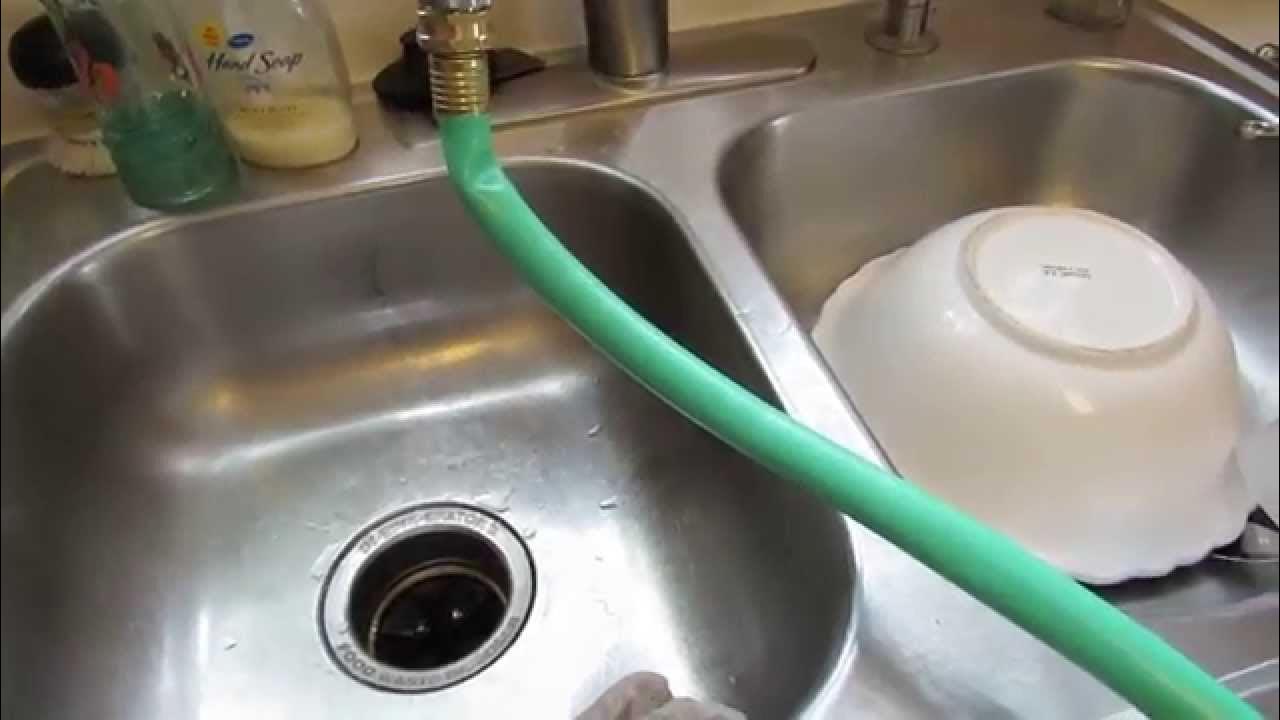
How To Hook Garden Hose To Kitchen Sink: Easy Steps
Can I hook a garden hose to my kitchen sink? Yes, you absolutely can hook a garden hose to your kitchen sink, but it requires specific adapters to make the connection safely and effectively. This guide will walk you through the process step-by-step, ensuring you have the right tools and knowledge for a successful indoor hose connection.
Connecting a garden hose to your kitchen sink might seem unusual, but it’s a handy solution for various needs. Perhaps you need to fill a large container, water indoor plants during a cold spell, or even clean out something messy that won’t fit in the sink. Whatever your reason for using garden hose indoors, the key lies in the right adapters. This DIY project is surprisingly straightforward if you have the correct parts. We’ll cover everything from identifying your faucet type to choosing the right garden hose kitchen adapter and completing the kitchen sink hose setup.
Deciphering Your Kitchen Faucet Type
Before you can begin connecting anything, it’s crucial to know what kind of faucet you have in your kitchen. Most kitchen faucets fall into two main categories: those with a pull-out or spray hose, and those with a standard, non-retractable spout.
Faucets with a Pull-Out Sprayer
If your kitchen faucet has a pull-out sprayer, this makes the job significantly easier. These sprayers typically detach from the main faucet body, revealing a threaded connection point.
- Locating the Connection: Gently pull the sprayer head off its hose. At the end of the hose, you’ll usually find a threaded fitting. This is where you’ll attach your adapter.
- Thread Size: The threads on these hoses are generally standard, but it’s always a good idea to check. They are often similar to garden hose threads or may have a specific connection size that requires a specialized adapter.
Faucets Without a Pull-Out Sprayer
For faucets that don’t have a pull-out sprayer, the process is a bit different but still achievable. You’ll need to find a way to connect to the main spout.
- Aerator Removal: Most modern kitchen faucets have an aerator at the tip of the spout. This is the part where the water comes out. You can usually unscrew this by hand or with a wrench.
- Threaded Spout Tip: Once the aerator is removed, you might find that the spout itself has threads. These threads are often where you’ll attach a specific faucet to garden hose adapter.
- Non-Threaded Spouts: If your spout doesn’t have threads, you’ll need a different type of adapter that clamps onto or fits over the end of the spout.
Essential Adapters for a Successful Connection
The magic behind connecting hose to faucet lies in the adapters. You’ll need specific pieces to bridge the gap between your garden hose and your kitchen faucet.
The Sink to Hose Adapter
This is the most critical piece of equipment. A sink to hose adapter is designed to fit onto your kitchen faucet and provide a connection point that matches your garden hose.
- Types of Sink to Hose Adapters:
- Aerator Adapters: These screw into the spot where your faucet’s aerator was. They often have a female garden hose thread on one end and male threads to match common aerator sizes on the other.
- Spray Hose Adapters: If you have a pull-out sprayer, you’ll need an adapter that connects to the sprayer hose thread. These can be male-to-female or female-to-female garden hose adapters, depending on the sprayer hose’s threads.
- Spout Clamp Adapters: For non-threaded spouts, these adapters often have a rubber gasket and a clamp that secures the adapter to the end of the faucet spout.
The Garden Hose Kitchen Adapter
This term can sometimes refer to the adapter that connects to the faucet, or it might refer to a smaller adapter that connects the faucet-side piece to the actual garden hose. Let’s clarify:
- Faucet Connector: This is the part that attaches to your kitchen sink’s faucet. It’s designed to accept the standard garden hose thread.
- Hose Connector: This is typically the standard female end of your garden hose. The faucet connector will have a male end that your garden hose screws onto.
Other Necessary Items
Beyond the primary adapters, you might need a few other things for a secure and leak-free connection.
- Adjustable Wrench: For tightening connections where hand-tight isn’t enough. Be careful not to overtighten and damage the threads.
- Thread Seal Tape (PTFE Tape): This tape helps create a watertight seal on threaded connections. Wrap it around the male threads before screwing on the female part.
- Rubber Washers: Ensure all connections have a good rubber washer to prevent leaks. Your adapters should come with these, but it’s good to have spares.
- A Small Section of Hose (Optional): Sometimes, you might need a short piece of hose to connect between the faucet adapter and your main garden hose if the threads don’t align perfectly.
Step-by-Step Guide to Connecting Your Garden Hose
Now that you know what you need, let’s get down to the practical steps of creating your kitchen sink hose setup.
Step 1: Prepare Your Faucet
- For Faucets with Pull-Out Sprayers:
- Locate the sprayer head.
- Gently unscrew the sprayer head from its hose. Most detach with a simple twist.
- Inspect the end of the hose. You’ll see a threaded fitting.
- For Faucets Without Pull-Out Sprayers:
- Locate the aerator at the tip of the spout.
- Try unscrewing it by hand. If it’s stuck, use a wrench, but protect the faucet finish with a cloth.
- Examine the threads on the spout where the aerator was.
Step 2: Choose and Install the Correct Faucet Adapter
This is where you’ll use your garden hose kitchen adapter or the specific sink to hose adapter that matches your faucet type.
- For Faucets with Pull-Out Sprayers:
- You’ll need an adapter that connects to the sprayer hose threads. This is often a female-to-male garden hose adapter.
- Check the threads on your sprayer hose. If they are male, you need a female adapter. If they are female, you need a male adapter.
- Apply thread seal tape to the male threads of the adapter (if applicable).
- Screw the adapter onto the end of the sprayer hose. Hand-tighten first, then use a wrench for a snug fit if needed. Ensure it has a rubber washer.
- For Faucets Without Pull-Out Sprayers:
- If your spout has threads: You’ll likely need an adapter that screws onto these threads and has a female garden hose connection. Ensure the adapter’s threads match your spout’s threads (e.g., male, female, and the thread pitch). Apply thread seal tape to the spout threads before attaching the adapter.
- If your spout is smooth or non-threaded: You’ll need a clamp-on or slip-on adapter. These often have a rubber seal and a clamp or a snug-fitting design to grip the spout. Make sure it’s designed for the diameter of your faucet spout.
Step 3: Connect the Garden Hose
Now it’s time to attach your actual garden hose.
- Take your garden hose. Ensure its female end has a clean rubber washer.
- Screw the female end of the garden hose onto the male end of the adapter you just attached to your faucet.
- Tighten it by hand until it’s snug. Avoid overtightening.
- If you notice any leaks after turning on the water, you may need to tighten it a bit more or reapply thread seal tape.
Step 4: Test for Leaks
This is a crucial step to ensure your DIY hose to sink connection is secure.
- Turn on the cold water slowly at your kitchen faucet.
- Check all connection points for drips or leaks: where the adapter meets the faucet, and where the hose connects to the adapter.
- If you find a leak, turn off the water.
- For threaded connections: Try tightening them a bit more. If that doesn’t work, unscrew the connection, reapply thread seal tape, and re-tighten. Ensure the rubber washer is in place and not damaged.
- For clamp-on adapters: Check that the clamp is tight and the rubber seal is properly seated.
Step 5: Securing the Hose and Water Flow
- Hose Management: When you’re using a garden hose indoors, it’s important to manage it carefully. Keep it away from heat sources or sharp objects. Drape it neatly to prevent tripping hazards.
- Water Pressure: Be mindful of the water pressure. Kitchen faucets typically have lower pressure than outdoor spigots, but it’s still good to start with the faucet turned on partially.
- Drainage: Consider where the water will go. If you’re filling something, ensure it’s stable and won’t tip. If you’re using the hose for cleaning, make sure the floor can handle the water, or use towels to catch drips.
Common Issues and Solutions When Connecting Hose to Faucet
Even with the best preparation, you might encounter a few hiccups. Here are some common problems and how to solve them.
Leaky Connections
This is the most frequent issue.
- Cause: Loose fitting, missing or damaged rubber washer, faulty thread seal tape, or damaged threads.
- Solution:
- Tighten the connection slightly.
- Ensure a good rubber washer is present and properly seated in both the hose end and the adapter. Replace worn washers.
- Remove the connection, clean the threads, and reapply thread seal tape in the direction of the threads (clockwise).
- Inspect the threads on both the hose, adapter, and faucet for any damage. If threads are stripped, you may need a different type of adapter or a new faucet component.
Incompatible Threads
Sometimes the threads on your faucet or hose just don’t match the adapter.
- Cause: Faucet threads are non-standard, or the adapter isn’t designed for your specific faucet type.
- Solution:
- Double-check the thread size of your faucet’s aerator or spout. You might need to measure it or look up common faucet thread sizes online.
- Purchase a different kitchen faucet adapter or a universal adapter that accommodates a wider range of sizes. Universal adapters often have a flexible rubber sleeve and clamp.
- For pull-out sprayers, ensure you’re getting an adapter specifically for that type of hose connection.
Low Water Flow
You might find the water flow isn’t as strong as you expect.
- Cause: Kinked hose, clogged aerator (if reattached incorrectly or if the adapter partially blocks it), or the faucet itself has low flow.
- Solution:
- Ensure the hose is not kinked anywhere along its length.
- If you removed the aerator and reattached it as part of the connection, ensure it’s not causing a blockage. Sometimes the adapter itself is designed to fit the faucet without needing the aerator.
- Check if the faucet’s internal water restrictor is limiting flow, although this is less common with the hose attached.
Adapter Not Fitting Tightly
The adapter feels loose on the faucet.
- Cause: Wrong size adapter, or it’s designed for a threaded spout but you have a smooth one.
- Solution:
- For threaded spouts, ensure you’re using an adapter with the correct thread type and size.
- For smooth spouts, you must use a clamp-on or slip-on adapter designed for the diameter of your faucet. Make sure the clamp is tightened securely.
Specific Scenarios for Using a Garden Hose Indoors
Using garden hose indoors can be surprisingly versatile.
Filling Large Containers
- Aquariums: Need to do a partial water change? A garden hose can make this much easier than buckets.
- Bathtubs: Filling a large inflatable pool or a child’s paddling pool can be done directly from the sink.
- Stock Pots/Brewing: If you’re a home brewer or cook, filling large pots for brewing or sanitizing can be simplified.
Watering Indoor Plants
- Seasonal Needs: During winter or periods of extreme dryness, you might need to supplement your indoor plants’ watering. A hose makes it easier to move water from the kitchen to your green friends.
- Large Collections: If you have many plants, lugging watering cans can be a chore.
Cleaning and Messes
- Pet Bowls/Waterers: Filling large pet water dishes or cleaning them is easier with a hose.
- Muddy Boots/Equipment: Quickly rinse off muddy shoes or small garden tools near the sink.
- Spills: In case of a large spill, a hose can help transport water for cleanup.
Safety and Precautions
When you’re connecting hose to faucet for indoor use, safety is paramount.
- Water Damage: Always check for leaks. A small drip can become a big problem if left unchecked. Keep towels handy and monitor the connection.
- Hose Material: Ensure your garden hose is rated for potable water if you’re using it for anything that might involve drinking water (like filling pet bowls). Not all garden hoses are made with food-safe materials.
- Faucet Strain: Be mindful of the weight and pressure of a full hose of water on your faucet. Avoid yanking or putting excessive stress on the connection.
- Trip Hazards: Keep the hose routed safely and out of pathways to prevent anyone from tripping.
- Water Temperature: Remember to control the water temperature at the faucet. Don’t accidentally turn on hot water if you’re using a hose not designed for it, as some plastic hoses can warp or release chemicals at high temperatures. Stick to cold water for most indoor uses.
- Mold and Mildew: After use, drain the hose completely and store it properly to prevent mold and mildew growth, especially if it will be used indoors.
Frequently Asked Questions (FAQ)
Q1: Do I need a special hose for my kitchen sink?
A1: You can use your regular garden hose, but you will need a specific garden hose kitchen adapter or sink to hose adapter to connect it to your faucet. Ensure the hose material is safe if you plan to use it for drinking water purposes.
Q2: What if my kitchen faucet doesn’t have threads for an adapter?
A2: If your faucet spout is smooth, you’ll need a clamp-on or slip-on adapter designed for non-threaded spouts. These usually have a rubber gasket and a tightening mechanism to grip the faucet securely.
Q3: Can I just screw a garden hose directly onto my faucet?
A3: No, you cannot screw a standard garden hose directly onto most kitchen faucets. You need an adapter to bridge the thread difference between your faucet and the garden hose.
Q4: Will this damage my faucet?
A4: If done correctly with the right adapters and without overtightening, it shouldn’t damage your faucet. However, using excessive force or the wrong type of adapter can cause leaks or damage to the faucet’s threads or internal components. Always be gentle and use thread seal tape.
Q5: How do I know which adapter to buy?
A5: You need to identify your faucet type. For faucets with pull-out sprayers, you’ll need an adapter that fits the sprayer hose. For standard faucets, you’ll need to see if the spout has threads (after removing the aerator) and buy an adapter that matches those threads, or a universal clamp-on adapter if the spout is smooth.
Q6: Is it safe to use a garden hose for drinking water indoors?
A6: Not all garden hoses are made with materials safe for drinking water. If you intend to use the water for drinking, cooking, or for pets, look for hoses specifically labeled as “potable water safe” or “drinking water safe.”
Q7: What is a faucet to garden hose adapter?
A7: A faucet to garden hose adapter is a fitting that allows you to connect the standard threading of a garden hose to the outlet of your kitchen faucet, usually by attaching to the faucet’s aerator threads or directly to the spout.
By following these steps and using the right kitchen faucet adapter, you can successfully and safely connect your garden hose to your kitchen sink for a variety of useful indoor applications. Remember to prioritize safety, check for leaks, and enjoy the convenience this setup can provide.