
When planning a kitchen renovation or building a new home, one of the most visually impactful and functionally crucial elements is the kitchen countertop. But how thick should it be? The standard kitchen countertop thickness typically ranges from 1.5 to 2 inches (3.8 to 5 cm). This is a common guideline, but the actual thickness can vary based on material, design, and personal preference.
Your kitchen countertop’s thickness plays a significant role in its overall look, feel, and durability. It’s not just about aesthetics; a thicker countertop can often signify higher quality and provide greater structural integrity. Let’s delve into the specifics of countertop material thickness and what you need to know to make the best choice for your kitchen. We’ll explore the various materials and their common dimensions, helping you decipher the ideal thickness for your needs.
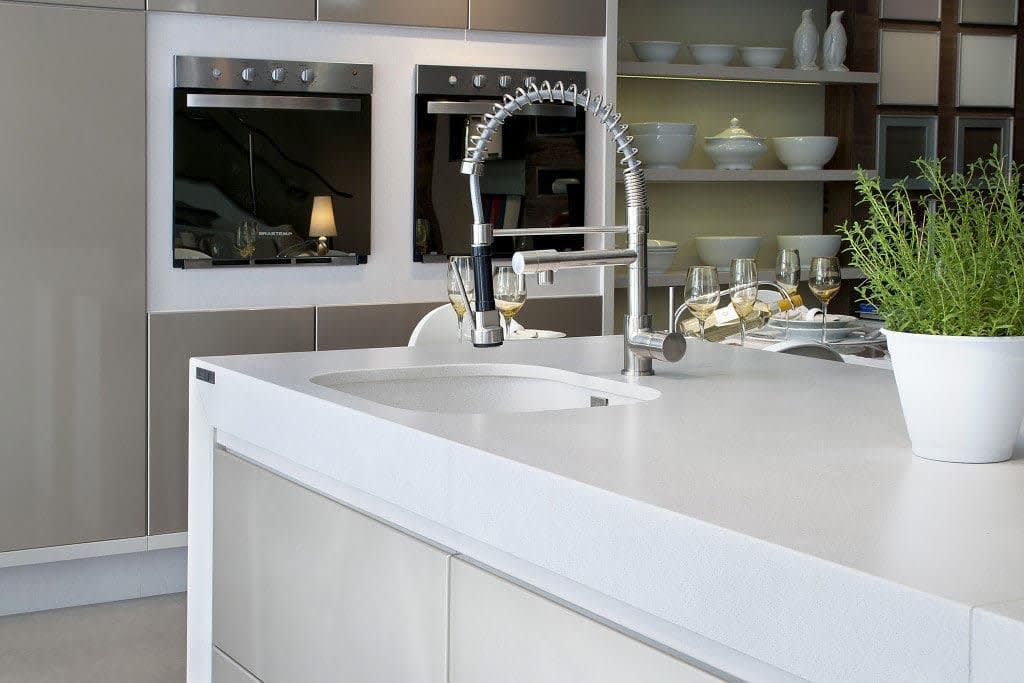
Image Source: images.ctfassets.net
Deciphering Standard Dimensions
The kitchen counter depth is another critical measurement to consider. Most kitchen countertops have a standard depth of 25 inches (63.5 cm), extending from the backsplash to the front edge of the cabinets. This depth allows for ample workspace and accommodates standard cabinet sizes. However, this depth can be customized for islands or unique kitchen layouts.
Typical Countertop Thickness by Material
Different materials offer different thicknesses, and this can influence both cost and appearance. Here’s a breakdown of common countertop materials and their typical thickness ranges.
Granite Countertop Thickness
Granite countertop thickness is a popular topic. The most common thickness for granite countertops is 3 cm (approximately 1.2 inches). This thickness is widely available, cost-effective, and provides excellent durability.
- 3 cm Granite: This is the industry standard for most fabricators. It’s strong enough to stand on its own without additional support, making installation simpler and more cost-effective.
- 2 cm Granite: While less common for countertops, 2 cm (about 0.8 inches) granite is sometimes used, often requiring plywood support underneath to prevent cracking or sagging. This can make it appear thicker overall.
- Thicker Granite (4 cm or more): Some prefer a more substantial look and opt for thicker granite slabs, typically 4 cm (about 1.6 inches) or even more. This offers a luxurious, weighty appearance but comes at a higher cost due to the increased material and the need for specialized fabrication and installation. Thicker granite often doesn’t require additional support, enhancing its robust appeal.
When discussing granite thickness, it’s important to remember that the “visible” thickness at the edge is what most people refer to. The actual slab thickness is the primary factor.
Quartz Countertop Thickness
Quartz countertop thickness is very similar to granite, as quartz slabs are engineered to mimic natural stone.
- 2 cm Quartz: This thickness is common for quartz countertops. It offers a sleek profile and is generally strong enough for most kitchen applications.
- 3 cm Quartz: This is also a very popular choice for quartz. It provides a more substantial look and feel, similar to thicker granite, and offers excellent durability without the need for additional support.
- Custom Thicknesses: While less common, custom quartz slabs can be manufactured in various thicknesses, but this is usually for very specific design projects and can be significantly more expensive.
The strength of quartz as a material means that thinner slabs can be just as durable as thicker natural stone slabs, but the visual impact of thicker quartz is often desired.
Marble Countertop Thickness
Marble countertop thickness often follows similar guidelines to granite, but the inherent nature of marble can influence decisions.
- 2 cm Marble: This is a frequently chosen thickness for marble countertops. It’s lighter and more manageable to install. However, marble is softer than granite or quartz, so even at 2 cm, it benefits from careful use and protection.
- 3 cm Marble: Opting for 3 cm marble provides a more substantial look and can offer slightly increased durability against chipping and scratching. Like granite, 3 cm marble can often be supported by its own weight without additional bracing.
- Laminated Edges: To achieve a thicker appearance with thinner marble slabs, fabricators often use a technique called “laminating” or “build-up” edges. This involves gluing a second strip of marble to the edge of the slab, creating the illusion of a much thicker countertop without the full cost or weight of a solid thick slab. This is a common way to achieve a standard kitchen countertop thickness of 4 inches or more.
Marble is beautiful but porous and prone to etching and staining, so its thickness often plays a secondary role to its maintenance requirements.
Butcher Block Countertop Thickness
Butcher block countertop thickness is where you see a wider variation, as wood offers more flexibility in its natural form.
- 1.5 inches (approx. 3.8 cm): This is a very common thickness for butcher block. It provides a sturdy surface for food preparation and a beautiful natural aesthetic.
- 2 inches (approx. 5 cm): Many prefer a more robust feel and choose 2-inch thick butcher block. This thickness is ideal for serious chefs who will be chopping directly on the surface, as it offers greater longevity and can be planed down more times over the years.
- 3 inches or more: For a dramatic, statement piece, butcher block can be fabricated in much thicker dimensions. These are often found on kitchen islands and offer a substantial, artisanal look.
The thickness of butcher block can directly impact its functionality as a cutting surface. Thicker pieces are generally more durable and can withstand more frequent planing and oiling.
Laminate Countertop Thickness
Laminate countertop thickness is quite standardized, primarily because laminate is an engineered product with a core material.
- 1.5 inches (approx. 3.8 cm): This is the most common thickness for laminate countertops. It’s designed to mimic the appearance of natural stone, wood, or other materials.
- 3/4 inch (approx. 1.9 cm): Some thinner laminate options exist, but these are less common for full kitchen countertops and might be used for specific applications or as a budget-friendly alternative. These often require additional support.
Laminate countertops achieve their thickness through a core of particleboard or MDF, which is then covered with a decorative laminate layer. The thickness is more about the base material than the decorative surface itself.
Beyond the Standard: Customization and Considerations
While there are typical thicknesses, the beauty of modern kitchens lies in customization. You’re not limited to the common sizes.
Factors Influencing Thickness Choices
- Aesthetics: A thicker countertop generally conveys a sense of luxury and permanence. It can make a bold design statement.
- Durability and Strength: While material quality is paramount, a thicker slab of granite or quartz can offer greater resistance to cracking and breaking, especially if it’s being used for a large unsupported span.
- Functionality: For butcher block, thickness is directly related to its ability to withstand heavy chopping and frequent resurfacing.
- Edge Profiles: The chosen edge profile can also affect the perceived and actual thickness of the countertop. A bullnose or ogee edge on a 3 cm slab can make it appear much thicker than a simple eased edge on a 2 cm slab.
- Support Requirements: Thinner slabs (like 2 cm granite or marble) may require additional support, such as plywood underlayment or a reinforced cabinet structure, to prevent bowing or cracking over time. Thicker slabs (3 cm and above) are generally self-supporting.
- Cost: Thicker materials mean more raw material, increased weight, and potentially more complex fabrication. This translates to a higher cost for thicker countertops.
- Cabinetry Compatibility: Ensure your cabinet boxes are sturdy enough to support the weight of your chosen countertop material and thickness.
Edge Treatments and Perceived Thickness
The edge profile you choose significantly influences how thick your countertop appears. Simple eased or square edges present the true thickness of the slab. However, more elaborate profiles like:
- Bullnose: A rounded edge that makes the countertop appear thicker and softer.
- Ogee: An S-shaped curve that adds a decorative touch and a sense of depth.
- Beveled: An angled edge that can reduce the perceived bulk while still adding a visual detail.
- Laminated/Build-up Edges: As mentioned with marble, this technique glues an additional piece of the same material to the edge, creating the illusion of a much thicker slab. This is a popular way to achieve a 4-inch or even 6-inch thick look without the massive weight and cost of a solid slab.
These edge treatments can transform a standard thickness into something that looks significantly more substantial and custom.
Weighing Your Options: A Visual and Practical Guide
Let’s visualize the differences. Imagine a 3 cm slab versus a 2 cm slab with a laminated edge to achieve a 4 cm visual thickness. The 3 cm slab offers the inherent strength of its material. The 2 cm slab with a laminated edge might offer a similar visual weight but relies on the adhesive and the skill of the fabricator for its structural integrity at the edge.
Countertop Thickness and Durability
While thicker countertops generally offer more inherent strength, the material itself is the primary determinant of durability.
- Granite and Quartz: Both are very durable, and their thickness primarily affects their resistance to flexing or cracking under heavy loads or impacts, especially over longer spans without support.
- Marble: Marble is softer and more prone to etching and scratching. While a thicker slab might offer slightly more resistance to chipping, its overall durability is more about careful use and sealing than its thickness.
- Butcher Block: Thickness is crucial for butcher block’s longevity as a cutting surface. A thicker piece can be planed down multiple times, extending its lifespan significantly.
- Laminate: Laminate’s durability is more about its wear layer and the quality of the core material. Thickness has less impact on its resistance to scratches or fading compared to the material’s construction.
Budgetary Considerations
The thickness of your countertop material will directly impact its price.
- Material Cost: Thicker slabs inherently cost more because there is more material involved.
- Fabrication Cost: Working with thicker slabs can be more challenging, requiring specialized tools and techniques, which can increase fabrication labor costs.
- Installation Cost: Thicker and heavier slabs can also lead to higher installation costs due to the need for more labor and potentially specialized equipment to move and position them.
When comparing a 3 cm granite slab to a 2 cm granite slab with a laminated edge, the 2 cm option might seem cheaper initially due to less raw material, but the added labor for lamination can sometimes offset savings. It’s always best to get quotes for your specific desired thickness and edge profile.
Finalizing Your Kitchen Countertop Thickness
Choosing the right thickness for your kitchen countertops involves balancing aesthetics, functionality, budget, and the specific properties of your chosen material. The standard kitchen countertop thickness provides a reliable starting point, but don’t be afraid to explore custom options.
Consider how you use your kitchen. Are you a passionate baker and chef who needs a robust cutting surface? Butcher block might be best at 2 inches or more. Do you prefer the look of substantial stone? Opt for 3 cm granite or quartz, or explore laminated edges for a thicker appearance.
Remember to consult with your fabricator about the best thickness options for your chosen material and your specific kitchen design. They can provide expert advice on structural integrity, edge profiles, and the overall visual impact of different thicknesses. Ultimately, the perfect countertop thickness is the one that meets your practical needs and enhances the beauty of your kitchen.
Frequently Asked Questions About Countertop Thickness
Q1: What is the most common kitchen countertop thickness?
A1: The most common standard kitchen countertop thickness is 3 cm (approximately 1.2 inches), especially for natural stones like granite and engineered stones like quartz. However, 2 cm (approximately 0.8 inches) is also very common, often with a laminated edge to achieve a thicker look.
Q2: Can I have custom thickness countertops?
A2: Yes, most countertop materials can be fabricated to custom thicknesses. However, this can significantly increase costs due to material usage, fabrication complexity, and transportation weight. Some materials, like laminate, have more limited custom thickness options.
Q3: Does a thicker countertop mean it’s more durable?
A3: Generally, yes, especially for materials like granite and quartz, a thicker slab can offer better resistance to cracking and sagging, particularly over longer spans without support. However, material quality and proper installation are also crucial factors in durability. For materials like marble, thickness has less impact on its inherent susceptibility to etching and scratching compared to its composition.
Q4: How does countertop thickness affect installation?
A4: Thicker and heavier countertops require more robust cabinet support and often more labor for installation, which can increase costs. Very thin countertops might require additional support structures to prevent bowing or cracking.
Q5: What is the difference between 2 cm and 3 cm granite countertop thickness?
A5: 3 cm granite is almost twice as thick as 2 cm granite. This makes 3 cm granite generally stronger, more self-supporting, and often provides a more substantial, luxurious appearance. 2 cm granite is lighter and can be more budget-friendly, but it often requires plywood support underneath and may use laminated edges to appear thicker.
Q6: How thick should my butcher block countertop be?
A6: For general use and a beautiful aesthetic, 1.5 inches is common. For serious cooks who plan to chop directly on the surface frequently, 2 inches or thicker is recommended for longevity and the ability to be planed down multiple times.
Q7: Can I make my laminate countertop thicker looking?
A7: Laminate countertops are typically a standard thickness, usually around 1.5 inches. While you can’t easily increase the core thickness, decorative edge treatments can sometimes enhance the perceived depth, though the material itself remains consistent.
Q8: What is the average kitchen counter depth?
A8: The average kitchen counter depth is 25 inches from the cabinet front to the backsplash. This provides ample workspace and accommodates standard appliances and cabinetry. The overhang at the front edge is typically 1 to 1.5 inches.