
What is the ideal kitchen size? The ideal kitchen size is one that comfortably accommodates your cooking style, the number of people who use it, and the available space, while ensuring efficient workflow and adequate clearance for appliances and movement.
Determining the right size for your kitchen is a crucial step in kitchen room planning. It’s not just about fitting in cabinets and appliances; it’s about creating a functional, comfortable, and enjoyable space. Too small, and you’ll feel cramped and inefficient. Too large, and you might feel like you’re walking miles just to grab a spice. This comprehensive kitchen size guide aims to help you navigate the decision-making process.
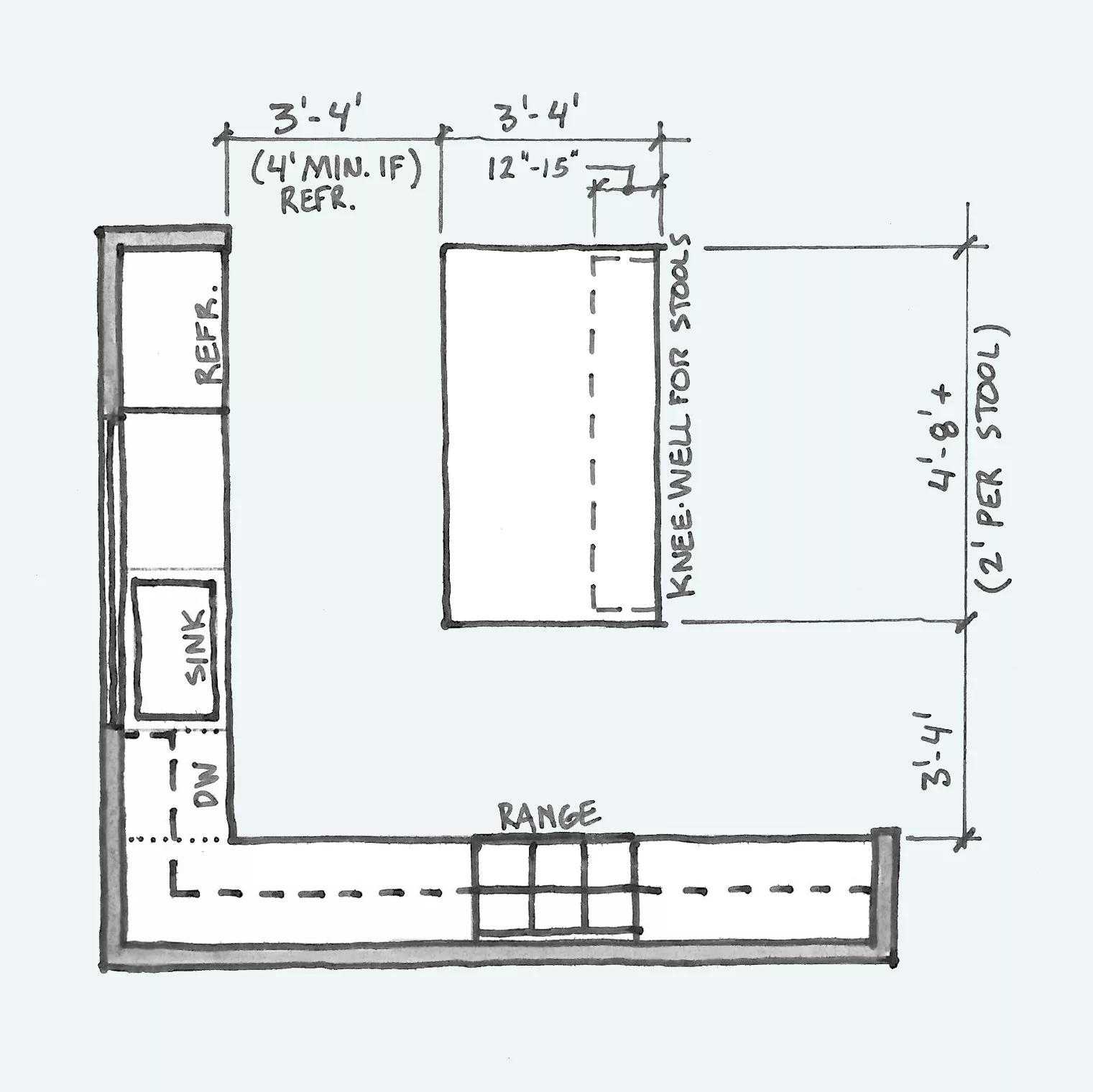
Image Source: www.boardandvellum.com
Fathoming Your Kitchen Needs
Before diving into specific measurements, it’s important to assess your personal needs and how you use your kitchen. Consider these points:
- Cooking Habits: Are you a gourmet chef who needs ample prep space and room for multiple appliances, or do you primarily reheat meals and make simple snacks?
- Household Size: A single person or a couple will have different needs than a large family with children.
- Entertaining: Do you often host dinner parties or casual gatherings? This will influence the need for seating, serving areas, and open-plan design.
- Storage Requirements: How much pantry space, cookware, and small appliances do you need to store?
- Appliance Choices: The size and type of appliances you plan to use (e.g., double ovens, large refrigerators, wine coolers) will significantly impact the required space.
Deciphering Minimum Kitchen Dimensions
Every kitchen needs a baseline for functionality. These are the minimum kitchen dimensions to ensure basic usability and safety.
The Work Triangle: A Timeless Concept
The concept of the kitchen work triangle is fundamental to efficient kitchen design. It connects the three main work areas: the sink, the refrigerator, and the stove/cooktop. The idea is that these should be arranged so that movement between them is quick and easy, with minimal obstruction.
- Total Triangle Perimeter: Ideally, the sum of the lengths of the three sides of the triangle should be between 13 and 26 feet (approximately 4 to 8 meters).
- Leg Lengths: Each leg of the triangle (distance between two workstations) should be between 4 and 9 feet (approximately 1.2 to 2.7 meters).
- No Obstructions: No major traffic patterns or cabinets should interrupt the triangle.
While the work triangle is a classic guide, modern kitchens often incorporate a “work zone” concept, especially in larger or open-plan layouts. However, the principle of minimizing steps and creating logical flow remains.
Essential Clearances: Making Space to Move
Proper kitchen workflow space is paramount. This refers to the clear pathways and areas around appliances and countertops that allow for comfortable movement and use.
- Main Walkways: The primary pathways in a kitchen should be at least 36 inches (91 cm) wide. For busier kitchens or those with multiple cooks, 48 inches (122 cm) is recommended.
- Working Space Between Appliances: When two workstations or appliances face each other, allow at least 48 inches (122 cm) of clearance. This ensures you can open refrigerator doors, oven doors, and drawers without them hitting each other or blocking passage.
- Against a Wall: If a workstation is against a wall, a minimum of 42 inches (107 cm) of clearance is needed.
Interpreting Average Kitchen Size Square Feet
The average kitchen size square feet can vary greatly depending on the type of home and its location. However, understanding these averages can provide a useful benchmark.
| Home Type | Average Kitchen Size (Square Feet) | Average Kitchen Size (Square Meters) |
|---|---|---|
| Small Apartment | 70 – 100 | 6.5 – 9.3 |
| Medium Home | 120 – 180 | 11.1 – 16.7 |
| Large Home | 200 – 300+ | 18.6 – 27.9+ |
| Luxury Home | 300 – 500+ | 27.9 – 46.5+ |
These are general figures, and your specific needs might require a larger or smaller space.
Small Kitchen Dimensions: Maximizing Every Inch
Small kitchen dimensions often present a challenge, but with smart design, they can be incredibly functional and stylish.
- Minimum Layouts: For a galley kitchen, a common layout for smaller spaces, a width of at least 5 feet (1.5 meters) is ideal to allow for two counter runs with walkways.
- Single-Wall Kitchen: These kitchens, where all appliances and cabinets are on one wall, can work in very tight spaces, often around 6-8 feet (1.8-2.4 meters) in length.
- Efficient Appliance Choices: Opt for compact appliances, such as under-counter refrigerators or slim dishwashers. Consider combination microwave-convection ovens.
- Vertical Storage: Utilize wall space with tall cabinets, open shelving, and magnetic knife strips to free up counter space.
- Clever Cabinetry: Incorporate pull-out pantries, corner lazy Susans, and drawer organizers to maximize storage efficiency.
Large Kitchen Proportions: Balancing Scale and Functionality
Large kitchen proportions offer more flexibility but also require careful planning to avoid feeling cavernous or losing efficiency.
- Generous Work Zones: Large kitchens can comfortably accommodate multiple work zones, such as a baking station, a prep area, and a drinks station.
- Island Functionality: A large kitchen often benefits from a kitchen island. For an island to be functional and safe, ensure at least 36-42 inches (91-107 cm) of clearance around it for walkways. The island itself could be 3 feet wide and 6 feet long (approx. 0.9 x 1.8 meters) or larger, depending on the overall kitchen size.
- Appliance Placement: In a large kitchen, avoid placing essential appliances too far apart. You still want a functional work triangle or zones, even if the distances are greater.
- Consider a Secondary Sink or Prep Area: If your kitchen is very large, a secondary sink in the island or a dedicated prep zone can significantly improve workflow.
Comprehending Kitchen Layout Size
The ideal kitchen layout size depends heavily on the shape of the room and your preferred layout. Common kitchen layouts include:
1. The Galley Kitchen
- Description: Two parallel walls with cabinets and appliances.
- Ideal Width: 5-8 feet (1.5-2.4 meters). This allows for counter space, appliances, and adequate walkways (at least 4 feet or 1.2 meters between counters).
- Length: Can vary, but typically 8-12 feet (2.4-3.6 meters).
- Pros: Very efficient for cooking, good for smaller spaces.
- Cons: Can feel cramped, limited space for multiple cooks or dining.
2. The L-Shaped Kitchen
- Description: Cabinets and appliances along two adjacent walls.
- Ideal Size: Can range from 10×10 feet (3×3 meters) for smaller versions to 12×14 feet (3.6×4.2 meters) or larger.
- Pros: Creates a good work triangle, opens up the room for a dining or seating area, good corner storage solutions.
- Cons: Corner cabinets can be less accessible if not designed well.
3. The U-Shaped Kitchen
- Description: Cabinets and appliances along three walls.
- Ideal Size: Requires a minimum of 10×10 feet (3×3 meters) to avoid feeling cramped. A more comfortable U-shape might be 12×12 feet (3.6×3.6 meters) or larger.
- Pros: Excellent workspace, plenty of storage, defines the kitchen space.
- Cons: Can feel enclosed, requires careful attention to doorway placement to avoid disrupting workflow.
4. The Island Kitchen
- Description: A variation of L-shaped or U-shaped kitchens that includes a freestanding island.
- Ideal Size: Requires a minimum of 10×10 feet (3×3 meters) for the basic kitchen footprint, but the overall room size needs to be larger to accommodate the island and adequate walkways. A common size might be 12×15 feet (3.6×4.5 meters) or more.
- Island Clearance: Crucially, maintain 36-42 inches (91-107 cm) clearance around the island.
- Pros: Adds significant prep and storage space, can serve as a social hub.
- Cons: Requires a larger room, island placement is critical for workflow.
5. The Peninsula Kitchen
- Description: Similar to an island but attached to a wall or cabinet run on one side.
- Ideal Size: Can work in spaces similar to L-shaped kitchens, often around 10×12 feet (3×3.6 meters).
- Pros: Offers some benefits of an island without requiring as much open space, can provide casual seating.
- Cons: Less flexible than a freestanding island.
Kitchen Appliance Spacing: Safety and Convenience
Proper kitchen appliance spacing is vital for both safety and efficient use. Manufacturers provide specific installation guidelines for each appliance, and these should always be followed.
Refrigerator Spacing
- Door Swing: Ensure enough space for the refrigerator door to open fully without hitting cabinets, walls, or other appliances. Measure the door’s swing radius.
- Ventilation: Refrigerators need space around them for air circulation to operate efficiently. Check the manufacturer’s recommendations for clearance at the back, sides, and top (usually 1-2 inches or 2.5-5 cm).
- Height: If placing under a cabinet or shelf, ensure adequate height clearance.
Range and Cooktop Spacing
- Side Clearances: Allow at least 12 inches (30 cm) of counter space on one side of a freestanding range, and 15-18 inches (38-45 cm) on the side without a wall. For cooktops, follow manufacturer guidelines for side clearances to adjacent cabinets.
- Backsplash and Vent Hood: Ensure proper spacing for a backsplash and vent hood installation. The height of the vent hood above the cooktop is critical for effective ventilation, typically 20-30 inches (50-76 cm) depending on the hood type.
- Oven Door: Allow clearance for the oven door to open fully.
Dishwasher Spacing
- Standard Width: Most dishwashers are 24 inches (60 cm) wide, but 18-inch (45 cm) models are available for smaller spaces.
- Adjacent Space: Allow 24 inches (60 cm) of space for the dishwasher door to swing open and for someone to stand in front of it while loading or unloading. It’s often placed next to the sink for easy rinsing and loading.
Microwave and Oven Placement
- Wall Ovens: Require dedicated cabinet space. Ensure the cabinet is sized correctly for the oven and allows for proper ventilation.
- Microwave Ovens: Can be placed on countertops, mounted under cabinets with a bracket, or built into wall cabinets. Consider the height for ease of use, especially for microwave drawers or built-in units.
- Countertop Microwaves: Ensure they don’t take up prime prep space and have enough room around them for ventilation.
Kitchen Workflow Space: Designing for Efficiency
Kitchen workflow space refers to the pathways and clear areas that allow you to move smoothly between prep, cooking, and cleaning tasks.
- Prep Zones: The area between the sink and the cooktop is prime prep territory. This zone should be at least 36 inches (91 cm) wide, ideally 48 inches (122 cm) if space allows.
- Landing Zones: Every appliance needs a “landing zone” – a counter space nearby for placing hot dishes, groceries, or to stage ingredients.
- Refrigerator: 15-18 inches (38-45 cm) on the handle side.
- Oven/Cooktop: 12-18 inches (30-45 cm) on either side.
- Microwave: 15-18 inches (38-45 cm) nearby.
- Traffic Flow: Ensure primary walkways are at least 36 inches (91 cm) wide, with 48 inches (122 cm) being more comfortable for two people or high-traffic kitchens. Avoid placing major appliances or obstructions in main traffic paths.
Kitchen Room Planning: Integrating Size and Style
Effective kitchen room planning means considering how the kitchen fits within the overall home layout.
- Open vs. Closed Kitchens:
- Open Kitchens: Popular for modern living, they blend the kitchen with dining and living areas. This requires careful consideration of noise, ventilation, and aesthetics. Larger, open spaces can feel more social but may require more careful layout to avoid feeling overwhelming.
- Closed Kitchens: More traditional, these kitchens are separate rooms. They can be more intimate for cooking but may isolate the cook from family or guests.
- Ergonomics and Accessibility: Consider counter heights, appliance heights, and drawer accessibility. For kitchens used by people of varying heights or those with mobility issues, adjustable elements or lower counter sections might be beneficial.
- Lighting and Ventilation: Adequate lighting (task, ambient, and accent) is crucial, especially in larger kitchens. Good ventilation is essential to remove smoke, steam, and odors. The size of your kitchen will influence the type and power of the ventilation system needed.
- Storage Solutions: Plan for adequate storage from the outset. This includes cabinets, drawers, pantries, and even creative solutions like pull-out spice racks or appliance garages. The size of your kitchen directly impacts the potential for storage.
Kitchen Size Considerations by Layout
Let’s look at specific dimensions for common kitchen layouts, keeping minimum clearances in mind.
Galley Kitchen Dimensions
- Minimum Functional Width: 5 feet (1.5m)
- Comfortable Width: 6-8 feet (1.8-2.4m)
- Example: A 6ft x 10ft (1.8m x 3m) kitchen provides 2ft (0.6m) counters on each side with a 4ft (1.2m) walkway.
L-Shaped Kitchen Dimensions
- Minimum Footprint: 10ft x 10ft (3m x 3m) – for a compact version.
- Ideal Size: 12ft x 12ft (3.6m x 3.6m) or larger.
- Example: A 12ft x 14ft (3.6m x 4.2m) kitchen allows for comfortable counter space, appliance placement, and a potential small dining nook.
U-Shaped Kitchen Dimensions
- Minimum Functional Footprint: 10ft x 10ft (3m x 3m)
- Ideal Size: 12ft x 12ft (3.6m x 3.6m) or larger. The length of each leg will determine the amount of cabinetry and counter space. Ensure adequate space between the two parallel legs (at least 5ft or 1.5m).
- Example: An 11ft x 13ft (3.3m x 4m) U-shaped kitchen with 3ft (0.9m) deep cabinets on each of the three sides would leave a 5ft (1.5m) space in the center, providing good workflow.
Island/Peninsula Kitchen Dimensions
- Base Kitchen Footprint (L or U): Minimum 10ft x 10ft (3m x 3m).
- Room Size to Accommodate Island/Peninsula: At least 12ft x 15ft (3.6m x 4.5m) is recommended.
- Island Clearance: 36-42 inches (91-107 cm) around the island.
- Example: A 14ft x 16ft (4.2m x 4.8m) room can comfortably fit an L-shaped layout with a 4ft x 8ft (1.2m x 2.4m) island, allowing for 4ft (1.2m) walkways around the island.
Practical Tips for Kitchen Sizing
- Measure Twice, Plan Once: Accurately measure your existing space or the space in your new home.
- Use Painter’s Tape: Before committing to a layout, use painter’s tape on the floor to mark out cabinet runs, islands, and appliance footprints. This helps visualize the scale and flow.
- Consider Multi-Functional Elements: In smaller kitchens, think about islands with built-in seating or tables that can serve as prep space and dining areas.
- Don’t Overcrowd: It’s better to have a slightly smaller, well-designed kitchen with ample workflow space than a larger kitchen that feels cramped due to poor layout.
- Consult Professionals: Kitchen designers or architects can offer invaluable advice based on your specific space and needs.
Frequently Asked Questions (FAQ)
Q1: What is the minimum size for a functional kitchen?
A1: The minimum functional size for a kitchen is often considered to be around 60 square feet (5.6 square meters), but this can vary depending on the layout. A galley kitchen can be functional in as little as 5 feet (1.5 meters) in width.
Q2: Can I have a kitchen island in a small kitchen?
A2: Yes, you can, but it needs to be carefully considered. Opt for a smaller island or a rolling cart, and ensure you maintain at least 36 inches (91 cm) of clearance around it for walkways. Sometimes a peninsula is a better option for tighter spaces.
Q3: How much space do I need between my kitchen counter and island?
A3: You should have a minimum of 36 inches (91 cm) of clearance between your kitchen counter and an island or peninsula. For more comfortable movement, especially if there are multiple people in the kitchen, 42-48 inches (107-122 cm) is ideal.
Q4: What is the standard kitchen work triangle size?
A4: The standard kitchen work triangle aims for a total perimeter of 13 to 26 feet (4 to 8 meters), with each leg of the triangle (sink to fridge, fridge to stove, stove to sink) being between 4 and 9 feet (1.2 to 2.7 meters).
Q5: How do I calculate my kitchen’s square footage?
A5: Measure the length and width of your kitchen space and multiply these two numbers together. For rooms that are not rectangular, divide the room into rectangular sections, calculate the area of each section, and then add them together.
Q6: What are essential kitchen appliance spacing guidelines?
A6: Key spacing includes: 24 inches (60 cm) for dishwasher door swing, 15-18 inches (38-45 cm) landing space next to refrigerators and ovens, and proper ventilation clearance around all appliances as specified by the manufacturer. Walkway clearances are also critical, with minimums of 36 inches (91 cm) and ideal of 48 inches (122 cm).
Choosing the right size for your kitchen is about balancing functionality, comfort, and aesthetics. By carefully considering your needs, understanding the principles of kitchen design, and adhering to essential dimension guidelines, you can create a kitchen that is perfectly suited to your home and lifestyle.