
A standard kitchen countertop is typically 24 inches deep. This depth, along with other key kitchen countertop dimensions, ensures a functional and comfortable kitchen work surface depth.
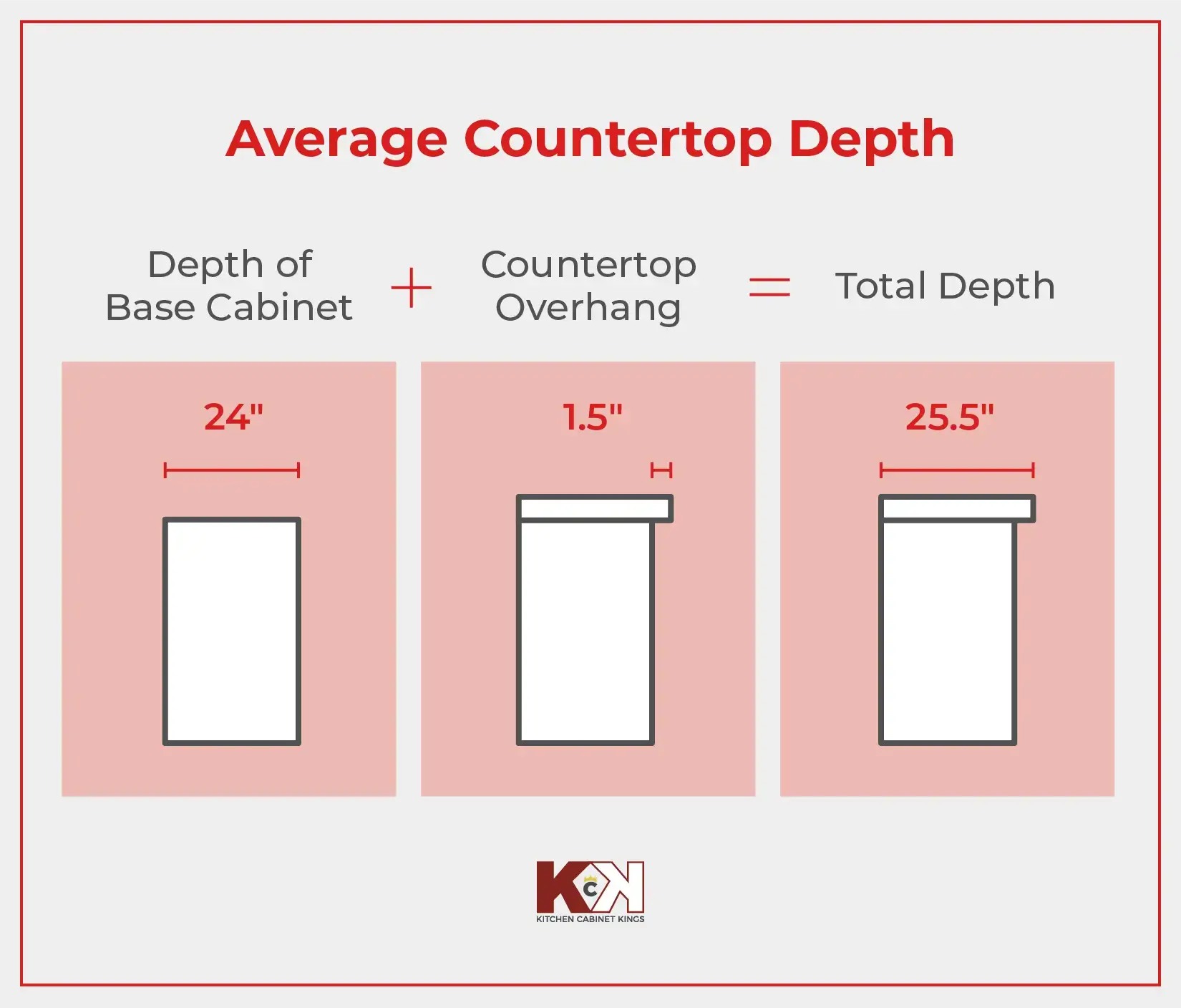
Image Source: cdn.kitchencabinetkings.com
The Essentials of Kitchen Countertop Depth
When planning or renovating your kitchen, the depth of your countertops is a crucial detail. It’s not just about aesthetics; it directly impacts how you use your kitchen every day. A well-thought-out depth makes cooking, preparing food, and storing items much easier and more efficient. Let’s dive into the specifics of counter depth measurements to help you make informed decisions.
Standard Countertop Depth: The 24-Inch Rule
The most common standard kitchen counter depth is 24 inches. This measurement is primarily dictated by the standard cabinet depth that forms the base of your countertop. Kitchen cabinets are typically designed to be 24 inches deep to provide ample storage space for everyday kitchen items like pots, pans, dishes, and small appliances.
Why 24 inches? This depth offers a good balance. It’s deep enough to house standard base cabinets, which are essential for structural support and storage. It also allows for a comfortable workspace in front of the cabinets, leaving enough room for appliances like toasters, blenders, or coffee makers, and still providing adequate space for chopping and food preparation.
Beyond the Standard: Variations in Countertop Depth
While 24 inches is the standard, there are reasons why you might opt for a different kitchen countertop dimensions.
Deeper Countertops: More Workspace, More Storage
- Increased Prep Area: If you love to cook or bake, a deeper countertop can be a game-changer. An extra few inches can provide significantly more kitchen work surface depth, allowing you to spread out ingredients, use larger cutting boards, or accommodate multiple appliances simultaneously.
- Enhanced Storage: Deeper countertops mean deeper base cabinets. This translates to more storage capacity, especially for bulkier items like large pots, mixing bowls, or seldom-used appliances.
- Appliance Integration: Some standard-sized appliances, like deeper refrigerators or certain dishwashers, can fit flush with deeper countertops, creating a more streamlined and built-in look.
Considerations for Deeper Countertops:
- Reachability: Make sure you can easily reach the back of the countertop. If it becomes too deep, items stored at the back might be difficult to access.
- Kitchen Size: In smaller kitchens, very deep countertops can make the space feel cramped and reduce maneuverability.
- Cost: Deeper cabinets and countertops can sometimes be more expensive due to increased material usage.
Shallower Countertops: For Specific Needs
In some situations, shallower countertops might be preferable.
- Tight Spaces: In very narrow kitchens or small galley kitchens, shallower countertops can help maximize the walkway space and prevent the kitchen from feeling claustrophobic.
- Specific Appliance Requirements: Some compact appliances or specialized units might require shallower cabinet bases.
- Aesthetic Choices: Occasionally, a shallower depth might be chosen for a particular design aesthetic, though this is less common for functional workspaces.
Considerations for Shallower Countertops:
- Reduced Workspace: The most obvious drawback is less kitchen work surface depth, which can limit your food preparation activities.
- Limited Storage: Shallower cabinets offer less storage capacity.
- Appliance Fit: Ensure that standard appliances will fit appropriately without sticking out too far into the walkway.
Countertop Overhang: Adding Functional Space
The countertop overhang is the part of the countertop that extends beyond the front of the base cabinets. This overhang adds to the usable kitchen work surface depth and serves several practical purposes.
Standard Overhang Measurements
- Front Overhang: The typical front overhang is 1 to 1.5 inches. This provides enough space for your fingers to grip the edge of the countertop when opening cabinet doors or drawers, and it also helps protect the cabinet front from spills and drips.
- Side Overhang: The overhang on the sides can vary, but a common measurement is 0.5 to 1 inch.
Overhang for Seating (Kitchen Islands and Peninsulas)
When a countertop is used for seating, the overhang needs to be more substantial to accommodate legs.
- Knee Space: For comfortable seating at a kitchen island depth or peninsula, an overhang of at least 10-15 inches is generally recommended. This provides adequate knee space for people to sit comfortably at the counter.
- Support: Longer overhangs, especially those exceeding 12 inches, will likely require additional support structures, such as corbels or a reinforced cabinet frame, to prevent sagging or breakage.
Countertop Thickness: A Matter of Style and Durability
While depth refers to how far the countertop extends from the wall, thickness refers to its vertical dimension. Typical kitchen counter thickness can vary significantly and is often a stylistic choice as much as a practical one.
- Standard Thickness: Many common countertop materials, like laminate and solid surface, come in a typical kitchen counter thickness of 3 centimeters (approximately 1.2 inches).
- Granite and Quartz: Natural stone and quartz countertops are often 3 centimeters thick, offering a substantial and durable feel.
- Thicker Options: You can also find countertops that are 2 centimeters thick (often used with a laminated edge to mimic a thicker profile) or significantly thicker, such as 4 to 6 centimeters (1.5 to 2.5 inches) or even more. Thicker countertops can lend a more luxurious and solid appearance.
Factors Influencing Thickness:
- Material: Some materials are naturally thicker or are commonly sold in specific thicknesses.
- Aesthetics: Thicker countertops can make a bolder statement and appear more robust.
- Support: Very thick or very thin countertops may require specific cabinet support considerations.
Kitchen Island Depth: Unique Considerations
Kitchen islands are central to many modern kitchens, serving as prep areas, storage hubs, and social gathering spots. The depth of a kitchen island depth can be customized to suit its primary function.
- Standard Island Depth: Similar to perimeter countertops, many standard kitchen islands have a depth of 24 inches to accommodate standard base cabinets.
- Extended Depth Islands: Islands can be made deeper, for example, 30 inches or even 36 inches, to provide more extensive workspace or to house specialized appliances like a cooktop with a downdraft ventilation system.
- Seating Integration: If the island is designed with seating, the depth will need to accommodate the cabinet section plus the necessary overhang for legroom. A common configuration might be a 24-inch deep cabinet with a 12-inch overhang, resulting in a total kitchen island depth of 36 inches.
Kitchen Countertop Dimensions: A Summary Table
To help visualize the common kitchen countertop dimensions, here’s a table summarizing the typical measurements:
| Dimension | Typical Measurement | Notes |
|---|---|---|
| Standard Depth | 24 inches | Corresponds to standard cabinet depth; balances workspace and appliance fit. |
| Countertop Overhang | 1 to 1.5 inches (front) | Protects cabinets, aids in opening drawers/doors. |
| 0.5 to 1 inch (sides) | For aesthetic finishing and edge protection. | |
| Seating Overhang | 10 to 15 inches (minimum) | For comfortable legroom at islands and peninsulas. |
| Typical Thickness | 3 cm (approx. 1.2 inches) | Common for laminate, solid surface, quartz, and granite. |
| 2 cm (approx. 0.8 inches) | Often used with laminated edges for a thicker appearance. | |
| 4 to 6 cm (approx. 1.5-2.5 inches) | For a more substantial and luxurious look. | |
| Standard Cabinet Depth | 24 inches | The foundation for most standard countertop depths. |
Building Code Countertop Depth: Ensuring Safety and Functionality
While building code countertop depth doesn’t typically specify an exact minimum or maximum depth for countertops themselves, codes often indirectly influence these measurements through requirements for cabinet dimensions, appliance clearances, and overall kitchen layout.
- Appliance Clearances: Building codes mandate specific clearances around appliances like ranges and dishwashers for safety and proper operation. This can influence the depth of cabinets installed next to them.
- Accessibility Standards: For kitchens designed to be accessible, codes might have recommendations or requirements for aisle widths and counter heights, which can indirectly affect the usable kitchen work surface depth.
- Structural Integrity: While not usually a code issue for depth, the thickness and material of the countertop, and how it’s supported, are important for structural integrity. Codes related to load-bearing capacities for cabinets might come into play.
It’s always a good practice to consult local building codes or work with a qualified contractor or designer who is familiar with them to ensure your kitchen renovation complies with all regulations.
Maximizing Your Kitchen Work Surface Depth
Regardless of the specific counter depth measurements you choose, several strategies can help you maximize your usable kitchen work surface depth:
- Deepen Base Cabinets: If your kitchen layout allows, consider opting for deeper base cabinets (e.g., 27 or 30 inches) to achieve a correspondingly deeper countertop. This is particularly beneficial for dedicated prep zones.
- Utilize the Overhang: Design your island or peninsula with an appropriate overhang for seating. This creates a dual-purpose area that extends your functional kitchen work surface depth.
- Minimize Protruding Appliances: Where possible, choose built-in appliances or appliances with shallower profiles to avoid them encroaching on your walkway or workspace.
- Strategic Appliance Placement: Place smaller appliances like microwaves or toasters on dedicated shelves or in appliance garages to keep the main countertop free.
- Backsplash Considerations: The thickness of your backsplash material can slightly affect the usable depth. Ensure your countertop extends slightly beyond the backsplash to prevent liquids from seeping behind.
Common Kitchen Work Surface Depth Scenarios
Let’s look at how different depths might play out in practice:
-
Scenario 1: The Standard Kitchen
- Base Cabinets: 24 inches deep
- Countertop Depth: 25 to 25.5 inches (including a 1 to 1.5-inch overhang)
- Result: A comfortable workspace for general cooking and food prep.
-
Scenario 2: The Gourmet Cook’s Kitchen
- Base Cabinets: 27 or 30 inches deep
- Countertop Depth: 28 to 31.5 inches (including overhang)
- Result: Significantly more kitchen work surface depth for extensive meal preparation, multiple appliances, and ingredient staging.
-
Scenario 3: The Compact Galley Kitchen
- Base Cabinets: 21 or 24 inches deep
- Countertop Depth: 22 to 25.5 inches (including overhang)
- Result: A shallower profile to maximize walkway space, with a focus on efficiency within a smaller footprint.
-
Scenario 4: The Island with Seating
- Base Cabinets (Island): 24 inches deep
- Overhang for Seating: 12 inches
- Total Island Depth: 36 inches
- Result: A versatile island providing ample prep space and comfortable seating.
Frequently Asked Questions (FAQ)
Q1: What is the most common depth for a kitchen countertop?
A1: The most common depth for a kitchen countertop is 24 inches.
Q2: Can I have a countertop deeper than 24 inches?
A2: Yes, you can opt for deeper countertops (e.g., 27 or 30 inches) if your kitchen layout and needs accommodate them. This provides more workspace and storage.
Q3: How much overhang should a kitchen countertop have?
A3: A standard front countertop overhang is typically 1 to 1.5 inches. For seating at an island or peninsula, a minimum overhang of 10 to 15 inches is recommended.
Q4: What is the typical thickness of a kitchen countertop?
A4: The typical kitchen counter thickness is around 3 centimeters (about 1.2 inches), though thicker options (4-6 cm) are also popular for a more substantial look.
Q5: Does building code specify countertop depth?
A5: Building codes don’t usually set exact building code countertop depth requirements for the countertop itself but may influence it through appliance clearances and accessibility standards.
Q6: How does standard cabinet depth affect countertop depth?
A6: The standard cabinet depth of 24 inches is the primary factor determining the standard countertop depth. The countertop typically extends slightly beyond the cabinet.
Q7: What is kitchen island depth typically like?
A7: A typical kitchen island depth is 24 inches for the cabinet portion, but can be extended to 30-36 inches or more when including seating overhangs or specialized appliances.
Q8: Why is the countertop overhang important?
A8: The countertop overhang provides extra kitchen work surface depth, protects cabinet fronts from spills, and is essential for comfortable seating at islands and peninsulas.
By carefully considering these kitchen countertop dimensions, including the crucial counter depth measurements, you can design a kitchen that is both beautiful and highly functional, offering an ideal kitchen work surface depth for all your culinary needs.