
A cloud kitchen, also known as a ghost kitchen, virtual restaurant, or dark kitchen, is a food preparation and cooking facility set up for the preparation of delivery-only meals. They operate without a physical storefront or dine-in area, focusing entirely on food delivery operations.
The world of food service is changing, and at the heart of this shift are cloud kitchens. These innovative culinary hubs are revolutionizing how we order and eat food. Forget the bustling dining rooms and the aroma of food wafting onto the street; cloud kitchens are all about efficiency and getting delicious meals directly to your door. But how exactly do these modern culinary operations function? This guide will break it all down.
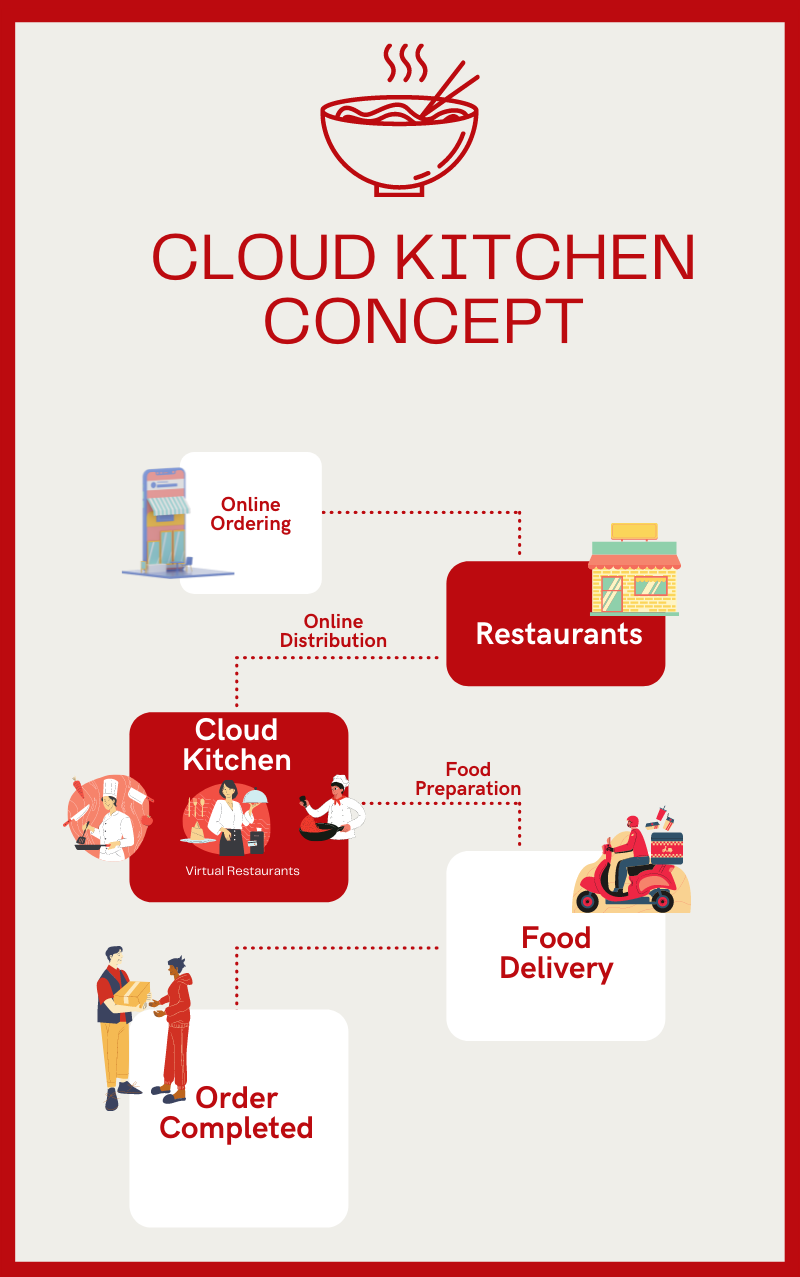
Image Source: www.code-brew.com
Deciphering the Cloud Kitchen Model
At its core, a cloud kitchen is a professional kitchen space optimized for preparing food solely for delivery. Unlike traditional restaurants that have a physical presence for customers to visit, cloud kitchens exist purely to serve online orders. This distinction is crucial and allows for a streamlined business model.
The primary purpose is to fulfill orders placed through various channels, most commonly third-party delivery platforms (like Uber Eats, DoorDash, or Deliveroo) or directly through their own online ordering systems. The food is prepared by skilled chefs, packaged with care, and then handed off to delivery drivers to be transported to the customer.
The Rise of Virtual Restaurants
A key aspect of the cloud kitchen ecosystem is the concept of virtual restaurants. These are food brands that exist only online, with no physical restaurant location. A single cloud kitchen facility can house multiple virtual restaurant brands, each with its own distinct menu and target audience. For example, one kitchen might prepare burgers under “Burger Bliss,” pasta dishes under “Pasta Paradise,” and healthy salads under “Green Goodness,” all from the same operational space. This allows businesses to test new concepts, cater to diverse tastes, and maximize the use of their kitchen facilities without the overhead of multiple brick-and-mortar establishments.
The Nuts and Bolts: How Cloud Kitchens Operate
The operational flow of a cloud kitchen is designed for speed and efficiency. It’s a well-oiled machine focused on taking an order and getting it out the door.
Order Placement and Reception
- Customer Order: A customer browses menus and places an order through a delivery app or a restaurant’s website/app.
- Order Transmission: The order is instantly transmitted to the cloud kitchen. This is often facilitated by specialized restaurant tech stack solutions that integrate with delivery platforms.
- Kitchen Display System (KDS): The order appears on a KDS screen within the kitchen, detailing the items, any customizations, and the required preparation time.
Food Preparation
- Ingredient Management: Kitchen staff prepare the dishes using pre-portioned ingredients, which is common in cloud kitchens to ensure consistency and reduce waste.
- Cooking and Assembly: Chefs expertly cook and assemble the meals according to each virtual brand’s standards.
- Quality Control: Each dish undergoes a quick quality check to ensure it meets the brand’s standards before packaging.
Packaging and Dispatch
- Specialized Packaging: Food is carefully packaged in containers designed to maintain temperature and prevent spillage during transit.
- Labeling: Orders are accurately labeled with the customer’s name, address, and the specific virtual restaurant brand.
- Delivery Handover: Once ready, the order is handed over to a delivery driver from a third-party platform or the kitchen’s own delivery fleet.
Types of Cloud Kitchen Facilities
Cloud kitchens aren’t a one-size-fits-all concept. They can range from a single, shared space to dedicated, purpose-built facilities.
Shared Kitchen Spaces (Commissary Kitchens)
Commissary kitchens are facilities that rent out equipped kitchen stations or units to multiple food businesses. These are often a cost-effective entry point for new businesses or existing restaurants looking to expand their delivery reach without significant capital investment.
- Benefits: Lower startup costs, shared overhead (utilities, maintenance), access to professional equipment, flexibility.
- Considerations: Shared equipment may require careful scheduling; branding and operational independence can be more challenging.
A prime example of this model is kitchen-as-a-service (KaaS) providers, who offer fully equipped kitchen spaces, technology, and sometimes even support staff on a subscription basis.
Dedicated Cloud Kitchens
These are facilities built or leased specifically for a single food business or a small group of tightly controlled brands. They offer more control over operations, branding, and equipment.
- Benefits: Full control over workflow, branding, and hygiene; optimized layout for specific menus; enhanced operational efficiency.
- Considerations: Higher initial investment and ongoing operational costs.
Hybrid Models
Some businesses operate from the kitchens of their existing brick-and-mortar restaurants, dedicating a section or specific hours to preparing delivery-only orders. This leverages existing infrastructure and staff.
Key Components of a Cloud Kitchen Operation
Several elements are critical for a cloud kitchen to function effectively.
Infrastructure and Equipment
- Commercial Kitchen Equipment: Ovens, ranges, fryers, griddles, prep tables, refrigeration, ventilation systems – all essential for high-volume food production.
- Storage Solutions: Adequate dry, cold, and frozen storage for ingredients.
- Washing and Sanitation: Industrial dishwashers and robust cleaning protocols.
Technology Stack
The restaurant tech stack is the backbone of a cloud kitchen. It includes:
- Online Ordering System: Websites, apps, or integrations with third-party platforms.
- Point of Sale (POS) System: To manage orders and payments.
- Kitchen Display System (KDS): Digital screens that display orders and track preparation progress.
- Inventory Management Software: To monitor stock levels and reduce waste.
- Delivery Management Software: To track drivers and optimize routes.
Staffing
Cloud kitchens require a skilled team, including:
- Chefs and Cooks: To prepare the food.
- Kitchen Staff: For prep work, cleaning, and plating.
- Order Managers: To oversee incoming orders and ensure smooth kitchen flow.
- Packers: To package meals for delivery.
Branding and Menu Development
Each virtual restaurant needs a distinct brand identity and a menu optimized for delivery. This involves:
- Menu Engineering: Creating dishes that travel well, maintain quality, and are cost-effective.
- Photography: High-quality images are crucial for online menus.
- Branding: Developing logos, names, and messaging for each virtual brand.
The Economics of Cloud Kitchens
Cloud kitchens offer a different financial profile compared to traditional restaurants.
Lower Overhead Costs
- Reduced Rent: No need for prime, high-footfall locations.
- No Front-of-House Staff: Eliminates the need for servers, hosts, and dining room managers.
- Limited Decor and Furnishings: No investment in dining area aesthetics.
Revenue Streams
- Delivery Sales: The primary source of revenue.
- Takeaway Orders: Some cloud kitchens may also offer pick-up options.
- Wholesale/Catering: Potential for B2B sales.
Key Expenses
- Rent for Kitchen Space: Still a significant cost, though typically lower than retail.
- Staff Salaries: Kitchen and management staff.
- Ingredient Costs: Food supplies.
- Technology and Software Subscriptions: For ordering, management, etc.
- Delivery Platform Commissions: A substantial portion of revenue can go to these platforms.
- Packaging Costs: Specialized containers.
- Marketing and Advertising: To promote virtual brands.
Profitability Factors
- Order Volume: Higher order numbers lead to better economies of scale.
- Menu Pricing: Balancing perceived value with profitability.
- Operational Efficiency: Minimizing waste and maximizing kitchen output.
- Delivery Costs: Negotiating rates or managing in-house delivery.
- Brand Diversification: Operating multiple successful virtual restaurants.
Advantages and Challenges of the Cloud Kitchen Model
Like any business model, cloud kitchens have their strengths and weaknesses.
Advantages
- Lower Startup Costs: Significantly less capital required than traditional restaurants.
- Flexibility and Agility: Easy to launch new brands, test menus, and adapt to market trends.
- Wider Reach: Can serve a larger geographical area through delivery.
- Increased Efficiency: Streamlined operations focused solely on production.
- Data-Driven Insights: Technology provides valuable data on customer preferences and operational performance.
Challenges
- Reliance on Third-Party Platforms: High commission fees and dependence on platform algorithms.
- Brand Building: Difficult to build customer loyalty and brand recognition without a physical presence.
- Quality Control during Delivery: Ensuring food arrives in optimal condition.
- Competition: The market can be saturated with many virtual brands.
- Customer Feedback: Direct interaction with customers is limited.
- Hygiene and Food Safety: Maintaining impeccable standards is paramount and can be challenging in shared spaces.
The Future of Cloud Kitchens
The cloud kitchen model is not just a trend; it’s a fundamental shift in the food industry. As technology advances and consumer habits continue to evolve, cloud kitchens are likely to play an even more significant role.
- Increased Specialization: We may see more hyper-specialized cloud kitchens focusing on niche cuisines or dietary needs.
- Further Tech Integration: AI and automation could play a larger role in kitchen management and customer service.
- Direct-to-Consumer (DTC) Growth: Brands may invest more in their own online ordering and delivery systems to reduce reliance on third parties.
- Sustainability Focus: Innovations in packaging and waste reduction will become more important.
- New Ownership Models: Kitchen-as-a-service platforms are likely to grow, offering flexible solutions for restaurateurs.
Frequently Asked Questions (FAQ)
Q1: What is a cloud kitchen?
A1: A cloud kitchen is a professional kitchen space set up solely for preparing meals for delivery. It does not have a physical dining area for customers.
Q2: Can I run multiple restaurant brands from one cloud kitchen?
A2: Yes, this is one of the key benefits. A single cloud kitchen facility can house multiple virtual restaurants, each with its own menu and branding.
Q3: Who typically uses cloud kitchens?
A3: Cloud kitchens are used by existing restaurants looking to expand their delivery reach, startups launching new food concepts, and established food businesses creating delivery-only restaurants.
Q4: What are the main costs associated with running a cloud kitchen?
A4: Key costs include rent for kitchen space, staff salaries, ingredient costs, technology subscriptions, packaging, and commissions paid to third-party delivery platforms.
Q5: How do cloud kitchens differ from traditional restaurants?
A5: Traditional restaurants have a physical storefront for dine-in customers, whereas cloud kitchens operate exclusively for delivery, eliminating front-of-house operations and associated costs.
Q6: What is kitchen-as-a-service (KaaS)?
A6: Kitchen-as-a-service refers to business models where companies provide fully equipped, ready-to-use kitchen spaces, often with additional support services, on a rental or subscription basis to food businesses.
Q7: How do cloud kitchens manage inventory?
A7: Many cloud kitchens use specialized inventory management software to track ingredient levels, forecast needs, and minimize waste, which is crucial for efficient food delivery operations.
Q8: What is the role of technology in cloud kitchens?
A8: Technology, forming the restaurant tech stack, is vital for managing online orders, dispatching deliveries, tracking kitchen workflow via KDS, and analyzing sales data to optimize operations.
Cloud kitchens represent a dynamic and evolving segment of the food industry, driven by convenience, technology, and changing consumer preferences. By understanding their operational model, the different facility types, and the economic factors at play, one can grasp the significant impact these ghost kitchens are having on the culinary landscape.