
Can you enter the kitchen in pickleball? No, you cannot enter the kitchen (non-volley zone) while volleying a ball. This is a fundamental aspect of pickleball that often trips up new players. The “kitchen” refers to the area on the court near the net, known formally as the non-volley zone pickleball. Mastering how to play around this zone is key to success in the game.
Pickleball, a sport that combines elements of tennis, badminton, and table tennis, has gained immense popularity for its accessibility and engaging gameplay. At the heart of its unique strategy lies the kitchen line pickleball, or the non-volley zone. This area, extending seven feet from the net on both sides, dictates a crucial rule: you cannot pickleball volleying the ball while standing in it or any part of your body is touching the kitchen line pickleball. This rule adds a layer of finesse and strategic thinking to the game, distinguishing it from other racquet sports.
This in-depth guide will break down the intricacies of the kitchen, covering the essential pickleball kitchen rules, how they impact gameplay, and offering practical pickleball strategy tips to help you dominate this vital area of the pickleball court lines. We’ll also touch upon basic pickleball basics and how the kitchen influences them.
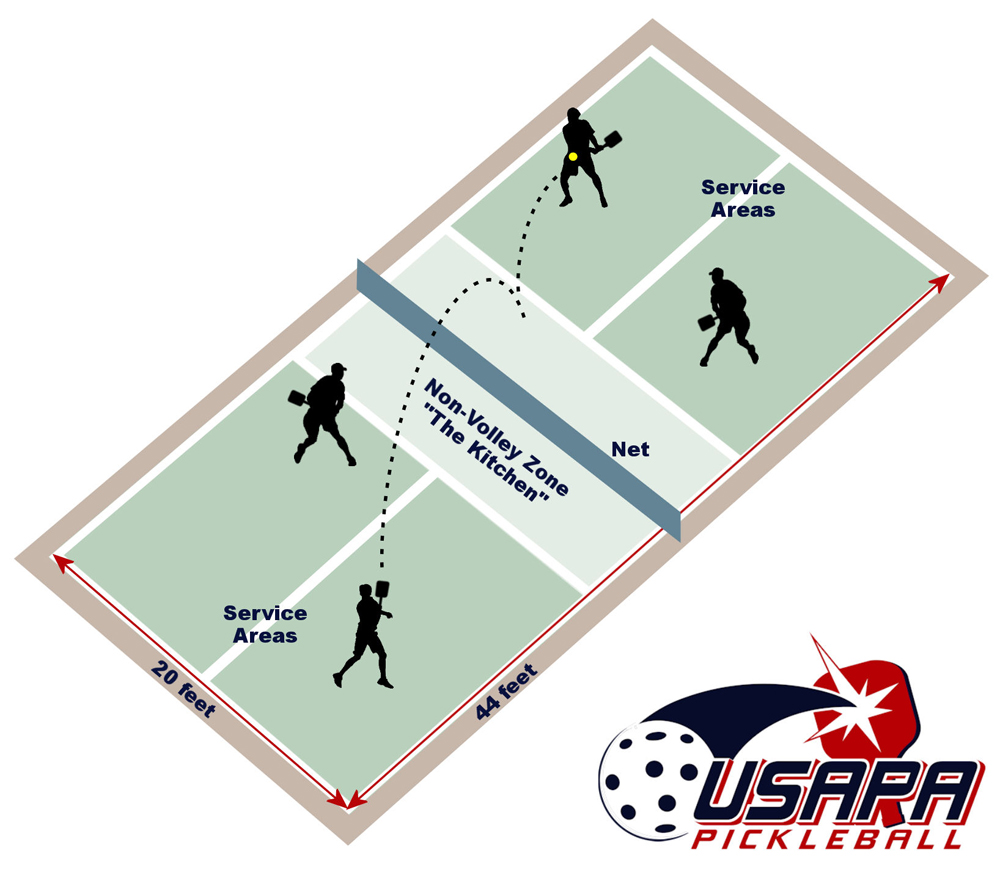
Image Source: pickleballcentral.com
Defining the Kitchen: The Non-Volley Zone
The non-volley zone, commonly called the kitchen, is a critical area of the pickleball court lines. It’s the area between the net and the non-volley zone line, which is seven feet from the net on each side. The pickleball net divides the court into two halves, and this zone extends across the width of the court on both sides of the net.
Key Features of the Kitchen:
- Dimensions: Seven feet from the net on each side.
- Purpose: To prevent players from smashing the ball directly from the net using a volley.
- Boundaries: The kitchen line pickleball is the front boundary, the net is the back boundary, and the sidelines define the width.
What is the Non-Volley Zone Line?
The non-volley zone line is the boundary marking the edge of the kitchen. It is a permanent line on the court. If any part of your body touches this line while you are volleying the ball, it is a fault.
What is a Volley in Pickleball?
A volley in pickleball is hitting the ball in the air before it bounces on your side of the court. This is where the kitchen rule becomes most relevant.
The Core Rule: No Volleying in the Kitchen
The most important pickleball kitchen rules revolves around volleys. To put it simply:
You cannot hit a volley while standing in the kitchen or on the kitchen line.
This means if the ball is in the air and you haven’t let it bounce, you cannot be inside the kitchen when you strike it.
What Constitutes a Fault in the Kitchen?
A fault occurs if:
- You hit a volley while your feet are within the non-volley zone pickleball (kitchen).
- You hit a volley while any part of your body is touching the kitchen line pickleball.
- After hitting a volley, your momentum causes you or your paddle to touch the kitchen or kitchen line. This is a crucial aspect to remember – even if you hit the volley legally outside the kitchen, if your follow-through takes you into the kitchen, it’s a fault.
What if the Ball Bounces in the Kitchen?
If the ball bounces in the kitchen, you are allowed to enter the kitchen to hit it. The restriction only applies to volleys. Once the ball has bounced, it is fair game, and you can enter the kitchen to play it. This is a key distinction that many players overlook.
When Can You Enter the Kitchen?
You can enter the kitchen for any reason except to hit a volley. This includes:
- To hit a ball that has bounced.
- To retrieve a ball that has rolled into the kitchen.
- To stand in the kitchen after a successful volley to prepare for the next shot.
The important thing is to ensure that when you hit the ball, if it’s a volley, your feet are outside the kitchen.
Momentum and the Kitchen
A common mistake is not accounting for momentum. If you hit a volley from outside the kitchen but your swing and follow-through cause you to step into the kitchen or touch the line, it’s a fault. This is particularly important for powerful overhead shots or aggressive volleys near the net. Players must be mindful of their body’s movement and control their momentum.
The Importance of the Kitchen in Pickleball Strategy
The kitchen isn’t just a restriction; it’s a strategic playground. It influences how players approach the net and dictates the types of shots they use. The pickleball strategy in and around the kitchen is what separates amateur play from more advanced games.
The Dink Shot: King of the Kitchen
The pickleball dink shots are perhaps the most important offensive and defensive weapon in pickleball, and they are intrinsically linked to the kitchen. A dink is a soft, arced shot that lands just over the net and into the opponent’s kitchen.
Why are dinks so effective?
- Force Opponents Out of Position: A well-placed dink forces the receiving player to either stoop low to hit the ball or move forward into the kitchen, often disrupting their court positioning.
- Prevent Volleys: Because they land in the kitchen, dinks force the opponent to let the ball bounce before hitting it, preventing them from volleying and smashing.
- Set Up Offensive Opportunities: A good dink can set you up for a winning attack on the next shot.
Executing a Perfect Dink:
- Soft Touch: The key is a gentle, controlled swing. Think of a push or a gentle scoop rather than a forceful hit.
- Arc: The ball should have a gentle arc that drops just over the net.
- Placement: Aim for the opponent’s kitchen, ideally where they are least able to reach it comfortably.
- Patience: Don’t try to hit a winner with every dink. The goal is to control the rally and create an opening.
The Third Shot Drop
Another critical shot influenced by the kitchen is the third shot drop. After your team serves and the opposing team returns the ball (the second shot), your team’s third shot is often a drop shot aimed into the opponent’s kitchen. This shot aims to reset the rally and allow your team to move up to the net, achieving the coveted “two-bounce” rule advantage.
Playing the Kitchen Line
As players become more skilled, they aim to get to the net and stand on the kitchen line pickleball themselves. This allows them to intercept volleys and dinks more effectively. However, they must still adhere to the rules, ensuring they don’t commit a fault.
Common Mistakes and How to Avoid Them
Many players, especially beginners, make common errors related to the kitchen. Being aware of these mistakes can significantly improve your game.
Mistake 1: Lunging into the Kitchen for a Volley
This is probably the most frequent error. You see an opportunity to hit a volley, but you’re a step too close to the net, and you lunge forward. Even if you make contact with the ball outside the kitchen, if your momentum carries you in, it’s a fault.
How to Avoid:
- Footwork is Key: Focus on shuffling your feet to get into a balanced position before hitting the ball.
- Backpedal: If you are too close, sometimes it’s better to backpedal slightly to ensure you’re outside the kitchen when you volley.
- Assess Your Position: Before you commit to a volley, quickly check your foot placement relative to the kitchen line.
Mistake 2: Not Controlling Follow-Through
You hit a beautiful volley outside the kitchen, but your follow-through is too aggressive, and your paddle or body lands in the kitchen.
How to Avoid:
- Controlled Swings: Practice controlled swings, especially when hitting volleys close to the net.
- Balance: Maintain your balance after the shot. Imagine you have to be able to hold your follow-through position without stepping into the kitchen.
Mistake 3: Misjudging the Bounce
You think a ball will bounce outside the kitchen, so you prepare to volley, but it lands just inside. You then hit it, committing a fault.
How to Avoid:
- Watch the Ball: Keep your eyes on the ball until it bounces. Don’t assume where it will land.
- Be Ready for Both: Be prepared to hit a groundstroke if the ball lands in the kitchen or play a volley if it lands outside.
Mistake 4: Standing in the Kitchen and Volleying
This is a fundamental misunderstanding of the pickleball kitchen rules. You are simply not allowed to volley if any part of you is in the kitchen.
How to Avoid:
- Know the Rule: Reiterate the pickleball rules explained to yourself. If it’s a volley, your feet must be outside the kitchen.
Advanced Kitchen Play and Nuances
As you progress in pickleball, you’ll discover more sophisticated ways to use the kitchen to your advantage.
The “Third Shot Drop” into the Kitchen
This is a cornerstone of offensive pickleball strategy. The goal of the third shot drop is to hit a soft, arcing shot that lands in the opponent’s kitchen. This neutralizes their offensive opportunity and allows your team to move forward to the net.
Tips for a Successful Third Shot Drop:
- Watch the Opponent’s Position: If they are far back, a drop is more effective. If they are close to the net, it’s riskier.
- Use Spin: A bit of slice can make the ball stay low and skid, making it harder for your opponent to attack.
- Practice, Practice, Practice: This shot requires a delicate touch and consistent practice.
The “Reset Shot” from the Kitchen
If you are forced to hit a shot from within the kitchen, and the ball has bounced, you need to hit a “reset shot.” This is typically a softer shot, similar to a dink, aimed to give you time to get out of the kitchen and back into a neutral position.
“Baiting” Opponents into the Kitchen
Skilled players can sometimes use dinks to draw opponents into the kitchen, and then hit a sharp angle shot or a speed-up shot that they can’t return effectively. This forces them to move laterally and break their court positioning.
Pickleball Court Lines and the Kitchen
All the pickleball court lines are important, but the non-volley zone line is the one that defines the kitchen.
- Non-Volley Zone Line: This line is crucial. Touching it while volleying is a fault.
- Centerline: This line divides the serving side and is also important for doubles play.
- Sidelines: These define the width of the court.
The Kitchen in Singles vs. Doubles
The pickleball kitchen rules apply equally to singles and doubles. However, in doubles, the dynamics of who is covering the kitchen can be more complex, with partners needing to communicate effectively about who will take certain balls.
Equipment and the Kitchen
While equipment doesn’t directly change the rules of the kitchen, your paddle choice can influence how you play around it.
- Paddle Weight and Balance: Lighter paddles can offer more control for dink shots, while heavier paddles might offer more power for drives, but can also lead to more momentum issues if not handled carefully.
- Grip: A comfortable and secure grip is essential for controlling delicate shots like dinks and for maintaining balance during volleys.
Frequently Asked Questions (FAQ) about the Kitchen
Q1: Can I step into the kitchen after I hit a volley?
A1: No. If your momentum carries you into the kitchen or onto the kitchen line after you hit a volley, it is a fault. You must maintain control and remain outside the kitchen.
Q2: Can I hit a ball that bounces in the kitchen?
A2: Yes. You can enter the kitchen to hit any ball that has bounced. The kitchen rule only applies to volleys (hitting the ball before it bounces).
Q3: What if my partner is in the kitchen and I hit a volley from outside?
A3: This is a legal play. The rule is specific to the person hitting the volley. Your partner being in the kitchen is fine, as long as they don’t interfere with the shot or touch the ball.
Q4: Can I catch the ball in the kitchen?
A4: No. If you catch the ball in the kitchen, even if it bounced, it’s not a legal return. You must hit the ball with your paddle.
Q5: Does the kitchen rule apply if the ball hits the kitchen line and then bounces?
A5: Yes. If the ball hits the kitchen line, it is considered in the kitchen. You must let it bounce before you can hit it.
Q6: What if I hit a ball that is on the kitchen line?
A6: If the ball is on the kitchen line, it is considered in. You must let it bounce.
Q7: Can I stand on the kitchen line and hit a groundstroke?
A7: Yes. You can stand on the kitchen line to hit a groundstroke (a shot after the ball has bounced). The restriction is only on volleys.
Q8: What if my paddle crosses the kitchen line on a volley, but my body doesn’t?
A8: This is also a fault. If any part of your body or your paddle (while you are in the process of hitting a volley) is in the kitchen or touching the kitchen line, it is a fault.
Conclusion
The kitchen in pickleball, or the non-volley zone pickleball, is a defining feature of the game that adds layers of strategy and skill. Mastering the pickleball kitchen rules is not just about avoiding faults; it’s about using the zone to your advantage. From the art of the pickleball dink shots to the strategic importance of the third shot drop, the kitchen is where many rallies are won or lost. By paying close attention to your footwork, understanding momentum, and practicing precise shots, you can transform this rule from a potential pitfall into a powerful tool in your pickleball strategy. So, next time you step onto the pickleball court lines, remember the kitchen – it’s more than just a space; it’s the heart of the game. Continue to learn and refine your pickleball basics, and you’ll soon find yourself playing with more confidence and control around this crucial area of the pickleball net.