
Determining the ideal kitchen runner length is crucial for both aesthetics and functionality. A well-fitting runner enhances your kitchen’s look and provides comfort underfoot, while a poorly sized one can disrupt the flow and appear awkward. So, how long should a kitchen runner be? Generally, a kitchen runner should extend at least 6 inches beyond your cabinet or sink area, and no more than a foot, to create a balanced look and ensure it stays in place.
The runner size for kitchen spaces is a common puzzle for homeowners. A kitchen runner isn’t just a decorative item; it’s a practical addition that can define zones, protect your flooring, and add a layer of comfort to high-traffic areas. From the long stretches of hallways leading into the kitchen to the space in front of your sink or stove, the need for a runner can vary. This guide will help you navigate the often-confusing world of kitchen runner dimensions and ensure you choose the best kitchen runner size for your unique space.
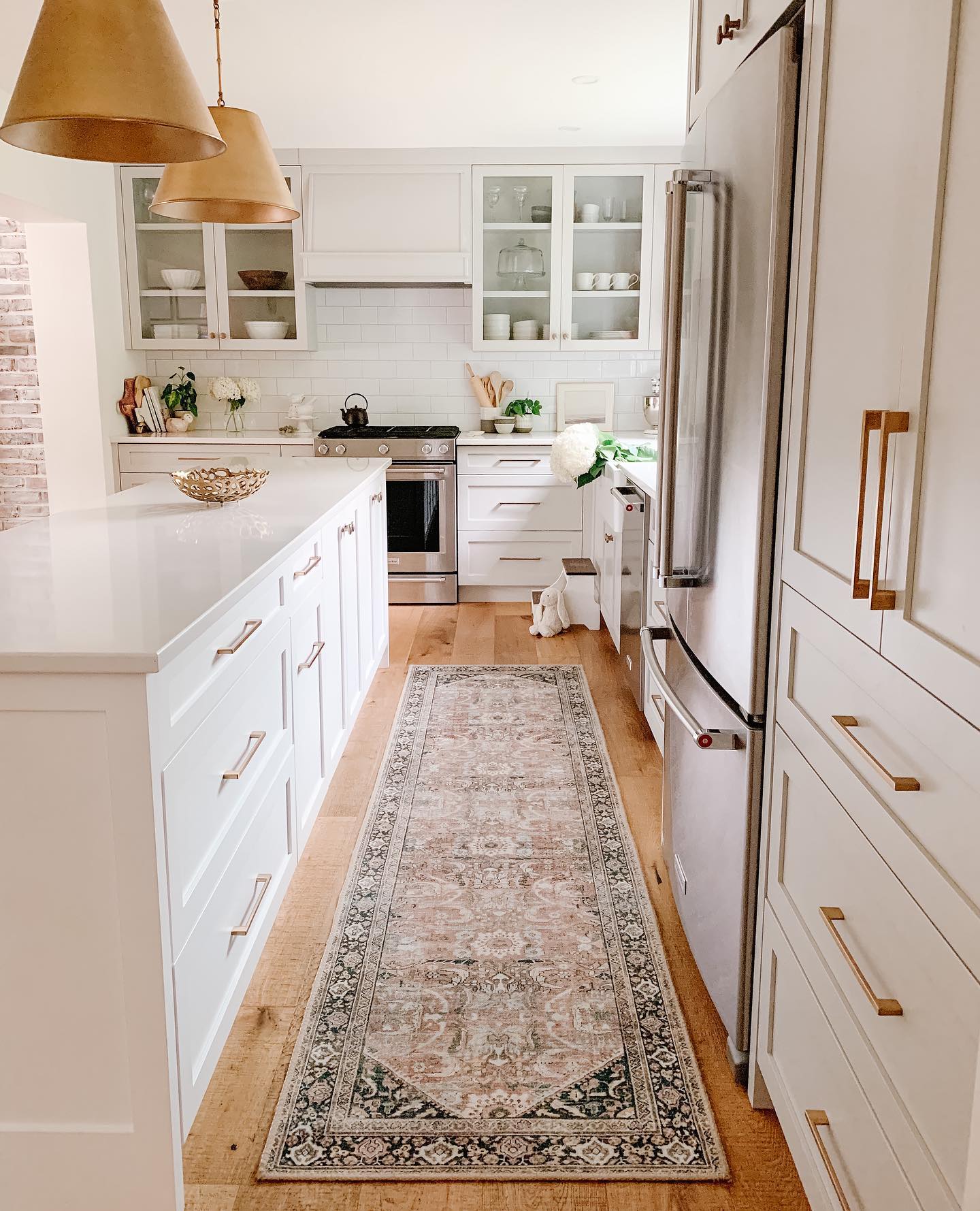
Image Source: image1.rugs-direct.com
Fathoming the Factors for Runner Size for Kitchen
Choosing the right runner size for kitchen areas involves more than just picking a rug you like. Several key factors come into play, influencing both the visual appeal and the practicality of your chosen runner. Let’s break down what you need to consider.
Kitchen Layout and Shape
The shape and layout of your kitchen play a significant role.
- Galley Kitchens: These kitchens, with cabinets and appliances on two parallel walls, often benefit from long, narrow runners that run the length of the main working area. This creates a sense of continuity and can visually widen the space.
- L-Shaped Kitchens: The corner in an L-shaped kitchen can be a natural break point. You might opt for a runner that follows one leg of the “L” or choose two smaller runners.
- U-Shaped Kitchens: Similar to L-shaped kitchens, U-shaped layouts can accommodate runners along the primary walkways. The challenge here is to avoid interrupting the flow around the sink or stove.
- Open-Concept Kitchens: In kitchens that flow into living or dining areas, runners can help visually define the kitchen space. The length will depend on the size of the kitchen zone and how much of the adjoining area you wish to incorporate.
Functionality and Purpose
Think about why you want a runner in the first place.
- Comfort: If your primary goal is comfort, especially in front of the sink or stove where you stand for extended periods, you’ll want a runner that’s long enough to cover your entire standing area and provide ample cushioning.
- Protection: Runners can protect your flooring from spills, stains, and wear and tear, particularly in high-traffic zones. The length should be sufficient to cover the most vulnerable areas.
- Style and Zone Definition: Runners can add color, pattern, and texture to your kitchen, acting as a design element. They can also delineate different zones within a larger kitchen, such as the cooking area from the prep area.
Traffic Flow
Consider how people move through your kitchen.
- Doorways and Walkways: Ensure your runner doesn’t block doorways or create tripping hazards. It should allow for easy passage.
- Appliance Access: Make sure the runner doesn’t interfere with the opening of cabinet doors, dishwashers, or ovens.
Determining Kitchen Runner Length: Key Measurement Points
To get the optimal kitchen runner dimensions, you need to take precise measurements of your kitchen space. This is the most critical step in determining kitchen runner length.
Measuring for the Sink Area
The sink area is a very common place for a kitchen runner due to the time spent standing there.
- The “Work Triangle”: Consider the path you take between your sink, stove, and refrigerator. A runner placed strategically can make this journey more comfortable.
- Measuring the Space: Stand in front of your sink. How far do you typically stand? Most people stand with their feet roughly 1-2 feet from the sink base. Measure from the edge of your sink cabinet outward.
- Coverage: You want the runner to be long enough to catch drips and provide comfort throughout your standing reach. A common recommendation is to have the runner extend about 6 to 18 inches past the cabinet edge on either side, or a total length that comfortably covers your standing space.
- Avoid Obstructions: Ensure the runner doesn’t hinder the opening of drawers or the dishwasher.
Measuring for Stove/Cooktop Areas
Similar to the sink, the stove is another area where a runner can enhance comfort and catch splashes.
- Standing Room: Measure the space in front of your stove. How much room do you need to comfortably maneuver while cooking?
- Runner Extension: Aim for a runner that extends at least 6 inches beyond the cabinet on either side of the stove, or at least 18-24 inches in front of the stove for ample standing room.
- Safety: Be mindful of heat. While most kitchen runners are made of durable materials, ensure the runner doesn’t come too close to the stove’s open flame or hot elements.
Measuring for Hallways and Walkways
Many kitchens have long, narrow pathways or hallways.
- Length of the Walkway: Measure the entire length of the walkway.
- Desired Coverage: Decide how much of the walkway you want to cover. Do you want it to run the full length, or just a portion?
- Balance: A runner that’s too short can look awkward, while one that’s too long might overwhelm the space or create an obstruction. A good rule of thumb is to leave 12-18 inches of bare floor at each end of the runner. This framing effect makes the runner stand out and prevents it from looking like it’s “swimming” in the space.
- Doorways: Again, ensure the runner does not impede the opening of any doors.
Standard Kitchen Runner Sizes and Runner Length Recommendations
While custom sizes are always an option, there are several standard kitchen runner sizes that cater to common kitchen dimensions. Knowing these can provide a helpful starting point.
Common Runner Lengths
Kitchen runners come in a wide array of lengths, typically ranging from 4 feet to 14 feet. Widths often vary from 2 to 3 feet.
- 4-6 feet: Good for smaller spaces, like in front of a single sink or a short walkway.
- 6-8 feet: Versatile for many kitchen sink areas or slightly longer walkways.
- 8-10 feet: Ideal for larger kitchens or longer, more defined hallways.
- 10+ feet: Suitable for very long hallways or large kitchen islands.
Runner Length Recommendations by Area
Let’s look at specific recommendations for different kitchen zones:
For the Sink Area
- Small Sink Area: A runner that is 2-3 feet wide and 4-6 feet long is often sufficient.
- Standard Sink Area: Consider a runner that is 2.5-3 feet wide and 6-8 feet long. This provides good coverage and comfort.
- Large Sink/Prep Area: You might need a longer runner, perhaps 8-10 feet, to cover a wider prep space.
For the Stove/Cooktop Area
- Standard Stove: A runner of 2.5-3 feet wide and 4-6 feet long is usually adequate.
- Generous Cooking Space: If you have a large range or a dedicated cooking zone, an 6-8 foot runner could be beneficial.
For Hallways and Walkways
- General Rule: For a walkway that is 10 feet long, an 8-foot runner is a good choice, leaving 1 foot of floor exposed at each end.
- Longer Walkways: For a 15-foot walkway, a 12-foot runner would be appropriate. The key is to maintain that 12-18 inch buffer at each end for visual balance.
- Narrow Kitchen Hallways: Often, a runner that is 2-2.5 feet wide is ideal to maintain a sense of spaciousness while still providing coverage.
How to Choose Kitchen Runner Length: Practical Tips
Beyond just measuring, there are other practical considerations when selecting your kitchen runner length.
Consider the Runner’s Placement
Where you decide to place the runner is fundamental to how long it should be.
- In Front of Cabinets: If the runner is placed in front of a row of cabinets, measure the width of the cabinet run and add extra on each side for a balanced look.
- Along an Island: For kitchen islands, runners are often placed lengthwise along the main walkway beside the island. Measure the length of the island and consider the walkway space around it.
- Centering: If the runner is meant to be a focal point, consider centering it within the space or relative to a key feature like the sink or stove.
Visual Balance and Proportions
A runner that is too short can look like an afterthought, while one that is too long might make the kitchen feel cramped.
- The “Doorway Test”: Imagine placing the runner. Does it overwhelm the space? Does it leave enough room for doors to open?
- Proportion to Other Elements: Consider the size of your cabinets, appliances, and overall kitchen footprint. A runner that is too large or too small can throw off the entire aesthetic.
Material and Thickness
The material of the runner can also influence its perceived size and how it functions.
- Thick, Plush Runners: These can sometimes appear larger and might need to be slightly shorter to avoid feeling overwhelming.
- Thin, Flat-Weave Runners: These can be a bit more forgiving in length as they don’t add as much visual bulk.
- Non-Slip Backing: Ensure the runner has good grip, especially if it’s a longer runner. This is crucial for safety and prevents the runner from bunching up.
Interpreting Runner Size for Kitchen Needs
Let’s visualize different scenarios and how runner size for kitchen choices can impact the space.
Scenario 1: The Busy Sink Area
Your kitchen sink is where you spend a lot of time washing dishes, prepping food, and cleaning up.
- Problem: You stand at your sink for extended periods, and the floor is hard and cold. You also tend to drip water.
- Solution: A runner that extends at least 18 inches in front of your sink cabinet and at least 6 inches past the cabinet edges on either side is ideal. If your sink area is quite wide or you tend to move side-to-side while working, a longer runner might be necessary. Aim for a total length of 5-8 feet for a standard sink.
Scenario 2: The Kitchen Hallway
Your kitchen has a long, narrow walkway connecting it to other parts of the house.
- Problem: The hallway feels bare, and you want to add warmth and define the kitchen space.
- Solution: Measure the length of the hallway. For a 10-foot hallway, a 6-8 foot runner is often a good fit, leaving a few feet of exposed floor at either end. This creates a visual “frame” and prevents the runner from looking like it’s simply floating. Ensure the runner is narrow enough (typically 2-3 feet wide) to allow for easy passage and prevent it from feeling restrictive.
Scenario 3: The Kitchen Island Runner
You have a prominent kitchen island and want to add a runner.
- Problem: You want to add comfort and style to the area around your island.
- Solution: Runners are often placed along the main walkway beside the island, not necessarily underneath it. Measure the length of the island and the walkway space. A runner that is roughly 2/3 the length of the island can look proportionally pleasing. For example, if your island is 8 feet long, a 5-6 foot runner placed beside it would work well.
Kitchen Rug Size Guide: A Table of Recommendations
Here’s a quick reference table to help with determining kitchen runner length based on common scenarios. Remember to always measure your specific space!
| Kitchen Area | Typical Cabinet/Appliance Width | Recommended Runner Width | Recommended Runner Length (Minimum) | Recommended Runner Length (Maximum) | Notes |
|---|---|---|---|---|---|
| Sink Area | 30-36 inches | 2-3 feet | 4 feet | 6 feet | Extend 6-12 inches past cabinet edges; enough to stand comfortably without stepping off. |
| Sink Area (Larger) | 48-60 inches | 2.5-3.5 feet | 5 feet | 8 feet | Provides more coverage for wider sinks or prep zones. |
| Stove/Cooktop | 30-36 inches | 2-3 feet | 4 feet | 6 feet | Enough space to stand comfortably while cooking; ensure no heat interference. |
| Kitchen Walkway | N/A (Length of walkway) | 2-3 feet | Walkway Length – 2 feet | Walkway Length – 1 foot | Aim to leave 12-18 inches of exposed floor at each end for balance. |
| Kitchen Island Side | N/A (Island Length) | 2-3 feet | 2/3 Island Length | 3/4 Island Length | Placed along the walkway beside the island, not underneath it. |
Frequently Asked Questions (FAQ)
Q1: What is the standard width for a kitchen runner?
A1: The standard kitchen runner sizes for width typically range from 2 feet to 3 feet. Wider runners, around 3-4 feet, are available for larger spaces or more expansive walkways.
Q2: Can I use multiple runners in my kitchen?
A2: Yes, absolutely! In larger kitchens or those with distinct zones, using multiple runners can be a very effective design strategy. For example, you might use one runner in front of the sink and another along a long hallway. Ensure the styles and colors complement each other for a cohesive look.
Q3: How do I prevent my kitchen runner from slipping?
A3: Most kitchen runners come with non-slip backing. If yours doesn’t, or if you find it’s still shifting, invest in a good quality rug pad designed for hard floors. These pads provide extra grip and also add cushioning.
Q4: Should my kitchen runner touch the cabinets?
A4: It’s generally best to leave a small gap of 1-2 inches between the runner and the base of your cabinets or appliances. This prevents the runner from bunching up or getting caught when doors are opened.
Q5: What is the best kitchen runner size for a small kitchen?
A5: For a small kitchen, opt for a runner that fits the primary functional area, such as the sink. A 2-3 foot wide and 4-6 foot long runner is often a good choice. Avoid overly long or wide runners that can make the space feel cluttered.
Q6: How far should a kitchen runner extend from the sink?
A6: As a general guideline for runner length recommendations, the runner should extend at least 6 inches beyond the cabinet on each side and about 18 inches in front of the sink for comfortable standing.
Choosing the right kitchen runner length is a blend of practical measurement and aesthetic consideration. By carefully measuring your space, thinking about the intended use of the runner, and following these guidelines, you can find the perfect fit that enhances both the beauty and functionality of your kitchen.