
Deciding how many can lights your kitchen needs is a common question for homeowners undertaking renovations or building new spaces. The general consensus among experts is that you’ll typically need 1 can light for every 4 to 6 feet of ceiling space for general kitchen lighting. However, this is a starting point, and the precise number depends on several factors including the room’s dimensions, ceiling height, the desired light output, and the overall kitchen lighting layout.
Getting your kitchen ceiling lights just right is crucial for both functionality and ambiance. Too few can lights, and you’ll have dark corners and an uninviting space. Too many, and you risk a sterile, overly bright environment that feels like a hospital operating room. This guide will walk you through the process of determining can light quantity and achieving optimal recessed lighting kitchen results.
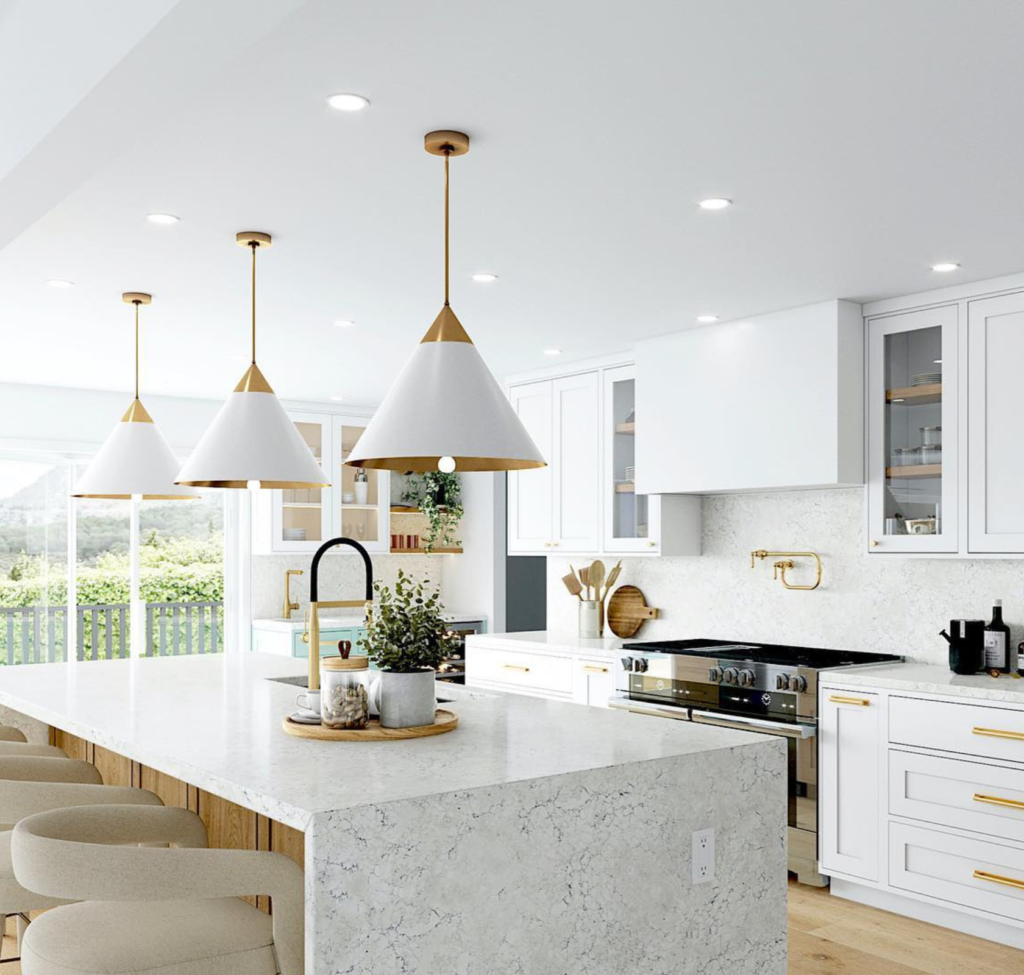
Image Source: blog.1800lighting.com
Fathoming the Fundamentals: Basic Calculations
At its core, can light spacing is about providing even illumination across your kitchen. A common rule of thumb for general lighting is to place a can light every 4 to 6 feet. This is a good starting point for general kitchen lighting, ensuring there are no significant dark spots.
The 4-5 Foot Rule: A Simple Starting Point
For a straightforward approach to how many recessed lights you need, consider this:
- Measure your kitchen’s square footage.
- Divide the total square footage by 4 or 5.
For example, a 10×12 foot kitchen is 120 square feet.
120 sq ft / 4 ft = 30.
120 sq ft / 5 ft = 24.
This suggests you might need between 24 and 30 total lumens for general coverage, but this needs further refinement. Let’s rephrase: for every 4 to 5 feet of ceiling space, plan for one can light.
Ceiling Height Matters
Your ceiling height plays a significant role in can light spacing. Taller ceilings require more lights or higher wattage bulbs to achieve the same level of brightness as lower ceilings.
- 8-foot ceilings: Can lights spaced 4-5 feet apart.
- 9-foot ceilings: Can lights spaced 5-6 feet apart.
- 10-foot ceilings and above: Can lights spaced 6-7 feet apart.
The goal is to ensure the light reaches effectively down to the task areas.
Lumens: The Measure of Brightness
Instead of focusing solely on the number of lights, it’s more effective to think about the total amount of light (lumens) your kitchen needs.
- General Kitchen Lighting: Aim for 10-20 lumens per square foot.
- Task Lighting (e.g., over countertops): Aim for 70-80 lumens per square foot.
A typical 6-inch recessed light fixture with a standard LED bulb might produce around 800 lumens.
Example Calculation:
A 10×12 foot kitchen (120 sq ft) for general lighting:
120 sq ft * 15 lumens/sq ft = 1800 lumens.
If each can light provides 800 lumens: 1800 lumens / 800 lumens/light = 2.25 lights.
This simplified calculation shows that for general coverage, you might only need 2-3 lights. This is why focusing on coverage and spacing is more important than a raw lumen count for determining how many can lights for a kitchen.
Deciphering Recessed Lighting Design: Beyond General Coverage
A well-lit kitchen isn’t just about the overhead “general kitchen lighting.” A comprehensive recessed lighting design incorporates layers of light to enhance both functionality and aesthetics.
The Layers of Kitchen Lighting
Effective kitchen lighting layout typically involves three layers:
- Ambient (General) Lighting: This is the overall illumination of the room, provided by your can lights. It should be even and comfortable.
- Task Lighting: Focused light for specific activities like chopping vegetables or reading recipes. This can include under-cabinet lighting, pendant lights over an island, or dedicated spotlights.
- Accent Lighting: Used to highlight architectural features, artwork, or decorative elements. This might involve directional spotlights or wall washers.
When determining how many can lights for a kitchen, you must consider where these layers will overlap and how the general lighting will support the task and accent lighting.
Optimizing Can Light Placement for Functionality
The optimal can light placement focuses on where the light is actually needed.
- Perimeter Lighting: Placing lights around the perimeter of the room, about 1-2 feet from the walls, is a good strategy for general illumination. This prevents shadows in the corners and makes the room feel more spacious.
- Over Work Areas: Even with under-cabinet lighting, you may want a few can lights directly over main prep areas or your stovetop for added brightness.
- Center of the Room: A light in the center can help with overall balance, especially in larger kitchens.
- Traffic Paths: Ensure walkways and entryways are well-lit.
Consider this: If you have a large island, you might use pendant lights for task and decorative lighting, reducing the number of can lights needed directly over the island. However, you’ll still need can lights around the island for broader illumination.
Advanced Techniques: Utilizing a Kitchen Lighting Calculator and Grids
For a more precise approach to determining can light quantity, many designers and electricians turn to specialized methods and tools.
The Grid Method for Kitchen Lighting Layout
The grid method is a popular approach for can light spacing.
- Divide the Room into a Grid: Imagine your ceiling divided into equal squares.
- Place Lights in the Center of Each Square: The size of these squares will dictate your can light spacing.
How to determine grid size:
- Ceiling Height: For an 8-foot ceiling, a grid of 5×5 feet is common. For a 10-foot ceiling, a grid of 6×6 feet might be more appropriate.
- Light Beam Spread: Can lights come with different beam spreads (e.g., narrow flood, flood, wide flood). A wider beam spread means lights can be spaced further apart. A 6-inch can light with a standard flood (around 90-degree beam spread) is typical for general lighting.
Using the Grid Method:
- Measure the Length and Width of Your Kitchen.
- Divide the Length by your chosen spacing (e.g., 5 feet). This gives you the number of lights along the length.
- Divide the Width by your chosen spacing (e.g., 5 feet). This gives you the number of lights along the width.
- Multiply these two numbers to get the total number of can lights.
Example: A 10×12 foot kitchen with 5-foot spacing:
Length: 12 feet / 5 feet = 2.4. Round up to 3 lights along the length.
Width: 10 feet / 5 feet = 2. Round up to 2 lights along the width.
Total lights = 3 lights * 2 lights = 6 can lights.
This grid method provides a good starting point for general kitchen lighting. You would then adjust this based on specific kitchen features and desired light levels.
Leveraging a Kitchen Lighting Calculator
Many online resources offer a kitchen lighting calculator. These tools can be very helpful because they often take into account:
- Room dimensions
- Ceiling height
- Desired brightness (lumens or lux)
- Beam spread of the fixtures
- Color temperature of the bulbs
How a Kitchen Lighting Calculator Works:
You input your kitchen’s details, and the calculator suggests a total lumen output and can help determine optimal can light spacing. It essentially automates the calculations we’ve discussed. Some calculators might even generate a visual kitchen lighting layout.
While a calculator is a great tool, it’s important to remember that it’s a guide. Always apply common sense and consider the specific ergonomics of your kitchen.
Factors Influencing Your Kitchen Lighting Decisions
The number of can lights isn’t just about math; it’s about creating a functional and beautiful space. Several other factors play a role in determining can light quantity.
Kitchen Size and Shape
- Large Kitchens: Require more lights to ensure even coverage. Consider using fewer, wider-spaced lights for general lighting and supplementing with task lighting.
- Long, Narrow Kitchens: You might place lights in a single row down the center or two rows along the main work areas, adjusting spacing to avoid dark zones.
- Kitchens with Multiple Zones: If your kitchen has distinct areas like a cooking zone, a prep zone, and a dining nook, you’ll need to plan lighting for each zone accordingly.
Obstructions and Features
- Cabinets: Upper cabinets can block light, making under-cabinet lighting essential. Can lights placed too close to walls might not illuminate countertop areas effectively if there are upper cabinets.
- Ceiling Beams or Trusses: These can dictate where lights can be placed. You might need to adjust your grid or spacing to work around them.
- Ventilation Hoods and Appliances: Large appliances like powerful range hoods might require specific lighting considerations or may influence the placement of nearby fixtures.
- Skylights and Windows: Natural light can reduce the need for as many can lights during the day. Consider how your artificial lighting will complement natural light.
Light Fixture Specifications
- Beam Angle: As mentioned, a wider beam angle (e.g., 90 degrees) covers more area, allowing for greater can light spacing. Narrower beams (e.g., 30-40 degrees) are better for accent lighting or highlighting specific areas.
- Fixture Type: Different types of recessed fixtures exist. For example, “shallow housing” fixtures are for rooms with limited ceiling space, while “air-tight” fixtures help with energy efficiency.
- Color Rendering Index (CRI): A high CRI (90+) ensures colors look natural under the light, which is important in a kitchen where you want to see food accurately.
Personal Preference and Style
Ultimately, your recessed lighting kitchen design should reflect your personal style.
- Minimalist: You might opt for fewer, more strategically placed lights with a focus on clean lines.
- Bright and Airy: You might lean towards more lights or higher lumen bulbs to maximize brightness.
- Cozy and Warm: Consider using dimmer switches and warmer color temperatures (around 2700K-3000K).
Common Pitfalls to Avoid in Recessed Lighting Design
Even with the best intentions, recessed lighting design can sometimes go wrong. Here are common mistakes to sidestep:
The “Spotlight Effect”
Placing lights too far apart, especially in smaller kitchens or those with lower ceilings, can lead to a series of bright pools of light separated by dark areas. This creates an uninviting atmosphere and makes it difficult to work in the dimmer zones.
- Solution: Use the grid method or a kitchen lighting calculator to ensure more even coverage. Consider the beam spread of your chosen fixtures.
Lighting Only the Center of the Room
Many homeowners think placing all lights in the center of the kitchen is sufficient. However, this leaves the perimeter and edges of the room in shadow.
- Solution: Ensure lights are spaced out, including near walls, to provide balanced illumination.
Neglecting Task Lighting
Relying solely on general kitchen lighting from can lights is a common mistake. While they provide ambient light, they are often insufficient for detailed tasks.
- Solution: Incorporate under-cabinet lighting, task lamps, or pendant lights over key work areas.
Ignoring Dimmers
Not installing dimmer switches is a missed opportunity for versatility. Dimmers allow you to adjust the light level for different moods and activities.
- Solution: Install dimmers on all your can lights. This is especially useful for creating a softer ambiance in the evening or for reducing glare.
Over-Reliance on a Single Fixture Type
Using only one size or type of can light can lead to a monotonous lighting scheme.
- Solution: Consider using different sizes of recessed fixtures or combining them with other lighting types (pendants, track lighting) for a more dynamic and functional design.
Bringing It All Together: A Step-by-Step Approach
Here’s a practical way to determine how many can lights for a kitchen:
- Measure Your Kitchen: Get accurate length and width measurements.
- Note Your Ceiling Height: This is critical for spacing.
- Map Out Your Layout: Sketch your kitchen, including cabinets, islands, windows, and major appliances. Mark key work areas.
- Determine Lighting Needs:
- General (Ambient) Lighting: Decide on your desired overall brightness.
- Task Lighting: Identify areas needing focused light (prep zones, sink, stove).
- Accent Lighting: Note any features you want to highlight.
- Choose Fixture Type and Beam Spread: Select 6-inch LED downlights with a flood or wide flood beam spread for general lighting.
- Apply Spacing Rules:
- For general lighting, start with the can light spacing rule (e.g., 5 feet for an 8-foot ceiling).
- Use the grid method or a kitchen lighting calculator for more precision.
- Place Lights Strategically:
- Perimeter lighting: 1-2 feet from walls.
- Over islands/peninsulas: Consider pendants first, then supplement with can lights.
- Over work areas: Ensure adequate light.
- Adjust for Obstructions: Move lights as needed to avoid beams, vents, or to maximize light on countertops.
- Consider Dimmer Switches: Plan to install dimmers for flexibility.
- Review and Refine: Look at your proposed kitchen lighting layout. Does it seem balanced? Are there any dark spots? Do you have enough light for tasks?
Table: Example Calculation for a 12×15 Kitchen (8-foot Ceilings)
| Feature | Calculation/Consideration | Result |
|---|---|---|
| Dimensions | 12 ft x 15 ft = 180 sq ft | |
| Ceiling Height | 8 ft | |
| General Lighting | 5 ft spacing rule (grid method) | |
| Length Spacing | 15 ft / 5 ft = 3 sections -> 4 lights | 4 lights along the 15 ft length |
| Width Spacing | 12 ft / 5 ft = 2.4 sections -> 3 lights | 3 lights along the 12 ft width |
| General Lights | 4 lights x 3 lights | 12 can lights for general coverage |
| Task Lighting | 4 ft over island, 2 lights over sink, 2 lights over prep area | Add 8 task-focused lights |
| Total Potential | 12 (general) + 8 (task) = 20 | Consider 16-20 total lights, adjusted for layout |
This table provides a starting point. You might reduce the general lighting to 8 lights (2 rows of 4) and rely more heavily on dedicated task lighting if your island and cabinets are well-equipped.
Frequently Asked Questions (FAQ)
How far apart should can lights be in a kitchen?
For general kitchen lighting with 6-inch recessed fixtures and an 8-foot ceiling, a common can light spacing is 4 to 5 feet apart. This spacing can increase to 5 to 6 feet for 9-foot ceilings and 6 to 7 feet for 10-foot ceilings. The specific spacing also depends on the beam spread of the light fixture.
What is the best type of lighting for a kitchen?
The best kitchen lighting uses a layered approach. This includes:
* Ambient (General) Lighting: Typically provided by recessed lighting kitchen fixtures for overall illumination.
* Task Lighting: Focused light for workspaces like countertops (under-cabinet lights) or islands (pendants).
* Accent Lighting: To highlight specific features.
Can I use fewer than 4 can lights in my kitchen?
While you can use fewer than 4 can lights, it’s generally not recommended for adequate general kitchen lighting in most standard-sized kitchens. If your kitchen is very small (e.g., under 80 sq ft) and you have strong task lighting, you might get away with 2-3 strategically placed lights. However, for most kitchens, this will result in uneven illumination and dark spots.
What is the purpose of recessed lighting in a kitchen?
The primary purpose of recessed lighting in a kitchen is to provide clean, unobtrusive general kitchen lighting that illuminates the entire space evenly. They offer a sleek, modern look without taking up visual space, unlike pendant lights or chandeliers. They also serve as a foundation for a layered lighting scheme, supporting task and accent lighting.
How do I calculate how many recessed lights I need?
To calculate how many recessed lights you need, start with your room dimensions and ceiling height. Use the rule of thumb of placing a light every 4-6 feet for general lighting, adjusted by ceiling height. You can also employ the grid method or use a kitchen lighting calculator for a more precise estimation, factoring in beam spread and desired lumen output. Always consider your specific kitchen layout and the placement of work areas.
What is the difference between can lights and recessed lights?
The terms “can light” and “recessed light” are often used interchangeably. A “can light” refers to the metal housing that is installed within the ceiling, often referred to as the “can.” The “recessed light” is the entire fixture, including the can, trim, and bulb. So, while you install the “can,” the complete unit is the recessed light.
By carefully considering these factors and utilizing available tools, you can confidently determine how many can lights for a kitchen will provide the perfect balance of illumination, style, and functionality.