
The standard height for kitchen base cabinets is 34.5 inches without a countertop, which typically brings the total countertop height to 36 inches. This measurement is a widely adopted industry standard for good reason, impacting everything from usability to aesthetics.
Navigating the world of kitchen renovations or new builds often involves deciphering a unique set of terminology and measurements. Among the most fundamental elements are kitchen base cabinets, the workhorses that anchor your kitchen’s functionality and form. Knowing their dimensions is crucial for everything from appliance selection to aesthetic planning. So, how tall are kitchen base cabinets? The answer, as we’ll explore, is rooted in a standard that prioritizes comfort, efficiency, and seamless integration with other kitchen components.
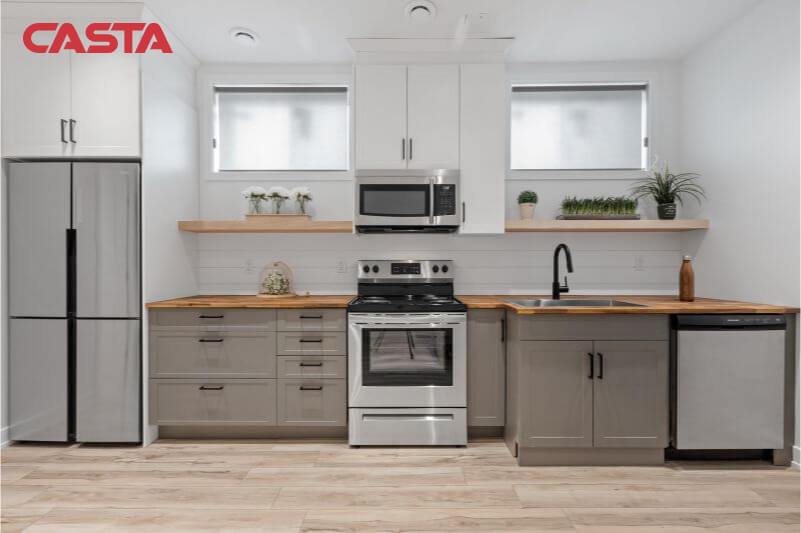
Image Source: castacabinetry.com
Deciphering Standard Base Cabinet Height
The quest for the perfect kitchen often begins with the cabinets. These are the foundation of your culinary space, offering storage and defining the overall style. When we talk about how tall are kitchen base cabinets, we’re referring to the unadorned cabinet box before any countertop is added.
The Industry Benchmark: 34.5 Inches
The overwhelming majority of kitchen base cabinets adhere to a standard height of 34.5 inches. This figure isn’t arbitrary; it’s the result of decades of design evolution aimed at creating a comfortable and ergonomic working environment. This height, when combined with a standard countertop thickness, culminates in the universally recognized 36-inch countertop height.
Why 36 inches? It strikes a balance for the average adult. It’s low enough to allow comfortable food preparation, chopping, and mixing without excessive bending, yet high enough to reduce strain on the back when standing for extended periods. This standard base cabinet height is a cornerstone of modern kitchen design.
Factors Influencing Cabinet Height
While 34.5 inches is the standard, there are instances where this might vary slightly. These variations are usually driven by specific design choices or accessibility needs.
- Custom Cabinetry: For those with unique spatial requirements or specific ergonomic preferences, custom cabinets can be designed to deviate from the standard. This might include making them slightly taller or shorter.
- Appliance Integration: Certain built-in appliances, like specific dishwashers or trash compactors, might have integrated paneling that affects the overall cabinet height. However, most are designed to work within the standard 36-inch countertop height.
- Accessibility: For kitchens designed with accessibility in mind, base cabinet heights might be adjusted to accommodate individuals using wheelchairs or those who require lower work surfaces.
The Crucial Role of Kitchen Cabinet Dimensions
Beyond just height, a comprehensive understanding of kitchen cabinet dimensions is essential for successful kitchen planning. These measurements dictate how cabinets fit together, how much storage they offer, and how they interact with other kitchen elements.
Standard Base Cabinet Height and Depth
We’ve established the standard height. Now, let’s delve into the other critical dimension: depth.
- Standard Height: 34.5 inches (without countertop)
- Standard Depth: 24 inches (This is the most common depth for base cabinets, allowing for ample storage and accommodating standard countertop overhangs.)
This kitchen base cabinet depth is vital. A 24-inch depth provides a sturdy platform for countertops and ensures sufficient space for items stored within the cabinet, such as pots, pans, and small appliances.
Under Counter Cabinet Size: More Than Just Height
When considering under counter cabinet size, it’s not just about the visible height. The internal dimensions and the way the cabinet is constructed play a significant role in its storage capacity and functionality.
- Face Frame Cabinets: These have a solid wood frame attached to the front of the cabinet box. This frame adds about 1.5 inches to the overall width and depth of the cabinet face, affecting how units fit together.
- Frameless (European-Style) Cabinets: These cabinets lack a face frame, meaning the cabinet doors and drawers attach directly to the cabinet box. This typically offers slightly more usable interior space compared to face-frame cabinets of the same external dimensions.
Base Cabinet Measurements: A Holistic View
When planning your kitchen, looking at base cabinet measurements holistically is key. This includes not only the standard height and depth but also the widths.
- Standard Widths: Base cabinets come in a wide array of standard widths, typically in 3-inch increments. Common widths include 12, 15, 18, 21, 24, 27, 30, 33, and 36 inches. Wider cabinets (e.g., 42, 48 inches) are also available, often for specialized storage solutions like large pantry pull-outs.
- Filler Strips: If your kitchen layout doesn’t perfectly accommodate standard cabinet widths, filler strips (usually made of wood) are used to bridge gaps between cabinets and walls or other obstructions.
Typical Kitchen Cabinet Dimensions: A Quick Reference
To solidify your grasp of typical kitchen cabinet dimensions, consider this summary:
| Cabinet Type | Standard Height (No Countertop) | Standard Depth | Standard Widths (Inches) |
|---|---|---|---|
| Base Cabinets | 34.5 inches | 24 inches | 12, 15, 18, 21, 24, 27, 30, 33, 36+ |
| Wall Cabinets | 30 inches, 36 inches, 42 inches | 12 inches | 12, 15, 18, 21, 24, 27, 30, 33, 36+ |
| Tall Cabinets | 84 inches, 90 inches, 96 inches | 24 inches | Varies |
This table highlights that while base cabinets have a consistent height standard, wall and tall cabinets offer more variability to suit different kitchen designs and needs.
The Impact of Countertop Height Base Cabinets
The term countertop height base cabinets refers to the base cabinets designed to accommodate standard countertops. The 34.5-inch height is precisely engineered for this purpose, ensuring that when a typical 1.5-inch thick countertop is installed, the finished surface sits at the ergonomic 36-inch mark.
Why 36 Inches is the Magic Number
The 36-inch countertop height base cabinets facilitate:
- Ergonomics: As mentioned, this height is comfortable for most people for tasks like chopping, mixing, and kneading.
- Appliance Integration: Standard-sized dishwashers, ranges, and under-counter refrigerators are designed to fit seamlessly with this 36-inch height.
- Aesthetics: A consistent countertop height creates a visually cohesive and balanced kitchen design.
Variations and Considerations
While 36 inches is standard, some homeowners opt for slightly different countertop heights:
- Lowered Countertops: Some prefer a slightly lower countertop (e.g., 34 inches) for specific prep areas, especially if they are shorter or have back issues.
- Raised Countertops: Taller individuals might opt for a higher countertop (e.g., 37-38 inches) to avoid stooping. This would require custom-height base cabinets.
- Butcher Block or Specialty Countertops: Thicker countertop materials (e.g., 2-inch butcher block) will naturally raise the finished height, so base cabinets might need to be slightly shorter to compensate and still achieve the desired overall height.
Practicalities of Base Cabinet Installation Height
Knowing the standard heights is one thing; correctly installing them is another. The base cabinet installation height is critical for a level, stable, and functional kitchen.
Leveling the Playing Field
- Subfloor Imperfections: Subfloors are rarely perfectly level. Cabinet installers use shims – small wedges of wood – to ensure that each base cabinet is perfectly level horizontally and plumb (vertically straight) both front-to-back and side-to-side.
- Marking the Line: Installers will often establish a level line on the wall at the desired finished countertop height (usually 36 inches) and then work down from that line to determine the correct cabinet placement.
- Securing Cabinets: Base cabinets are typically secured to the wall studs through the cabinet’s back or a reinforced cleat. This ensures they are firmly attached and won’t tip.
Adjusting for the Wall
- Uneven Walls: Walls, like subfloors, can also be uneven. Shims are used between the back of the cabinet and the wall to ensure the cabinet front is flush and level, even if the wall behind it has contours.
- Toe Kick Space: The toe kick is the recessed area at the bottom of the base cabinet. Its height is usually around 4 inches, and it’s designed to provide clearance for your feet as you stand at the counter. The installation needs to ensure the toe kick is consistently positioned.
How to Measure Kitchen Cabinets for Your Project
Whether you’re replacing old cabinets or designing a new kitchen from scratch, knowing how to measure kitchen cabinets accurately is a fundamental skill. Precision here prevents costly mistakes.
Measuring Existing Cabinets (for Replacement)
- Height: Measure from the floor to the top of the cabinet box itself, ignoring any existing countertop or decorative molding.
- Depth: Measure from the front edge of the cabinet (where the doors/drawers are) straight back to the wall. If there’s a decorative door or drawer front, measure to the back of that. For a more accurate measurement of the cabinet box, measure the side panel depth.
- Width: Measure the front width of the cabinet box, from one side edge to the other. If you are measuring a bank of cabinets, measure each cabinet individually.
- Opening Sizes: Note the width and height of any specific cabinet openings, especially for appliances like dishwashers or ovens, or for specialty inserts like trash pull-outs.
Measuring for a New Kitchen Design
- Overall Wall Dimensions: Measure the length of each wall where cabinets will be installed. Measure from corner to corner.
- Obstructions: Note the location and dimensions of windows, doors, vents, electrical outlets, plumbing fixtures, and any soffits or bulkheads. Measure the distance from corners to these obstructions.
- Appliance Placement: Determine where your major appliances (refrigerator, range, dishwasher) will be located. Measure the exact dimensions of these appliances, including any necessary clearance space.
- Cabinet Layout: Sketch out your desired cabinet layout. This will help you determine the widths of individual cabinets needed to fill the space. Remember to factor in corner cabinet solutions and filler strips.
Essential Tools for Measuring
- Tape Measure: A good quality metal tape measure (at least 12 feet long) is essential.
- Pencil and Paper/Notebook: To record all measurements clearly.
- Optional: Laser Measure: Can be helpful for longer wall measurements, but manual measurements are often more accurate for cabinet placement.
The Nuances of Kitchen Base Cabinet Depth
The kitchen base cabinet depth is as important as its height for functionality and clearance.
Standard 24-Inch Depth
The 24-inch depth is the standard for good reasons:
- Countertop Support: It provides a robust base for standard countertops, which typically extend 1.5 inches beyond the cabinet box, creating a 25.5-inch total depth. This overhang allows comfortable seating and prevents spills from dripping down the cabinet front.
- Storage Capacity: This depth allows for deep drawers and shelves, maximizing storage for pots, pans, dishes, and small appliances.
- Appliance Fit: Many standard kitchen appliances, like dishwashers and ranges, are designed to fit within this depth, often with slight variances for ventilation or installation.
Variations in Depth
While 24 inches is standard, some situations call for different depths:
- Shallower Base Cabinets: In smaller kitchens or tight spaces, base cabinets of 18 or even 15 inches deep might be used. These offer less storage but can improve traffic flow.
- Deeper Base Cabinets: For maximum storage, especially in large kitchens or for specific needs like holding large baking sheets, deeper cabinets (e.g., 27 or 30 inches) can be custom-ordered.
- Corner Cabinets: Corner base cabinets often have unique depth measurements to maximize usable space within the corner. Standard corner cabinet depths might be 36×36 inches or 42×42 inches (referring to the wall lengths they occupy), with interior dimensions varying based on the cabinet style.
Achieving the Perfect Dimensions: A Synthesis
The synergy between standard base cabinet height, depth, and width creates the functional and aesthetically pleasing kitchen we expect. When planning, consider these key points:
- Consistency is Key: Adhering to the 36-inch finished countertop height (achieved with 34.5-inch base cabinets) is generally recommended for ergonomic and design harmony.
- Measure Twice, Cut Once: Accurate measurements are paramount. Whether you’re ordering pre-fab cabinets or commissioning custom ones, precise measurements prevent costly errors.
- Appliance Compatibility: Always confirm the dimensions of your chosen appliances and ensure they are compatible with standard or custom cabinet sizes.
- Workflow: Think about how you use your kitchen. Do you need deeper drawers? More counter space in a specific area? This might influence your cabinet choices beyond just the standard measurements.
Frequently Asked Questions
Q1: What is the standard height of a kitchen base cabinet?
A1: The standard height for a kitchen base cabinet itself is 34.5 inches. This, when combined with a typical 1.5-inch countertop, results in a standard countertop working height of 36 inches.
Q2: Can I install base cabinets that are taller or shorter than the standard height?
A2: Yes, you can install base cabinets with non-standard heights, especially if you opt for custom cabinetry. However, be aware that this will affect your overall countertop height and may require adjustments for standard appliance installations.
Q3: What is the standard depth for kitchen base cabinets?
A3: The standard depth for kitchen base cabinets is 24 inches. This depth provides ample storage and supports standard countertop overhangs.
Q4: How do I determine the correct cabinet sizes for my kitchen?
A4: You need to measure your kitchen walls, noting the locations of doors, windows, and other obstructions. Then, plan your appliance placement and sketch out a layout, determining the widths of individual cabinets required to fill the space, accounting for standard sizes and potential filler strips.
Q5: What is the standard countertop height in a kitchen?
A5: The standard countertop height in a kitchen is 36 inches from the finished floor to the top of the countertop.
Q6: How do I measure my existing kitchen cabinets accurately?
A6: Measure the height of the cabinet box from the floor to the top, the depth from the front edge to the back, and the width of each cabinet box. Also, note the dimensions of any specific openings or features.
Q7: What are the common widths for base cabinets?
A7: Base cabinets typically come in widths starting from 12 inches and increasing in 3-inch increments, such as 15, 18, 21, 24, 27, 30, 33, and 36 inches. Wider sizes are also available.
By meticulously considering these base cabinet measurements and adhering to established standards, you can create a kitchen that is as functional and comfortable as it is beautiful. The seemingly simple question of “how tall are kitchen base cabinets?” unlocks a world of important design considerations that directly impact your daily life in the heart of your home.