
Can you handle the heat? Do you dream of working under the fiery gaze of Gordon Ramsay? This guide is your essential roadmap to navigating the complex process of applying for Hell’s Kitchen. We’ll break down everything you need to know, from initial requirements to submitting that all-important audition tape. This is your chance to prove you have what it takes to survive and thrive in one of the most intense culinary environments on television.
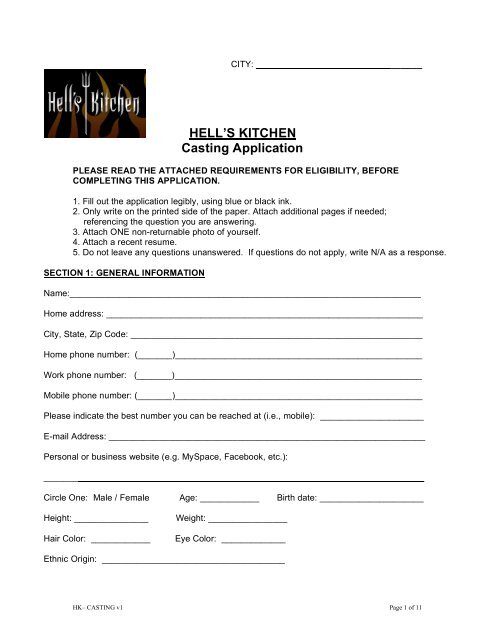
Image Source: img.yumpu.com
The Allure of the Inferno: Why Hell’s Kitchen?
Hell’s Kitchen isn’t just another cooking show; it’s a proving ground. It’s where aspiring chefs are pushed to their absolute limits, tested on their skills, their composure, and their ability to work under immense pressure. The chance to learn from a culinary titan like Gordon Ramsay, and to potentially win a coveted head chef position at a world-class restaurant, is a dream for many in the culinary world. The show’s unique format, with its daily eliminations and gruelling challenges, makes it a thrilling spectacle for viewers and an unparalleled opportunity for participants.
What Makes a Hell’s Kitchen Applicant Stand Out?
- Exceptional Culinary Skills: This is non-negotiable. You need a strong foundation in cooking techniques, a broad knowledge of ingredients, and the ability to create delicious, well-presented dishes.
- Resilience Under Pressure: Hell’s Kitchen is renowned for its high-stress environment. Can you stay calm and focused when things go wrong? Can you take criticism and learn from it?
- Strong Personality: The show thrives on personality. Are you outspoken, passionate, and able to articulate your thoughts and feelings effectively?
- Teamwork and Leadership Potential: While individual skill is crucial, the ability to work with others and potentially lead a brigade is also vital.
- A Compelling Story: Producers look for individuals with interesting backgrounds, unique perspectives, and a genuine passion for the culinary arts.
Is This Your Culinary Destiny? Understanding the Basics
Before diving deep into the application process, let’s clarify some fundamental points.
What is the Hell’s Kitchen Casting Process Like?
The Hell’s Kitchen casting process is rigorous and multi-stage. It typically involves an initial online application, followed by auditions (which may include in-person callbacks or video submissions), and finally, extensive interviews and background checks. The casting team is looking for a specific blend of talent, personality, and resilience.
What are the Hell’s Kitchen Application Requirements?
The Hell’s Kitchen application requirements are quite specific. Generally, applicants must be:
- 18 years of age or older: You must be a legal adult.
- Legally authorized to work in the United States: This is a standard requirement for US-based productions.
- Have professional culinary experience: While the show is open to various levels of culinary experience, demonstrating a genuine career path in cooking is essential. This could include working in restaurants, catering, or even extensive private chef experience.
- Be willing to commit to the filming schedule: This is a significant commitment, often lasting several months, with unpredictable hours.
- Possess a valid passport: This is usually required for international travel if the show involves filming abroad, though most seasons are filmed in Los Angeles.
Can I Apply if I’m not a Professional Chef?
While the show heavily features professional chefs, there have been instances where individuals with exceptional home-cooking skills and unique life experiences have been considered. However, the primary focus remains on those with demonstrable professional culinary backgrounds. If your experience is more in catering, private cheffing, or even significant roles in the food industry that aren’t direct kitchen service, be prepared to highlight how those experiences have honed your culinary acumen.
Who is the Ideal Hell’s Kitchen Applicant?
The ideal Hell’s Kitchen applicant is someone who possesses a rare combination of technical skill, an unshakeable spirit, and a compelling narrative. They are not afraid to speak their mind, can handle criticism constructively, and are driven by an insatiable passion for food and the pursuit of culinary excellence. They are also individuals who can create engaging television, adding drama and excitement to the viewing experience.
Deconstructing the Application: Your Step-by-Step Guide
Applying for Hell’s Kitchen is a marathon, not a sprint. Each stage is designed to weed out those who aren’t truly cut out for the intense demands of the show.
Stage 1: The Online Application – Your First Impression
This is where your journey begins. The online application is your first chance to make a strong impression. Be prepared to provide detailed information about your culinary background, your motivations, and your personality.
Key Information to Prepare:
- Contact Information: Standard details like name, address, phone number, and email.
- Personal Details: Age, date of birth, height, weight, and any relevant identifying information.
- Culinary Experience: This is the most crucial section.
- List all restaurants where you’ve worked, including your roles, responsibilities, and dates of employment.
- Include any catering experience, private chef work, or significant culinary training.
- Quantify your experience where possible. For example, “Managed a brigade of 10 chefs,” or “Developed and executed seasonal menus for events of up to 200 guests.”
- Education: Detail any culinary schools attended or degrees obtained.
- Personal Statement/Essays: Many applications will ask for short essays or personal statements. This is your opportunity to showcase your personality, your passion, and what makes you unique.
- Why do you want to be on Hell’s Kitchen? Be specific and genuine.
- What are your greatest culinary strengths and weaknesses? Honesty is key, but frame weaknesses as areas for growth.
- Describe a time you faced extreme pressure in the kitchen and how you handled it.
- What makes you a good candidate for Hell’s Kitchen? Highlight your skills, personality, and unique story.
- Photos: High-quality, recent photos are usually required. Include a headshot and a full-body shot. You might also be asked for photos of your signature dishes.
Tips for a Winning Online Application:
- Be Thorough and Honest: Don’t inflate your experience. Lies will inevitably be uncovered.
- Proofread Meticulously: Typos and grammatical errors can make you seem unprofessional.
- Tell Your Story: Don’t just list facts; weave a narrative that highlights your passion and journey.
- Highlight Unique Skills: Do you have a specialty? Are you fluent in multiple cuisines? Mention it.
Stage 2: The Audition – Proving Your Mettle
If your online application stands out, you’ll be invited to an audition. This is where the real pressure begins.
Types of Auditions:
- Video Audition: You may be asked to submit a video tape demonstrating your cooking skills and answering specific questions. This is your chance to showcase your personality and culinary talent in a controlled environment.
- In-Person Audition/Callback: These are often held in major cities. You might be asked to cook a dish, participate in group interviews, or undergo individual interviews with casting directors.
What to Expect at an Audition:
- Cooking Demonstration: You might be asked to prepare a signature dish. Be prepared to talk about your dish, why you chose it, and the techniques you used.
- On-Camera Interview: You’ll likely be interviewed on camera. This is where your personality shines. Be energetic, engaging, and articulate.
- Group Exercises: Sometimes, candidates are put into groups to assess their teamwork and communication skills.
- Culinary Skills Test: You might be asked to perform specific culinary tasks to demonstrate your proficiency.
How to Submit Audition Tape Hell’s Kitchen:
When submitting an audition tape, focus on:
- Quality: Ensure good lighting, clear audio, and stable camera work.
- Your Kitchen: Showcase a clean, organized workspace.
- Your Dish: Present your food appealingly.
- Your Personality: Let your passion and energy come through. Speak directly to the camera.
- Conciseness: Stick to the time limits provided.
What are the Hell’s Kitchen Applicant Criteria for Auditions?
Beyond the basic requirements, during auditions, casting looks for:
- Authenticity: Are you being yourself?
- Enthusiasm: Do you genuinely love cooking?
- Communication Skills: Can you express yourself clearly and concisely?
- Adaptability: How do you handle unexpected questions or challenges?
- Potential for Drama/Engagement: Do you have a compelling story or personality that will resonate with viewers?
Stage 3: The Interview and Beyond – The Final Gauntlet
If you make it through the initial auditions, you’ll face more in-depth interviews and checks.
Deeper Dives:
- One-on-One Interviews: These interviews with producers and casting directors are designed to get to know you on a deeper level. They’ll explore your motivations, your history, and how you handle conflict.
- Psychological Evaluation: Some shows, especially those with high-pressure environments, may conduct psychological assessments to gauge your mental fortitude.
- Background Checks: Expect thorough background checks, including criminal records and employment verification.
- Medical Examinations: To ensure you’re fit for the demands of the show, a medical examination might be required.
Gordon Ramsay Show Tryouts:
While you won’t directly “try out” for Gordon Ramsay himself at this stage, the producers are essentially filtering candidates who they believe will impress him and respond well to his methods. They are looking for individuals who can handle his feedback, even the most brutal kind, and use it to improve.
Chef Reality TV Casting:
The chef reality TV casting process for Hell’s Kitchen is highly competitive. Thousands of aspiring chefs vie for a limited number of spots. It’s crucial to remember that producers are not just looking for the best cooks, but for the most compelling television personalities.
Making Your Culinary Mark: Crafting Your Application Materials
Your application materials are your ambassadors. They need to speak volumes about who you are as a chef and as a person.
Crafting a Killer Culinary Resume
Your resume should be more than just a list of jobs. It should tell the story of your career progression and highlight key achievements.
Resume Essentials:
- Contact Information: Clear and easy to find.
- Summary/Objective: A brief, impactful statement about your culinary aspirations.
- Professional Experience: List jobs in reverse chronological order. For each role, include:
- Restaurant Name and Location
- Your Title
- Dates of Employment
- Key Responsibilities and Accomplishments (use action verbs!)
- Education: Culinary school, degrees, certifications.
- Skills: Mention specific cuisines, techniques, knife skills, menu development, costing, etc.
- Awards and Recognition: Any accolades received.
Example of an Accomplishment-Focused Bullet Point:
Instead of: “Responsible for prep work.”
Try: “Spearheaded prep for a 150-seat fine-dining restaurant, reducing prep time by 20% through implementation of a new mise en place system.”
The Art of the Audition Tape: Your Visual Story
This is where you can truly shine. Think of it as a mini-documentary about yourself.
Elements of a Compelling Audition Tape:
- Introduction: Clearly state your name, where you’re from, and why you want to be on Hell’s Kitchen. Be energetic and engaging.
- Kitchen Tour: Briefly show your cooking space. Highlight any unique or impressive tools.
- Cooking Demonstration:
- Choose a dish that showcases your skills and personality.
- Explain what you’re making and why.
- Talk through your cooking process, explaining techniques as you go.
- Showcase precision and cleanliness.
- Plate the dish beautifully.
- On-Camera Interview Segments: Answer common casting questions:
- What’s your signature dish?
- What’s your biggest culinary strength? Your biggest weakness?
- Describe your cooking philosophy.
- What do you admire about Gordon Ramsay? What are your fears about working with him?
- What makes you different from other chefs?
- Personality: Be yourself! Let your passion, your quirks, and your sense of humour come through.
- Ending: A strong closing statement reiterating your desire to be on the show.
Table: Audition Tape Do’s and Don’ts
| Do | Don’t |
|---|---|
| Use good lighting and clear audio. | Use a shaky camera or have distracting background noise. |
| Showcase your personality. | Be monotonous or overly shy. |
| Cook a dish that highlights your best skills. | Cook something too simple or too complex for the time. |
| Explain your techniques. | Just cook without talking. |
| Keep it concise and within the time limit. | Ramble or go significantly over the allotted time. |
| Be professional and respectful. | Be arrogant or overly aggressive. |
| Proofread any on-screen text. | Have typos in your on-screen text. |
The Culinary Competition Application: Strategy is Key
Approaching the application as a culinary competition means being strategic and prepared.
Pre-Application Research:
- Watch Past Seasons: Familiarize yourself with the challenges, the types of contestants, and the overall tone of the show.
- Understand the Gordon Ramsay Persona: Know what kind of chef and personality he respects and what he dislikes.
- Follow Official Channels: Keep an eye on the official Hell’s Kitchen casting website and social media for announcements regarding applications and Hell’s Kitchen open calls.
Application Strategy:
- Tailor Your Application: Don’t use a generic application. Customize it to Hell’s Kitchen.
- Highlight Relevant Skills: Emphasize experience in high-pressure environments, fine dining, or specific cuisines that are often featured.
- Show, Don’t Just Tell: Instead of saying “I’m resilient,” describe a situation where you demonstrated resilience.
Navigating Hell’s Kitchen: What Happens Next?
If you are selected, your life will change dramatically.
The Commitment: What to Expect If Selected
- Intense Filming Schedule: Be prepared for long days, early mornings, late nights, and constant pressure. Your personal life will likely take a backseat.
- Living Conditions: You’ll be living and working in close proximity with other contestants.
- Psychological Strain: The show is designed to test your mental fortitude. You’ll be pushed, criticized, and potentially manipulated.
- Culinary Growth: Despite the challenges, this is an unparalleled opportunity to learn from one of the world’s best chefs.
How to Get on Hell’s Kitchen: The Long Game
- Build Your Resume: Continuously work on your culinary skills and gain experience in diverse kitchen environments.
- Develop Your Brand: Cultivate a distinct personality and cooking style.
- Network: Attend industry events and connect with other culinary professionals.
- Stay Persistent: If you don’t get selected the first time, learn from the experience and reapply. Many successful contestants have applied multiple times.
Hell’s Kitchen Open Calls: Rare Opportunities
While most applications are handled online, there may be occasional Hell’s Kitchen open calls in major cities. These are highly competitive and require a significant amount of preparation. If an open call is announced, treat it like any other audition: dress professionally, bring your resume, and be ready to impress immediately.
Frequently Asked Questions (FAQ)
Q1: What is the minimum age to apply for Hell’s Kitchen?
A: You must be at least 18 years old to apply for Hell’s Kitchen.
Q2: Do I need formal culinary school training to apply?
A: While formal training is a significant advantage and highly recommended, exceptional professional experience in the culinary field can sometimes be a substitute. However, the Hell’s Kitchen application requirements generally favor those with a strong educational foundation in cooking.
Q3: Can I apply if I have a criminal record?
A: This depends on the nature and recency of the offense. All applicants undergo background checks, and certain criminal records may disqualify you. It’s best to be upfront about any past issues.
Q4: How long does the filming process typically last?
A: The filming process for Hell’s Kitchen can be quite lengthy, often spanning several months, depending on the season’s production schedule.
Q5: What kind of dishes should I showcase in my audition tape?
A: Choose a dish that best represents your skills, your style, and your personality. It should be well-executed, visually appealing, and something you can confidently discuss.
Q6: What if I’m a great cook but not very outspoken?
A: While personality is important, focus on showcasing your passion and professionalism. If you have strong culinary skills and a genuine desire to improve, your talent might speak for itself. However, the show does look for individuals who can contribute to the drama and narrative.
Q7: Can I use pre-made ingredients or shortcuts in my audition tape?
A: It’s best to prepare your dish from scratch as much as possible. Honesty and authenticity are crucial. If you must use a pre-made component, be prepared to explain why.
Q8: What is the prize for winning Hell’s Kitchen?
A: The grand prize typically includes a head chef position at a renowned restaurant and often a significant cash prize.
Q9: How often does Hell’s Kitchen accept applications?
A: Applications are usually opened periodically when the show is gearing up for a new season. It’s important to regularly check the official casting website.
Q10: Is there an advantage to having worked in fine dining restaurants?
A: Yes, experience in fine dining restaurants often aligns well with the high standards and expectations of Hell’s Kitchen. It demonstrates familiarity with advanced techniques and service.
By preparing thoroughly, showcasing your unique talents, and presenting yourself authentically, you can significantly increase your chances of getting on Hell’s Kitchen. Remember, it’s a demanding process, but for those with the passion and skill, it’s an opportunity of a lifetime. Good luck!