
What is a kitchen hood and why do I need one? A kitchen hood, also known as a range hood or vent hood, is a crucial component of any kitchen. It’s a mechanical fan that hangs above your stove or cooktop, designed to remove airborne grease, combustion products, smoke, heat, and steam from the air. This process is vital for improving the air quality in your kitchen and home, preventing grease buildup on surfaces, and reducing lingering cooking odors. Without proper kitchen ventilation, your kitchen can become stuffy, oily, and unpleasant.
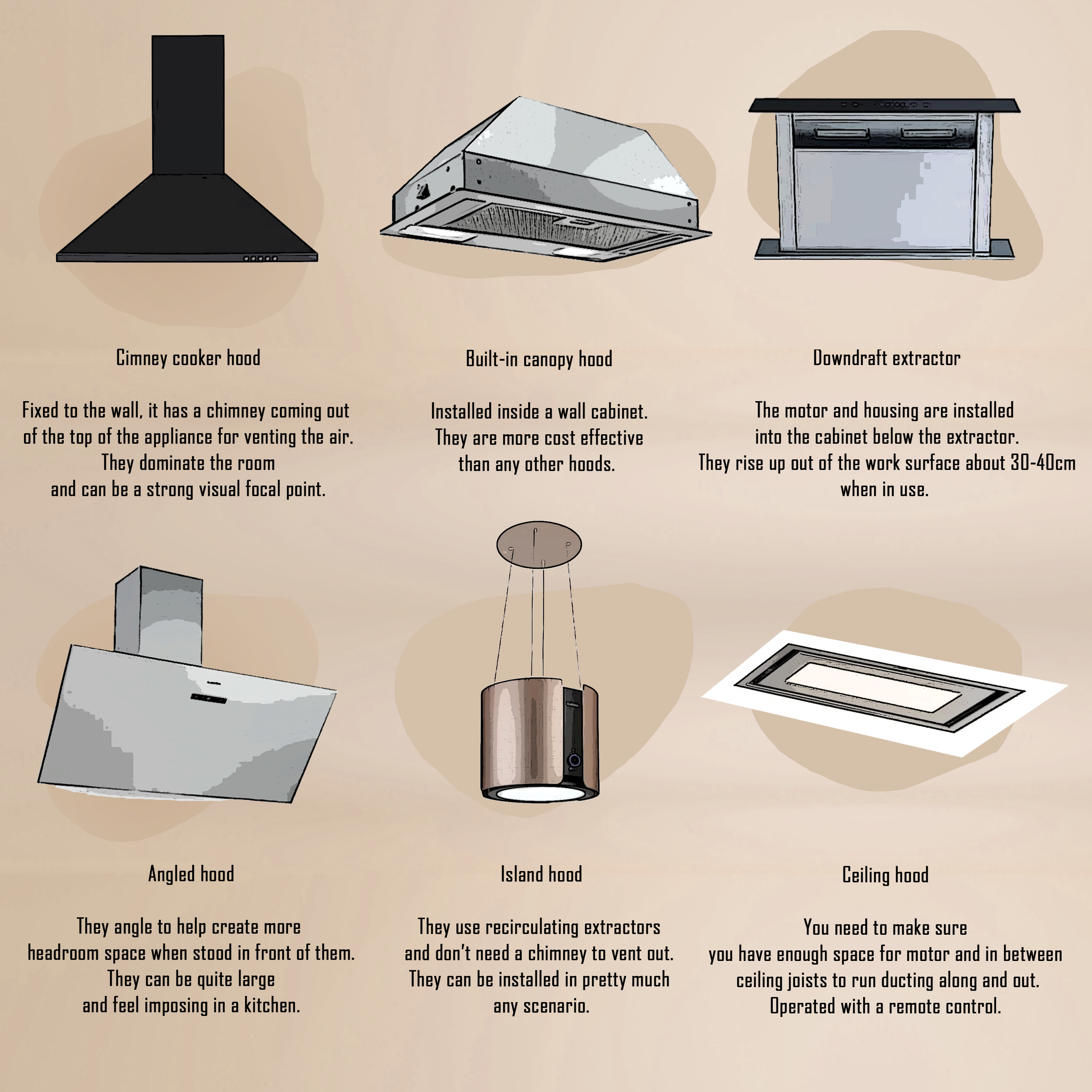
Image Source: images.squarespace-cdn.com
Fathoming Kitchen Ventilation Needs
When you cook, especially with gas stoves or when frying, searing, or stir-frying, various particles are released into the air. These include:
- Grease particles: Tiny droplets of oil that can coat cabinets, walls, and appliances.
- Smoke: From high-heat cooking or accidental burning.
- Steam and moisture: From boiling and steaming food.
- Odors: Lingering smells that can spread throughout your home.
- Combustion byproducts: Especially from gas stoves, which can include nitrogen dioxide and carbon monoxide.
A well-chosen kitchen hood actively combats these issues, making your cooking experience more enjoyable and your home healthier.
Deciphering Range Hood Types
There’s a wide variety of kitchen hoods available, each suited for different kitchen layouts and cooking styles. Knowing the different range hood types is the first step to making an informed decision.
Under Cabinet Hoods
These are perhaps the most common and straightforward type of kitchen hood. As their name suggests, they are designed to be mounted directly beneath your upper kitchen cabinets, directly above the stove.
Pros:
- Space-saving: They don’t take up additional wall space.
- Cost-effective: Generally more affordable than other types.
- Easy installation: Often the simplest to install, especially if you’re replacing an old unit.
- Integrated look: They can blend seamlessly with existing cabinetry.
Cons:
- Limited capture area: Their effectiveness can be limited by their size, especially for wider cooktops.
- Lower aesthetic appeal: Some find them less stylish than other options.
- Ducting limitations: May require ducting to the outside, which can be more complex to route under cabinets.
Installation Note: Range hood installation for under-cabinet models typically involves securing the hood to the underside of the cabinets and connecting it to either an exhaust duct or a recirculating system.
Wall Mount Range Hoods
These hoods are mounted directly to the wall above your stove. They are often chosen for their striking design and are a popular choice for kitchens where the stove is against an exterior wall.
Pros:
- Stylish designs: Available in a wide array of materials and finishes, from sleek stainless steel to bold contemporary designs.
- Efficient capture: Often have a larger capture area than under-cabinet models, leading to better ventilation.
- Good for deeper cooktops: Can accommodate and effectively ventilate more powerful cooking appliances.
Cons:
- Requires wall space: They protrude from the wall, which might be an issue in smaller kitchens.
- More complex installation: Mounting to the wall and connecting to ductwork can be more involved.
- Higher cost: Generally more expensive than under-cabinet hoods.
Island Range Hoods
For kitchens with a freestanding island cooktop, an island range hood is the solution. These hoods are suspended from the ceiling directly above the island.
Pros:
- Excellent ventilation: Designed to capture fumes from all sides, which is crucial for island cooktops.
- Statement piece: Often a focal point of the kitchen design, adding a touch of luxury and style.
- Unobstructed view: They don’t rely on walls, which can enhance the open feel of the kitchen.
Cons:
- Most expensive: Typically the priciest option.
- Most complex installation: Requires ceiling mounting and extensive ductwork, often needing professional installation.
- May obstruct views: Depending on the design and ceiling height, they can sometimes block sightlines.
- Require specific ceiling height: The height from the cooktop to the hood is critical for performance.
Downdraft Ventilation Systems
While not strictly a “hood,” downdraft systems are another form of kitchen ventilation. They are integrated into the cooktop itself or rise from behind it, pulling air down and away from the cooking surface.
Pros:
- Minimalist aesthetic: Nearly invisible when not in use.
- Ideal for certain designs: Perfect for kitchens where overhead ventilation is not possible or desired.
Cons:
- Less effective: Generally less powerful than overhead hoods, especially for capturing smoke and steam that rises.
- Can recirculate grease: If not properly ducted, grease can be pulled back into the kitchen.
- Can be expensive: Especially when integrated into a high-end cooktop.
- Installation complexity: Requires careful integration with the cooktop and ductwork.
Ductless vs Ducted Hoods: Which Is Right?
A significant decision when choosing a kitchen hood is whether to go ductless vs ducted hoods. This choice greatly impacts installation, performance, and maintenance.
Ducted Hoods
Ducted hoods, also known as vented hoods, connect to a system of ducts that carry cooking fumes and grease particles directly outside your home.
How they work:
Air is drawn into the hood, passes through baffle filters (which capture grease), and then is expelled through a ductwork system to the exterior.
Pros:
- Superior ventilation: By expelling air outside, they remove all pollutants, including grease, steam, smoke, and odors, completely from your home.
- More powerful: Generally have higher extraction rates.
- No filters to replace regularly: Baffle filters are typically washable and designed for long-term use.
Cons:
- Complex installation: Requires external ducting, which can be challenging and costly to install, especially in existing homes.
- Requires an exterior wall or roof: Ductwork needs a clear path to the outside.
- Can lose heated/cooled air: Expelling interior air can impact your home’s energy efficiency.
Ductless Hoods
Ductless hoods, also known as recirculating hoods, filter the air and then release it back into the kitchen.
How they work:
Air is drawn into the hood, passes through metal baffle filters to capture grease, and then typically goes through charcoal (carbon) filters to remove odors and smoke particles. The cleaned air is then recirculated into the kitchen.
Pros:
- Easier installation: No need for external ducting, making them ideal for apartments or kitchens where ducting is not feasible.
- Lower installation cost: Significantly cheaper to install due to the absence of ductwork.
- No loss of heated/cooled air: Recirculating air doesn’t impact your home’s HVAC system.
Cons:
- Less effective ventilation: They don’t remove steam, heat, or some fine particles as effectively as ducted hoods.
- Require regular filter replacement: Charcoal filters become saturated and need to be replaced periodically (often every 3-6 months), adding to ongoing costs.
- Can recirculate some grease/odors: Despite filtration, some trace amounts might still return to the kitchen.
- Can be noisier: Without the smooth flow of ducted air, they might be louder.
Choosing between ductless and ducted often comes down to your home’s structure and your budget. If ducting is an option, it’s generally the preferred method for optimal air quality.
Comprehending CFM Rating: The Heart of Extraction
The CFM rating (Cubic Feet per Minute) is the most critical specification when selecting a kitchen hood. It measures the volume of air the hood can move per minute. A higher CFM rating means more powerful suction.
How to Calculate Your CFM Needs
A general guideline for calculating your required CFM is based on the size of your cooktop and whether it’s gas or electric:
- Electric Cooktops: Multiply the width of your cooktop (in inches) by 10.
- Example: For a 30-inch electric cooktop, you’d need at least 300 CFM.
- Gas Cooktops: Multiply the width of your cooktop (in inches) by 15. This is because gas cooktops produce more heat and byproducts.
- Example: For a 30-inch gas cooktop, you’d need at least 450 CFM.
Additional Factors to Consider:
- Ceiling Height: If you have high ceilings, you might need a higher CFM to effectively ventilate the larger volume of air.
- Cooking Habits: If you frequently sear, stir-fry, or use high-heat cooking methods, a higher CFM is beneficial.
- Kitchen Size: Larger kitchens may benefit from higher CFM for better air circulation.
- Duct Length and Bends: The longer and more complex your ductwork, the more CFM you’ll lose due to friction. You may need to increase your CFM rating by 10-20% to compensate.
- Make-up Air: In very tightly sealed homes, high-CFM hoods (above 400 CFM) might require a make-up air system to replace the air being exhausted, preventing negative pressure. Check local building codes for requirements.
A handy table to help you estimate:
| Cooktop Type & Width | Minimum CFM Needed |
|---|---|
| Electric 20″ | 200 |
| Electric 24″ | 240 |
| Electric 30″ | 300 |
| Electric 36″ | 360 |
| Gas 20″ | 300 |
| Gas 24″ | 360 |
| Gas 30″ | 450 |
| Gas 36″ | 540 |
Important Note: It’s often better to have a slightly higher CFM than you need. You can always run the hood on a lower speed setting. Running a hood at its maximum speed constantly can be noisy and consume more energy.
Exploring Key Range Hood Features
Beyond CFM and type, various range hood features can enhance your kitchen experience.
Filters
- Baffle Filters: These are the most common and effective type, made of interlocking metal baffles. They are dishwasher-safe and designed for long-term use. They excel at capturing grease.
- Mesh Filters: Similar to baffle filters but made of mesh. They are also washable but can be less efficient at grease capture over time and may require more frequent cleaning.
- Charcoal Filters: Essential for ductless hoods to remove odors and smoke. They are not washable and must be replaced regularly.
Lighting
Most hoods come with built-in lighting to illuminate your cooktop. Look for:
- LED lighting: Energy-efficient, long-lasting, and provide bright, clear light.
- Adjustable brightness: Allows you to control the light intensity.
- Halogen lighting: Offers good color rendering but consumes more energy and generates more heat.
Fan Speeds
- Multiple speed settings: Usually 2-4 speeds. This allows you to choose the appropriate suction power for different cooking tasks, from a light simmer to a high-heat sear.
- Variable speed control: Offers a more precise adjustment of fan speed.
Noise Level (Sones)
The noise level of a range hood is measured in sones. A lower sone rating indicates a quieter operation.
- 1.0 to 2.0 sones: Very quiet, comparable to a soft whisper.
- 2.0 to 3.0 sones: Moderate noise, like a quiet conversation.
- 3.0 sones and above: Can be quite noticeable.
Consider the sone rating, especially if your kitchen is open to living areas or you’re sensitive to noise.
Timer Functions and Auto Shut-off
Some advanced hoods offer timer functions that automatically turn off the fan after a set period, ensuring you don’t forget to switch it off. Auto shut-off can also be triggered by heat sensors.
Remote Controls and Smart Features
Higher-end models may come with remote controls or even smart home integration, allowing you to operate the hood via an app or voice commands.
Backsplash and Canopy Design
The visual aspect of the hood is important. Consider how the design will complement your kitchen’s aesthetic. Some hoods have integrated backsplashes, while others are designed to be paired with a separate backsplash.
Range Hood Installation: A Crucial Step
Proper range hood installation is paramount to its effectiveness and safety. While some DIY-ers tackle this, it often requires professional help, especially for ducted systems.
Key Installation Considerations:
- Height from Cooktop: The ideal height varies by hood type and manufacturer, but generally, for ducted hoods, it’s between 24 to 36 inches above the cooktop. Ductless hoods might be placed slightly higher. Always follow the manufacturer’s specific recommendations to ensure optimal capture and avoid fire hazards.
- Ductwork (for Ducted Hoods):
- Duct Material: Use rigid metal ducting for best airflow and fire safety. Flexible ducting can restrict airflow and trap grease.
- Duct Size: The duct size should match the hood’s exhaust outlet (often 6 or 8 inches in diameter). Avoid reducing the duct size.
- Duct Run: Keep the duct run as short and straight as possible. Every bend reduces the hood’s efficiency.
- Exterior Vent Cap: Ensure the exterior vent cap is clear of obstructions and has a backdraft damper.
- Electrical Connection: Hoods require an electrical connection. Ensure the wiring is done by a qualified electrician to meet safety codes.
- Mounting: The hood must be securely mounted to the wall or ceiling according to the manufacturer’s instructions. Use appropriate fasteners for your wall type (studs are ideal).
- Make-up Air: As mentioned earlier, if your hood’s CFM rating is high (typically over 400 CFM) and your home is well-sealed, you may need to install a make-up air system. This system brings fresh outside air into the kitchen to replace the air being exhausted, preventing negative pressure and potential backdrafting of combustion appliances. Check your local building codes.
DIY vs. Professional Installation:
- DIY: Possible for simple ductless under-cabinet hood replacements if you are comfortable with basic electrical work and have the right tools.
- Professional: Recommended for wall-mount, island hoods, and all ducted installations, especially if significant ductwork or electrical modifications are needed. A professional installer will ensure the hood is mounted correctly, ducted properly, and all safety codes are met.
Kitchen Hood Maintenance: Keeping It Working Well
Regular kitchen hood maintenance is essential to keep it performing efficiently and safely.
Cleaning Filters
- Baffle/Mesh Filters:
- Frequency: Clean every 1-3 months, depending on your cooking habits.
- Method: Most are dishwasher-safe. You can also soak them in hot, soapy water and scrub them with a non-abrasive brush. For very greasy filters, a degreaser can be helpful. Ensure they are completely dry before re-installing.
- Charcoal Filters (Ductless Hoods):
- Frequency: Replace every 3-6 months, or as recommended by the manufacturer. They cannot be cleaned.
- Method: Carefully remove the old filters and install the new ones according to the hood’s instructions.
Cleaning the Hood Body
- Exterior: Wipe down the exterior of the hood regularly with a damp cloth and mild detergent. For stainless steel, use a stainless steel cleaner and polish with the grain to avoid streaks.
- Interior: The interior surfaces, especially around the filters, can accumulate grease. Wipe them down with a degreasing cleaner. Be careful around the fan and electrical components.
Checking the Fan and Lights
- Periodically check that the fan is operating smoothly and that the lights are working.
- If you notice any unusual noises or vibrations, it’s time to call a professional.
Inspecting Ductwork (Ducted Hoods)
- Frequency: It’s a good idea to inspect your ductwork annually.
- Method: Look for any signs of grease buildup, damage, or blockages. Significant buildup can be a fire hazard and reduce airflow. Professional duct cleaning services can be employed if necessary.
Frequently Asked Questions (FAQ)
Q1: What is the best CFM for a 30-inch gas range?
A1: For a 30-inch gas range, a minimum CFM of 450 is recommended. However, if you do a lot of high-heat cooking or have a larger kitchen, you might consider going up to 600 CFM or more.
Q2: Can I install a ducted range hood if I have no exterior wall?
A2: Yes, you can potentially vent through the roof if there’s no exterior wall available. This requires more complex ductwork, but it’s a feasible solution.
Q3: How often should I replace my range hood filters?
A3: For grease filters (baffle/mesh), clean them monthly. For charcoal filters in ductless hoods, replace them every 3-6 months, as they cannot be cleaned effectively.
Q4: My kitchen feels stuffy even with the hood on. What could be wrong?
A4: Several factors could contribute:
* The CFM rating might be too low for your cooktop or kitchen size.
* The filters may be dirty and clogged.
* If it’s a ducted hood, the ductwork might be blocked, too long, or have too many bends.
* The hood might not be installed at the optimal height above the cooktop.
* If your home is very airtight, you might need a make-up air system.
Q5: What’s the difference between a hood and a vent?
A5: The terms are often used interchangeably, but “hood” refers to the entire unit that sits above the stove, including the fan, filters, and lighting. “Vent” or “ventilation” refers to the system that exhausts air outside. A range hood is a type of ventilation system.
Q6: Can I use a ductless hood if I have a gas stove?
A6: Yes, you can use a ductless hood with a gas stove, but it’s crucial to ensure it has effective charcoal filters to capture odors and byproducts. However, for gas stoves, a ducted system is always the more effective and safer option for removing combustion byproducts like carbon monoxide.
Choosing the right kitchen hood is a significant decision that impacts your kitchen’s air quality, safety, and overall ambiance. By carefully considering your cooking habits, kitchen layout, and the various types and features available, you can find a hood that meets your needs and enhances your home.