
Yes, you can connect a garden hose to your kitchen sink, but it requires a special adapter. This guide will show you how to do it safely and effectively. Running a garden hose indoors for various purposes is a common need, and with the right tools, attaching a hose to your kitchen faucet or utility sink becomes straightforward.
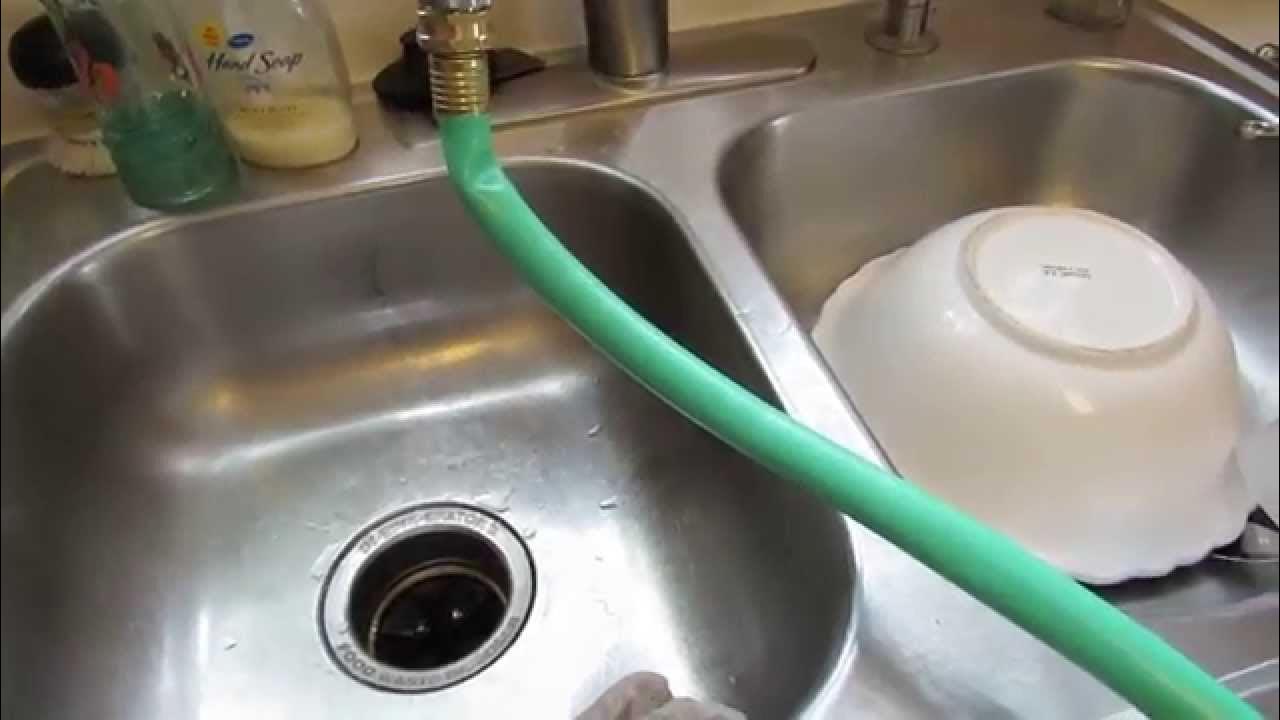
Image Source: i.ytimg.com
Why You Might Want to Connect a Garden Hose to Your Kitchen Sink
There are several practical reasons why someone might want to connect a garden hose to their kitchen sink. Perhaps you need to water houseplants that are too heavy to move, fill a large storage container, or even wash a pet indoors. Sometimes, you might need a longer reach for cleaning tasks that your regular sink sprayer can’t handle. Whatever your reason, attaching garden hose to indoor faucet can be a convenient solution.
The Essential Tool: The Kitchen Faucet Hose Adapter
The key to successfully connecting a garden hose to the kitchen sink lies in using the correct adapter. You can’t just screw a garden hose directly onto your kitchen faucet. The threads are different, and even if they somehow matched, the seal wouldn’t be secure.
The most common and effective solution is a kitchen faucet hose adapter. These adapters are specifically designed to bridge the gap between your standard kitchen faucet and the threaded end of a garden hose.
Types of Kitchen Faucet Hose Adapters
When looking for the right hose connector for kitchen sink, you’ll typically find a few main types:
- Aerator Thread Adapters: Most modern kitchen faucets have an aerator at the end of the spout. This aerator screws off, and many adapters screw onto these exposed threads. You’ll need to measure the diameter of your faucet’s aerator threads to find the correct adapter.
- Spout Adapters: Some adapters clamp onto the entire spout of the faucet. These are less common but can be useful if your faucet doesn’t have removable aerator threads.
- Quick-Connect Adapters: These often attach to the aerator threads and provide a quick-connect fitting for your garden hose, making the connection and disconnection process very fast.
What to Look for in an Adapter
- Thread Compatibility: This is crucial. Most garden hoses use a standard GHT (Garden Hose Thread) of 3/4 inch. Your faucet’s aerator threads can vary, but common sizes are Male or Female 15/16 inch, 55/64 inch, or 13/16 inch. Many adapters come with multiple thread sizes or are universal.
- Material: Brass adapters are generally more durable and resistant to corrosion than plastic ones.
- Seal Quality: Look for adapters with rubber washers or O-rings to ensure a watertight seal.
- Flow Control: Some adapters have a built-in shut-off valve, which can be very handy.
Step-by-Step Guide: Attaching Your Garden Hose to the Kitchen Sink
Here’s a breakdown of how to go about attaching garden hose to indoor faucet.
Step 1: Gather Your Supplies
Before you begin, make sure you have:
- Your garden hose
- The correct sink to garden hose adapter
- A wrench (adjustable or pipe wrench) if the adapter doesn’t tighten by hand
- A towel or rag for any drips
Step 2: Prepare Your Kitchen Faucet
- Remove the Aerator: Carefully unscrew the aerator from the end of your kitchen faucet spout. You might be able to do this by hand. If it’s tight, use a wrench with a cloth wrapped around the aerator to prevent scratching.
- Inspect the Threads: Look at the threads on the faucet spout and the inside of the aerator you removed. This will help you confirm the thread size if your adapter instructions aren’t clear.
Step 3: Attach the Adapter to the Faucet
- Select the Correct Adapter: Choose the adapter that matches the threads on your faucet spout. If you have an adapter with multiple thread options, try fitting the correct one.
- Screw on the Adapter: Gently screw the adapter onto the faucet spout. Ensure it’s going on straight to avoid cross-threading.
- Tighten Securely: Tighten the adapter by hand as much as possible. If it feels loose or leaks, use a wrench to tighten it a bit more. Be careful not to overtighten, as this can damage the faucet or adapter.
Step 4: Connect the Garden Hose to the Adapter
- Align the Hose: Take the end of your garden hose and align its threaded coupling with the open end of the kitchen sink hose attachment.
- Screw on the Hose: Screw the garden hose onto the adapter. Again, ensure it’s straight.
- Tighten the Hose: Tighten the hose securely by hand. Most garden hose fittings are designed to be hand-tightened for a good seal.
Step 5: Test for Leaks
- Turn on the Water Slowly: Turn on your kitchen faucet slowly. Start with cold water.
- Check All Connections: Inspect the connection point at the faucet and where the hose connects to the adapter. Look for any drips or leaks.
- Tighten if Necessary: If you see any leaks, try tightening the adapter or the hose connection slightly. A small amount of plumber’s tape on the threads of the faucet spout (before attaching the adapter) can sometimes help create a better seal if you’re still experiencing issues.
- Run Water Through the Hose: Once you’ve confirmed there are no leaks at the faucet, let water run through the hose for a minute to flush out any debris and ensure the hose itself is connected properly.
Tips for Running Garden Hose Indoors Safely
Running garden hose indoors requires some precautions to prevent water damage and ensure safety.
Water Pressure Considerations
- Faucet Pressure vs. Hose Pressure: Your kitchen faucet is designed for household water pressure. A garden hose can carry a significant volume of water. Be mindful of the pressure.
- Avoid High Pressure for Extended Periods: Don’t leave the water running at full blast for long durations without supervision, especially if you’re using older hoses or fittings.
Preventing Water Damage
- Use a Drip Pan: Place a large drip pan or a tarp under the connection point and anywhere the hose might pass through or sit. This is crucial for catching any small leaks.
- Secure the Hose: Ensure the hose is routed so it doesn’t kink or get snagged, which could cause a sudden burst or leak.
- Supervise: Never leave the hose connected and running unattended.
Hose Quality
- Inspect Your Hose: Before connecting, check your garden hose for any cracks, kinks, or worn spots. A damaged hose is more likely to leak or burst indoors.
- Consider a Shorter Hose: If you only need a short reach, use the shortest hose possible to minimize the amount of water that could spill if a leak occurs.
Adapting to Different Indoor Faucets
While the kitchen sink is common, you might also consider attaching hose to utility sink. Utility sinks, often found in garages or laundry rooms, can be very suitable for this purpose.
Utility Sink Hookups
Utility sinks typically have different faucet styles than kitchen sinks. Some utility sink faucets have threads on the spout for attaching hoses directly. Others might have a larger spout without threads.
- Threaded Utility Faucets: If your utility sink faucet has threads, you might be able to use a standard garden hose adapter similar to the one for your kitchen sink. You may need a different size adapter depending on the utility faucet’s specific threading.
- Threadless Utility Faucets: For faucets without threads, you’ll need a more universal adapter. These often involve a clamp or a flexible rubber sleeve that creates a seal around the spout. These can be a bit trickier to get a perfect seal on, so thorough testing is essential.
Other Indoor Faucet Types
- Laundry Room Faucets: Similar to utility sinks, laundry room faucets can vary. Some may have threaded spouts, while others might require a more universal adapter.
- Bathroom Faucets: While less common, in a pinch, you might consider a bathroom faucet. However, their spouts are usually shorter and less robust, making them less ideal for heavy-duty hose connections.
Troubleshooting Common Issues
When running garden hose indoors, you might encounter a few problems.
Leaks at the Connection
- Check Washers: Ensure the rubber washer is properly seated in the garden hose coupling and the adapter.
- Tighten Appropriately: As mentioned, hand-tight is usually sufficient for garden hoses, but a slight extra turn with a wrench might be needed.
- Use Plumber’s Tape: For metal-to-metal threads on the faucet itself, a few wraps of plumber’s tape can help create a better seal. Apply it in the direction the threads will turn.
- Adapter Quality: A faulty or poorly manufactured adapter can be the culprit. Try a different brand or type.
Kinks in the Hose
- Hose Management: Keep the hose as straight as possible. Avoid sharp bends.
- Hose Reels: If you frequently run hoses indoors, consider a hose reel that helps manage the hose neatly.
Low Water Flow
- Partially Closed Faucet: Ensure your kitchen faucet is fully open.
- Partial Kink: Even a slight kink can reduce water flow. Straighten the hose.
- Adapter Restriction: Some adapters might slightly restrict flow compared to a direct connection.
Creative Uses for Your Indoor Hose Setup
Once you’ve mastered how to use garden hose inside, a world of convenience opens up.
Watering Indoor Plants
- Heavy Potted Plants: Easily water large, heavy potted plants without the struggle of moving them.
- Vertical Gardens: Reach higher levels of indoor vertical gardening systems.
Filling Large Containers
- Aquariums: If you have a large aquarium, filling it can be a chore. A garden hose can make this much quicker.
- Water Tubs or Storage Bins: For cleaning projects or large-scale water storage, a hose provides a fast filling solution.
Cleaning Tasks
- Muddy Boots and Gear: Set up a station near an entrance to rinse off muddy boots, gardening tools, or sports equipment before bringing them further into the house.
- Pet Cleaning: If you have a small pet that can be safely bathed indoors, a hose offers more control and reach than a standard faucet.
Temporary Water Source
- During Plumbing Repairs: If your outdoor spigot is out of order or you need a water source in an area of the house where there isn’t a convenient tap, your kitchen sink can serve as a temporary hub.
Frequently Asked Questions (FAQ)
Q1: Will connecting a garden hose to my kitchen sink damage my faucet?
A1: Generally, no, if done correctly with the proper adapter. The main risk is over-tightening the adapter, which could strip the threads on the faucet spout or the adapter itself. Always use a wrench gently and with a protective cloth.
Q2: Can I use any garden hose for this indoor hookup?
A2: It’s best to use a clean, high-quality garden hose that you know is in good condition. Avoid using hoses that have been exposed to harsh chemicals or extreme weather, as they might degrade and contaminate the water or leak.
Q3: Is the water safe to drink after running through a garden hose?
A3: It’s not recommended to drink water that has passed through a garden hose, especially if it’s an older hose or one that has been used outdoors extensively. Many garden hoses are made with materials that can leach chemicals into the water, and they can harbor bacteria. For drinking water, use your faucet directly or a dedicated filtered water system.
Q4: What if my kitchen faucet doesn’t have a removable aerator?
A4: If your faucet spout doesn’t have a removable aerator, you’ll need a different type of adapter. Look for universal faucet adapters that are designed to clamp onto or seal around the exterior of the spout. These can sometimes be harder to get a leak-proof seal with, so careful fitting and testing are essential.
Q5: How do I find the right size adapter for my faucet?
A5: The best way is to unscrew your faucet’s aerator and measure its diameter. You can also often find product information for your faucet online or by looking for identifying marks on the aerator itself. Many adapters are sold as kits with several common thread sizes included, making it easier to find a match.
Q6: Can I connect a garden hose to a bathroom sink faucet?
A6: While technically possible with the right adapter, it’s generally not recommended. Bathroom faucets often have smaller, less robust spouts and may not be designed to handle the water flow or pressure that a garden hose can deliver. This increases the risk of leaks or damage to the faucet or surrounding fixtures.
Q7: What is the GHT thread size for garden hoses?
A7: The standard thread size for garden hoses in North America is GHT, which stands for Garden Hose Thread. It is a 3/4-inch diameter thread. Most garden hose to faucet adapter for sink connections will be designed to mate with this size.
By following these steps and tips, you can confidently and safely connect your garden hose to your kitchen sink for a variety of useful indoor tasks. Remember, the right adapter and careful execution are key to a successful and leak-free connection.