
Can I take apart a Moen kitchen faucet to fix it? Yes, you can absolutely take apart a Moen kitchen faucet to perform repairs. Many common issues like leaks or low water pressure can be resolved by disassembling the faucet and replacing worn-out parts. This guide will walk you through the process, making Moen faucet repair manageable even for beginners.
Moen kitchen faucets are known for their durability and ease of use, but like any plumbing fixture, they can sometimes develop problems. Knowing how to take apart your Moen kitchen faucet is a valuable skill for any homeowner. Whether you’re dealing with a persistent drip, a stiff handle, or simply want to perform routine Moen kitchen faucet maintenance, this detailed guide will help you confidently disassemble, troubleshoot, and reassemble your faucet. We’ll cover everything you need to know, from gathering your tools to identifying common Moen faucet parts and even when it might be time for Moen faucet replacement.
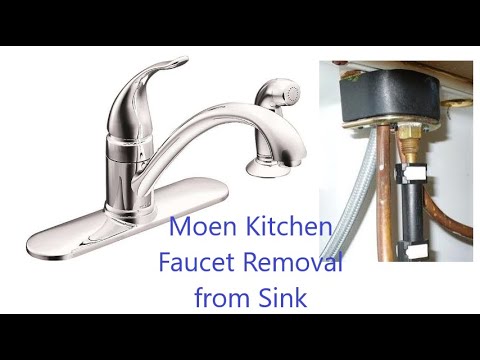
Image Source: i.ytimg.com
Getting Ready: Tools and Preparation
Before you dive into taking apart your Moen faucet, proper preparation is key. Having the right tools and taking a few precautionary steps will make the process much smoother and prevent unnecessary damage.
Essential Tools for Disassembly
Gathering these tools beforehand will save you trips to the hardware store mid-job:
- Adjustable Wrench: This is your go-to tool for loosening and tightening nuts and fittings.
- Phillips Head Screwdriver: For removing various screws that hold the faucet together.
- Flathead Screwdriver: Also useful for prying and loosening certain components.
- Allen Wrench Set (Hex Keys): Many Moen faucets use small set screws, often hidden under the handle, that require Allen wrenches.
- Plumber’s Putty or Silicone Sealant: For creating a watertight seal when reassembling.
- Rag or Towel: To protect the sink surface and catch any dripping water.
- Bucket or Container: To collect any residual water from the pipes.
- Penetrating Oil (Optional): If parts are stuck or corroded, this can help loosen them.
- Replacement Moen Faucet Parts: It’s a good idea to have common replacement parts on hand, such as O-rings or a new cartridge, especially if you already know the issue.
Safety First: Shutting Off the Water Supply
This is the most crucial step. You must turn off the water supply before you start to disassemble your Moen kitchen faucet.
- Locate the Shut-Off Valves: Look underneath your sink for two valves, usually made of metal or plastic. One controls the hot water, and the other controls the cold water.
- Turn Off the Valves: Turn both valves clockwise until they stop.
- Test the Water Flow: Turn on the faucet handles to release any remaining water pressure in the lines and confirm that the water is indeed shut off. No water should come out.
Protecting Your Sink and Workspace
Preventing scratches and damage to your sink is important.
- Cover the Drain: Place a rag or stopper in the sink drain to prevent small parts from falling down it. This is an easy step that can save a lot of frustration.
- Lay Down Towels: Place towels around the base of the faucet and on the countertop to absorb any spills and protect surfaces.
Step-by-Step Guide to Taking Apart Your Moen Kitchen Faucet
Now that you’re prepared, let’s get into the actual process of how to take apart a Moen kitchen faucet. We’ll focus on common Moen faucet models, but the general principles apply to most.
H3: Removing the Moen Faucet Handle
The first step in most Moen faucet repair or maintenance is removing the handle. This is where you’ll often find the cartridge or other internal mechanisms.
H4: Identifying Handle Types
Moen faucets typically have two main types of handle attachments:
- Decorative Cap: Many handles have a small decorative cap (often marked with red for hot and blue for cold) that hides a screw.
- Exposed Set Screw: Some models have a small set screw visible on the back or side of the handle.
H4: Steps for Handle Removal
-
Locate the Set Screw or Cap:
- For Decorative Caps: Gently pry off the decorative cap using a small flathead screwdriver or even your fingernail. Be careful not to scratch the finish. Underneath, you’ll find a Phillips head screw.
- For Exposed Set Screws: Look for a small hole on the back or underside of the handle. This hole houses the set screw, which is usually accessed with an Allen wrench.
-
Remove the Screw:
- Phillips Head Screw: Use your Phillips head screwdriver to turn the screw counter-clockwise. You don’t usually need to remove the screw completely; loosening it enough is often sufficient to free the handle.
- Allen Screw: Insert the correct size Allen wrench into the set screw and turn it counter-clockwise to loosen. Again, you likely only need to loosen it, not remove it entirely.
-
Pull Off the Handle: Once the screw is loosened, grip the handle firmly and pull it straight up and off the faucet stem. Sometimes, a gentle wiggle is needed. If the handle is stuck, try applying a bit of penetrating oil and waiting a few minutes. Avoid excessive force, as this can damage the faucet.
H3: Accessing the Cartridge
With the handle removed, you’ll have access to the faucet’s internal workings, most importantly, the Moen faucet cartridge replacement is a common task.
H4: Removing the Handle Adapter or Bonnet Nut
Underneath the handle, you might find a decorative cover, an adapter, or a large nut called a bonnet nut.
- Remove Decorative Cover (if present): Some faucets have a decorative shroud or cap that needs to be unscrewed or lifted off.
- Unscrew the Bonnet Nut: This large nut secures the cartridge in place. Use your adjustable wrench to turn the bonnet nut counter-clockwise. Hold the faucet body steady with your other hand to prevent it from twisting.
H3: Replacing the Moen Faucet Cartridge
The cartridge is the heart of the faucet, controlling water flow and temperature. If your faucet is leaking or the handle is difficult to turn, replacing the Moen faucet cartridge is often the solution.
H4: Identifying and Removing the Old Cartridge
-
Pull Out the Cartridge: Once the bonnet nut is removed, you should be able to pull the cartridge straight out. Some cartridges have a retaining clip that needs to be removed first. Look for a small metal clip that holds the cartridge in place. You can usually pull this out with needle-nose pliers.
- Moen Cartridge Puller Tool: For stubborn cartridges, especially older ones, a Moen cartridge puller tool is invaluable. This specialized tool grips the cartridge and allows you to twist and pull it out more easily. You can rent or purchase these from hardware stores.
-
Inspect the Cartridge: Examine the old cartridge for any signs of damage, such as cracks or worn-out O-rings.
H4: Installing the New Cartridge
- Match the New Cartridge: Ensure your new cartridge is the correct Moen faucet parts for your specific faucet model. Moen offers various cartridge types (e.g., 1222, 1225). You can often find the model number on the faucet itself or by checking your faucet’s manual or the Moen website. Bring the old cartridge to the store if you’re unsure.
- Lubricate O-Rings: Lightly coat the O-rings on the new cartridge with plumber’s grease or silicone grease. This helps them seal properly and makes installation easier.
- Insert the New Cartridge: Align the new cartridge with the faucet body, ensuring it’s oriented correctly. There are usually notches or tabs that need to line up.
- Secure the Cartridge: If there was a retaining clip, reinsert it. Screw the bonnet nut back on, hand-tightening it first, then snugging it up with the adjustable wrench. Don’t overtighten.
H3: Reassembling the Faucet
Reassembly is the reverse of disassembly. Take your time and ensure each part is correctly seated.
- Reattach Handle Components: Place the handle back onto the faucet stem, aligning it correctly.
- Secure the Handle: Reinstall and tighten the set screw or the Phillips head screw under the decorative cap.
- Replace Decorative Cap: Snap the decorative cap back into place if your faucet has one.
H3: Testing for Leaks
Once everything is back together, it’s time to test your work.
- Turn Water Supply Back On: Slowly turn the shut-off valves back on counter-clockwise.
- Check for Leaks: Inspect all connections and the base of the faucet for any signs of dripping.
- Test Faucet Operation: Turn the faucet handles on and off, checking for smooth operation and proper water flow. Test both hot and cold water.
Common Moen Faucet Troubleshooting and Solutions
Even with careful disassembly and reassembly, you might encounter issues. Here’s a look at common Moen faucet troubleshooting scenarios.
H3: Leaky Faucet
A dripping faucet is the most common problem.
- Cause: Worn O-rings, a damaged cartridge, or debris in the valve seat.
- Solution:
- Cartridge Replacement: If your faucet uses a cartridge, replacing it is usually the fix. Refer to the steps above for Moen faucet cartridge replacement.
- O-Ring Replacement: For faucets with stems rather than cartridges, worn O-rings on the stem can cause leaks. Carefully remove the stem, locate the O-rings, and replace them with new ones of the correct size.
- Cleaning Valve Seat: If you have a compression faucet, debris can get lodged on the valve seat. After removing the stem, clean the valve seat with a soft cloth and possibly a bit of vinegar to dissolve mineral deposits.
H3: Low Water Pressure
Reduced water flow can be frustrating.
- Cause: Clogged aerator, debris in the supply lines, or a faulty cartridge.
- Solution:
- Clean the Aerator: The aerator is the screen at the tip of the spout. Unscrew it and clean it. You might need a small brush to remove mineral buildup.
- Flush Supply Lines: With the water shut off and the cartridge removed, briefly turn the water on at the shut-off valves to flush any debris from the supply lines. Be prepared for water to come out!
- Check Cartridge: A damaged cartridge can restrict water flow. Consider replacing the cartridge if other methods don’t work.
H3: Stiff or Hard-to-Turn Handle
This often indicates a problem with the cartridge or internal lubrication.
- Cause: Mineral buildup, worn internal parts, or a lack of lubrication.
- Solution:
- Lubricate Cartridge Components: When replacing the cartridge, ensure you use plumber’s grease on the O-rings.
- Replace Cartridge: If the handle remains stiff after lubrication, the cartridge itself may be worn out and needs replacement.
- Clean Internal Parts: If your faucet has separate stem components, clean them thoroughly to remove any grit or mineral deposits.
H3: Water Temperature Issues
Inconsistent or difficult-to-set water temperatures often relate to the cartridge.
- Cause: Incorrectly seated cartridge, damaged temperature control mechanism within the cartridge.
- Solution:
- Ensure Cartridge Alignment: Double-check that the new cartridge is seated correctly with all alignment tabs in place.
- Replace Cartridge: The temperature balancing features are built into the cartridge. If it’s damaged, replacing the entire Moen faucet cartridge replacement will likely solve the problem.
Moen Faucet Maintenance for Longevity
Regular Moen kitchen faucet maintenance can prevent many of these issues before they start.
H3: Cleaning the Aerator
This simple task, done every few months, can maintain good water pressure and flow.
H3: Inspecting for Leaks
Periodically check around the base of the faucet and the handles for any signs of moisture. Address small drips promptly to prevent them from becoming bigger problems.
H3: Lubricating Moving Parts
If your faucet handle feels a bit stiff, even without a major issue, a bit of plumber’s grease on the cartridge O-rings during a minor check can help.
When to Consider Moen Faucet Replacement
While many Moen faucet repair jobs can be done yourself, there are times when replacement is a better option.
H3: Age and Wear
If your faucet is very old, numerous parts might be worn out, making frequent repairs uneconomical. You might find yourself constantly fixing different components.
H3: Obsolete Parts
For very old Moen kitchen faucets, it can be difficult to find the correct Moen faucet parts. If you can’t find replacement parts, a new faucet is the only solution.
H3: Significant Corrosion or Damage
If the faucet body itself is corroded, cracked, or heavily damaged, it’s usually best to replace the entire unit.
H3: Desire for Upgrades
Newer faucets offer improved features like pull-down sprayers, touchless operation, or better water efficiency. Replacing an old faucet can be a good opportunity to upgrade your kitchen.
This Moen faucet replacement guide is a simplified overview. Always refer to your specific Moen faucet model’s installation manual or contact Moen customer support for detailed instructions related to your faucet.
Frequently Asked Questions (FAQ)
Q1: How often should I clean my Moen faucet’s aerator?
A1: It’s recommended to clean your Moen faucet’s aerator every 3-6 months, or more frequently if you have hard water or notice a decrease in water pressure.
Q2: What is the most common Moen faucet part that needs replacement?
A2: The Moen faucet cartridge is the most common part to need replacement. It controls water flow and temperature, and wear and tear can lead to leaks and operational issues.
Q3: Do I need a special tool to disassemble a Moen kitchen faucet?
A3: While a basic set of tools (wrenches, screwdrivers) is essential, a Moen cartridge puller tool is highly recommended, especially for older or stubborn cartridges. It can save a lot of effort and prevent damage.
Q4: My faucet handle is stuck. What should I do?
A4: First, ensure the water supply is off. Then, try gently wiggling the handle. If it’s still stuck, apply a small amount of penetrating oil around the base of the handle where it meets the faucet body and let it sit for 10-15 minutes before trying again. Avoid using excessive force.
Q5: Where can I find replacement Moen faucet parts?
A5: You can find Moen faucet parts at most home improvement stores like Home Depot or Lowe’s, as well as plumbing supply stores. You can also order parts directly from the Moen website or other online retailers. It’s helpful to have your faucet’s model number ready.
By following this guide on how to take apart a Moen kitchen faucet, you’ll be well-equipped to handle many common repair and maintenance tasks, keeping your faucet functioning smoothly for years to come. Remember to always prioritize safety by shutting off the water supply before beginning any work.