
The perfect kitchen island width is typically between 36 and 42 inches, but this can vary based on your kitchen’s layout, intended use, and desired seating.
Choosing the right width for your kitchen island is a crucial step in creating a functional, beautiful, and efficient kitchen. It’s not just about aesthetics; the island’s width directly impacts workflow, seating capacity, and the overall feel of your space. A well-proportioned island can become the heart of your kitchen, a hub for cooking, dining, and socializing. Conversely, an island that’s too wide can make your kitchen feel cramped, while one that’s too narrow might not offer enough workspace or seating.
This guide will delve into the various factors that influence the ideal kitchen island width, helping you make an informed decision for your home. We’ll explore the essential measurements, consider different uses, and look at options for various kitchen sizes.
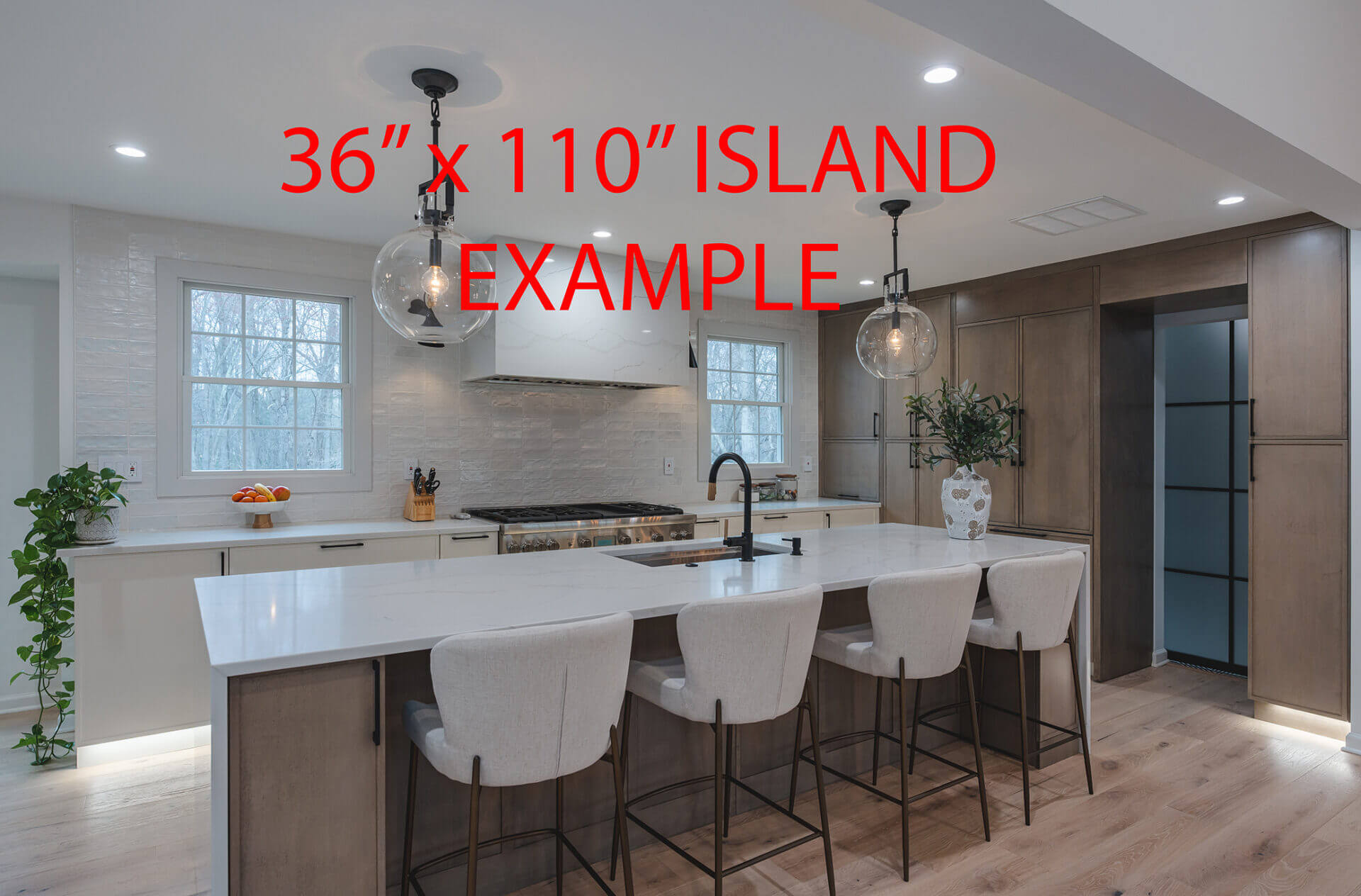
Image Source: bossdesigncenter.com
Key Considerations for Kitchen Island Width
Several factors come into play when determining the optimal width for your kitchen island. These aren’t rigid rules, but rather guidelines to help you achieve the best balance for your specific needs.
Kitchen Layout and Size
The overall dimensions of your kitchen are the most significant determinant of how wide your island can be. A large, open-plan kitchen can accommodate a wider island without feeling cluttered, whereas a smaller kitchen will require a more scaled-down approach.
- Spacious Kitchens: In larger kitchens, you have more flexibility. A wider island can provide ample counter space for prep work, serving, and even a breakfast bar. It can also act as a more substantial focal point.
- Compact Kitchens: For smaller kitchens, a narrower island is often necessary. Even a modest width can offer significant benefits in terms of workspace and storage, without sacrificing essential circulation space. The goal here is functionality without obstruction.
Intended Use of the Island
How you plan to use your kitchen island will heavily influence its ideal width.
- Prep Work: If your island will be your primary food preparation area, you’ll need sufficient width to comfortably chop vegetables, roll out dough, and plate meals. Wider surfaces offer more room to spread out your ingredients and tools.
- Seating: If you envision your island as a place for casual dining or as a breakfast bar, you’ll need to factor in the space required for chairs and comfortable seating. This often means a wider island or a specific design that accommodates overhang.
- Storage: Islands can house a wealth of storage, from drawers and cabinets to wine racks and open shelving. The width of the island will dictate how much storage you can incorporate and the types of units you can use.
- Appliance Integration: Will your island include a sink, cooktop, or dishwasher? These appliances often require a certain minimum depth and width to function safely and efficiently, and this will impact the overall island dimensions.
Workflow and Circulation
A kitchen island should enhance, not hinder, your movement within the kitchen. Adequate clearance around the island is paramount for a smooth workflow.
- Passageways: Ensure there are clear pathways for you and others to move around the island easily, especially when the dishwasher or oven doors are open.
- Ergonomics: Consider how you’ll move between different work zones (e.g., from the refrigerator to the island for prep, then to the stove). The island’s placement and width should facilitate this movement.
Standard Kitchen Island Dimensions
While every kitchen is unique, there are some generally accepted standard kitchen island size ranges that serve as excellent starting points.
Minimum and Maximum Widths
- Minimum Width: For a functional island that offers some workspace and storage, a minimum width of 24 inches is often cited. However, this is quite narrow and might feel restrictive for anything beyond minimal tasks.
- Practical Minimum for Prep: If you plan on doing any significant prep work on your island, a width of at least 30 inches is more practical.
- Common Widths: Many standard kitchen islands fall within the 36 to 42 inches range. This width provides a good balance of workspace, seating potential, and is manageable in most kitchen sizes.
- Wider Options: Islands can go wider, sometimes up to 48 inches or more, especially in very large kitchens or as statement pieces. However, widths much beyond 48 inches can start to feel overwhelming and may impact usability if not carefully integrated.
Minimum Kitchen Island Depth
The depth of your island is as important as its width. A deeper island offers more robust counter space and storage options.
- Standard Depth: A typical kitchen island depth is around 24 inches for the base cabinets. This aligns with standard counter depths and allows for efficient storage.
- With Seating: If you are incorporating seating, you will need to add 12 to 15 inches for knee space and the depth of the seating itself. This means an island intended for seating will likely need to be at least 36 inches deep (24 inches for cabinets + 12 inches for overhang).
- Countertop Overhang: Overhangs are common on islands, especially for seating. An overhang of 10 to 15 inches is generally recommended for comfortable seating. This means a 24-inch deep base cabinet could support a 36-inch deep island with a 12-inch overhang.
Ideal Kitchen Island Clearance: How Much Space Around Island?
This is perhaps the most critical aspect of kitchen island design. Insufficient clearance can turn a beautiful island into a major inconvenience.
Recommended Clearances
The ideal kitchen island clearance dictates how easily you can move around it.
- Minimum Recommended Clearance: Aim for a minimum of 36 inches of clearance on all sides of the island. This allows for comfortable passage and basic movement.
- Ideal Clearance for Work Zones: For areas where you’ll be opening appliances (like an oven door or dishwasher), or where multiple people will be working, 42 to 48 inches is a better recommendation. This provides ample space to move freely without bumping into anything.
- On the Seating Side: If you have seating, you’ll need enough space behind the chairs for people to sit down and get up easily. 48 inches from the edge of the island to the nearest wall or obstruction is ideal here.
Practical Clearance Scenarios
| Scenario | Recommended Clearance | Notes |
|---|---|---|
| Between island and primary work zones | 42-48 inches | Allows for efficient workflow and multiple users. |
| Between island and wall/cabinets | 36-42 inches | Sufficient for passage. |
| Behind seating at island | 48 inches+ | Crucial for comfortable ingress/egress to seating. |
| Between two parallel islands or work zones | 48 inches+ | Allows for easy passage and opening of appliance doors simultaneously. |
Factors Affecting Clearance Needs
- Traffic Flow: High-traffic kitchens will benefit from wider clearances.
- Appliance Doors: Consider how appliance doors swing open. A dishwasher next to an island requires more space than a wall cabinet.
- Number of Users: If multiple people regularly use the kitchen simultaneously, more generous clearances are essential.
Kitchen Island Width for Seating
When designing an island for seating, the width is directly tied to the comfort and practicality of that seating.
Seating Space Requirements
- Per Person: Each person seated at an island typically needs about 24 inches of linear space. This allows them to sit comfortably without feeling crowded.
- Countertop Depth for Seating: As mentioned, you need a minimum of 10 to 15 inches of countertop overhang for knee space.
Calculating Width for Seating
Let’s say you want to seat three people at your island:
- Linear Space Needed: 3 people * 24 inches/person = 72 inches
- Island Width (with 12-inch overhang): If your base cabinets are 24 inches deep, and you add a 12-inch overhang, the total depth is 36 inches. This 36-inch depth can comfortably accommodate a 24-inch seating overhang.
- Overall Island Width: To seat three people comfortably along one side, your island would need to be at least 72 inches wide (6 feet). This allows 24 inches of counter space per person.
- Including Cabinetry: If you have 24-inch deep cabinets on the working side, your island would be 24 inches (cabinets) + 12 inches (seating overhang) = 36 inches deep. The 72-inch width is for the counter surface, accommodating the three seats.
Example: A 72-inch wide by 36-inch deep island (with 24-inch cabinets and a 12-inch overhang) can seat three people comfortably.
Kitchen Island Width for Prep
If your primary goal for the island is food preparation, then counter space is king.
Maximizing Prep Surface
- Uninterrupted Space: The most efficient prep islands offer long, uninterrupted stretches of counter space. This allows you to spread out ingredients, use multiple cutting boards, and move tools around easily.
- Depth Matters: A wider island will naturally offer more prep space. Consider a depth of at least 30 inches for dedicated prep work, allowing for a decent work triangle on the counter itself.
- Appliance Considerations: If you plan to incorporate a sink or cooktop into your island, you’ll need to allocate space for these, reducing the continuous prep surface. A large, dedicated prep zone often works best without a sink or cooktop.
Width for Different Prep Needs
- Light Prep: For basic tasks like chopping herbs or assembling sandwiches, a narrower island (around 30-36 inches wide) can suffice.
- Serious Cooking: If you do a lot of baking or cooking, you’ll want a wider island, perhaps 48 inches or more, to accommodate multiple tasks and ingredients.
Small Kitchen Island Width
Limited space doesn’t mean you can’t enjoy the benefits of a kitchen island. The key is to choose a small kitchen island width that maximizes functionality without compromising on circulation.
Smart Solutions for Small Kitchens
- Narrow Islands: Opt for islands that are 30 to 36 inches wide. These can still offer valuable counter space and storage.
- Peninsula Design: If a freestanding island feels too restrictive, consider a peninsula. This attaches to a wall or cabinet run on one end, often requiring less clearance on that side.
- Mobile Islands/Carts: For ultimate flexibility, a mobile kitchen island or cart can be moved out of the way when not in use. These often have smaller footprints.
- Island with Wheels: Similar to mobile islands, islands on casters offer flexibility in placement.
Compromises in Small Kitchens
- Reduced Seating: You may have to forgo seating or opt for very minimal seating (e.g., one or two stools at the end).
- Less Storage: Storage capacity will likely be less than in a larger island.
- Minimal Overhang: Seating overhangs might be reduced to save space.
Large Kitchen Island Width
In spacious kitchens, you have the freedom to embrace a more substantial island, but it still needs to be proportionate to the room. A large kitchen island width can become a magnificent focal point and a highly functional workspace.
Benefits of Wider Islands
- Ample Workspace: Provides extensive surfaces for food preparation, buffet-style serving, and multiple people working simultaneously.
- Increased Storage: Can house more cabinets, drawers, wine coolers, and specialized appliance garages.
- Enhanced Seating: Accommodates more bar stools, creating a more robust social gathering spot.
- Statement Piece: A larger island can anchor the kitchen design and act as a central design element.
Balancing Size with Functionality
- Proportion: Ensure the island’s width is in proportion to the overall kitchen size. An island that is too dominant can make the space feel unbalanced.
- Traffic Flow: Always maintain adequate clearance. Even with a large island, you still need at least 36 inches, ideally 42-48 inches, of walkway space.
- Visual Weight: Consider the visual impact. A very wide island can feel imposing if it’s too dark or heavy in its materials.
Optimal Kitchen Island Dimensions: A Summary Table
To help visualize, here’s a table summarizing some common optimal kitchen island dimensions based on function. Remember these are guidelines, and your specific needs may dictate variations.
| Function | Recommended Width (inches) | Recommended Depth (inches) | Key Considerations |
|---|---|---|---|
| Basic Prep & Storage | 30 – 42 | 24 – 30 | Good for most kitchens, provides decent workspace. |
| Seating (2-3 people) | 60 – 72 | 36 – 42 (incl. overhang) | Requires 10-15″ overhang for comfortable seating. |
| Seating (4+ people) | 72+ | 36 – 48 (incl. overhang) | Needs ample space, potentially a two-tiered design for better seating access. |
| Heavy Prep/Baking | 48+ | 30 – 36 | Focus on continuous, uninterrupted counter space. |
| Island with Sink | 48 – 72 | 36+ | Needs space for sink, faucet, and potential dishwasher. |
| Island with Cooktop | 60+ | 36+ | Requires clearance around cooktop for safety and ventilation. |
| Small Kitchen Island | 24 – 36 | 18 – 24 | Prioritize mobility or peninsula design if space is very tight. |
Designing Your Island: Beyond Width
While width is a primary concern, don’t forget other aspects of island design that contribute to its overall success:
Depth and Height
- Standard Height: Most kitchen islands are the same height as your countertops, typically 36 inches. However, variations like baking stations at 30-33 inches or bar height at 42 inches are also possible.
- Depth Impact: As discussed, depth impacts storage and seating capacity. A deeper island (e.g., 30-36 inches) offers more versatility.
Storage Solutions
The width of your island directly influences the types of storage you can incorporate.
- Drawers: Offer easy access to pots, pans, and utensils.
- Cabinets: Ideal for larger items or appliances.
- Open Shelving: Can display cookbooks or decorative items but requires neatness.
- Specialty Storage: Wine racks, pull-out trash bins, or appliance garages can be integrated depending on width.
Material and Style
The materials you choose for your countertop and cabinetry will affect the visual weight and perceived size of the island.
- Light vs. Dark Colors: Lighter colors can make an island feel less imposing, which is beneficial in smaller kitchens or with wider islands.
- Countertop Thickness: Thicker countertops can add visual heft.
- Base Cabinet Style: Open shelving or glass-front cabinets can create a lighter feel than solid, dark wood cabinets.
Frequently Asked Questions (FAQ)
Q1: What is the minimum width for a kitchen island with seating?
A1: For comfortable seating, you generally need about 24 inches of linear space per person. So, to seat two people, you’d need at least a 48-inch wide island. For three people, aim for 72 inches.
Q2: Can I have a kitchen island that is only 24 inches wide?
A2: Yes, you can have a 24-inch wide island, but it will be quite narrow. It’s best suited for very small kitchens where functionality is paramount and it might serve more as a movable cart or a narrow work surface rather than a primary prep zone or seating area.
Q3: How much space around island is necessary for walkways?
A3: The minimum recommended clearance around a kitchen island for walkways is 36 inches. For better functionality and to accommodate appliance doors opening, 42 to 48 inches is ideal, especially in high-traffic areas or where multiple people work.
Q4: What is a standard kitchen island size?
A4: A standard kitchen island size typically ranges from 3 to 4 feet wide and 6 to 8 feet long. However, these are averages, and custom sizes are very common to fit specific kitchen layouts and needs.
Q5: Is a 36-inch wide kitchen island enough for prep work?
A5: A 36-inch wide island can be sufficient for basic prep work. However, if you do a lot of cooking, baking, or need to spread out many ingredients and tools, a wider island (48 inches or more) will provide a more comfortable and efficient workspace.
Q6: How wide should a kitchen island be if I want to put a sink in it?
A6: If you’re installing a sink, you’ll typically need at least a 48-inch wide island to accommodate the sink basin, faucet, and necessary countertop space around it. Larger sinks or more workspace around the sink might require an island of 60 inches or wider.
Q7: What is the minimum kitchen island depth I should consider?
A7: The minimum kitchen island depth for base cabinets is generally 24 inches. If you plan to incorporate seating with an overhang, you’ll need to add 10-15 inches for knee space, making the total depth 34-39 inches.
By carefully considering these kitchen island width guidelines, clearances, and intended uses, you can select or design an island that perfectly complements your kitchen, enhancing both its beauty and its functionality for years to come.