
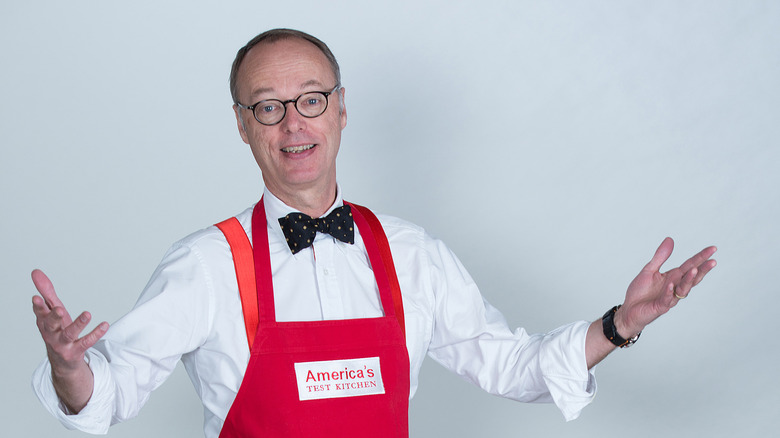
Image Source: www.thedailymeal.com
The Truth: Why Did Christopher Kimball Leave Test Kitchen?
The question of why did Christopher Kimball leave Test Kitchen has been a hot topic in the culinary world since his departure. In short, Christopher Kimball left America’s Test Kitchen (ATK) due to disagreements over the company’s direction and his desire for greater creative control and expansion, ultimately leading to the founding of his new venture, Milk Street.
Christopher Kimball’s exit from the beloved culinary institution he helped build, America’s Test Kitchen, sent ripples through the food media landscape. For years, he was the face and voice of ATK, guiding viewers and readers through meticulous recipe testing and culinary science on his popular Christopher Kimball cooking show and through the pages of Cook’s Illustrated and Cook’s Country. His departure wasn’t a sudden event but the culmination of growing tensions and diverging visions for the future of the brand. This deep dive aims to shed light on the complex factors behind the Christopher Kimball departure, exploring the disagreements, his aspirations, and the subsequent birth of Milk Street.
The Foundation of America’s Test Kitchen
To comprehend the reasons behind Kimball’s exit, it’s essential to first appreciate the remarkable success of America’s Test Kitchen. Founded in 1980 by Christopher Kimball and his business partner, Jack Bishop, ATK revolutionized the way people approached home cooking. Their core philosophy was simple yet powerful: test recipes exhaustively until they were foolproof and explained the “why” behind cooking techniques. This scientific, data-driven approach, coupled with Kimball’s distinctive, sometimes quirky, on-screen persona, resonated with millions of home cooks seeking reliable guidance.
- Key Milestones of ATK:
- Launch of Cook’s Illustrated magazine (1980s)
- Development of the famous “test kitchen” methodology.
- Creation of the television show, “America’s Test Kitchen” (early 2000s).
- Expansion to include Cook’s Country and various online platforms.
- Development of a significant following and brand recognition.
Kimball’s role was central to this success. He was not just an on-air personality; he was the visionary, the chief creative force, and the primary public face. His passion for culinary accuracy and his ability to demystify complex cooking processes made him a trusted authority.
Seeds of Discontent: Divergent Paths
While ATK enjoyed widespread acclaim, the seeds of Christopher Kimball conflict ATK began to sprout. As the organization grew, so did its corporate structure and strategic planning. This evolution, while necessary for a burgeoning media company, began to chafe with Kimball’s desire for unbridled creative freedom and his evolving culinary interests.
One of the primary areas of divergence was the pace of innovation and expansion. Kimball, a natural innovator and a restless culinary explorer, felt that ATK’s established processes and corporate decision-making could slow down the introduction of new ideas and content. He was eager to explore a wider range of global cuisines, different cooking philosophies, and more experimental approaches, which might not always fit neatly within the established ATK framework.
Furthermore, the financial aspects and business decisions surrounding ATK began to create friction. As the company matured, external investors and a more formalized board of directors became involved. While this is standard for many successful businesses, it meant that decisions were no longer solely driven by Kimball’s personal vision. This shift in control and the compromises inherent in corporate governance likely became a significant factor in his growing dissatisfaction.
The Public Announcement and Immediate Aftermath
In September 2016, the news broke that Christopher Kimball was leaving America’s Test Kitchen. The announcement was made through a joint press release, aiming to present a united front, but the underlying reasons were clear to many observers. The official statements spoke of “divergent visions for the future,” a diplomatic phrasing that hinted at deeper disagreements.
The immediate aftermath saw a flurry of speculation. Fans were shocked and saddened by the departure of the familiar face of ATK. The question on everyone’s mind was: what’s next for Christopher Kimball? Would he disappear from the culinary scene, or would he resurface elsewhere?
The Birth of Milk Street: A New Culinary Frontier
Kimball didn’t stay out of the spotlight for long. Within months of his departure from ATK, he announced his new venture: Christopher Kimball Milk Street. This new endeavor was not just a rebranding; it represented a significant expansion and a fresh philosophical approach to food. Milk Street was conceived as a multi-platform media company, encompassing a television show, radio program, magazines, cookbooks, and cooking classes, all centered around a different culinary perspective.
The Milk Street concept was deeply rooted in Kimball’s evolving interests. He aimed to explore global flavors, home cooking from around the world, and a more intuitive, less rigidly scientific approach to recipe development. This contrasted with the rigorous, benchmark-driven testing that defined ATK. Milk Street celebrated the diversity of global culinary traditions, often focusing on techniques and ingredients that were accessible to home cooks but offered a new lens through which to view familiar dishes.
- Milk Street’s Core Pillars:
- Global Flavors: Emphasis on international cuisines and their adaptation for home cooks.
- Intuitive Cooking: A move towards less prescriptive recipes, encouraging experimentation.
- Ingredient Focus: Highlighting the importance of quality ingredients and their impact on flavor.
- Storytelling: Connecting recipes to the cultures and people who created them.
This new direction was clearly a significant departure from the ATK model, reflecting Kimball’s personal growth and his desire to push culinary boundaries in new ways. His association with Christopher Kimball Bon Appétit in the past, though brief and early in his career, also signaled his willingness to engage with broader food media trends.
Analyzing the “Why”: Deeper Motivations
Fathoming the exact “why” behind Christopher Kimball’s departure requires looking beyond surface-level explanations. Several key factors likely converged:
1. Creative Control and Vision Alignment
At ATK, while Kimball was instrumental in establishing its identity, the organization had grown into a larger entity with multiple stakeholders and a more formalized decision-making process. Kimball’s entrepreneurial spirit and his desire to be at the forefront of culinary innovation likely felt constrained by this structure. Milk Street offered him the opportunity to shape every aspect of the brand, from recipe development to editorial direction, without the compromises often necessary in a larger organization.
2. Evolving Culinary Philosophy
Kimball’s own culinary perspective had also evolved over the years. While he remained committed to reliable recipes, he became increasingly fascinated by the vibrancy and adaptability of global cuisines. He saw an opportunity to introduce American home cooks to a wider world of flavors and techniques that were often overlooked by more traditional culinary institutions. Milk Street was the perfect vehicle to express this evolving passion. He wanted to explore cooking that was less about precision and more about flavor, less about “correctness” and more about creativity.
3. Business and Financial Independence
Building and owning his own venture provided Kimball with greater financial independence and the ability to directly benefit from his creative output. While ATK was a successful company, the financial arrangements and ownership structures of such organizations can be complex. Starting Milk Street allowed him to establish a new business model where he had greater control over the financial direction and a more direct connection to the success of his endeavors. This also meant he could reinvest profits directly into the growth and vision of Milk Street.
4. A Desire for a Fresh Start
Sometimes, a significant change is simply about a desire for a fresh start and a new challenge. After decades at the helm of ATK, Kimball might have felt a need to break free from the established routines and expectations. Milk Street represented a chance to build something new from the ground up, to redefine his personal brand, and to engage with the culinary world on his own terms. This new chapter allowed him to shed the past and forge a distinct identity separate from the ATK legacy.
The Contrast: ATK vs. Milk Street
The differences between America’s Test Kitchen and Milk Street are not just stylistic; they reflect fundamentally different approaches to food and media.
| Feature | America’s Test Kitchen | Milk Street |
|---|---|---|
| Core Philosophy | Rigorous, scientific testing; foolproof recipes | Global flavors; intuitive cooking; cultural context |
| Recipe Style | Precise measurements, detailed instructions | Emphasis on adaptable techniques, ingredient importance |
| Cuisine Focus | Primarily American and European comfort food | Diverse global cuisines, often with a focus on origins |
| On-Screen Persona | Analytical, authoritative, slightly formal | Enthusiastic, curious, conversational |
| Media Output | Magazines, TV shows, cookbooks, online content | TV shows, radio, magazines, cookbooks, classes, tours |
| Target Audience | Home cooks seeking reliability and accuracy | Home cooks seeking inspiration and global discovery |
This comparison highlights how Kimball’s departure was not about abandoning his core principles but about expanding and diversifying his culinary exploration. His work with Christopher Kimball America’s Test Kitchen laid a strong foundation, and Milk Street is the natural evolution of his lifelong passion for food.
The Impact on the Culinary Landscape
Christopher Kimball’s departure from ATK and the subsequent launch of Milk Street had a significant impact on the culinary media landscape.
-
For ATK: The organization continued its success, adapting to Kimball’s absence and reinforcing its brand identity. New faces and voices emerged, carrying forward the rigorous testing methodology. The “America’s Test Kitchen” brand remained strong, a testament to the enduring appeal of its core mission.
-
For Milk Street: The new venture quickly gained traction, appealing to a growing audience interested in global cuisines and a more adventurous approach to home cooking. Milk Street’s unique perspective and Kimball’s distinct voice carved out a new niche in the crowded food media space. It demonstrated that there was a significant appetite for culinary content that bridged the gap between meticulous testing and genuine cultural exploration. The immediate success of Milk Street, including its appearance in publications like Boston Common, signaled its growing influence.
Frequently Asked Questions (FAQ)
Q1: Was there a single, major event that caused Christopher Kimball to leave ATK?
No, the Christopher Kimball departure was not the result of a single event. It was a gradual process stemming from a divergence in visions for the company’s future, differing opinions on creative direction, and Kimball’s desire for greater autonomy and expansion.
Q2: Did Christopher Kimball have creative disagreements with ATK’s leadership?
Yes, it is widely reported that creative differences and disagreements over the company’s strategic direction were primary factors in Christopher Kimball reasons for leaving. He sought more freedom to explore global cuisines and new culinary ideas.
Q3: What is Milk Street and how is it different from ATK?
Milk Street is Christopher Kimball’s new media company, focused on exploring global cuisines, intuitive cooking, and the cultural context of food. It contrasts with ATK’s more traditional, scientific approach to recipe testing and American home cooking.
Q4: Did Christopher Kimball leave because of a conflict with Jack Bishop or other ATK employees?
While specific details of interpersonal dynamics are rarely public, the primary reasons cited for the Christopher Kimball conflict ATK revolved around business and creative strategy rather than solely personal conflicts.
Q5: Will Christopher Kimball still be associated with ATK in any way?
No, following his departure, Christopher Kimball has no ongoing professional association with America’s Test Kitchen. He is solely focused on his new venture, Milk Street.
Q6: How did Christopher Kimball get his start in food media?
Christopher Kimball’s career began with the founding of Cook’s Illustrated magazine in the late 1970s, which later evolved into America’s Test Kitchen. His early experiences included a brief stint at Christopher Kimball Bon Appétit early in his career.
Q7: Is Christopher Kimball’s cooking show still on the air?
Yes, Christopher Kimball has a new Christopher Kimball cooking show as part of his Milk Street venture, titled “Christopher Kimball’s Milk Street.”
Conclusion: A New Chapter in Culinary Storytelling
The Christopher Kimball departure from America’s Test Kitchen marked the end of an era for many food enthusiasts. However, it also signaled the beginning of an exciting new chapter for Kimball himself and for the culinary media landscape. His journey from the meticulous testing of ATK to the global exploration of Milk Street showcases a career defined by relentless curiosity and a deep passion for food. The reasons for his leaving are rooted in a desire for creative freedom, a different culinary perspective, and the entrepreneurial spirit that has driven him throughout his career. Christopher Kimball’s story is a compelling example of how evolution and personal vision can lead to the creation of new, impactful ventures that continue to inspire home cooks around the world.