
Your kitchen breaker keeps tripping primarily due to an overload of electrical demand on the circuit or a short circuit. Resetting a kitchen breaker is straightforward: locate the breaker box, identify the tripped breaker (it will be in the “off” or middle position), and push it firmly to the “on” position. If it immediately trips again, there’s an underlying issue that needs attention.
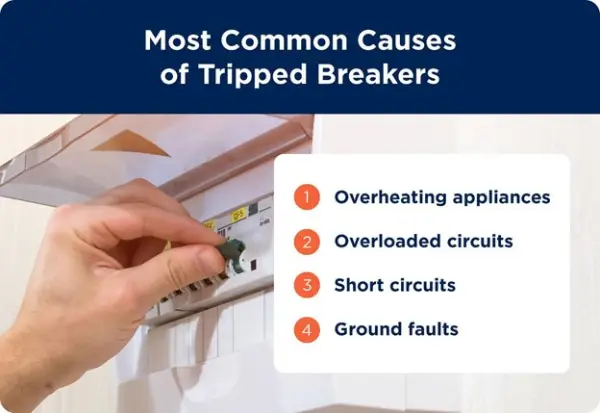
Image Source: www.mrappliance.com
Why Does My Kitchen Breaker Keep Tripping? Troubleshooting Common Causes & Solutions
The hum of a refrigerator, the sizzle of a frying pan, the whir of a blender – these are familiar sounds of a busy kitchen. But what happens when the symphony of kitchen appliances is interrupted by the jarring click of a tripped breaker? Discovering why is my kitchen breaker tripping can be frustrating, but with a systematic approach, you can often pinpoint and resolve the issue. A circuit breaker keeps tripping is a common household problem, and it’s usually a sign that your electrical system is trying to protect itself from damage.
Deciphering the Role of a Circuit Breaker
Before diving into the causes, it’s helpful to grasp what a circuit breaker does. Think of it as a safety valve for your home’s electricity. Each breaker is designed to protect a specific circuit, typically a group of outlets and lights in a particular area. When too much electricity flows through a circuit, which can happen from too many appliances running at once or a fault within an appliance, the breaker trips. This means it interrupts the flow of electricity, preventing potential hazards like overheating wires, fires, or damage to your appliances.
Fathoming Common Culprits: When Your Kitchen Breaker Won’t Stay On
Several factors can lead to a persistently tripping kitchen breaker. Identifying the correct cause is key to a lasting solution.
1. Kitchen Outlet Overload: The Most Frequent Offender
This is arguably the most common reason your kitchen breaker might be tripping. Modern kitchens are packed with appliances, from microwaves and toasters to coffee makers and blenders, all vying for power. Each appliance draws a certain amount of electricity (measured in amps or watts). When the total demand from all the devices plugged into a single circuit exceeds the breaker’s capacity, it trips.
- How it Happens: Imagine a single electrical pathway designed to handle a certain amount of traffic. If you try to send too many cars down that path simultaneously, it gets congested and has to shut down to prevent a crash. Your kitchen circuit works similarly.
- Identifying the Load: Different appliances have different power needs:
- High-Wattage Appliances: Microwaves, toasters, electric kettles, coffee makers, and toasters are notorious power-hungry devices. Using several of these at the same time on the same circuit is a prime candidate for tripping the breaker.
- “Phantom Loads”: Even appliances that appear to be off might still draw a small amount of power. While usually minimal, in a heavily loaded circuit, these can contribute.
- Solutions for Kitchen Outlet Overload:
- Distribute Appliance Usage: Avoid running multiple high-wattage appliances simultaneously on the same circuit. For example, don’t use the toaster and microwave at the exact same time if they’re on the same circuit.
- Identify Circuit Load: If you’re unsure which outlets are on which circuit, you can test this. Plug in a few appliances, one at a time, and see which breaker trips. Make a note of what’s on each circuit.
- Consider Dedicated Circuits: If your kitchen consistently experiences overloading, it might be time to consult an electrician about installing dedicated circuits for high-demand appliances like your refrigerator, dishwasher, or microwave. This separates their power needs from general-purpose outlets.
2. Kitchen Appliance Power Surge: A Sudden Demand
Sometimes, it’s not just about continuous use but the initial kitchen appliance power surge. When an appliance, especially one with a motor or heating element, first starts up, it draws a significantly higher amount of electricity for a brief moment. If the circuit is already near its limit, this initial surge can be enough to trip the breaker.
- How it Happens: Think of it like starting a car. It requires more power to crank the engine than it does to keep it running. Similarly, appliances need a burst of power to get going.
- Common Culprits: Refrigerators, freezers, blenders, blenders, and washing machines are known for their startup surges.
- Solutions:
- Stagger Appliance Starts: If possible, try to turn on appliances one after another rather than all at once.
- Check Appliance Condition: A malfunctioning appliance might have an increased startup surge. If you suspect a particular appliance is causing the problem, try running it on a different circuit (if available) to see if the issue persists. If it does, the appliance itself might be the problem.
3. Faulty Kitchen Outlet: A Hidden Danger
A faulty kitchen outlet can be a direct cause of tripping breakers. This can occur for several reasons:
- Worn-out Receptacles: Over time, the internal contacts within an outlet can become loose or corroded, leading to poor connections. This can cause arcing, resistance, and eventually trip the breaker.
- Loose Wiring: The wires connecting to the outlet might have become loose. This can create intermittent contact, leading to surges and potential shorts.
- Damaged Outlets: If an outlet has been physically damaged, cracked, or is discolored from overheating, it’s a clear sign of a problem.
- Solutions:
- Visual Inspection: Carefully examine your kitchen outlets. Look for any signs of discoloration, scorch marks, or physical damage.
- Test Outlets: If you suspect a particular outlet, you can use an outlet tester (available at hardware stores) to check its functionality and wiring.
- Replace Faulty Outlets: If an outlet is deemed faulty, it’s crucial to replace it. This is a relatively simple DIY task for those comfortable with basic electrical work, but always turn off the power at the breaker before starting and ensure you use the correct replacement parts. If you’re unsure, hire a qualified electrician.
4. Kitchen Circuit Short: A Direct Path for Electricity
A kitchen circuit short is a more serious issue. It occurs when electricity finds an unintended path to ground or between wires. This can happen due to:
- Damaged Wire Insulation: If the protective coating on electrical wires becomes damaged (due to age, pests, or physical abrasion), the bare wires can touch each other or metal components, creating a short circuit.
- Foreign Objects: A nail, screw, or even a stray piece of metal accidentally coming into contact with exposed wiring within a wall can cause a short.
- Faulty Appliances: Internal wiring issues within an appliance can also lead to shorts that affect the entire circuit.
- Solutions:
- Troubleshoot Appliances: Unplug all appliances from the affected circuit. If the breaker stays on, plug them back in one by one until the breaker trips. The last appliance plugged in is likely the culprit.
- Inspect Cords: Check the power cords of your appliances for any signs of damage, fraying, or exposed wires.
- Professional Diagnosis: Shorts within the walls are more difficult to diagnose and require the expertise of an electrician. They have specialized tools to locate the fault.
5. Kitchen GFCI Breaker Tripping: Sensitive Safety Measures
Many kitchens, especially those near water sources like sinks, are equipped with kitchen GFCI breaker tripping (Ground Fault Circuit Interrupter). These are designed to protect against electrical shock. They trip much faster and at lower levels than standard breakers.
- What Causes GFCI Tripping?
- Ground Fault: This happens when electricity escapes its intended path and flows to the ground. This can occur through water, a faulty appliance, or even a person.
- Overload: While primarily for ground faults, GFCIs can also trip due to overloads, though less commonly than standard breakers.
- Moisture: Even a small amount of moisture in an outlet or switch can cause a GFCI to trip.
- Faulty GFCI Outlet: Like regular outlets, GFCI outlets can also fail.
- Solutions:
- Resetting: A GFCI outlet has “Test” and “Reset” buttons. Press the “Reset” button firmly. If it trips again, there’s a fault.
- Check for Water: Ensure the outlet and surrounding area are completely dry.
- Unplug Appliances: Unplug all appliances connected to the GFCI outlet and any “downstream” outlets it protects. Reset the GFCI. If it holds, plug in appliances one by one to find the faulty one.
- Test Other Outlets: GFCI outlets often protect other standard outlets on the same circuit. If one GFCI trips, check the other outlets it may be protecting.
- Replace GFCI: If the GFCI continues to trip even with nothing plugged in and the area is dry, the GFCI outlet itself may be faulty and need replacement.
6. Loose Wiring Connections: A Subtle but Dangerous Fault
Beyond the outlet itself, loose wiring can exist at various points in the circuit, including:
- At the Breaker Panel: Wires can become loose where they connect to the breaker in the panel.
- In Junction Boxes: If electrical connections were made in a junction box within the walls, these connections can loosen over time.
-
At Light Fixtures or Switches: Connections at other points on the circuit can also be a source of loose wiring.
-
Symptoms: Intermittent power outages, flickering lights, or the breaker tripping without a clear overload.
- Solutions: This is a task best left to a qualified electrician. They can safely access the breaker panel and junction boxes to check and tighten all connections.
7. Faulty Breaker: The Component Itself
While less common, the circuit breaker itself can become faulty. Over time, breakers can wear out and fail to function correctly, either tripping too easily or not tripping when they should.
- How to Tell: If you’ve ruled out all other common causes, and the breaker continues to trip even when no significant load is present, the breaker itself might be the issue.
- Solution: A faulty breaker needs to be replaced by a qualified electrician. This involves working within the breaker panel, which requires specific safety knowledge.
Troubleshooting Kitchen Breaker Issues: A Step-by-Step Approach
When your kitchen breaker trips, follow these steps to systematically troubleshooting kitchen breaker issues:
- Identify the Tripped Breaker: Go to your main electrical panel. The tripped breaker will be in the “off” or middle position.
- How to Reset Kitchen Breaker: Firmly push the breaker to the “off” position first, then flip it back to the “on” position.
- Observe: If it stays on, the issue might have been a temporary overload. If it trips again immediately, proceed to the next steps.
- Unplug Everything: Turn off or unplug all appliances and devices connected to the affected circuit.
- Reset the Breaker Again: Try resetting the breaker with everything unplugged.
- Plug Back In Gradually: If the breaker stays on, plug in your appliances one by one. Wait a few moments after plugging in each appliance.
- Identify the Culprit: The appliance that causes the breaker to trip when plugged in is likely the source of the problem, or it’s highlighting an overloaded kitchen circuit.
- Check for Appliance Issues: Inspect the appliance for damaged cords or obvious faults. Try running it on a different circuit if possible.
- Examine Outlets: Visually inspect the outlets on the circuit for any signs of damage.
- Consider GFCI: If it’s a GFCI breaker or outlet that’s tripping, ensure the area is dry and test the GFCI’s function.
- Seek Professional Help: If you cannot identify the cause, the breaker continues to trip, or you suspect internal wiring issues, it’s time to call a qualified electrician.
Table: Common Kitchen Appliances and Their Typical Wattage/Amperage
| Appliance | Typical Wattage (Watts) | Typical Amperage (Amps) | Notes |
|---|---|---|---|
| Refrigerator | 150-200 (running) | 1.5 – 2.0 | Higher surge on startup |
| Microwave | 1000-1500 | 10 – 12.5 | High power draw when in use |
| Toaster | 800-1500 | 7 – 12.5 | Significant draw, especially for two slots |
| Coffee Maker | 700-1200 | 6 – 10 | Heating element is a major draw |
| Blender | 300-800 | 2.5 – 7 | Startup surge can be high |
| Electric Kettle | 1500-2000 | 12.5 – 17 | Very high draw, often trips breakers |
| Dishwasher | 1200-1500 | 10 – 12.5 | Heating element for drying uses power |
| Blender | 300-700 | 2.5 – 6 | Can have a startup surge |
| Toaster Oven | 1000-1500 | 8 – 12.5 | Similar to a toaster |
| Electric Skillet | 1200-1500 | 10 – 12.5 | Constant heating element draw |
Note: Amperage is calculated by dividing Wattage by Voltage (e.g., 1500 Watts / 120 Volts = 12.5 Amps). Standard kitchen circuits are often 15 or 20 amps.
When to Call an Electrician
While some troubleshooting can be done by homeowners, certain situations absolutely require professional help:
- Persistent Tripping: If the breaker continues to trip after you’ve followed all troubleshooting steps.
- Burning Smells: Any indication of burning from an outlet, switch, or the breaker panel.
- Sparks or Arcing: If you see sparks when plugging in an appliance or a breaker trips with a visible spark.
- Damaged Wiring: If you suspect damaged wiring within the walls.
- Unfamiliarity or Discomfort: If you are not comfortable working with electrical systems, it is always safest to call a professional.
Frequently Asked Questions (FAQ)
Q1: How often should a kitchen breaker trip?
A kitchen breaker should ideally never trip under normal use. If it’s tripping regularly, it indicates an issue that needs to be addressed.
Q2: Can a refrigerator cause my kitchen breaker to trip?
Yes, a refrigerator can cause a breaker to trip, especially if it’s on a circuit with other appliances, or if there’s a problem with the refrigerator’s motor or compressor causing an excessive power surge or fault.
Q3: Is it safe to keep resetting my kitchen breaker?
No, it is not safe to repeatedly reset a breaker that keeps tripping. This can indicate a serious underlying problem that could lead to electrical fires or damage to your home’s electrical system or appliances.
Q4: What’s the difference between a tripped breaker and a blown fuse?
Both serve the same purpose – to protect a circuit from overload. However, a circuit breaker is a switch that can be reset, while a fuse contains a wire that melts and must be replaced when it blows. Older homes might still use fuse boxes.
Q5: Can a coffee maker trip my kitchen breaker?
Yes, especially if it’s a high-wattage model or if you’re using it at the same time as other power-hungry appliances on the same circuit.
By systematically approaching the problem and being aware of the common causes, you can effectively troubleshoot why your kitchen breaker keeps tripping and ensure your kitchen remains a safe and functional space. Remember, when in doubt, always prioritize safety and call a qualified electrician.