
What is the ideal width for a kitchen island? The ideal width for a kitchen island is typically between 24 and 42 inches, but this can vary significantly based on your kitchen’s layout, intended use, and the overall space available. A common standard kitchen island width hovers around 36 inches, offering a good balance for most kitchens.
Choosing the right size for your kitchen island is crucial. It’s not just about aesthetics; it’s about functionality, flow, and safety. An island that’s too wide can make your kitchen feel cramped and hinder movement. Conversely, an island that’s too narrow might not offer enough workspace or storage. This kitchen island width guide will help you navigate the complexities and find the perfect fit.
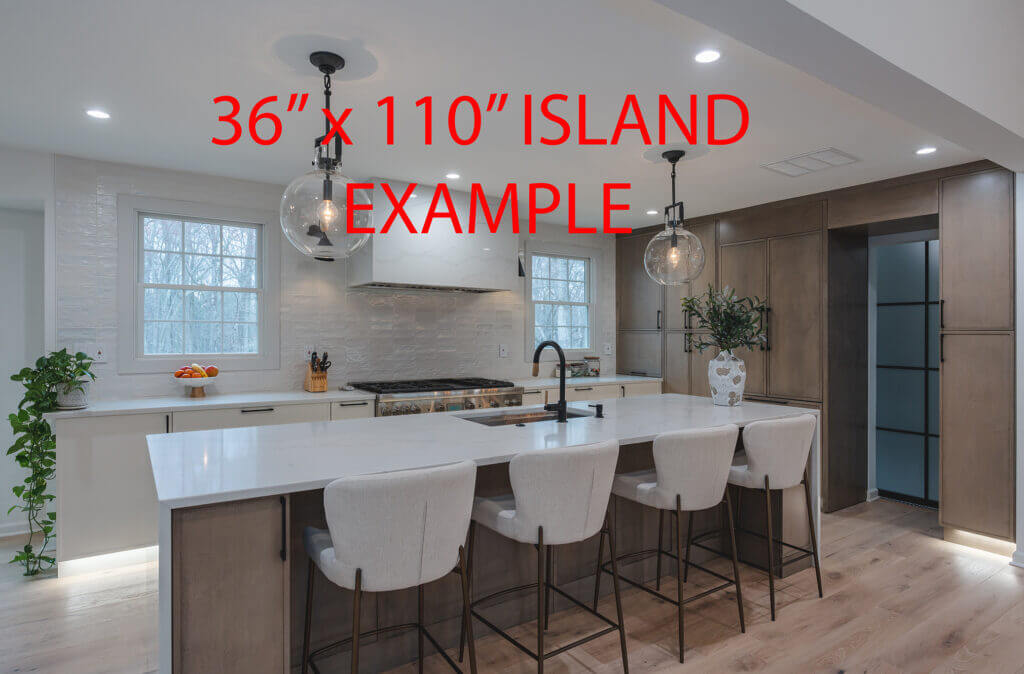
Image Source: bossdesigncenter.com
Fathoming Your Kitchen Island Dimensions
When considering how wide your kitchen island should be, it’s important to think about more than just the island itself. You need to look at your entire kitchen. The goal is to create a workspace that is both beautiful and practical. We’ll explore the key factors that influence kitchen island dimensions to ensure your island enhances, rather than detracts from, your kitchen’s usability.
The Crucial Role of Kitchen Island Clearance
Before we dive into specific widths, let’s talk about the most important element: clearance. This is the space you leave around the island for people to walk, open cabinets, and use appliances comfortably. Without enough kitchen island clearance, even the most stylish island can become a major annoyance.
- Working Aisles: You need at least 36 inches of clearance on all sides where someone will be actively working or walking. This includes the space between the island and countertops, appliances, or walls.
- Seating Areas: If you plan to have seating at your island, you’ll need more space. Allow at least 48 inches of clearance behind seated guests so others can pass by comfortably. This also gives people enough room to pull out chairs without bumping into anything.
- Appliance Doors: Don’t forget to account for appliance doors. Ensure there’s enough space for refrigerator doors, oven doors, and dishwasher doors to open fully without hitting the island.
Think of these clearance zones as the pathways in your kitchen. You wouldn’t want a traffic jam in your cooking space, so give your island the breathing room it needs.
Standard Kitchen Island Widths: What’s Common?
While there’s no single “right” answer, certain widths are more common because they work well in many kitchens. These are often dictated by what’s practical and what fits with standard cabinetry and appliance sizes.
- 36 Inches (3 Feet): This is often considered the standard kitchen island width. It provides a decent amount of counter space for prep work and can often accommodate a shallow overhang for casual seating. It’s a good all-rounder for medium-sized kitchens.
- 42 Inches (3.5 Feet): Moving up in width, 42 inches gives you more generous counter space and can comfortably support a deeper seating overhang. This width is excellent for kitchens where the island is a central hub for cooking and gathering.
These standard widths are a good starting point, but they are not rigid rules. Your specific needs will dictate what’s best.
Minimum Kitchen Island Width: When Space is Tight
For smaller kitchens, the question often becomes, “What is the minimum kitchen island width I can get away with?” It’s vital to maintain a minimum clearance for functionality and safety, even with a smaller island.
- Minimum Walkway: Never go below 36 inches for primary walkways around the island. This means the island itself, plus the clearance, needs to fit within your kitchen’s overall dimensions.
- Small Kitchen Island Width: In very compact spaces, you might consider islands as narrow as 18 to 24 inches wide. These are often more like a movable cart or a narrow prep station. They offer some counter space and storage without overwhelming the room. However, these are usually for very specific, limited uses and not for substantial prep or seating.
The key here is to prioritize essential clearances. A slightly smaller island with adequate clearance is far more functional than a wider island that makes your kitchen feel like a maze.
Large Kitchen Island Width: For Spacious Homes
If you have a generously sized kitchen, you can explore larger island options. These become the heart of the home, offering ample workspace, extensive storage, and significant seating areas.
- 48 Inches (4 Feet) and Wider: For larger kitchens, islands can easily reach 48 inches in width and even go up to 60 inches or more. These large kitchen island widths are often designed with multiple functions in mind, such as:
- Integrated Appliances: Think cooktops, sinks, or dishwashers.
- Extensive Seating: Accommodating multiple people comfortably.
- Dual-Level Countertops: Creating distinct zones for cooking and socializing.
- Ample Storage: Incorporating deep drawers, pull-out shelves, and wine racks.
When opting for a large island, ensure it doesn’t disrupt the kitchen’s natural workflow or make the space feel unbalanced. It should still allow for comfortable movement and access to other areas.
Counter Depth Island: A Stylish Compromise
A counter depth island refers to an island that matches the depth of your standard kitchen cabinetry, typically around 24 inches. This design choice can be excellent for several reasons:
- Space Saving: They are ideal for smaller kitchens or galley-style kitchens where you need to maximize walkway space.
- Seamless Look: A counter depth island often blends more seamlessly with the surrounding cabinetry, creating a cohesive and less bulky appearance.
- Reduced Obstruction: They are less likely to impede traffic flow compared to deeper islands.
While a counter depth island offers less deep workspace on the island itself, it can still provide valuable prep surface and storage, especially if it includes clever drawer and cabinet configurations.
Deciphering Your Kitchen Island Size Chart
To help visualize how different widths might fit, consider this conceptual kitchen island size chart. Remember to always factor in your required clearance spaces.
| Island Width | Typical Use | Clearance Needed (Min) | Best For |
|---|---|---|---|
| 18-24 inches | Small prep station, movable cart, walkway accent | 36 inches | Very small kitchens, galley kitchens where space is extremely limited. Offers minimal workspace but can add a bit of function. |
| 24-30 inches | Narrow island, seating for 1-2 (shallow overhang) | 36-42 inches | Small to medium kitchens, kitchens where a full-size island isn’t feasible but some central workspace is desired. Often counter depth. |
| 30-36 inches | General prep, casual seating for 2 | 42 inches | Medium kitchens, good balance of workspace and flow. Can accommodate a small sink or cooktop. |
| 36-42 inches | Primary prep area, seating for 2-3, multi-purpose | 42-48 inches | Medium to large kitchens. A very popular and versatile size that allows for good workspace, storage, and comfortable seating. |
| 42-48 inches | Ample prep, seating for 3-4, potential for sink/cooktop | 48 inches | Large kitchens, kitchens that serve as a central gathering space. Offers significant counter area and comfortable seating. |
| 48+ inches | Extensive prep, multiple seating, appliance hub | 48+ inches | Very large kitchens, open-plan living areas. Can accommodate major appliances, elaborate storage, and extensive seating arrangements. |
This kitchen island width guide is a starting point. Your kitchen’s layout and your lifestyle are the ultimate deciding factors.
Interpreting Your Kitchen’s Needs
The “ideal” width is deeply personal and tied to how you use your kitchen. Let’s explore the different scenarios and needs that influence the ideal kitchen island width.
How Will You Use the Island?
The primary function of your island will heavily influence its required width.
- Prep Space: If your island is mainly for chopping vegetables, rolling out dough, and general food preparation, you’ll want a generous width to spread out. A width of 36 to 48 inches is a good starting point. Consider a single, continuous counter surface for maximum efficiency.
- Seating: If you envision your island as a breakfast bar or casual dining spot, you’ll need to factor in seating. Each person typically needs about 24 inches of linear space at the counter. If you want to accommodate three people comfortably, you’ll need at least 72 inches (6 feet) of island length. For width, ensure you have enough depth for an overhang. A 12-inch overhang is standard for stool seating, meaning you might need an island that’s at least 36 inches wide to accommodate the seating depth and the island structure itself.
- Appliance Hub: If you plan to install a sink, cooktop, or dishwasher, the island width needs to accommodate these appliances plus the necessary clearances around them. For a sink, you’ll typically need an island at least 36 inches wide for a standard sink, and potentially wider for larger sinks or if you want a small prep area on either side. For a cooktop, you’ll need even more space to allow for safe operation and ventilation.
Your Kitchen Layout: The Spatial Puzzle
The shape and size of your kitchen play a huge role in determining the maximum possible island width.
- Rectangular Kitchens: These often have clear pathways and can accommodate longer, narrower islands or more substantial, wider ones depending on the length of the room.
- Square Kitchens: Square kitchens can be more flexible. You might opt for a square island or a rectangular one that runs parallel to a wall, as long as you maintain adequate clearance on all sides.
- Galley Kitchens: These are narrow spaces. You’ll likely need a smaller, counter depth island or even a movable cart. Prioritize maintaining at least 36 inches of clearance on both sides for comfortable passage.
- Open-Concept Kitchens: In open-plan spaces, the island often acts as a visual divider between the kitchen and living areas. The island’s width can be a key element in defining these zones. You can often afford a larger island in these layouts, but be mindful of not making it feel like a wall that blocks the flow.
Fathoming Your Kitchen’s Square Footage
A larger kitchen can naturally accommodate a larger island.
- Small Kitchens (Under 100 sq ft): Here, a small kitchen island width is key. Think 18-30 inches wide. Focus on functionality and maintaining critical walkways. A movable island or a narrow peninsula might be a better choice.
- Medium Kitchens (100-200 sq ft): This is where standard kitchen island width of 36-42 inches shines. You have enough space for a substantial island that can serve multiple purposes without making the kitchen feel crowded.
- Large Kitchens (Over 200 sq ft): You have the freedom to go wider, 48 inches or more, creating a true centerpiece. Consider islands with multiple zones, seating, and even appliances.
Rule of Thumb: For a comfortable kitchen flow, aim to have at least 42 inches of clearance between your island and all surrounding countertops, appliances, and walls. If you have seating, increase that clearance to 48 inches behind the seating area.
The Impact of Island Depth on Width
While we’re focusing on width, it’s impossible to ignore depth, especially when considering a counter depth island.
- Standard Cabinet Depth: Most kitchen cabinets are 24 inches deep. A counter depth island will match this, offering a clean, uniform look and saving space.
- Deeper Islands: Islands can be deeper, perhaps 30, 36, or even 42 inches. This provides more workspace on the surface and can accommodate deeper storage or seating overhangs. However, deeper islands also require more clearance to ensure comfortable passage. A 36-inch deep island, for instance, requires at least 36 inches of clearance on the working sides, making the total space needed at least 72 inches (36 for island + 36 for clearance) in that direction.
Consider the visual weight. A wider island can sometimes feel narrower if it’s also quite deep, and vice versa. Balance these dimensions to create a harmonious look and feel.
Creating Your Perfect Kitchen Island Width Guide
Now, let’s synthesize this information into actionable steps to help you choose the perfect width for your kitchen island.
Step 1: Measure Your Kitchen Space
This is non-negotiable. Get out your tape measure and accurately measure your kitchen’s dimensions. Pay attention to:
- The total length and width of the kitchen.
- The location of doorways, windows, and existing cabinets.
- The space required for appliance doors to open.
- The primary walkways you need to maintain.
Step 2: Determine Your Island’s Purpose
As discussed, clearly define what you want your island to do.
- Will it be a primary prep zone?
- Will it be a casual dining spot?
- Will it house appliances?
- A combination of these?
Step 3: Map Out Your Clearance Zones
Once you have your measurements and purpose, sketch out your kitchen. Draw your island in different potential sizes and then draw the required clearance zones around it. This visual exercise is incredibly helpful.
- Draw the Island: Start with a rectangle representing your desired island size.
- Add Walkways: Draw 36-inch (or 48-inch for seating) paths around the island.
- Check for Obstructions: Ensure these paths are clear of appliance doors, cabinet doors, and main traffic routes.
Pro Tip: Use painter’s tape on your floor to mark out the potential island dimensions and clearance areas. This allows you to physically walk around the proposed space and get a true feel for it.
Step 4: Consult a Kitchen Island Size Chart (Like Ours!)
Refer back to the kitchen island size chart provided earlier. Use it as a guide to see how your desired functionality aligns with typical dimensions and the space you have.
Step 5: Consider Your Cabinetry and Materials
The width of your island can also be influenced by standard cabinet widths if you’re using them. Many islands are built using standard base cabinets. If you’re using a counter depth island, it will likely be 24 inches deep.
Step 6: Think About Aesthetics and Proportion
While functionality is paramount, aesthetics matter too. A massive island in a tiny kitchen looks out of place, as does a tiny island in a huge kitchen. Ensure the size of your island is proportionate to the overall size and style of your kitchen.
Frequently Asked Questions About Kitchen Island Width
Here are some common questions people have when deciding on their kitchen island width.
Q1: What is the minimum width I need for a kitchen island?
A1: The minimum width is usually dictated by the need for at least 36 inches of clearance for walkways around the island. This means the island itself might be as narrow as 18-24 inches, but it’s the total footprint including clearance that matters.
Q2: Can I have a kitchen island that’s less than 36 inches wide?
A2: Yes, you can have a kitchen island that’s less than 36 inches wide, especially in small kitchens. Islands as narrow as 18-24 inches are sometimes used, often functioning more like a movable cart or a narrow prep space. However, ensure you still maintain at least 36 inches of clearance around it for traffic.
Q3: How much space do I need for seating at my kitchen island?
A3: For comfortable seating, you need about 24 inches of linear space per person. For width, you’ll need an overhang of at least 10-12 inches for stools. This means an island that’s 36 inches wide can typically accommodate a 12-inch overhang, providing a 24-inch deep seating surface.
Q4: What is the ideal kitchen island width if I plan to put a sink in it?
A4: If you plan to install a sink, a kitchen island width of at least 36 inches is recommended to accommodate a standard sink and allow for some counter space on either side. For larger sinks or more prep area around the sink, consider 42 inches or wider.
Q5: How do I choose a kitchen island size for a small kitchen?
A5: For a small kitchen, focus on a small kitchen island width, typically 18-30 inches. Consider a counter depth island (24 inches deep) to maximize walkway space. A movable island or a peninsula might also be excellent options. Prioritize crucial clearances.
Choosing the right width for your kitchen island is a balancing act. It’s about maximizing functionality, ensuring comfortable flow, and creating a beautiful, cohesive space. By carefully considering your kitchen’s dimensions, your lifestyle, and the intended purpose of your island, you can find that perfect fit. Remember, proper kitchen island clearance is just as important as the island’s size itself. Happy planning!