
A standard kitchen counter depth is typically 25 inches. This measurement refers to the depth of the base cabinets themselves, onto which the countertop is installed. Understanding the standard kitchen counter depth is crucial for efficient kitchen design and functionality.
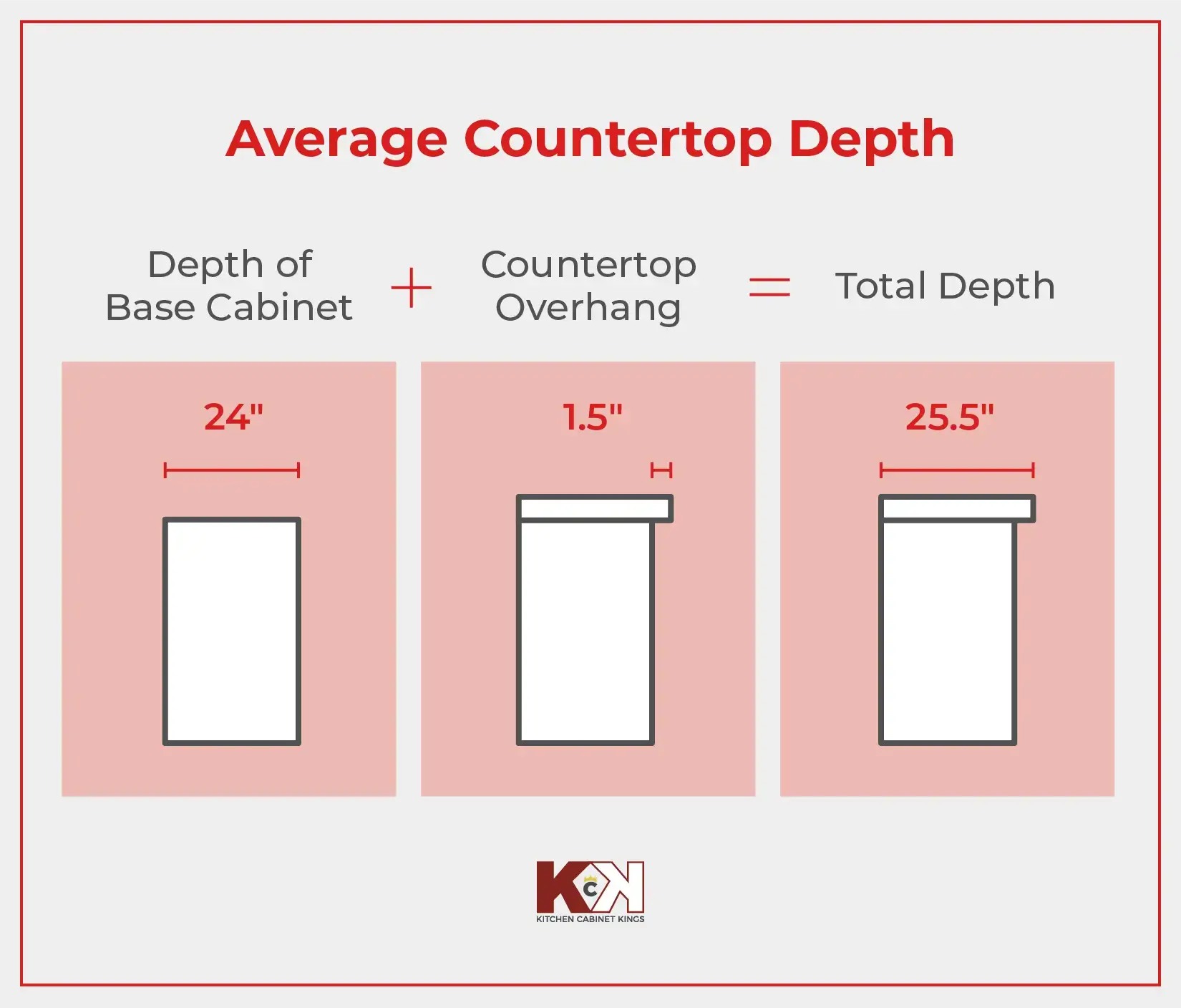
Image Source: cdn.kitchencabinetkings.com
Deciphering Countertop Dimensions: The Core Measurements
When we talk about kitchen counters, several key dimensions come into play. Knowing these helps us plan our kitchen layout for maximum usability and comfort.
The Foundation: Kitchen Cabinet Depth
The base cabinets are the backbone of your kitchen workspace. Their depth directly influences how much usable counter space you have and how much storage you gain. The kitchen cabinet depth is generally set at 24 inches. This depth is carefully chosen to balance storage capacity with the need for adequate walkway space. Deeper cabinets might offer more storage, but they can encroach on circulation areas, making the kitchen feel cramped. Conversely, shallower cabinets might lead to a loss of valuable storage.
Extending the Surface: Countertop Depth and Overhang
While the cabinet depth is standard, the countertop itself adds to this measurement. The countertop typically extends beyond the front of the cabinets to provide an overhang. This counter overhang depth serves a few purposes. Primarily, it offers a more comfortable place to stand and work, preventing your knees from bumping into the cabinet face. It also adds a finished, aesthetic look to the cabinetry. A common counter overhang depth is 1.5 inches. When you combine the standard 24-inch cabinet depth with this 1.5-inch overhang, you arrive at the common standard kitchen counter depth of 25.5 inches. However, some manufacturers may offer slightly different overhangs, leading to variations in the final countertop measurement.
Considering the Edges: Additional Depth Factors
Sometimes, the countertop might be thicker than a standard 1.5 inches, especially with certain materials like thick stone slabs. This extra thickness also adds to the overall countertop depth requirements. For example, a 3cm (approximately 1.2 inches) thick granite slab installed on a standard cabinet with a 1.5-inch overhang would result in a total depth of approximately 26.7 inches. It’s always important to confirm the exact thickness of your chosen countertop material.
The Importance of Standard Kitchen Counter Depth
Why does this standard depth matter so much? It’s all about creating a functional and ergonomic kitchen.
Working Comfort: The Kitchen Workspace Depth
The kitchen workspace depth is the usable surface area you have to prepare food, place appliances, and manage kitchen tasks. A 25-inch deep counter (including the overhang) provides a generous area for most activities. It allows for enough space to chop vegetables, mix ingredients, and still have room for a cutting board and a few essential tools. This depth also accommodates many standard kitchen appliances, such as stand mixers or blenders, without them completely dominating the surface.
Storage and Access: Cabinet and Drawer Functionality
The 24-inch kitchen cabinet depth is also optimized for storage. Standard drawers and pull-out shelves are designed to fit within this dimension. This means you can store pots, pans, dishes, and pantry items efficiently. If cabinets were significantly shallower, your storage capacity would be greatly reduced. If they were much deeper, accessing items at the back could become a challenge, leading to lost space.
Safety and Flow: Navigating Your Kitchen
Adequate counter depth contributes to the overall safety and flow of your kitchen. It prevents items from easily falling off the edge and provides a stable surface for cooking. Furthermore, the standard kitchen counter depth is an integral part of the overall kitchen layout, influencing how much space is left for movement between work areas.
Beyond the Standard: Variations and Considerations
While 25 inches is the standard, there are instances where variations occur, and these need careful consideration during the design phase.
Custom Depths: When Standard Isn’t Enough
In some cases, homeowners might opt for custom kitchen cabinets that deviate from the standard 24-inch depth. This might be to maximize storage in a larger kitchen or to accommodate specific appliance sizes. If you choose custom cabinets, you’ll need to ensure the countertops are designed to match, maintaining appropriate overhangs and usability.
Counter Setbacks: Creating Balance
Sometimes, designers might incorporate a kitchen counter setback. This is when the countertop is intentionally pulled back from the wall or an appliance. A common reason for a kitchen counter setback is to allow for a backsplash or to create a specific aesthetic. It can also be done to accommodate appliances that might protrude slightly, such as a dishwasher or a range. A typical setback might be 1-2 inches, which would reduce the effective kitchen workspace depth slightly.
Counter Knee Space: Comfort for Seating
If your kitchen design includes a seating area at the counter, kitchen counter knee space becomes a critical factor. Standard countertops are generally not designed with integrated knee space. However, if an island or peninsula is designed for seating, the countertop will typically extend further than the base cabinets to provide this. This extended overhang allows people to sit comfortably without their legs hitting the cabinets. For seating areas, an overhang of 10-12 inches is generally recommended to provide adequate legroom. This extended portion is a deliberate design choice and not part of the standard depth measurement.
The Standard Kitchen Island Depth
Kitchen islands are a popular feature, offering extra workspace and seating. The standard kitchen island depth often mirrors the base cabinets, being around 24 inches for the cabinet portion. However, islands are frequently designed with increased depth to accommodate deeper storage, specialized features like cooktops or sinks, or to provide more substantial seating overhang.
Island Work Zones
A larger island might have a deeper work zone to accommodate a sink and dishwasher. This can lead to a total depth of 30 inches or more for that section of the island. The crucial aspect here is ensuring that adequate clearance is maintained around the island for comfortable movement.
Seating Integration
When a kitchen island incorporates seating, the standard kitchen island depth will be extended to provide the necessary kitchen counter knee space. As mentioned, an overhang of 10-12 inches is common for comfortable seating. This means an island designed for seating might have a total depth of 34-36 inches or even more, depending on the cabinet depth and the seating overhang.
Common Kitchen Counter Dimensions: A Summary
To recap, here are some common kitchen counter dimensions:
| Component | Typical Dimension (Inches) | Notes |
|---|---|---|
| Base Cabinet Depth | 24 | The core depth of the cabinet structure. |
| Countertop Thickness | 1.25 – 1.5 (3-4 cm) | Varies based on material (e.g., laminate, granite, quartz). |
| Counter Overhang | 1.5 | Provides comfortable working space and aesthetic appeal. |
| Standard Counter Depth | 25.5 | Calculated by combining cabinet depth (24″) + typical overhang (1.5″). |
| Kitchen Workspace Depth | 25 (approx.) | The usable surface area for tasks. |
| Standard Island Depth | 24 (cabinet base) | Can vary significantly based on function (storage, appliances, seating). |
| Seating Overhang | 10 – 12 | For comfortable legroom when used as a dining or bar area. |
| Kitchen Counter Setback | 1 – 2 (optional) | Allows for backsplashes or appliance integration. |
These common kitchen counter dimensions are a guideline, and custom designs can always alter these figures. However, they provide a solid foundation for planning a functional and ergonomic kitchen.
Maximizing Your Kitchen Workspace Depth
Even within the standard dimensions, there are ways to optimize your kitchen workspace depth.
Drawer Inserts and Organizers
Use drawer inserts and organizers to make the most of the depth within your cabinets. This prevents items from getting lost at the back.
Pull-Out Shelves and Trays
For lower cabinets, consider installing pull-out shelves or trays. These make it much easier to access items stored in the deeper sections of the cabinet, effectively extending the usability of the kitchen workspace depth.
Appliance Placement
Strategically place your appliances. For instance, a microwave can be placed on the counter, but recessing it into a cabinet or using a dedicated shelf can free up valuable counter space. Consider built-in appliances where possible to maintain a clean and uninterrupted counter surface.
Countertop Depth Requirements for Specific Needs
Your specific kitchen needs might influence your countertop depth requirements.
Cooking and Prep Areas
For heavy cooking and prep work, a slightly deeper counter might be beneficial, perhaps extending to 26 or 27 inches total depth if your layout allows. This provides more room for multiple pots, pans, and prep bowls.
Appliance Integration
If you plan to install specialized appliances that are deeper than standard models, you’ll need to account for this in your countertop depth requirements. This includes things like larger sinks, commercial-style ranges, or built-in food processors.
ADA Compliance
For kitchens designed to be accessible, countertop depth requirements may change. The Americans with Disabilities Act (ADA) recommends specific clearances and heights for accessible workstations. While a standard 25-inch depth is often sufficient, ensuring adequate kitchen counter knee space and clear floor space is paramount in these designs.
Frequently Asked Questions about Kitchen Counter Depth
What is the standard kitchen counter height?
The typical kitchen counter height in the United States is 36 inches from the finished floor to the top of the countertop. This height is generally comfortable for most adults when standing.
How much clearance do I need around a kitchen island?
For comfortable movement, you typically need at least 36 inches of clearance around a kitchen island. For areas where appliances like ovens or dishwashers are used, 42-48 inches of clearance is recommended.
Can I use shallower base cabinets?
Yes, you can opt for shallower base cabinets (e.g., 18 or 21 inches deep). However, this will reduce your storage capacity and alter the overall standard kitchen counter depth unless compensated for with a deeper countertop or a larger overhang. This is usually only recommended for very small kitchens where space is extremely limited.
What happens if my countertop is too deep?
If your countertop is too deep for your kitchen cabinet depth, it can create an awkward workspace. It might also look visually unbalanced, with the countertop appearing to jut out too far. More importantly, an excessively deep counter can impede traffic flow and create tripping hazards.
What are the countertop depth requirements for a backsplash?
The countertop depth requirements typically include space for a backsplash. The standard 1.5-inch overhang is usually sufficient to accommodate a standard backsplash that sits behind the countertop. If you plan on a very thick or decorative backsplash, you might need to adjust the overhang or cabinet depth accordingly.
How is kitchen counter setback measured?
A kitchen counter setback is measured from the face of the cabinet to the front edge of the countertop, or from the wall to the front edge of the countertop. This measurement is taken into account when determining the overall kitchen workspace depth.
By carefully considering these dimensions, you can design a kitchen that is both beautiful and highly functional, ensuring your standard kitchen counter depth works perfectly for your needs.