
The ideal height for your kitchen wall cabinets is typically 54 inches from the finished floor to the bottom of the upper cabinet. This measurement ensures comfortable access for most people, with the most common counter to cabinet distance being 18 inches.
Choosing the right height for your kitchen cabinets is more than just an aesthetic decision; it’s about creating a functional, comfortable, and safe cooking environment. The kitchen cabinet height directly impacts how you interact with your kitchen daily, affecting everything from storing dishes to preparing meals. So, how high should your kitchen cabinets be? Let’s dive deep into the factors that determine the optimal kitchen cabinet height and explore the various considerations involved in kitchen cabinet installation height.
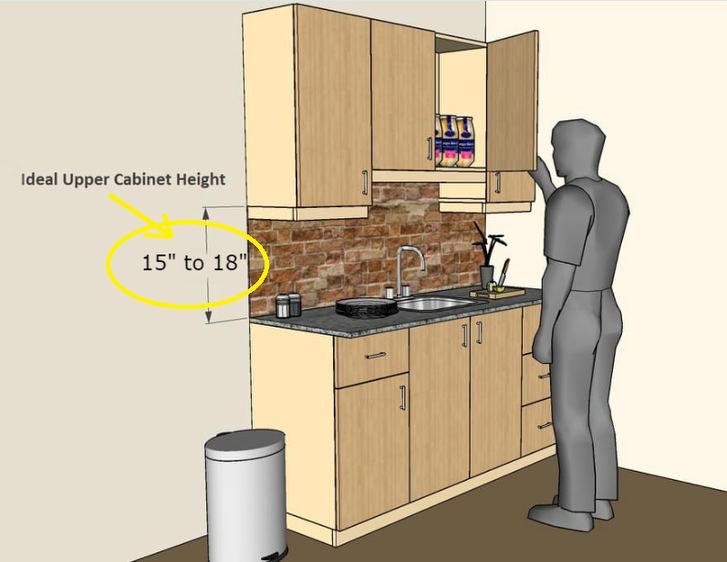
Image Source: www.bulacanliving.com
The Foundation: Standard Kitchen Dimensions and Their Impact
Before we talk about cabinets, it’s crucial to acknowledge standard kitchen dimensions. These are established guidelines that help ensure kitchens are ergonomic and practical. The most common counter to cabinet distance is 18 inches. This spacing is designed to provide ample room for most countertop tasks, like chopping vegetables or mixing ingredients, without feeling cramped.
- Standard Countertop Height: Typically 36 inches from the finished floor.
- Standard Cabinet Depth: Wall cabinets usually have a standard kitchen cabinet depth of 12 inches. This depth allows for efficient storage of plates, bowls, and other kitchen essentials. Base cabinets, on the other hand, are generally 24 inches deep.
These standard dimensions create a harmonious flow within the kitchen. When you deviate significantly from these norms, you need to have a good reason and consider the implications for usability.
Deciphering Wall Cabinet Height: The Core Measurement
The wall cabinet height is a critical aspect of your kitchen design. While 18 inches between the countertop and the bottom of the upper cabinet is standard, there are variations.
The 18-Inch Sweet Spot
Why 18 inches? This measurement is based on the average reach of an adult and the typical height of a countertop.
- Ergonomics: It allows most individuals to easily reach into the cabinets without needing a step stool for frequently used items.
- Workspace: It provides sufficient clearance for most kitchen activities. Imagine trying to chop an onion with cabinets hanging too low – it would be uncomfortable and potentially hazardous. Conversely, cabinets placed too high can make accessing items a daily challenge.
Factors Influencing Counter to Cabinet Distance
While 18 inches is the norm, several factors might lead designers and homeowners to adjust this measurement:
- Ceiling Height: In kitchens with very high ceilings (9 feet or more), some people opt for a slightly larger gap, perhaps 20-22 inches, to maintain visual balance. However, this can impact accessibility for shorter individuals.
- Countertop Thickness: If you opt for a thicker countertop material (e.g., a substantial slab of granite or marble), this will naturally reduce the space between the countertop and the bottom of the upper cabinet if the wall cabinet height (measured from the floor) remains the same. Some may adjust the cabinet’s mounting height to compensate.
- User Height: For households with predominantly very tall individuals, a slightly larger gap might be considered, though this is less common. Conversely, if most users are significantly shorter than average, a 17-inch gap might be explored, but this can impact resale value as it deviates from the standard.
- Backsplash Height: The height of your backsplash plays a direct role in the cabinet spacing. A taller backsplash, perhaps extending all the way to the ceiling, might influence the perceived height of the cabinets and the counter to cabinet distance.
Exploring Upper Cabinet Height Options
The actual height of the upper cabinets themselves also varies. Standard upper cabinet height options include:
- 30 inches: This is a very common height, offering a good balance of storage capacity and accessibility.
- 36 inches: These cabinets provide more storage space, ideal for kitchens where maximizing storage is a priority. They are often used in conjunction with a slightly larger counter to cabinet distance or in kitchens with higher ceilings.
- 42 inches: These are the tallest standard upper cabinets and are typically used in kitchens with 9-foot or higher ceilings. They extend closer to the ceiling, offering maximum storage but potentially making the uppermost shelves difficult to reach.
The Impact of Upper Cabinet Height on Spacing
When you select taller upper cabinet height options, especially 36 or 42 inches, you need to be mindful of the cabinet spacing.
- With 30-inch uppers: An 18-inch gap means the bottom of the cabinet is at 54 inches from the floor. The top of the cabinet is at 84 inches (7 feet). This is a very common and practical configuration.
- With 36-inch uppers: Maintaining an 18-inch gap means the bottom is still at 54 inches. However, the top of the cabinet will be at 90 inches (7.5 feet). This works well in kitchens with 8.5 to 9-foot ceilings.
- With 42-inch uppers: With an 18-inch gap, the bottom is at 54 inches, and the top reaches 96 inches (8 feet). These are best suited for kitchens with 9-foot or taller ceilings.
The choice of wall cabinet height must be considered alongside the counter to cabinet distance to create an aesthetically pleasing and functionally sound kitchen.
Beyond the Standard: Customizing Your Kitchen Cabinet Height
While standards exist for good reason, kitchens are also intensely personal spaces. There are instances where deviating from the norm makes sense.
Higher Cabinets for More Storage
If maximizing storage is your primary goal, extending cabinets closer to the ceiling is a popular solution. This can involve:
- Stacking Cabinets: Placing a smaller, shorter cabinet (e.g., 15 inches) directly above a standard-sized upper cabinet (e.g., 30 or 36 inches). This effectively creates a taller unit without sacrificing the standard counter to cabinet distance.
- Full-Height Cabinets: In very high-ceilinged kitchens, cabinets can extend all the way to the ceiling. However, this requires a sturdy step stool or ladder for accessing the top shelves, which might not be practical for everyday use.
Lower Cabinets for Specific Needs
In some specific scenarios, a slightly smaller counter to cabinet distance might be considered, perhaps 17 inches, or even lower if there’s a particular reason. For example:
- Accessibility: For individuals who use wheelchairs or have other mobility challenges, lowering the cabinets or increasing the cabinet spacing can improve accessibility.
- Specific Appliances: Sometimes, a specific appliance like a microwave might be placed on the counter, and the cabinet above it is designed to accommodate its height.
However, it’s important to remember that significant deviations from the standard kitchen dimensions can affect resale value. Buyers generally expect kitchens to adhere to common ergonomic standards.
The Role of Backsplash Height
The backsplash height is intimately linked to cabinet spacing. A standard backsplash is typically 4 inches high, extending from the countertop. However, many modern kitchens feature full-height backsplashes that extend all the way up to the bottom of the upper cabinets, or even higher.
- Standard Backsplash: If your backsplash is 4 inches, and you have an 18-inch counter to cabinet distance, the total height from the counter to the bottom of the upper cabinet remains 18 inches.
- Full-Height Backsplash: If your backsplash extends to the bottom of the cabinets, the cabinet spacing is still the key measurement. The backsplash simply fills the visual gap.
- Tiled Backsplash: If you tile up to the bottom of the cabinets, the aesthetic is similar to a full-height backsplash. The measurement from the countertop to the cabinet base is the crucial factor for usability.
The choice of backsplash material and its height can influence the overall perception of kitchen cabinet height and the cabinet spacing.
Practical Considerations for Kitchen Cabinet Installation Height
When it comes to kitchen cabinet installation height, precision is key. Even a small error can lead to a noticeable difference in functionality and aesthetics.
Measuring and Marking
Accurate measurement and marking are paramount.
- Determine the Finished Floor: Always measure from the finished floor, not the subfloor.
- Mark the Desired Bottom Cabinet Line: For an 18-inch counter to cabinet distance, mark a line 18 inches above the countertop where you want the bottom of your upper cabinets to sit.
- Leveling is Crucial: Use a level to ensure your marks are perfectly horizontal. This will be the guide for your cabinet installation.
Mounting Methods
Cabinets are typically mounted using cabinet screws that go through the back of the cabinet and into wall studs or appropriate wall anchors.
- Locating Studs: Finding wall studs is essential for secure mounting. Use a stud finder to locate them accurately.
- Pilot Holes: Drilling pilot holes can make driving screws easier and prevent wood from splitting.
- Support During Installation: It’s often helpful to have a second person or a temporary support system to hold the cabinet in place while you screw it in.
Adjustments and Reaching
Even with the standard 18-inch gap, individual needs can vary.
- Reach Test: Before committing to final installation, you can tape out the proposed cabinet positions on the wall and do a “reach test” to see if the height feels comfortable for the primary users of the kitchen.
- Cabinet Shelf Placement: Within the upper cabinets, the placement of adjustable shelves can further fine-tune accessibility. If you frequently store shorter items, you might place shelves higher within the cabinet. For taller items, you can position them lower.
What is the Standard Kitchen Cabinet Depth?
The standard kitchen cabinet depth for wall cabinets is typically 12 inches. This provides a good balance between storage capacity and not protruding too far into the kitchen workspace, ensuring comfortable movement and sufficient cabinet spacing. Base cabinets, conversely, are usually 24 inches deep to accommodate appliances like dishwashers and ovens, as well as provide more robust counter support.
How High Should Upper Cabinets Be?
The upper cabinet height is generally dictated by the desired counter to cabinet distance and the overall ceiling height of the kitchen. The most common counter to cabinet distance is 18 inches, creating a functional workspace. Therefore, if your countertops are at the standard 36 inches, the bottom of your upper cabinets would be at 54 inches from the floor. The actual height of the cabinet box (e.g., 30, 36, or 42 inches) will then determine how close the cabinets come to the ceiling.
Frequently Asked Questions (FAQ)
Q1: What is the standard counter to cabinet distance?
A1: The most common and ergonomically sound counter to cabinet distance is 18 inches. This provides ample clearance for most kitchen tasks and is comfortable for the average adult.
Q2: Can I install my upper cabinets higher than 18 inches from the counter?
A2: Yes, you can. However, increasing the cabinet spacing beyond 18 inches can make the upper cabinets harder to reach for many people, requiring a step stool for frequent use. It’s a trade-off between aesthetics (especially in high-ceilinged rooms) and accessibility. Always consider the primary users of the kitchen.
Q3: What is the standard wall cabinet height?
A3: Standard wall cabinet height options typically include 30 inches, 36 inches, and 42 inches. The choice often depends on the desired storage capacity and the ceiling height of the kitchen.
Q4: How does backsplash height affect cabinet installation height?
A4: The backsplash height is part of the visual space between the countertop and the bottom of the upper cabinet. Whether it’s a 4-inch backsplash or a full-height tiled backsplash, the critical measurement for usability is the counter to cabinet distance. The backsplash fills this gap visually.
Q5: What is the standard kitchen cabinet depth?
A5: The standard kitchen cabinet depth for wall cabinets is 12 inches. This depth is chosen to maximize storage without encroaching excessively into the kitchen’s workspace.
Q6: Are there any exceptions to the 18-inch rule for cabinet spacing?
A6: Yes, exceptions can be made for specific needs, such as very high ceilings where a slightly larger gap (e.g., 20-22 inches) might be used for visual balance, or for accessibility reasons. However, deviations from the standard 18 inches should be carefully considered for their impact on functionality and potential resale value.
Q7: How do I determine the right upper cabinet height for my kitchen?
A7: To determine the right upper cabinet height, consider your ceiling height, the desired counter to cabinet distance (18 inches is standard), and the overall storage needs. For 8-foot ceilings, 30-inch or 36-inch upper cabinets with an 18-inch gap are common. For higher ceilings, 42-inch cabinets might be appropriate.
Q8: What is the typical kitchen cabinet installation height from the floor?
A8: The kitchen cabinet installation height from the floor to the bottom of the upper cabinet is typically 54 inches (36-inch countertop + 18-inch gap). The top of the cabinet will then depend on its specific height (e.g., 54″ + 30″ = 84″ from the floor for 30-inch uppers).
By carefully considering these measurements and factors, you can ensure your kitchen cabinets are installed at a height that is both beautiful and perfectly functional for your everyday life.