
A standard kitchen countertop is typically 24 inches deep. This depth is designed to work seamlessly with standard base cabinets, which are also usually 24 inches deep, providing ample space for food preparation, appliance placement, and general kitchen activities.
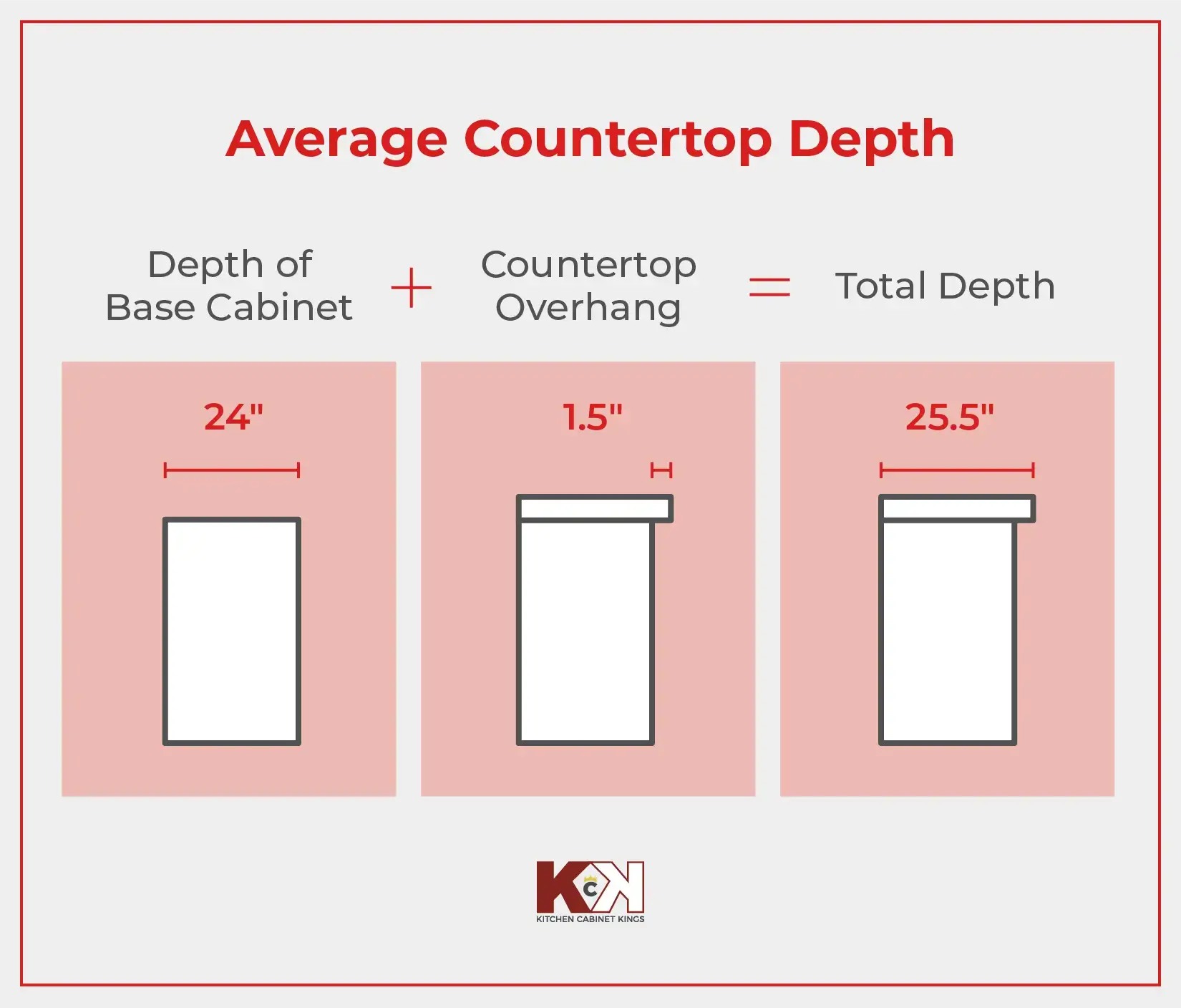
Image Source: cdn.kitchencabinetkings.com
Deciphering Countertop Dimensions: The Standard Depth
When planning your kitchen renovation or simply curious about the heart of your culinary space, one of the most fundamental questions revolves around the dimensions of your kitchen countertops. Specifically, how deep is a standard kitchen countertop? The answer, generally speaking, is 24 inches. This measurement isn’t arbitrary; it’s a carefully considered standard that balances usability, aesthetics, and compatibility with other kitchen components. This depth allows for comfortable working space in front of the cabinets and also accounts for the depth of standard appliances like dishwashers and ovens, which often fit neatly underneath.
This 24-inch kitchen counter depth is the cornerstone of kitchen design for good reason. It’s a sweet spot that allows you to chop vegetables, mix ingredients, and place appliances without feeling cramped, while also ensuring that the countertop doesn’t protrude too far into the kitchen, obstructing walkways or making the space feel smaller. Let’s delve deeper into why this measurement is so prevalent and explore the factors that influence countertop dimensions.
The Foundation: Standard Cabinet Depth and Its Influence
The depth of your kitchen countertop is intrinsically linked to the depth of your base cabinets. Standard base cabinets, the sturdy foundation upon which your countertops rest, are almost universally 24 inches deep. This standardization is a critical factor in the overall design and functionality of a kitchen.
- Seamless Integration: A 24-inch countertop fits snugly over a 24-inch base cabinet, creating a clean, uniform look. This flush fit is essential for both aesthetics and practicality. There’s no awkward overhang at the back, which could collect dust or interfere with plumbing, and the front edge provides a consistent and safe place to work.
- Appliance Compatibility: Many essential kitchen appliances, such as dishwashers, ovens, and some under-counter refrigerators, are designed to fit within a 24-inch depth. A standard countertop depth ensures these appliances can be installed without protruding beyond the cabinet face, maintaining a streamlined appearance and preventing trip hazards.
- Working Space: The 24-inch depth provides a generous work surface. It allows for a comfortable distance between the backsplash and the front edge of the counter, giving you ample room to prepare food, use small appliances, and keep ingredients within easy reach.
This tight integration between countertop and cabinet depth is why you’ll find standard cabinet depth consistently at 24 inches across most manufacturers and styles. It’s a building block of kitchen design that impacts many other decisions.
The Practicality of 24 Inches: Why It Works
The widespread adoption of the 24-inch kitchen counter depth stems from a combination of ergonomic considerations, manufacturing efficiencies, and historical precedent.
- Ergonomics and Reach: The average adult can comfortably reach about 10-12 inches onto a countertop. A 24-inch depth means that even with a backsplash and the front overhang (typically 1-1.5 inches), there’s still a substantial 10-12 inches of usable workspace in front of the cabinets. This depth allows for efficient food prep without requiring excessive leaning or reaching.
- Material Efficiency: Standard sheet goods, like plywood and MDF used for cabinet construction, and countertop materials, such as granite or quartz slabs, are often manufactured in standard widths. A 24-inch depth aligns well with these manufacturing standards, minimizing waste and keeping production costs down.
- Plumbing and Electrical Access: The space behind a 24-inch countertop and in front of the wall provides sufficient room for plumbing connections for sinks and dishwashers, as well as electrical outlets. This is crucial for maintenance and installation.
Essentially, the 24-inch normal kitchen counter depth is a well-established norm because it represents a practical and efficient solution for the vast majority of kitchen layouts and user needs.
Exploring Countertop Dimensions: Beyond the Standard
While 24 inches is the gold standard for kitchen counter depth, there are instances where this dimension might be adjusted. These deviations are usually driven by specific design choices or functional requirements.
Variations in Kitchen Worktop Depth
In some cases, you might encounter kitchen countertops that are deeper than the standard 24 inches. These are often custom solutions designed for specific purposes:
- Deeper Base Cabinets: If you opt for custom-built base cabinets that are deeper than standard (e.g., 27 or 30 inches), your countertop will naturally need to be correspondingly deeper to maintain a clean, integrated look. This might be done to accommodate larger appliances or to provide an extended work surface.
- Appliance Garages and Specialty Units: Sometimes, a portion of a countertop might be extended forward to house specific appliances or create a more elaborate working area. This can add visual interest and enhance functionality.
- Enhanced Workspace: For serious cooks or those who entertain frequently, a deeper countertop can offer a significantly larger preparation area. This extra depth can make tasks like rolling out dough or assembling large platters much more manageable.
However, it’s important to note that increasing countertop dimensions also impacts the overall kitchen footprint. Deeper countertops can encroach on your walkway space, so careful planning is essential.
The Depth of Kitchen Islands: A Different Dimension
Kitchen islands often have different countertop measurements than standard perimeter countertops. This is because islands serve multiple functions and are often designed with more flexibility.
- Standard Kitchen Island Depth: While perimeter countertops typically aim for a 24-inch depth to integrate with base cabinets, kitchen islands can vary. A common kitchen island depth is 36 inches. This allows for seating on one side and ample workspace on the other.
- Enhanced Workspace and Seating: The larger depth of an island countertop provides a more expansive work area, ideal for multiple people to cook or prepare food simultaneously. It also allows for comfortable seating with adequate legroom, often accommodating a standard 12-inch overhang for bar stools.
- Appliance Integration: Islands can house specialized appliances like cooktops or wine refrigerators, which may have different depth requirements than standard under-counter units.
- Aesthetic Considerations: The increased depth can also contribute to the visual presence and statement of a kitchen island, making it a more substantial and impressive feature.
When considering kitchen island depth, it’s crucial to balance the desire for more workspace and seating with the need for adequate traffic flow around the island. Generally, at least 36 inches of clearance is recommended on all sides of an island.
The Standard Kitchen Counter Height: An Equally Important Measurement
While we’re focusing on depth, it’s worth mentioning the standard kitchen counter height. This measurement is just as crucial for a comfortable and functional kitchen. The standard kitchen counter height is 36 inches from the finished floor to the top of the countertop.
This height is ergonomically designed for the average adult to work comfortably while standing. It aligns with the height of standard base cabinets (typically 34.5 inches) plus the thickness of the countertop (usually 1.5 inches).
- Ergonomic Design: The 36-inch height reduces the need to stoop or overextend, making tasks like chopping, mixing, and washing dishes more comfortable and less physically taxing.
- Appliance Alignment: This height ensures that standard-sized appliances, like ranges and dishwashers, fit seamlessly underneath or alongside the countertop, creating a visually cohesive and functional kitchen layout.
- Accessibility: For most people, this height is accessible. However, for individuals with specific mobility needs, adjustable height countertops or lower sections can be incorporated.
The interplay between standard cabinet depth, standard kitchen counter height, and overall kitchen counter size is what creates a truly functional and enjoyable kitchen.
Typical Kitchen Countertop Measurements: A Quick Reference
To summarize, let’s look at the most common countertop measurements you’ll encounter in a typical kitchen:
| Measurement | Standard Dimension | Typical Range (Custom) | Notes |
|---|---|---|---|
| Kitchen Counter Depth | 24 inches | 25-30 inches | Refers to the dimension from the front edge to the back edge. |
| Kitchen Counter Height | 36 inches | 34-38 inches | Measured from the finished floor to the top surface of the counter. |
| Kitchen Island Depth | Varies (often 36 inches) | 30-48 inches | Islands can accommodate more varied depths for seating and workspace. |
| Countertop Thickness | 1.5 inches | 1.25-2 inches | The physical thickness of the countertop material itself. |
| Front Countertop Overhang | 1-1.5 inches | 1-2 inches | The portion of the countertop that extends beyond the cabinet face. |
These figures provide a good baseline for understanding kitchen worktop depth and other critical dimensions.
Factors Influencing Your Kitchen Countertop Size Choices
While the 24-inch standard is prevalent, your personal needs and design preferences might lead you to consider different kitchen counter size options.
1. Your Cooking Habits and Needs
- Frequent Bakers: If you spend a lot of time baking, you might appreciate a deeper countertop or an extended section of counter space specifically for rolling out dough and decorating cakes.
- Large Families or Entertainers: More people in the kitchen often means a greater need for workspace. Deeper counters or wider spans can accommodate multiple cooks or buffet-style serving.
- Appliance Heavy Users: If you have numerous small appliances that are always on the counter (like toasters, coffee makers, blenders), you’ll need sufficient depth and width to house them comfortably without sacrificing your primary prep space.
2. Kitchen Layout and Space Constraints
- Small Kitchens: In compact kitchens, sticking to standard 24-inch depths is usually best to maximize walkway space and avoid making the room feel claustrophobic.
- Open-Concept Layouts: If your kitchen flows into a living or dining area, you’ll want to ensure your countertops don’t protrude excessively into the main living space.
- Island Placement: As discussed, the depth of a kitchen island needs careful consideration in relation to the surrounding space to ensure ease of movement.
3. Material Considerations and Installation
- Material Thickness: Different countertop materials have varying thicknesses. While 1.5 inches is common, some materials like solid wood or certain stone slabs can be thicker, impacting the overall standard kitchen counter height.
- Structural Support: Deeper or custom-shaped countertops might require additional structural support beneath them, especially if they are made from heavy materials like granite or marble. Your cabinet maker or fabricator will advise on this.
- Edge Profiles: The edge profile you choose for your countertop can slightly affect the perceived and actual kitchen counter depth, though this is usually a minor difference.
4. Budget and Customization
- Standard vs. Custom: Sticking to standard dimensions and materials will generally be more budget-friendly. Custom depths or shapes will often incur higher costs due to material optimization and specialized fabrication.
- Cabinet Modifications: If you decide on a non-standard countertop depth, you’ll likely need custom-depth base cabinets, which will also add to the overall expense.
Maximizing Functionality with Depth and Width
When thinking about your kitchen counter size, don’t forget the width. While depth is crucial for workspace, the overall length of your countertop sections also plays a vital role.
- Continuous Runs: Longer, uninterrupted countertop runs are excellent for efficient workflow. They allow you to move ingredients and tools along the counter without needing to lift and reposition them frequently.
- Zone Planning: Think about creating different “zones” on your countertop: a prep zone, a cooking zone (near the stove), and a landing zone (near the oven or refrigerator). Appropriate depths and widths for each zone enhance functionality.
- Appliance Placement: Consider where your main appliances will sit. You’ll want adequate counter space on either side of your cooktop for placing hot pans or ingredients, and a “landing zone” next to your oven for baked goods.
Frequently Asked Questions (FAQ)
Q1: Can I have a kitchen countertop that is deeper than 24 inches?
A1: Yes, absolutely. While 24 inches is the standard, custom countertops can be made deeper. However, ensure you have enough clearance for walkways and that your base cabinets are also built to accommodate the deeper countertop.
Q2: What is the standard depth for a kitchen island countertop?
A2: The depth for a kitchen island countertop can vary more than perimeter countertops. A common depth is 36 inches, which allows for seating and ample workspace. However, islands can range from 30 inches to 48 inches or even more, depending on the design and intended use.
Q3: How much overhang should my countertop have?
A3: For standard perimeter countertops, a 1-1.5 inch overhang is typical to protect the cabinet fronts and provide a comfortable edge to work at. For kitchen islands with seating, a 12-inch overhang is standard for comfortable legroom.
Q4: Does countertop thickness affect the standard kitchen counter height?
A4: Yes, the thickness of the countertop material contributes to the overall standard kitchen counter height. Standard base cabinets are usually 34.5 inches tall, and when topped with a 1.5-inch thick countertop, they reach the standard 36-inch working height.
Q5: What is the difference between kitchen counter depth and standard cabinet depth?
A5: Generally, kitchen counter depth and standard cabinet depth are the same – 24 inches. The countertop sits on top of and slightly overhangs the base cabinets.
Q6: How do I determine the right kitchen counter size for my space?
A6: Consider your cooking habits, the size of your kitchen, the intended use of the space (e.g., prepping, dining, entertaining), and your budget. Measure your kitchen carefully and consult with kitchen designers or cabinet makers.
Q7: Is a 30-inch deep countertop a good idea?
A7: A 30-inch deep countertop can provide significantly more workspace, which is great for extensive meal preparation or large kitchens. However, it will require custom base cabinets and may reduce walkway space in smaller kitchens. It’s a functional choice if space allows and you can utilize the extra depth.
In conclusion, the 24-inch kitchen counter depth is a well-established standard that offers a practical balance for most kitchens. However, the world of countertop dimensions is flexible, allowing for customization to suit individual needs and design visions. By carefully considering your kitchen worktop depth, standard kitchen counter height, and overall kitchen counter size, you can create a kitchen that is both beautiful and highly functional.