
If you’re wondering how much paint you need for your kitchen cabinets, a good rule of thumb is to plan for one quart of paint per 50-75 square feet of surface area for one coat, but this can vary based on the paint type and application method. This guide will help you precisely determine the paint required for your cabinet painting project, ensuring you have enough without overbuying.
Embarking on a kitchen cabinet painting project can be a rewarding DIY endeavor that dramatically transforms your kitchen’s look and feel. However, one of the most common questions that arise before you even open a can of paint is: “How much paint do I actually need?” Running out of paint mid-project is frustrating, but buying too much can be a waste of money and resources. This comprehensive guide aims to demystify the process of estimating paint quantity for cabinets, covering everything from surface area calculations to understanding paint coverage per gallon.
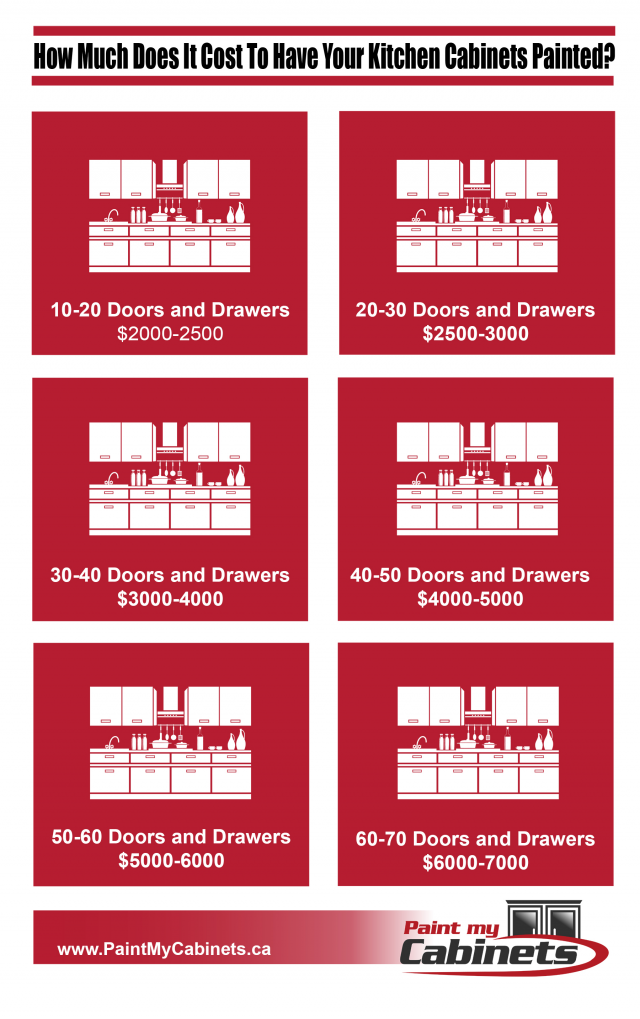
Image Source: www.paintmycabinets.ca
Deciphering Your Cabinet Painting Project Size
The first crucial step in determining paint quantity for kitchen cabinets is accurately assessing the size of your project. This involves measuring the total surface area you intend to paint. Cabinets aren’t just the doors; you’ll also be painting the cabinet boxes (the frames and sides visible when the doors are closed), drawer fronts, and potentially the insides of open shelving.
Measuring Cabinet Surfaces
h4: Cabinet Doors and Drawer Fronts
* Measure each door and drawer front individually: Record the height and width of each.
* Calculate the area of each piece: Area = Height × Width.
* Sum the areas: Add up the areas of all doors and drawer fronts.
h4: Cabinet Boxes
* Measure the visible exterior surfaces: This includes the sides of base cabinets and wall cabinets, as well as the stiles (vertical pieces) and rails (horizontal pieces) around the openings.
* Measure the top and bottom surfaces: If these are visible and you plan to paint them, include their areas.
* Calculate the area of each section: Use the same Height × Width formula.
* Sum the areas: Add all these measurements together.
h4: Interior Surfaces (Optional)
* If you plan to paint the interior of your cabinets or shelves, measure these surfaces as well. Often, a different, less durable paint might be used here, or you might choose to leave them unpainted.
h4: Account for Recesses and Details
* Cabinet doors and drawer fronts often have recessed panels or decorative profiles. While precise measurement of these details can be complex, a general approach is to treat them as flat surfaces. The extra paint required for the nooks and crannies is usually minimal and accounted for in the overall coverage estimates.
Tip: For easier tracking, create a simple spreadsheet or use a notebook to list each cabinet piece (e.g., “Upper Left Door,” “Base Cabinet 1 Side”) and its dimensions.
Calculating Total Square Footage
Once you have all your individual measurements, sum them up to get the total square footage of the surfaces you’ll be painting.
Example:
* 10 cabinet doors, each 12 inches wide by 30 inches high: 10 doors × (1 ft × 2.5 ft) = 25 sq ft
* 5 drawer fronts, each 18 inches wide by 6 inches high: 5 drawer fronts × (1.5 ft × 0.5 ft) = 3.75 sq ft
* Visible sides of 10 base cabinets, each 24 inches wide by 34 inches high: 10 sides × (2 ft × 2.83 ft) = 56.6 sq ft
Total Project Square Footage = 25 + 3.75 + 56.6 = 85.35 sq ft
This is a simplified example. Your actual project size will likely be larger, as kitchen cabinets are often numerous.
Fathoming Paint Coverage Per Gallon
Understanding paint coverage per gallon is crucial for accurate estimating paint for cabinets. Most quality paints for cabinets will cover between 350 to 400 square feet per gallon for a single coat. However, this is a general guideline and can be affected by several factors.
Factors Influencing Paint Coverage
- Paint Type: Alkyd (oil-based) paints often have slightly better coverage than latex (water-based) paints. However, the difference is usually not significant enough to drastically alter your calculations for typical DIY projects.
- Sheen: While the sheen (satin, semi-gloss, etc.) primarily affects durability and appearance, it doesn’t dramatically impact coverage.
- Application Method:
- Spraying: Can sometimes lead to slightly less coverage per gallon due to overspray, but it provides a superior finish.
- Rolling/Brushing: Generally offers more controlled application and closer to the stated coverage.
- Surface Porosity and Texture: Unfinished wood or surfaces with a porous primer will absorb more paint, reducing coverage. Smooth, pre-primed surfaces will yield better coverage.
- Number of Coats: Most cabinet projects require at least two coats for a durable and opaque finish. Some dark colors might require a tinted primer or even a third coat for full coverage.
- Application Thickness: Applying paint too thickly will use more paint than necessary and can lead to sagging or poor adhesion.
Using a Cabinet Paint Calculator
A handy tool for simplifying these calculations is a cabinet paint calculator. Many paint manufacturers and DIY websites offer these online. You input the dimensions of your cabinets, and the calculator provides an estimated amount of paint needed. While useful, it’s always wise to cross-reference with your own measurements and calculations.
Determining Primer Needs
Before you apply your chosen cabinet paint, priming is essential for adhesion, durability, and a uniform finish. You need to know how much primer for cabinets to buy. The coverage of primer is typically similar to that of paint, often in the 350-400 square feet per gallon range.
Why Primer is Essential for Cabinets
- Adhesion: Primer helps the paint stick better to the cabinet surface, preventing chipping and peeling.
- Blocking Stains: If your cabinets have knots or are a dark color, a stain-blocking primer prevents these from bleeding through the new paint.
- Uniformity: Primer creates a consistent surface, ensuring even color and sheen in your topcoats.
- Color Transition: It helps cover existing dark colors and provides a neutral base for lighter paint colors.
Calculating Primer Quantity
The amount of primer needed is calculated the same way as paint. Use your total project square footage. If you’re planning two coats of primer (often recommended for difficult surfaces or significant color changes), double your calculated need.
Example Calculation for Primer:
* Total project square footage: 300 sq ft
* Paint coverage: 350 sq ft/gallon
* Primer needed for one coat: 300 sq ft / 350 sq ft/gallon ≈ 0.86 gallons
Since you can’t buy 0.86 gallons, you would likely purchase one gallon of primer to be safe, especially if you’re applying two coats or using a stain-blocking primer which can sometimes be thicker.
Calculating Paint Quantities: Step-by-Step
Now, let’s put it all together to arrive at a precise estimate.
h4: Step 1: Measure Your Cabinets
* As detailed earlier, meticulously measure all surfaces you plan to paint. Calculate the total square footage.
h4: Step 2: Determine Coats Needed
* Base Coat (Primer): Plan for at least one, often two, coats of primer.
* Top Coats: Most cabinet painting projects require a minimum of two coats of paint for durability and a professional finish. If you are painting a light color over a dark one, or using a color that tends to be streaky (like some reds or yellows), you might need a third coat.
h4: Step 3: Estimate Paint per Coat
* Take your total project square footage and divide it by the paint coverage per gallon (e.g., 350 sq ft/gallon).
Formula:
Gallons per Coat = Total Project Square Footage / Paint Coverage Per Gallon
h4: Step 4: Calculate Total Paint Needed
* Multiply the gallons needed per coat by the number of coats you plan to apply.
Formula:
Total Gallons Needed = Gallons per Coat × Number of Coats
h4: Step 5: Round Up and Add a Buffer
* Paint is sold in quarts (0.25 gallons) and gallons (1 gallon). Always round up to the nearest purchasable size.
* It’s highly recommended to buy a little extra paint (about 10-15%) to account for touch-ups, potential spills, or if your coverage is less than expected. This extra paint is invaluable for future repairs.
Example Scenario: A Medium-Sized Kitchen
Let’s say your detailed measurements reveal a total project surface area of 400 square feet for cabinet doors, drawer fronts, and boxes.
-
Primer: You’ve decided to use two coats of primer due to the existing dark color.
- Primer needed per coat = 400 sq ft / 350 sq ft/gallon ≈ 1.14 gallons
- Total primer needed = 1.14 gallons/coat × 2 coats = 2.28 gallons.
- Recommendation: Purchase 3 gallons of primer (to be safe and for touch-ups).
-
Paint: You plan for two coats of your chosen cabinet paint.
- Paint needed per coat = 400 sq ft / 350 sq ft/gallon ≈ 1.14 gallons
- Total paint needed = 1.14 gallons/coat × 2 coats = 2.28 gallons.
- Recommendation: Purchase 3 gallons of paint. This provides enough for two coats with a small buffer for touch-ups. If you’re very confident in your application and coverage, 2.5 gallons (which means buying two gallons and one quart) might suffice, but 3 gallons is a safer bet.
How many cans of paint for kitchen cabinets?
Based on the calculations, the number of cans will depend on whether you’re buying quarts or gallons. For the example above needing 2.28 gallons, you’d likely buy:
* Option 1 (Safer): 3 x 1-gallon cans.
* Option 2 (Slightly less paint, but still enough): 2 x 1-gallon cans + 1 x 1-quart can = 2.25 gallons. This is very close to the calculated need and might be sufficient if your coverage is excellent.
Paint Calculation for Furniture vs. Cabinets
While the basic principle of calculating surface area applies to both paint calculation for furniture and cabinets, there are nuances:
- Furniture: Often involves fewer, larger pieces with more complex shapes (legs, ornate carvings). You might be painting chairs, tables, or dressers. Measuring each component and summing them is key. Coverage can be reduced on intricately carved pieces due to the need to get paint into every crevice.
- Cabinets: Typically involve many similar-sized doors and drawer fronts, plus the cabinet boxes. The repetition makes measurement easier but also means you need to be consistent. The sheer number of doors and drawers can add up the total surface area significantly.
The key takeaway is that thorough measurement is paramount for both.
Essential Cabinet Painting Supplies
Beyond paint and primer, you’ll need a range of cabinet painting supplies to achieve a professional finish.
Preparation Tools
- Screwdrivers: To remove hardware and doors/drawers.
- Painter’s Tape: High-quality tape (like FrogTape or 3M Blue Tape) for masking off areas you don’t want to paint.
- Drop Cloths/Plastic Sheeting: To protect floors and countertops from drips and dust.
- Sandpaper: Various grits (120-220 for general sanding, finer grits like 320-400 for between coats).
- Sanding Blocks or Orbital Sander: For efficient sanding.
- TSP (Trisodium Phosphate) or Degreaser: To thoroughly clean cabinets before sanding.
- Clean Rags or Microfiber Cloths: For cleaning and wiping surfaces.
- Dust Masks/Respirator: Essential for protecting your lungs from dust and fumes.
- Safety Glasses: To protect your eyes.
Application Tools
- High-Quality Brushes: Angled sash brushes (2-inch or 2.5-inch) are excellent for edges, corners, and details.
- Small Rollers: Foam rollers or high-density mini rollers (3/8″ nap or less) are ideal for smooth cabinet surfaces. Using the right roller cover is crucial for a smooth finish.
- Paint Trays and Liners: For holding paint.
- Paint Sprayer (Optional): For a factory-like finish, but requires more prep work and practice. If using a sprayer, you’ll need a respirator rated for organic vapors.
- Stir Sticks: To mix paint thoroughly.
Post-Painting Tools
- Small Touch-Up Brushes: For minor corrections.
- Screwdriver (again): To reattach hardware.
Tips for Accurate Estimation and Purchase
- Double-Check Your Measurements: It’s better to measure twice and buy once.
- Consider the Finish: If you’re aiming for a super smooth, glass-like finish and plan multiple thin coats with sanding in between, you might use slightly more paint than a single thicker coat.
- Don’t Skimp on Quality: Higher-quality paints often have better coverage and durability, potentially saving you money and effort in the long run.
- Buy from the Same Lot: When purchasing paint, ensure all cans are from the same batch (lot number) to avoid slight color variations.
- Keep Leftovers: Store leftover paint properly in airtight containers for future touch-ups. Label the cans with the color name and the room/project.
Frequently Asked Questions (FAQ)
Q: How much paint do I need for kitchen cabinets if I’m only painting the doors?
A: If you are only painting the cabinet doors and drawer fronts, you will need to calculate the surface area of just those components. The general rule of thumb for paint coverage per gallon (350-400 sq ft) still applies. For example, if your doors and drawer fronts measure a total of 200 sq ft, you’ll need roughly 0.5 to 0.6 gallons of paint per coat. For two coats, you’d need about 1 to 1.2 gallons, so purchasing two quarts or one gallon would be appropriate, with extra for touch-ups.
Q: Can I use regular wall paint on kitchen cabinets?
A: While you can technically use wall paint, it’s not recommended for optimal durability and finish. Cabinet paints are formulated to withstand the high traffic, moisture, and cleaning that kitchen cabinets endure. They typically have a harder, more resilient finish. Wall paint is often more prone to chipping, scratching, and water damage in a kitchen environment.
Q: How much paint is in a quart vs. a gallon?
A: A gallon of paint contains 128 fluid ounces. A quart of paint contains 32 fluid ounces, which is exactly one-quarter of a gallon.
Q: Should I buy more paint than calculated?
A: Yes, it’s always advisable to buy a bit more paint than your initial calculation suggests. Aim for an extra 10-15% to cover unforeseen issues like needing an extra coat for coverage, accidental spills, or for essential touch-ups down the line. Having matching paint for future repairs is invaluable.
Q: How do I calculate the paint needed for open shelving?
A: Treat open shelving like any other cabinet surface. Measure the visible lengths and widths of the shelves, the sides of the shelf supports, and the back panels if you plan to paint them. Sum these areas to get the total square footage for the shelving portion of your project.
By following these detailed steps and considerations, you can confidently determine the exact amount of paint and primer needed for your kitchen cabinet makeover, ensuring a smooth and successful project from start to finish. Happy painting!