
So, how much room do you really need around a kitchen island? The general consensus for comfortable movement and safe access is a minimum of 36 inches (91 cm) of clear walkway space. However, this is a starting point, and the ideal kitchen island clearance can vary depending on your kitchen’s size, layout, and how you plan to use your island. This guide will delve into the crucial aspects of kitchen island spacing to ensure your kitchen is both functional and beautiful.
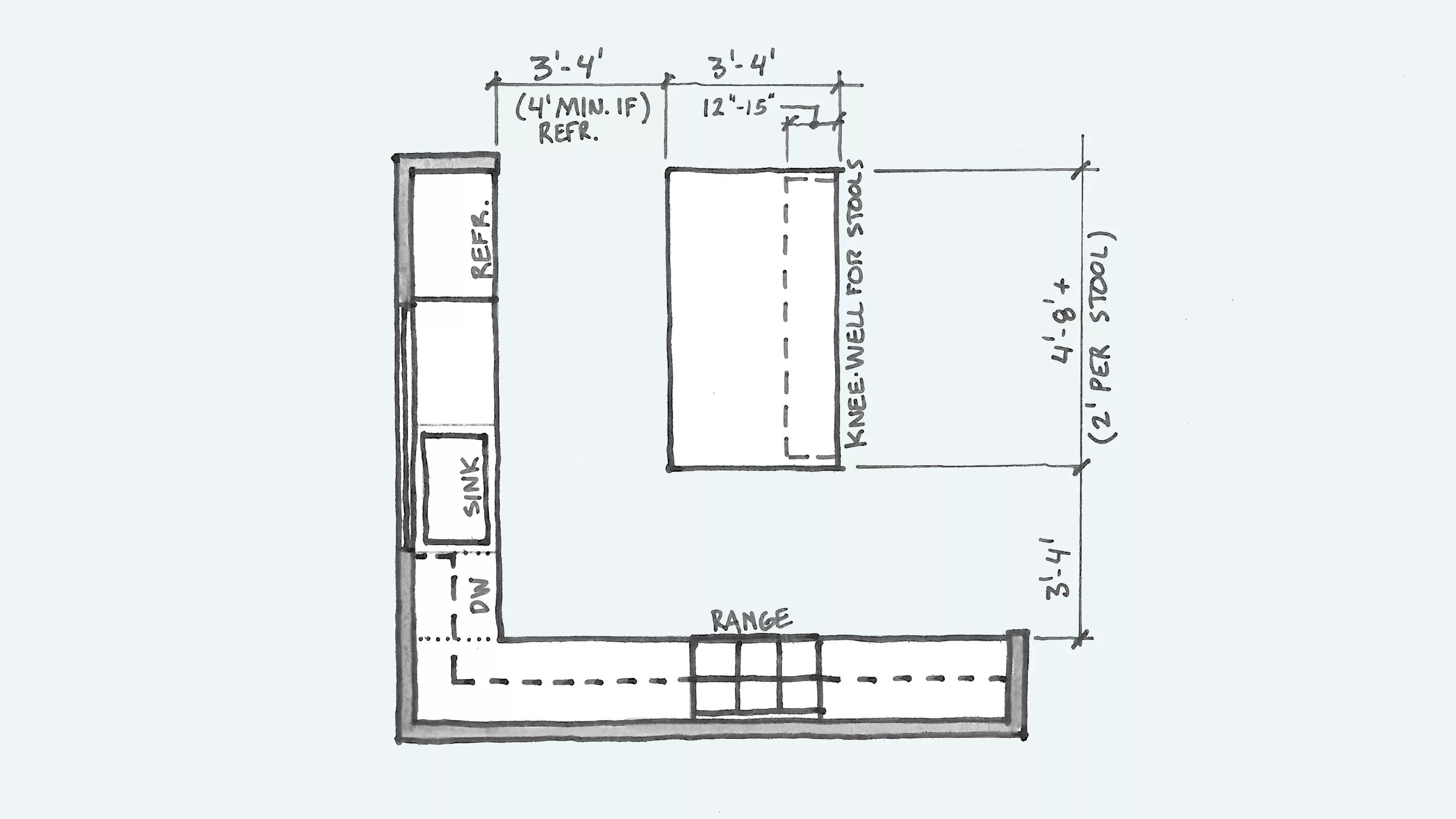
Image Source: www.boardandvellum.com
The Importance of Proper Kitchen Island Spacing
A kitchen island is more than just a countertop; it’s often the heart of the home. It’s a place for meal prep, casual dining, socializing, and sometimes even homework. Therefore, the walkway around island is as critical as the island’s design itself. Insufficient kitchen island spacing can lead to a cramped, inefficient, and even dangerous kitchen. Imagine trying to carry hot dishes or navigate with children when you’re constantly bumping into cabinets or people. This is where understanding kitchen island layout proportions becomes paramount.
Factors Influencing Your Kitchen Island Clearance Needs
Several factors will dictate how much usable space around kitchen island is truly necessary:
- Kitchen Size and Shape: A sprawling gourmet kitchen can accommodate a larger island with more generous walkways than a compact galley kitchen.
- Island Functionality: Will your island be primarily for prep, or will it also serve as a dining area with counter stool space? The latter requires more room.
- Appliance Placement: Consider the swing of refrigerator doors, oven doors, and dishwasher doors. These require dedicated clearance.
- Traffic Patterns: High-traffic kitchens need wider walkways to allow multiple people to move freely.
- Ergonomics and Accessibility: Ensuring comfortable movement for everyone, including those with mobility aids, is key.
Deciphering Minimum Walkway Widths: The Essentials
The most common recommendation for a minimum walkway width kitchen island is 36 inches (91 cm). This allows for basic passage of one person. However, to truly optimize your kitchen’s flow and functionality, consider these more specific guidelines:
The 36-Inch Rule: A Baseline
- What it is: A single-file passage is possible.
- When it might work: In very small kitchens where space is extremely limited, or if the island is purely decorative and rarely used for active prep or dining.
- Limitations: This can feel tight if two people need to pass each other, or if someone is standing at the island while another needs to pass behind them.
The 42-Inch Rule: A More Comfortable Standard
- What it is: Allows for more comfortable passage of one person and some elbow room.
- When it works best: This is a good general recommendation for most kitchens. It allows for easier movement around the island and sufficient space for one person to work at the island while another passes by.
- Benefits: Better island traffic flow, making it easier to access cabinets and appliances on opposite sides of the kitchen.
The 48-Inch Rule: Ideal for High-Traffic and Multi-Functional Islands
- What it is: Provides ample space for two people to pass each other comfortably, or for one person to work at the island while another walks behind them with ease.
- When it’s essential:
- If your island is the primary workspace.
- If you frequently have multiple cooks in the kitchen.
- If your island has seating for counter stool space.
- If the island is a major thoroughfare in your home.
- Benefits: Significantly enhances usable space around kitchen island and promotes a much smoother and safer kitchen experience.
The 60-Inch Rule: For Spacious, Multi-Functional Zones
- What it is: Offers generous space, essentially creating two distinct zones of movement.
- When it’s ideal:
- Large kitchens with substantial footprint.
- Islands that serve as a central hub for entertaining and dining.
- When you have multiple appliances or seating areas around the island.
- Benefits: Maximizes kitchen island clearance for ultimate comfort and flexibility, allowing for substantial interaction and movement around the island.
Optimizing Kitchen Island Spacing for Different Scenarios
The kitchen island spacing isn’t just about the distance between the island and the cabinets. It’s about the overall island traffic flow and how different elements interact.
Island to Countertop Clearance
This is the most common measurement. You need enough space between the island and the perimeter countertops (or cabinets) for easy movement.
| Clearance Type | Minimum Recommended | Ideal Recommendation | Best Practice (High Traffic/Seating) |
|---|---|---|---|
| Kitchen Island to Countertop | 36 inches (91 cm) | 42 inches (107 cm) | 48 inches (122 cm) or more |
| Kitchen Island to Appliance Door | 48 inches (122 cm) | 54 inches (137 cm) | 60 inches (152 cm) or more |
- Why these numbers? These figures account for a person to stand comfortably at the island, open drawers or cabinets on the perimeter, and for someone to pass by. Appliance doors, like refrigerators or ovens, require more space when open to prevent them from hitting the island.
Clearance for Seating: How Much Space for Chairs at Island?
If your kitchen island has seating, you need to factor in more space. This is for pulling out chairs and for people to sit comfortably without feeling crowded.
- When seating is on one side: Aim for at least 48 inches (122 cm) between the island edge and the wall or obstruction behind the seating. This allows chairs to be pulled out and for someone to walk behind the seated person.
- When seating is on two sides: You’ll need a minimum of 54 inches (137 cm) between the seating areas. This allows people to get in and out of their seats without disturbing others.
- Ideal scenario: For truly comfortable seating, especially if there’s foot traffic behind the seats, 60 inches (152 cm) or more is even better. This ensures ample counter stool space and a relaxed dining experience.
Island to Island (or Peninsula) Clearance
If you have a galley kitchen or a layout with two work zones, the space between them is critical.
- Minimum: 42 inches (107 cm) is acceptable for basic passage.
- Ideal: 48 inches (122 cm) to 60 inches (152 cm) is much preferred for smoother workflow and the ability for two people to work or pass simultaneously.
Clearance Around Appliances
- Refrigerator: Ensure there’s enough space for the door to swing open fully without hitting the island. This often requires 48 inches (122 cm) or more.
- Dishwasher: Similar to the refrigerator, the dishwasher door needs clearance. Position the island so the door can open without obstruction.
- Oven/Cooktop: If your island has an oven or cooktop, ensure adequate clearance for opening the oven door and for someone to safely stand in front of it while cooking, without being blocked by the island.
Maximizing Usable Space Around Kitchen Island
It’s not just about avoiding obstacles; it’s about making the usable space around kitchen island work for you.
Strategic Island Placement
The location of your island is key. Consider:
- Work Triangle: While the traditional work triangle (sink, refrigerator, cooktop) is still relevant, the island can become a fourth point or a central hub. Ensure easy access between these zones.
- Doorways and Entryways: Don’t place your island in a way that obstructs natural pathways into and out of the kitchen.
- Windows and Views: Position your island to take advantage of natural light and any attractive views.
Island Size and Shape Considerations
The kitchen island dimensions themselves play a huge role in how much space you need around them.
- Long, narrow islands: These can be good for tighter spaces, but ensure they don’t create a bottleneck.
- Large, rectangular islands: These often require wider walkways, especially if they have seating.
- Curved or angled islands: These can sometimes improve flow by softening corners and creating more organic pathways, but still require careful measurement.
- Island with seating: The depth needed for seating is crucial. Allow at least 15 inches (38 cm) of overhang for comfortable legroom. If you’re adding seating, you’ll need to add that depth to your island’s base dimension when calculating your kitchen island spacing.
The Impact of Cabinet and Drawer Access
- Opening cabinets and drawers: Every cabinet and drawer in your kitchen needs to open fully. Factor this into your kitchen island clearance. You don’t want to have to squeeze past the island to get to your pots and pans.
- Appliance garages and pull-outs: These also need clear access.
Common Layout Challenges and Solutions
Let’s look at some typical scenarios and how to apply these principles to achieve optimal island traffic flow.
Scenario 1: The Compact Kitchen
- Challenge: Limited square footage.
- Solution:
- Opt for a smaller, possibly narrower island.
- Consider a rolling island cart or a table that can be moved.
- If you have seating, make sure it’s tucked in and doesn’t encroach on main walkways.
- Prioritize the minimum walkway width kitchen island of 36 inches, but try to push for 42 inches where possible.
Scenario 2: The Open-Plan Living Space
- Challenge: The island acts as a divider and a central gathering point.
- Solution:
- A larger island with ample seating is often desirable.
- Ensure generous usable space around kitchen island to allow for easy movement between the kitchen and living/dining areas.
- Aim for 48 inches (122 cm) or more for your main walkways.
- Consider the kitchen island layout proportions carefully to balance the island’s visual impact with the overall room.
Scenario 3: The Multi-Functional Island (Prep, Dining, Storage)
- Challenge: The island serves many purposes, requiring different types of clearances.
- Solution:
- This is where the 48-inch rule or even 60-inch rule becomes essential, especially around seating areas.
- Ensure dedicated zones for prep, cooking, and dining.
- Don’t overload the island with too many features if it compromises circulation.
Tools and Techniques for Planning Your Space
Visualizing your kitchen layout is crucial.
Using Painter’s Tape
- How to do it: Before committing to an island purchase or build, use painter’s tape on your kitchen floor to mark out the island’s dimensions and the proposed clearances.
- Why it helps: You can walk around the taped area, open imaginary cabinet doors, and get a real feel for how much space you have. This is an excellent way to test your kitchen island spacing ideas.
Using Online Design Tools
- What they offer: Many websites and apps allow you to create 2D or 3D models of your kitchen. You can input your room dimensions, cabinet sizes, and island measurements to visualize the layout and test different kitchen island dimensions.
- Benefits: Helps with overall kitchen island layout proportions and identifying potential conflicts.
Consulting a Professional
- When it’s advisable: For complex layouts or when in doubt, a kitchen designer or architect can provide expert advice on optimal kitchen island spacing and functionality.
Frequently Asked Questions (FAQ)
Q1: What is the absolute minimum clearance I can get away with around my kitchen island?
The absolute minimum for a single-file passage is 36 inches (91 cm). However, this is often too tight for practical use, especially if you have seating or multiple people in the kitchen. For comfortable use, 42 inches (107 cm) is a much better minimum.
Q2: Can I put an island in a kitchen smaller than 10×10 feet?
Yes, you can, but you’ll need to be very strategic with your kitchen island dimensions. Consider a narrow island, a rolling cart, or a peninsula instead. The key is to ensure you still have adequate walkway around island for safety and functionality, often sticking closer to the 36-inch minimum where absolutely necessary.
Q3: How much space do I need behind counter stools at my island?
You need at least 15 inches (38 cm) of legroom for the person seated at the island. For comfortable passage behind someone seated, aim for a total of 48 inches (122 cm) from the island’s working edge to the wall or obstruction behind the seating. If there’s a walkway behind the seating, 54-60 inches (137-152 cm) is ideal to allow people to pass comfortably.
Q4: What if my island has appliances like a dishwasher or oven?
You need to account for the clearance required for these appliances to open. A standard dishwasher door needs about 24 inches (61 cm) of clearance, and an oven door can swing out even further. Ensure the kitchen island clearance allows these doors to open fully without hitting the island, often requiring 48-60 inches (122-152 cm) from the appliance to the island.
Q5: Is 42 inches of clearance enough if my island has seating?
While 42 inches (107 cm) is a good general clearance between the island and cabinets, it might be a bit tight if you have seating. For comfortable seating with traffic flow, it’s better to aim for 48 inches (122 cm) or more between the island’s edge (including the seating overhang) and any opposing cabinets or walls.
Q6: How do I determine the best kitchen island layout proportions for my space?
Consider the overall size of your kitchen, the main traffic patterns, and the intended use of the island. A larger kitchen can accommodate a larger island with more generous spacing. If the island is a primary workspace and dining area, prioritize wider walkways (48 inches+). For smaller kitchens, a more modest island with 36-42 inches of clearance might be the best compromise. Visualizing with tape or design software is key to finding the right kitchen island layout proportions.
By carefully considering these spacing guidelines, you can ensure your kitchen island enhances your kitchen’s functionality, flow, and overall appeal, creating a space that is a joy to work and live in.