
What is the best way to position recessed lighting in a kitchen? The best way to position recessed lighting in a kitchen is to create a balanced lighting plan that addresses general illumination, task lighting needs, and ambient moods, ensuring even light distribution and avoiding glare.
Getting your kitchen lighting right is crucial. It affects how you cook, eat, and even how big your kitchen feels. Recessed lighting, often called can lights or downlights, is a popular choice because it offers a clean, modern look and provides excellent general illumination. However, simply placing lights in random spots won’t cut it. A thoughtful kitchen lighting layout is key. This guide will walk you through how to achieve the perfect recessed lighting placement kitchen-wide, focusing on ceiling light spacing kitchen needs, task lighting kitchen ceiling requirements, general lighting kitchen coverage, and creating beautiful ambient lighting kitchen moods. We’ll cover everything from choosing the best recessed lighting for kitchen fixtures to creating a complete kitchen ceiling lighting plan.
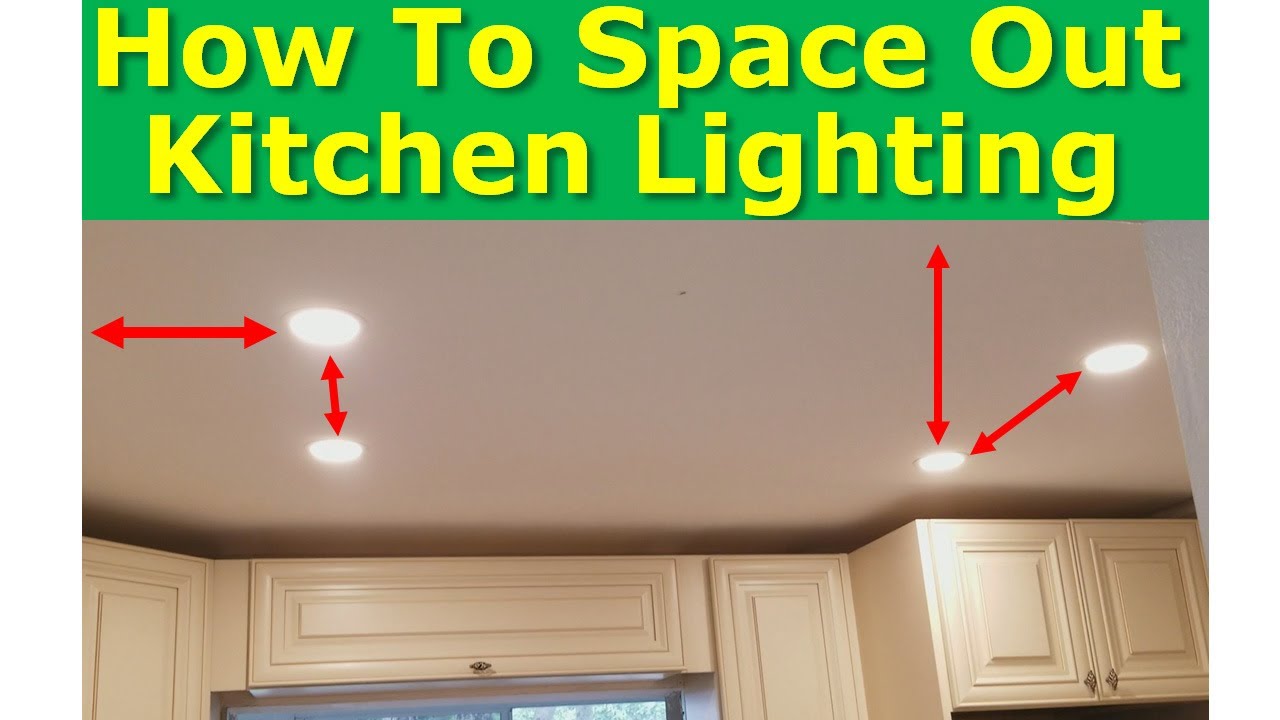
Image Source: i.ytimg.com
Fathoming Your Kitchen’s Lighting Needs
Before you even think about where to put those lights, you need to know what your kitchen needs. Every kitchen is different, with varying sizes, layouts, and how they are used.
General Lighting Kitchen: The Foundation
Every kitchen needs good general lighting kitchen. This is the base layer of light that makes the whole room feel bright and welcoming. It’s what you turn on when you first walk in. For this, recessed lighting is excellent because it provides a diffuse, even light across the entire space.
- Purpose: To provide overall illumination, allowing you to see and move around safely.
- Fixture Type: Recessed downlights with a wide beam spread are ideal for general lighting.
- Quantity: Depends on the size of your kitchen and the brightness of the bulbs used.
Task Lighting Kitchen Ceiling: Illuminating Work Areas
Cooking and preparing food require focused light. This is where task lighting kitchen ceiling comes into play. You need light directly on your countertops, stove, and sink. While recessed lights can contribute to task lighting, they often need to be supplemented by other fixtures like under-cabinet lights or pendants over islands.
- Purpose: To provide bright, focused light on specific work surfaces.
- Key Areas: Countertops, sink, stove/cooktop, prep areas.
- Placement Strategy: Position lights directly over work zones, ensuring no shadows are cast by the cook or their tools.
Ambient Lighting Kitchen: Setting the Mood
Beyond just seeing, good lighting can create an atmosphere. Ambient lighting kitchen refers to the softer, more diffused light that sets the mood. While recessed lights are primarily for general and task lighting, strategic placement and dimmable bulbs can also contribute to ambient lighting.
- Purpose: To create a comfortable and inviting atmosphere.
- Contribution of Recessed Lights: Using dimmers allows you to reduce the overall brightness for a cozier feel.
- Complementary Fixtures: Wall sconces or toe-kick lighting can also enhance ambient mood.
Deciphering Recessed Lighting Placement Kitchen Rules
Now, let’s get into the nitty-gritty of recessed lighting placement kitchen spaces. There are general guidelines, but your specific kitchen layout will dictate the final arrangement.
Ceiling Light Spacing Kitchen: The Golden Rule
Ceiling light spacing kitchen is about more than just putting lights equidistant. It’s about achieving even light distribution without creating dark spots or overly bright areas. The general rule of thumb is to divide the ceiling height by two to determine the spacing between fixtures.
Example:
If your kitchen ceiling is 8 feet high, divide by 2: 8 / 2 = 4 feet.
This suggests spacing your recessed lights approximately 4 feet apart.
However, this is a starting point. You also need to consider the distance from walls.
Distance from Walls
For optimal light distribution and to avoid the “pool of light” effect directly under each fixture, recessed lights should generally be placed 2 to 3 feet away from walls. This allows the light to spread and illuminate the perimeter of the room, making it feel larger and more cohesive.
- Why 2-3 feet? This distance helps the light wash down the walls, highlighting features and creating a more even overall brightness.
- Consideration: In very narrow hallways or small kitchens, you might adjust this slightly, but aim to keep it consistent.
Layout Strategies for Recessed Downlights Kitchen
The best recessed downlights kitchen plans depend on the room’s layout. Here are common strategies:
1. Grid Layout
This is the most common and straightforward approach. Lights are placed in a uniform grid pattern across the ceiling.
- Best For: Standard rectangular or square kitchens.
-
How to Plan:
- Measure the length and width of your kitchen.
- Determine the desired spacing between lights (e.g., 4 feet).
- Calculate how many lights fit along each dimension, accounting for the wall spacing (2-3 feet from each wall).
Example Calculation for a 12ft x 16ft Kitchen (8ft ceiling):
* Width (12ft):
* Spacing: 4ft.
* Distance from walls: 2.5ft each side (2.5 + 2.5 = 5ft).
* Remaining space: 12ft – 5ft = 7ft.
* Number of lights along width: 7ft / 4ft ≈ 1.75. Since you can’t have half a light, you’d typically use 2 lights along the width. This means the spacing might be slightly adjusted to 12ft – (2.5ft + 2.5ft) / 1 light = 7ft between lights, or you might slightly adjust the wall distance. A better approach might be: 2.5ft wall + 4ft light + 3ft wall = 9.5ft. You still have 2.5ft left. You can split this, perhaps 2.5ft, 4ft, 3.5ft, 2ft from the wall. Or, more simply, two rows of lights, each 2.5ft from the side walls, spaced about 6ft apart (12ft – 5ft = 7ft, so roughly 6ft spacing).
* Length (16ft):
* Spacing: 4ft.
* Distance from walls: 2.5ft each side (2.5 + 2.5 = 5ft).
* Remaining space: 16ft – 5ft = 11ft.
* Number of lights along length: 11ft / 4ft ≈ 2.75. You’d typically use 3 lights along the length. This means spacing them at 16ft – (2.5ft + 2.5ft) / 2 lights = 11ft / 2 = 5.5ft apart.This would result in a 2×3 grid of lights (6 total).
2. Perimeter Layout
This method involves placing lights around the outer edges of the room, creating a soft glow and highlighting the walls.
- Best For: Larger kitchens, kitchens with an island, or to create a more sophisticated ambiance.
- How to Plan:
- Place lights 2-3 feet from the walls.
- Adjust spacing based on the wall length, ensuring even coverage.
- This often works well in conjunction with other lighting types for the center of the room.
3. Layout Centered on Key Features
This approach focuses on lighting specific areas or features, such as a large island, a dining nook, or a pantry area.
- Best For: Kitchens with distinct zones or prominent architectural features.
- How to Plan:
- Island Lighting: If you have an island, place recessed lights 2-3 feet away from the island’s edges. Ensure the lights are centered over the work surfaces of the island. If the island is large, you might place two rows of lights along its length.
- Work Triangle: Position lights to illuminate the paths between the sink, stove, and refrigerator.
- Sink Area: Ensure there’s ample light directly over the sink for cleaning and food prep.
4. Combination Layout
Often, the best kitchen lighting design uses a combination of approaches. A grid for general coverage, supplemented by strategically placed lights for task areas.
- Example: A 4-light grid in the main cooking area, with two additional lights placed 2.5 feet out from the edge of a large island.
Comprehending Fixture Types and Beam Spreads
The type of recessed lighting you choose matters for your kitchen lighting layout.
Recessed Downlights Kitchen: The Basics
Recessed downlights are typically installed in the ceiling, with the trim and bulb recessed into the fixture.
Trim Types
- Standard/Baffle Trim: Features ribbed or textured surfaces to reduce glare. Good for general lighting.
- Snoot/Cone Trim: A cone-shaped interior that helps direct light and minimize glare.
- Gimbal/Adjustable Trim: Allows you to tilt and pivot the light source to direct light where needed. Excellent for highlighting specific areas or artwork.
- Wall Wash Trim: Designed with an angled reflector to cast a wider, more even wash of light down a wall. Useful for accenting cabinetry or backsplash.
Beam Spreads
- Narrow Flood (25-30 degrees): More focused light, good for task areas or accent lighting.
- Flood (35-50 degrees): A balanced beam, suitable for general lighting.
- Wide Flood (50-60 degrees): Spreads light over a larger area, excellent for general illumination in larger rooms.
Choosing the right beam spread is crucial for proper ceiling light spacing kitchen. Wider beams cover more area, meaning you might need fewer fixtures, but they can also be less effective for focused task lighting.
Best Recessed Lighting for Kitchen: Factors to Consider
When selecting the best recessed lighting for kitchen use, think about:
- Wattage/Lumens: Higher lumens mean brighter light. Consider the size of your kitchen and your desired brightness level.
- Color Temperature (Kelvin):
- Warm White (2700K-3000K): Cozy, inviting light, similar to incandescent bulbs. Good for ambient lighting.
- Cool White/Bright White (3500K-4000K): Crisp, neutral light, good for task lighting and general illumination.
- Daylight (5000K-6500K): Bluish, bright light, best for specific tasks where color accuracy is important, but can feel too stark for general kitchen use.
- Dimmability: Essential for creating different moods and adjusting light levels throughout the day. Ensure your fixtures and dimmer switch are compatible.
- Energy Efficiency: LED recessed lights are highly energy-efficient and last much longer than incandescent or halogen bulbs.
- Size of Fixture (Can Size): Common sizes are 4-inch and 6-inch. Smaller kitchens might benefit from 4-inch fixtures to avoid overwhelming the space, while larger kitchens can accommodate 6-inch fixtures.
Creating Your Kitchen Ceiling Lighting Plan
A well-thought-out kitchen ceiling lighting plan is your roadmap to perfect lighting.
Step-by-Step Planning Process
- Measure Your Kitchen: Get accurate dimensions of the length, width, and ceiling height.
- Sketch Your Layout: Draw a floor plan of your kitchen, including cabinets, appliances, islands, and any other significant features.
- Identify Key Zones: Mark out your primary work areas (countertops, sink, stove) and any areas needing specific lighting (dining nook, pantry entrance).
- Determine Lighting Layers: Decide how you’ll achieve general, task, and ambient lighting.
- Apply Spacing Rules:
- General Lighting: Use the ceiling height / 2 rule for initial spacing. Adjust for room shape and size. Place lights 2-3 feet from walls.
- Task Lighting: Position lights directly over work surfaces, typically 1-2 feet in front of cabinets or directly over an island. Ensure they don’t cast shadows on the work area.
- Consider Obstructions: Account for ceiling fans, vents, light fixtures, and structural beams that might affect placement.
- Select Fixtures: Choose trims, beam spreads, and bulb types that suit your needs.
- Map Out Wiring: Consult with an electrician to plan the wiring runs and switch locations. Multiple switches can help control different zones of lighting independently.
- Add Dimmers: Install dimmers on all or most of your recessed lights for maximum flexibility.
Visualizing Your Plan
It can be helpful to use graph paper or lighting design software to visualize your recessed lighting placement kitchen plan. You can even use painter’s tape on your ceiling (temporarily!) to mark out the proposed fixture locations before installation.
Table: Sample Recessed Lighting Placement for a Medium Kitchen
Let’s consider a hypothetical medium-sized kitchen (10ft x 12ft with an 8ft ceiling) with a central island.
| Zone/Area | Purpose | Recommended Fixture Type | Placement Strategy | Spacing (Approx.) | Notes |
|---|---|---|---|---|---|
| General | Overall light | 4″ or 6″ LED Downlights | Grid across the main kitchen area | 4-5 ft apart | 2-3 ft from walls. |
| Work Triangle | Task Light | 4″ or 6″ LED Downlights | Positioned to light paths between sink, stove, fridge | Varies | Supplement with under-cabinet lights for countertop illumination. |
| Island | Task Light | 4″ or 6″ LED Downlights | Centered over island work surfaces | 3 ft apart | 1-2 ft from island edges. Ensure no shadows when prepping. |
| Perimeter | Ambient/Task | 4″ LED Downlights (optional) | 2-3 ft from outer walls | 5-6 ft apart | Can wash walls, add subtle light. Use with dimmers for mood. |
| Sink Area | Task Light | 4″ LED Downlights or Gimbal | Directly over sink and faucet | N/A | Crucial for a key task area. Consider a gimbal for adjustability. |
| Cooktop Area | Task Light | 4″ LED Downlights | Over the cooktop (ensure clearance from heat/steam) | N/A | Ensure these are bright and focused. Complement with range hood light. |
Total Fixtures (Example): 6-8 recessed lights for general coverage, plus 2-4 over the island.
Optimizing Your Kitchen Lighting Design
A great kitchen lighting design goes beyond just placing lights. It’s about how they work together.
Layering Light: The Secret to Success
As mentioned, layering your lighting is key.
- Ambient: The base layer, providing general illumination. Recessed lights with dimmers are great here.
- Task: Focused light for activities like cooking, chopping, and cleaning. Under-cabinet lights, pendants over an island, and strategically placed recessed lights are crucial.
- Accent: Used to highlight architectural features, artwork, or display cabinets. Wall-washers, track lighting, or directional recessed lights can be used.
The Role of Dimmers
Dimmers are not optional; they are essential for a functional and flexible kitchen lighting layout. They allow you to:
- Adjust Brightness: Bright for cooking, dimmed for relaxing.
- Save Energy: Dimmed lights use less electricity.
- Extend Bulb Life: Especially true for some LED bulbs.
Ensure your dimmer switches are compatible with your chosen LED bulbs and fixtures.
Considering Ceiling Height and Room Size
- High Ceilings: May require wider beam spread lights or fixtures with a deeper baffle to direct light downwards effectively. Spacing might be slightly wider.
- Low Ceilings: Opt for shallower recessed fixtures (like wafer-thin LEDs) to avoid making the room feel smaller. Wider beam spreads are generally good here.
- Small Kitchens: Use fewer, smaller fixtures (e.g., 4-inch cans) and focus on even spacing to avoid a “spotlight” effect.
Avoiding Common Pitfalls
- Glare: Position lights so they don’t shine directly into people’s eyes, especially when they are seated. Use trims with good glare control.
- Dark Spots: Ensure lights are spaced correctly to cover the entire room evenly. Don’t place them too far from walls.
- Shadows: Position task lighting so that your body doesn’t cast shadows on your work surface.
- Over-Lighting: Too many lights, especially without dimmers, can make a kitchen feel harsh and sterile.
- Under-Lighting: Not enough light, particularly for tasks, can be frustrating and even unsafe.
Frequently Asked Questions (FAQ)
How far apart should recessed lights be in a kitchen?
For general lighting, a common guideline is to space recessed lights about as far apart as they are from the nearest wall. A good starting point is to divide your ceiling height by two. For an 8-foot ceiling, this means spacing lights roughly 4 feet apart. Always ensure you are 2-3 feet away from walls for even light distribution.
Can recessed lighting be used for task lighting in a kitchen?
Yes, recessed lighting can be used for task lighting, especially over countertops, sinks, and islands. However, it’s often best supplemented with other sources like under-cabinet lighting, which is specifically designed to illuminate countertops directly without casting shadows. Position recessed lights directly over the work surface for optimal task illumination.
What is the best type of bulb for kitchen recessed lighting?
LED bulbs are generally the best choice for kitchen recessed lighting due to their energy efficiency, long lifespan, and variety of color temperatures. Look for dimmable LED bulbs with a color temperature of 3000K-4000K for a good balance of brightness and warmth for general and task lighting.
How many recessed lights do I need in my kitchen?
The number of recessed lights depends on the size of your kitchen, the lumen output of the bulbs, and your desired brightness level. A good starting point is to use a lighting calculator or follow the spacing guidelines mentioned above (ceiling height divided by two, and 2-3 feet from walls) to determine placement and quantity.
Should recessed lights be centered over cabinets?
It’s generally better to place recessed lights slightly in front of cabinets, about 1-2 feet away from the cabinet face, especially over work areas. This ensures that the light directly illuminates your countertops and prep spaces, preventing shadows that can occur if the lights are directly above the cabinets.
What is the difference between general lighting and task lighting in a kitchen?
General lighting (ambient lighting) provides overall illumination for the entire room, making it safe and comfortable to navigate. Task lighting is more focused and brighter, directed at specific work areas like countertops, sinks, and stovetops to facilitate activities like cooking, chopping, and cleaning.
How do I create a good kitchen lighting layout?
A good kitchen lighting layout involves layering light: ambient for overall brightness, task for work areas, and accent for highlighting features. Plan your placement based on room dimensions, ceiling height, and key zones, using spacing guidelines. Incorporate dimmers for flexibility, and consider the type of fixtures and bulbs that best suit your needs.