
Can you have a separate kitchen and living room in a small apartment? Yes, absolutely! With smart design choices and creative solutions, you can achieve distinct zones even in the most compact living spaces. This guide will explore how to effectively separate your kitchen and living room in a small apartment, transforming it into a more functional and visually appealing home.
Living in a small apartment presents unique challenges, especially when it comes to defining separate areas for different activities. The open-concept style, while popular, can sometimes leave residents feeling like their living room is always “on display” and their kitchen is encroaching on their relaxation space. Fortunately, there are many effective strategies for achieving space separation in a small apartment layout without sacrificing precious square footage. This article will dive into various open concept solutions and creative partitions to help you carve out distinct zones for your kitchen and living room, making your compact dwelling feel much larger and more organized. We’ll cover everything from room dividers to furniture placement, and even the clever use of multifunctional furniture and smart storage solutions.
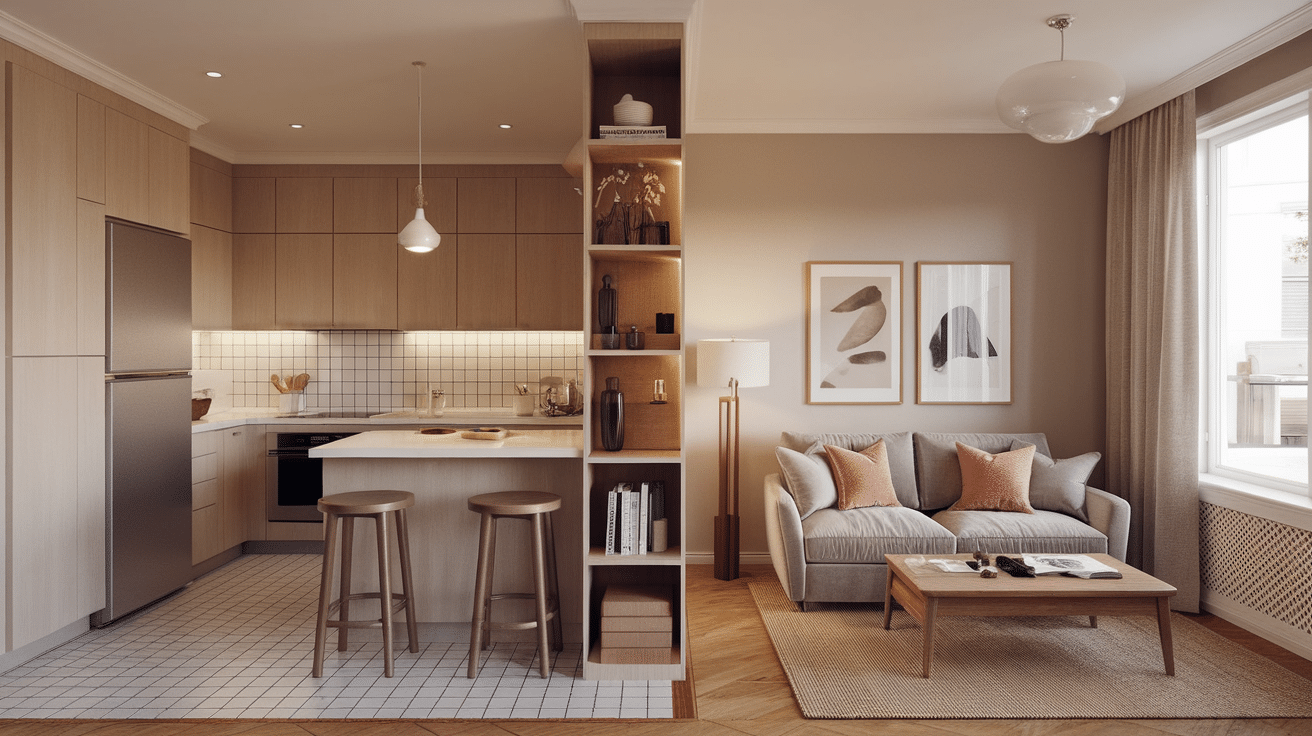
Image Source: opplehouse.com
Creating Distinct Zones: The Art of Separation
The goal in a small apartment isn’t necessarily to build permanent walls, but to create visual separation and functional boundaries. This can be achieved through a variety of methods that define one space from another without fully enclosing them.
Strategic Furniture Placement
One of the simplest and most effective ways to separate your kitchen from your living room is through careful furniture placement. Think of your furniture as the building blocks of your zones.
Sofa as a Room Divider
- The Power of the Back: A sofa, especially one with a solid back, can act as a natural barrier between the cooking and living areas. Place it with its back facing the kitchen, creating a clear demarcation.
- Orientation is Key: Ensure the sofa is oriented to face the living room area, inviting conversation and relaxation.
- Consider Size: Choose a sofa that fits the scale of your apartment. A bulky sofa can overwhelm a small space, while a sleek, modern design can enhance it.
Console Tables and Ottomans
- Behind the Sofa: A slim console table placed behind the sofa can serve as a surface for lamps, decor, or even a small bar area, further reinforcing the separation.
- Ottomans for Flexibility: Large ottomans can also function as a soft barrier. They can be moved easily, offering flexibility for entertaining or when you need more open space. They can also double as coffee tables or extra seating.
Bookshelves and Storage Units
- Open or Closed: Freestanding bookshelves or open shelving units can provide a more significant visual break. Opt for open designs to maintain a sense of airiness and light.
- Double Duty: These units also offer invaluable smart storage solutions, perfect for books, decor, or kitchen essentials that you want on display or easily accessible.
Utilizing Room Dividers
Room dividers are specifically designed for space separation and offer a versatile way to create distinct areas in a small apartment.
Types of Room Dividers
Here’s a look at some popular and effective room divider options:
| Divider Type | Pros | Cons | Best For |
|---|---|---|---|
| Folding Screens | Lightweight, portable, easy to store, wide variety of styles. | Can be flimsy, less effective for sound dampening. | Creating temporary or easily adjustable separations. |
| Bookshelves | Provides storage, creates a solid visual barrier, can be decorated. | Can be bulky, requires assembly, might block light. | Those needing extra storage and a more permanent feel. |
| Curtains/Drapes | Soft, adds texture and color, can be drawn to open up space. | Can look cluttered if not hung properly, less effective for sound. | Adding a softer, more fluid separation. |
| Shoji Screens | Lightweight, elegant, allows light to filter through. | Fragile, not very durable for high-traffic areas. | Creating a Zen-like atmosphere and soft light diffusion. |
| Slatted Dividers | Offers a partial visual screen, allows light and air to flow. | Less privacy, can be more involved to install. | Maintaining a sense of openness while defining zones. |
| Plant Stands | Adds greenery, natural, improves air quality, creates a natural barrier. | Requires plant care, can be less effective for a strong separation. | Adding life and a soft, organic division. |
| Pegboards | Highly customizable for storage and display, modern look. | Can look unfinished if not organized, requires mounting. | Creative individuals who want a functional and stylish divider. |
DIY Room Divider Ideas
- Repurposed Doors: An old door can be painted and mounted on a track or hinges to create a unique room divider.
- Hanging Macrame or Fabric: Simple yet effective, these can be hung from the ceiling or a curtain rod for a bohemian touch.
- Pallet Wood Screen: Stack and secure pallet wood pieces to create a rustic and industrial-style divider.
Visual Separation Techniques
Beyond physical dividers, you can employ visual separation techniques to make the kitchen and living room feel like distinct spaces.
Flooring
- Change the Flooring: Using different flooring materials can powerfully delineate zones. For example, tile or linoleum in the kitchen and hardwood or carpet in the living room.
- Area Rugs: In an open-concept space, a well-placed area rug can anchor the living room furniture and clearly define its boundaries, creating a cozy nook within the larger space.
Lighting
- Task vs. Ambient: Use different lighting to signal different functions. Brighter, task lighting (like under-cabinet lights or a pendant over a kitchen island) signals the kitchen, while softer, ambient lighting (floor lamps, table lamps) defines the living room.
- Dimmers: Install dimmers in the living room to control the mood and create a more intimate atmosphere.
Color and Decor
- Accent Walls: A different paint color or wallpaper on one wall can visually separate the two areas.
- Cohesive Palette, Distinct Accents: While maintaining a generally cohesive color scheme throughout the apartment, you can use accent colors specific to each zone. For instance, vibrant colors in the kitchen and calming tones in the living room.
Maximizing Functionality in Small Spaces
In a small apartment, every piece of furniture and every design choice needs to work harder. Multifunctional furniture and smart storage solutions are your best friends.
Multifunctional Furniture: The Space-Saving Heroes
Multifunctional furniture is key to making a small apartment work. It offers utility without occupying excess space.
Kitchen/Dining Solutions
- Extendable Dining Tables: A table that can expand for guests and fold away when not in use is a game-changer.
- Breakfast Bars/Peninsulas: If space allows, a small peninsula extending from a countertop can serve as both extra prep space and a dining area, effectively separating the kitchen from the living space.
- Nesting Tables: These can be tucked away when not needed and brought out for dining or as side tables.
Living Room Solutions
- Ottomans with Storage: As mentioned earlier, these offer seating, a footrest, and hidden storage.
- Sofa Beds: Essential for accommodating guests without a dedicated guest room.
- Coffee Tables with Storage: Look for coffee tables with drawers, shelves, or lift-tops for added utility.
Smart Storage Solutions: Declutter and Define
Effective storage is crucial for keeping a small apartment tidy and making the separation between kitchen and living room feel intentional rather than chaotic.
Kitchen Storage
- Vertical Storage: Utilize wall space with tall cabinets, open shelving, or magnetic knife strips.
- Drawer Organizers: Keep your drawers neat and maximize their capacity.
- Over-the-Sink Racks: These can hold dishes and utensils, freeing up counter space.
- Pegboards: Install a pegboard in the kitchen for hanging pots, pans, and utensils, keeping them off the counters and easily accessible.
Living Room Storage
- Wall-Mounted Shelving: Floating shelves can display decor or store books without taking up floor space.
- Storage Baskets and Bins: Use these stylish containers to hide clutter like blankets, remotes, or magazines.
- Furniture with Built-in Storage: Opt for furniture that doubles as storage, like a storage ottoman or a media console with cabinets.
Creative Partitions for Small Apartments
Beyond the standard room dividers, there are many creative partitions that can add personality and function to your small apartment.
Open Shelving as Partitions
- Benefits: Open shelving units are excellent for space separation because they create a visual break without completely blocking light or air circulation. They also provide display and storage opportunities.
- Considerations: Opt for units that are not too deep to avoid making the narrow walkways feel even tighter. Styles that are open on both sides are ideal for a seamless flow.
Plant Dividers
- Natural Appeal: Tall plants in decorative pots or a series of smaller plants on shelves can create a lush, natural visual separation.
- Air Quality: Bonus points for improving indoor air quality and adding a touch of nature.
- Height Variation: Mix plant heights for visual interest and a more substantial barrier.
Sliding Doors or Panels
- Modern and Chic: Sliding doors, whether made of frosted glass, wood, or even fabric panels, offer a sleek way to section off areas.
- Flexibility: They can be opened to create an open-concept feel or closed for privacy and separation. This is an excellent option for studio apartment ideas.
Fold-Down or Wall-Mounted Tables
- Space-Saving Dining: A table that folds down from the wall can serve as a dining surface for two, and when folded up, it frees up significant floor space, allowing the living area to expand.
- Versatile Use: These can also double as a workspace or a craft table.
Accordion or Folding Doors
- Temporary Separation: Similar to folding screens, accordion doors offer a more permanent-feeling separation that can be opened or closed as needed.
- Variety of Materials: Available in wood, vinyl, and even glass, you can find an option to match your decor.
Tips for Studio Apartment Ideas
When dealing with studio apartment ideas, where the kitchen, living, and sleeping areas are often combined, the principles of space separation become even more critical.
Creating a “Bedroom” Zone
- Strategic Divider: Use a bookshelf, a tall plant, or a decorative screen to create a sense of separation for your sleeping area. This is especially important in a studio apartment.
- Bed Placement: Position your bed in a corner or against a wall to maximize the feeling of enclosure.
Defining the Living Area
- Area Rugs are Essential: As mentioned, an area rug is a must-have for defining the living room space in a studio.
- Sofa Facing Inward: Orient your sofa to face a TV or a focal point within the living zone, drawing attention to that area.
Kitchen Separation in a Studio
- Clear Boundaries: Even a small kitchen can benefit from a clear visual or physical separation. A peninsula, a tall plant, or a well-placed cabinet can help.
- Consistent Style: While separating, ensure the styles flow together to avoid a choppy look.
Maintaining Flow and Ambiance
Even with clear separation, it’s important to maintain a sense of cohesion and flow in your small apartment.
Color Palette Consistency
- Unified Theme: While using accent colors for different zones, ensure an overarching color palette unites the entire apartment. This creates a harmonious and larger-feeling space.
Lighting Harmony
- Matching Fixtures: If possible, choose lighting fixtures that share a similar style or finish to tie the spaces together.
Material Cohesion
- Repeating Elements: Repeating certain materials, like wood tones or metallic finishes, across both the kitchen and living room areas can create a sense of continuity.
Frequently Asked Questions (FAQ)
Q1: What is the easiest way to separate a kitchen and living room in a small apartment?
A1: The easiest way is often through strategic furniture placement, such as positioning your sofa with its back to the kitchen, or using a large area rug to define the living room space.
Q2: Can I use curtains to separate my kitchen and living room?
A2: Yes, curtains are a flexible and affordable option for space separation. They can add softness, color, and can be drawn back to open up the space when desired.
Q3: How can I make my small apartment feel less like a studio and more like a multi-room space?
A3: Employ creative partitions, such as bookshelves or slatted screens, and utilize different flooring or visual separation techniques like rugs and lighting to create distinct zones.
Q4: What kind of furniture is best for small apartments that need separation?
A4: Multifunctional furniture is ideal. Think sofa beds, ottomans with storage, extendable dining tables, and nesting tables.
Q5: Is it possible to add a permanent wall in a small apartment to separate the kitchen and living room?
A5: While possible, adding a permanent wall can make a small apartment feel even smaller and can be costly. Most people opt for room dividers or creative partitions that offer more flexibility.
Q6: How do I maintain a sense of openness while separating my kitchen and living room?
A6: Use room dividers that allow light and air to pass through, such as open shelving, slatted screens, or sheer curtains. Avoid solid, heavy barriers.
By implementing these strategies, you can transform your small apartment into a more functional, organized, and aesthetically pleasing living space, successfully separating your kitchen and living room to create distinct and enjoyable zones.