
A standard kitchen countertop is typically 24 inches deep and 36 inches high. But how wide is a kitchen countertop? The width of a kitchen countertop can vary significantly, from as little as 12 inches for small prep areas to over 100 inches for large, expansive kitchen islands. This guide will delve into the various factors that determine countertop width, explore common dimensions, and help you make informed decisions for your own kitchen.
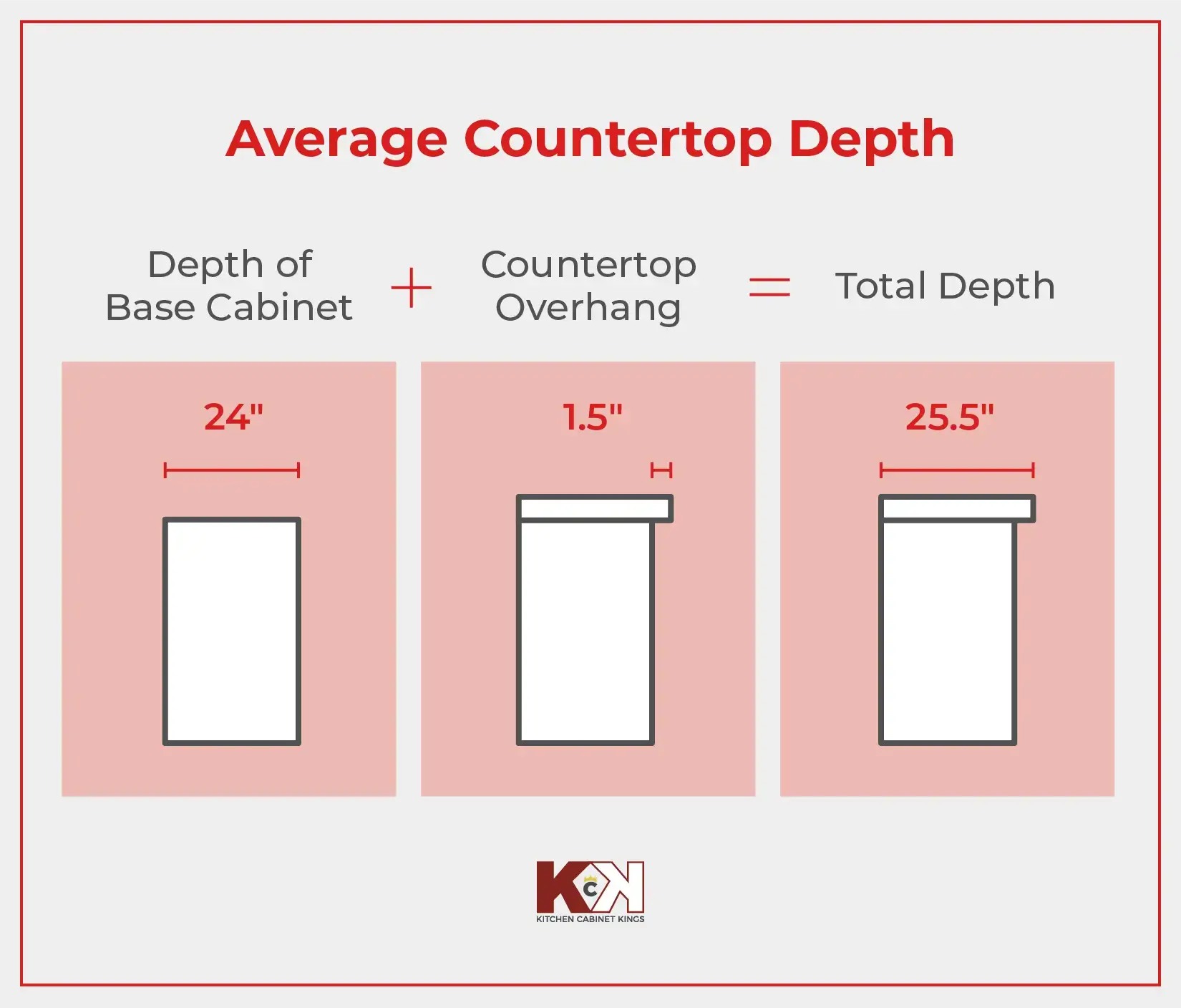
Image Source: cdn.kitchencabinetkings.com
Deciphering Standard Countertop Widths
When we talk about the “width” of a kitchen countertop, we’re generally referring to the length of the continuous surface. Unlike depth, which has more consistent guidelines, the width is highly dependent on the layout and design of your kitchen. There isn’t one single “standard countertop width” that applies to every kitchen. Instead, we see a range of widths dictated by the available space and intended use.
The Average Kitchen Counter Dimensions
The average kitchen counter dimensions for a base cabinet are usually 24 inches deep and 36 inches high. This depth provides a good balance for countertop workspace and allows for standard cabinet construction. The height is set to comfortable working levels for most adults. However, the width of these runs can be quite variable. A small galley kitchen might have counter runs of only 36 inches on each side, while a large, open-plan kitchen could feature counter sections extending 8 feet or more.
Minimum Counter Width for Functionality
For a functional kitchen workspace, there are some basic minimum counter width considerations. A very narrow countertop, perhaps 18 inches wide, might serve as a small landing zone next to a microwave or a decorative shelf. However, for practical food preparation, a wider expanse is necessary.
Key Minimum Widths to Consider:
- Prep Areas: Aim for at least 24-30 inches of continuous countertop space for basic chopping and food prep. This allows room for ingredients, cutting boards, and knives.
- Appliance Placement: If you intend to place a small appliance like a toaster or coffee maker, ensure that section of the countertop is at least 18-24 inches wide to accommodate the appliance and some surrounding space.
Kitchen Workspace Requirements and Countertop Width
Efficient kitchen workspace requirements are directly linked to countertop width. The more expansive your counter surface, the more efficiently you can move between tasks. Think about the “kitchen work triangle” – the path between the sink, refrigerator, and stove. Adequate counter width on either side of these zones is crucial for seamless workflow.
- Sink Landing Zones: It’s highly recommended to have at least 18-24 inches of countertop space on one side of the sink for dirty dishes and another 18-24 inches on the other side for drying or placing clean items.
- Stove Landing Zones: Similar to the sink, having 18-24 inches of clear counter space on each side of the stovetop is essential for placing hot pots, pans, and ingredients.
- General Prep Space: The largest continuous stretch of countertop is often the most valuable. This is where you’ll likely do most of your chopping, mixing, and assembling. Aim for at least 36 inches of clear space here if possible.
Exploring Countertop Depth and Its Implications
While the question is about width, it’s impossible to discuss countertop dimensions without touching upon kitchen counter depth. The standard depth of 24 inches is designed to align with standard base cabinets, which are typically 23.25 inches deep to allow for the door or drawer front.
Standard Countertop Depth in Detail
The standard countertop depth of 24 inches is a well-established industry norm. This depth offers a generous workspace and accommodates various kitchen tasks. However, there are instances where custom depths might be considered:
- Deeper Counters: Some homeowners opt for deeper countertops (e.g., 30-36 inches) to create more expansive prep areas or to accommodate larger appliances like professional-grade ranges. This usually requires custom cabinetry.
- Shallower Counters: In very compact kitchens, shallower countertops might be used, but this can limit workspace and appliance options.
The Significance of Countertop Overhang
Countertop overhang refers to the portion of the countertop that extends beyond the front edge of the base cabinets. This is an important design element that impacts both aesthetics and functionality.
Typical Overhang Guidelines:
- Standard Base Cabinets: A common countertop overhang for standard base cabinets is 1.5 inches. This creates a finished look and provides a slight buffer.
- Kitchen Islands: For kitchen islands, especially those with seating, the overhang can be more substantial, often ranging from 10-12 inches for comfortable legroom.
- Eating Bars: If your island or peninsula is intended as an eating bar, a minimum overhang of 12 inches is generally recommended for comfortable seating.
The overhang also plays a role in the effective usable width of your countertop. While the cabinet might be 24 inches deep, the countertop itself might be 25.5 inches deep due to the overhang.
Countertop Clearance: Ensuring Flow and Safety
Countertop clearance is vital for ensuring a smooth and safe kitchen environment. This refers to the open space around your countertops, allowing for comfortable movement and access to appliances and cabinets.
Essential Clearance Considerations:
- Aisle Width: The primary clearance concern is aisle width. In main traffic areas, aim for a minimum of 36 inches. For areas where two people might be working or passing, 42-48 inches is ideal.
- Appliance Doors: Ensure enough clearance for appliance doors (refrigerator, dishwasher, oven) to open fully without hitting countertops or other cabinets.
- Drawer and Cabinet Access: You need sufficient space to pull out drawers and open cabinet doors completely.
Fathoming Kitchen Island Width and Design
Kitchen island width is a particularly exciting area of countertop design, as islands often serve multiple functions and can be tailored to specific needs. Unlike standard counter runs, island widths can be much more variable and are often dictated by the overall kitchen size and layout.
Designing for Maximum Functionality
When determining the ideal kitchen island width, consider its primary purpose:
- Prep Station: If the island is mainly for food preparation, a wider surface (e.g., 36-48 inches or more) is beneficial.
- Seating Area: If seating is a key function, you’ll need to factor in the overhang required for comfortable legroom. A standard island width of 36 inches might accommodate a 12-inch overhang. For seating on two sides, a greater width is often necessary.
- Appliance Hub: If the island will house a cooktop, sink, or dishwasher, its width needs to accommodate these appliances plus adequate landing space around them.
Common Kitchen Island Widths
The average kitchen counter dimensions for islands can range significantly. Here’s a general idea:
| Island Function | Minimum Width (inches) | Recommended Width (inches) | Notes |
|---|---|---|---|
| Small Prep/Landing | 24 | 30-36 | Good for smaller kitchens. |
| Seating (one side) | 36 | 42-48 | Accommodates 12-inch overhang for seating. |
| Seating (two sides) | 48 | 60+ | Allows for seating and traffic flow. |
| Appliance Integration | 48 | 60+ | Needs space for appliances and landing. |
| Large Entertainment | 60+ | 72+ | Can accommodate sinks, prep areas, seating. |
The Impact of Island Depth on Width
While we’re focusing on width, it’s worth noting that island depth also influences the overall footprint and perceived width. Standard base cabinets are 24 inches deep. However, islands can be designed with deeper cabinetry, or a combination of shallow cabinetry and open shelving, which can affect their overall depth and the usable width of the countertop.
Custom Countertop Sizes: Tailoring to Your Needs
For many homeowners, custom countertop sizes offer the perfect solution for unique kitchen layouts or specific functional requirements. While standard sizes are readily available and often more budget-friendly, custom options provide unparalleled flexibility.
When to Consider Custom Widths
- Unusual Kitchen Layouts: Older homes or architecturally unique spaces might not accommodate standard cabinet and countertop dimensions. Custom sizes ensure a perfect fit.
- Specific Workflow Needs: If you have very particular kitchen workspace requirements, custom widths can be designed to optimize your cooking and prep flow.
- Appliance Integration: Fitting a unique or oversized appliance might necessitate custom countertop widths to provide adequate landing space.
- Aesthetic Vision: Sometimes, a particular design aesthetic calls for a wider or narrower counter run than what’s typically available.
Working with Custom Countertop Fabricators
When opting for custom countertop sizes, collaboration with a reputable fabricator is key. They can help you translate your vision into practical dimensions, considering material limitations and structural integrity. Be prepared to discuss:
- Your desired width and length for each countertop section.
- The intended use of each area (prep, serving, appliance placement).
- Any required overhangs or special edge profiles.
- The overall kitchen layout and how the countertops will integrate.
Materials and Their Influence on Width
The type of countertop material you choose can also subtly influence the practical width and fabrication possibilities. While most materials can be cut to custom lengths, some have limitations on slab size, which might affect seamless runs.
Common Countertop Materials and Widths
- Granite and Quartz: These natural and engineered stones come in large slabs, typically around 10-12 feet long. This means you can achieve long, seamless countertop runs without many seams, which is ideal for maximizing functional width.
- Laminate: Laminate countertops are often manufactured in standard widths and lengths. While they can be cut to size, very long custom widths might involve more seams.
- Solid Surface (e.g., Corian): Solid surface materials can be fabricated into very long, seamless pieces, making them excellent for custom widths and integrated sinks.
- Wood (Butcher Block): Wood countertops are often made by joining shorter pieces together. While long widths are achievable, the aesthetic will change with longer runs.
- Stainless Steel: Stainless steel counters can be fabricated to virtually any length, offering great flexibility for custom widths.
Visualizing Your Countertop Width
It’s one thing to read about dimensions, and another to visualize them in your space. Here are some tips:
- Use Painter’s Tape: Outline your intended countertop widths on your existing cabinets or floor. This gives you a tangible sense of the space.
- Cardboard Mock-ups: Cut out pieces of cardboard to represent your desired countertop widths and place them in your kitchen.
- Measure Your Appliances: Ensure the widths you choose will accommodate your appliances with the necessary landing space.
- Consider Traffic Flow: Walk through your kitchen with your proposed layout in mind. Are the aisle clearances adequate? Can you move freely?
Frequently Asked Questions (FAQ)
Q1: What is the standard depth of a kitchen countertop?
A1: The standard kitchen countertop depth is 24 inches, which aligns with standard base cabinets.
Q2: Can I have a countertop wider than 100 inches?
A2: Yes, you can have a countertop much wider than 100 inches, especially with kitchen islands or custom-fabricated counter runs. Material slab sizes and structural support will be key considerations for very long widths.
Q3: What is the minimum counter width I should aim for in my kitchen?
A3: For practical food preparation, aim for a minimum of 24-30 inches of continuous counter width in your main prep areas.
Q4: How much countertop overhang is standard?
A4: A standard countertop overhang for base cabinets is typically 1.5 inches. For kitchen islands with seating, an overhang of 10-12 inches is common for legroom.
Q5: Does countertop width affect countertop height?
A5: No, countertop width and countertop height are separate dimensions. Standard countertop height is usually 36 inches from the floor.
Q6: What are typical kitchen island widths?
A6: Kitchen island widths can vary greatly, but common widths range from 30 inches for small prep islands to 60 inches or more for islands with seating and appliances.
Q7: How do I ensure I have enough countertop clearance?
A7: Ensure at least 36 inches of clearance in main traffic aisles, and more if possible. Also, confirm there’s enough space for appliance doors, drawers, and cabinet doors to open fully.
Q8: Is a 12-inch countertop width useful?
A8: A 12-inch countertop width is generally too narrow for primary food preparation. It might serve as a narrow shelf, a decorative element, or a small landing spot for a very compact appliance.
Q9: What are the benefits of custom countertop sizes?
A9: Custom countertop sizes allow for perfect integration into unique kitchen layouts, optimization of workspace, and accommodation of specific appliance needs or aesthetic preferences.
Q10: How does the material affect the achievable countertop width?
A10: Materials like granite and quartz come in large slabs, allowing for long, seamless runs. Other materials might have limitations on slab size, potentially requiring more seams for very wide or long countertops.
By carefully considering these dimensions and planning your kitchen layout with kitchen workspace requirements in mind, you can create a functional, beautiful, and efficient space. Whether you opt for standard sizes or embrace the flexibility of custom countertop sizes, your countertop width plays a pivotal role in your kitchen’s overall success.