
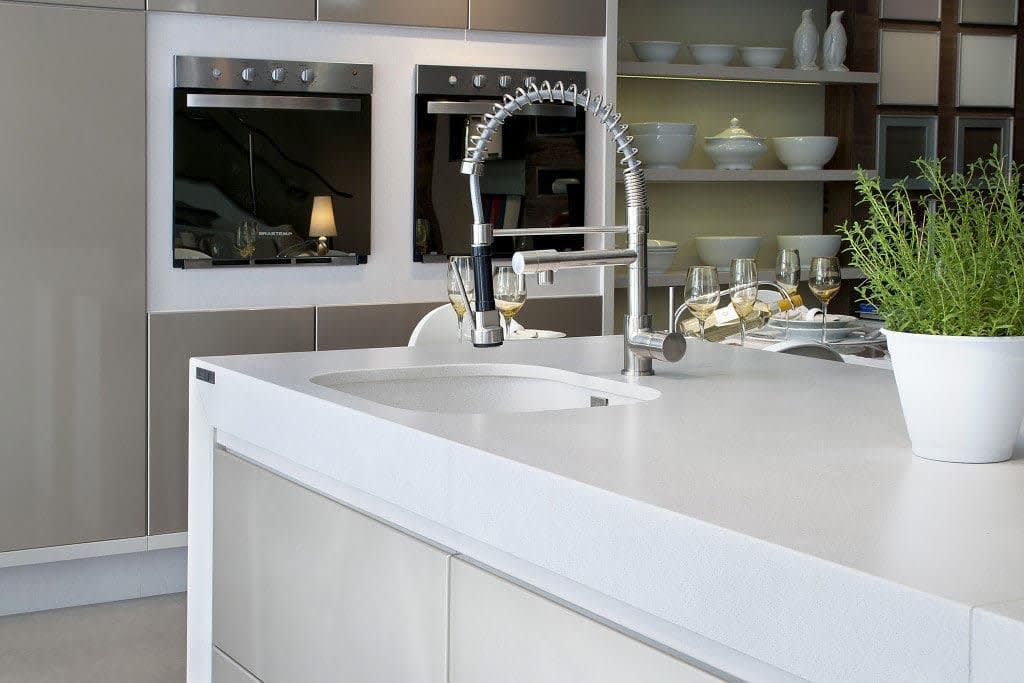
Image Source: images.ctfassets.net
Essential Guide: How Thick Is Kitchen Countertop?
The typical kitchen countertop thickness ranges from 1.5 inches to 2 inches. However, this can vary significantly based on the material, design preferences, and structural requirements. Let’s explore the specifics.
Deciphering Kitchen Countertop Thickness: A Comprehensive Look
When planning your dream kitchen, one crucial element that often gets overlooked until the last minute is the kitchen countertop thickness. It’s more than just an aesthetic choice; it impacts the overall look, feel, and functionality of your kitchen. This guide will delve into the various aspects of kitchen countertop thickness, from the most common dimensions to specialized options. We’ll cover everything you need to know to make an informed decision for your home.
Standard Countertop Depth and Thickness
The standard countertop depth is typically 25 inches, extending from the wall to the front edge. This allows for comfortable cabinet installation and sufficient workspace. However, the thickness is what we are focusing on here. When we talk about kitchen worktop thickness, we are referring to the vertical measurement of the slab itself.
Most homeowners opt for a standard countertop thickness that provides a good balance between visual weight and cost-effectiveness. This usually falls between 1.5 inches and 2 inches. These thicknesses offer a solid feel without being overly bulky or requiring excessive support.
Why Thickness Matters
The thickness of your countertop influences several factors:
- Visual Weight: A thicker countertop often appears more substantial and luxurious. A thinner slab might look more minimalist or delicate.
- Durability: While material is the primary factor in durability, a thicker slab can sometimes offer enhanced resistance to cracking or chipping, especially in high-traffic areas.
- Support Requirements: Thicker countertops, particularly those made of heavier materials like natural stone, may require additional support from the cabinets or a substrate.
- Edge Profile Options: The thickness dictates the types of edge profiles you can achieve. Thicker slabs allow for more dramatic edge treatments like a double bevel or waterfall edge.
- Cost: Generally, thicker slabs cost more because they use more material.
Exploring Countertop Material Thickness
The choice of countertop material thickness is closely tied to the inherent properties and typical fabrication methods of each material. Different materials have natural strengths and limitations that influence how thick they are commonly made.
Quartz Countertop Thickness
Quartz countertop thickness is remarkably consistent due to its manufacturing process. Most quartz slabs are fabricated to a standard thickness of 2 centimeters (approximately 3/4 inch) or 3 centimeters (approximately 1 1/4 inches).
- 2 cm Quartz: This is a popular choice for its sleek and modern appearance. It’s lighter than 3 cm and generally more affordable. However, it often requires plywood support or a reinforced sub-structure beneath it, especially for island overhangs or areas subjected to significant weight.
- 3 cm Quartz: This is the more common and often preferred thickness for quartz. It offers a more substantial look and feel, eliminating the need for additional support in most standard installations. It’s also generally more resistant to cracking under pressure.
While these are the standards, custom countertop dimensions for quartz are possible, but fabricating significantly thicker slabs can be technically challenging and cost-prohibitive due to the composite nature of the material.
Granite Countertop Thickness
Granite countertop thickness typically ranges from 2 cm to 3 cm. Granite is a natural stone, and its thickness is often dictated by quarrying and fabrication capabilities.
- 2 cm Granite: Similar to quartz, 2 cm granite offers a sleeker profile. It’s usually more affordable and easier to handle during installation. However, like 2 cm quartz, it often requires plywood sub-tops or specialized support systems, particularly for overhangs, to prevent sagging or breakage.
- 3 cm Granite: This is the most common and highly recommended thickness for granite countertops. It provides a robust, durable surface that doesn’t typically require additional support. The 3 cm thickness lends a sense of luxury and permanence to the kitchen, and it is more forgiving of heavy use.
When considering custom countertop dimensions for granite, you might find options for thicker slabs, but these are less common, significantly more expensive, and may require specialized handling and installation due to their immense weight.
Laminate Countertop Thickness
Laminate countertop thickness is generally more uniform and thinner than natural stone or quartz. Standard laminate countertops are typically 1.5 inches (3.8 cm) thick. This thickness is achieved by bonding a decorative laminate sheet to a particleboard or plywood core.
- 1.5 inch Laminate: This is the most prevalent thickness for laminate, offering a classic and functional aesthetic. It’s lightweight and easy to install. The thickness is primarily determined by the substrate and the laminate layers, not by structural necessity in the same way as stone.
While custom countertop dimensions for laminate are available, increasing the thickness significantly might compromise the structural integrity of the particleboard core and is not a common practice. Thicker laminate edges are often achieved by building up layers or using a more substantial edge banding.
Marble Countertop Thickness
Marble countertop thickness generally follows the same guidelines as granite, as it is also a natural stone.
- 2 cm Marble: Available for a more delicate look, but due to marble’s natural porosity and susceptibility to staining and etching, the 2 cm thickness is often less recommended for heavy kitchen use without proper sealing and diligent maintenance. It typically requires sub-tops for support.
- 3 cm Marble: This is the preferred thickness for marble kitchen countertops. The increased thickness provides greater strength and a more luxurious feel. It offers better resistance to chipping and cracking, making it more suitable for the demands of a kitchen environment.
Custom countertop dimensions for marble can be explored, but like granite, thicker slabs will be considerably heavier and more expensive.
Butcher Block Countertop Thickness
Butcher block countertop thickness offers a wide range of options, allowing for significant customization.
- 1.5 inches (3.8 cm): This is a common and accessible thickness for butcher block. It’s suitable for general countertop use and provides a good surface for light prep work.
- 2 inches (5 cm): A very popular choice, 2-inch butcher block offers a substantial and robust appearance. This thickness is ideal for heavier use and can withstand more aggressive chopping and slicing directly on the surface, especially if specified as a “food-safe” or “end-grain” butcher block.
- 3 inches (7.5 cm) or thicker: Many manufacturers offer butcher block in custom thicknesses, with 3 inches being a common option for a truly premium and durable surface. These thicker slabs are perfect for islands intended for extensive food preparation and can even accommodate built-in features.
The thickness of butcher block directly correlates with its usability as a cutting surface and its overall visual impact. Custom countertop dimensions are very feasible with butcher block, as it is often made to order.
Beyond the Standards: Custom Countertop Dimensions
While standard thicknesses cater to most needs, custom countertop dimensions are available for those seeking a unique look or specific functionality. This is particularly true for materials like butcher block and sometimes for natural stones if you have a special request and budget.
Considerations for Custom Thicknesses:
- Weight: Significantly thicker slabs will be substantially heavier, requiring reinforced cabinetry and potentially specialized installation equipment.
- Cost: More material equals higher cost. Custom thicknesses often come with a premium price tag.
- Support: Extra thickness might necessitate additional structural support, such as thicker cabinet walls, additional bracing, or a more robust substrate.
- Edge Profiles: Thicker countertops open up a wider array of edge profile possibilities, from simple eased edges to complex stacked or mitered designs.
- Material Availability: Not all materials are readily available in thicknesses beyond the standard 2 cm and 3 cm for natural stones and quartz.
Countertop Material Thickness Comparison Table
To help visualize the typical differences, here’s a comparative table:
| Countertop Material | Typical Thickness Options (inches) | Typical Thickness Options (cm) | Notes |
|---|---|---|---|
| Quartz | 3/4″, 1 1/4″ | 2 cm, 3 cm | 2 cm often requires support; 3 cm is standard and robust. |
| Granite | 3/4″, 1 1/4″ | 2 cm, 3 cm | 2 cm usually needs support; 3 cm is the preferred standard for durability and appearance. |
| Laminate | 1 1/2″ | 3.8 cm | Standard thickness for the composite material. |
| Marble | 3/4″, 1 1/4″ | 2 cm, 3 cm | 2 cm is less common for kitchens due to marble’s properties; 3 cm is recommended for strength and a luxurious look. |
| Butcher Block | 1 1/2″, 2″, 3″+ | 3.8 cm, 5 cm, 7.5 cm+ | Wide range available. 2″ is ideal for prep, thicker options offer premium look and durability. End-grain is best for cutting surfaces. |
| Solid Surface | 1/2″ to 1 1/4″ | 1.2 cm to 3.2 cm | Can be fabricated to various thicknesses, often installed with a supportive substrate. Common thicknesses are 1/2″ or 3/4″. |
| Stainless Steel | 1 1/2″ to 2″ | 3.8 cm to 5 cm | Often built with a plywood or composite core for rigidity and sound dampening. The visible thickness is usually the edge profile. |
| Concrete | 1 1/2″ to 2″ | 3.8 cm to 5 cm | Can be cast to various thicknesses. Thicker concrete can be very heavy and requires robust support. |
| Wood (other types) | 1″ to 2″ | 2.5 cm to 5 cm | Varies greatly by wood species and desired style. Thicker woods generally feel more substantial and durable. |
Fathoming the Impact of Thickness on Edge Profiles
The thickness of your chosen countertop material thickness plays a significant role in the types of edge profiles you can select. Certain edge profiles simply require more material to achieve their sculpted look.
Common Edge Profiles and Their Thickness Requirements:
- Eased Edge: This is a simple, slightly rounded edge. It can be achieved on virtually any thickness, from the thinnest laminate to the thickest stone.
- Beveled Edge: A beveled edge involves cutting an angle into the top edge. A 1/4-inch or 1/2-inch bevel is common and can be done on most thicknesses. Deeper bevels might look more substantial on thicker slabs.
- Bullnose Edge: A fully rounded edge. A standard bullnose is often achieved on 3 cm (1 1/4 inch) slabs and thicker. A “pencil” bullnose can be done on thinner materials.
- Ogee Edge: This is an elegant, S-shaped profile that requires a minimum thickness, typically 3 cm (1 1/4 inch) or more, to be properly fabricated.
- Dupont Edge: Similar to Ogee but with a sharper angle. This also requires a minimum thickness of 3 cm (1 1/4 inch).
- Chiseled Edge: This creates a rustic, hand-hewn look. It can be applied to various thicknesses, but the effect is often more pronounced on thicker slabs, giving them a more substantial, natural feel.
- Stacked Edge: This involves laminating two or more slabs together to create a much thicker, more dramatic edge. This technique is very versatile and can be used with almost any material, allowing for custom countertop dimensions in terms of edge thickness. For example, a 3 cm slab can be “stacked” with another 3 cm slab to create a 6 cm (2 1/2 inch) thick edge.
- Waterfall Edge: This design features the countertop material extending vertically down the side of a cabinet or island. The thickness of the material used for the waterfall is the same as the countertop itself. This effect is visually striking with 3 cm (1 1/4 inch) thick slabs and is often seen in modern kitchen designs.
Why 3 cm is Often the Sweet Spot
For many homeowners, especially those choosing natural stones like granite and marble, 3 cm (1 1/4 inch) thickness is considered the sweet spot. Here’s why:
- Structural Integrity: It offers excellent strength and durability, reducing the risk of chipping or cracking without the need for additional support.
- Aesthetic Appeal: It provides a substantial, luxurious look that many associate with high-end kitchens.
- Edge Profile Versatility: It accommodates a wider range of sophisticated edge profiles that are not possible with thinner slabs.
- Less Support Needed: In most cases, 3 cm slabs can be installed directly onto standard cabinetry without requiring plywood sub-tops or extra bracing, simplifying installation.
While 2 cm is a viable option, particularly for quartz and for those seeking a more minimalist look or to manage costs, the added thickness of 3 cm often translates to greater peace of mind and a more premium feel in the kitchen.
Frequently Asked Questions About Kitchen Countertop Thickness
Here are some common questions people have about kitchen countertop thickness:
Q1: What is the minimum thickness for a kitchen countertop?
A1: While very thin materials exist, for most solid countertop materials like granite, quartz, and marble, a minimum of 2 cm (approximately 3/4 inch) is generally recommended for adequate durability. Laminate typically starts at 1.5 inches.
Q2: Can I have a countertop thicker than 3 cm?
A2: Yes, you can often find custom countertop dimensions, including thicker slabs of natural stone (e.g., 4 cm or 5 cm), though these are less common, significantly heavier, and more expensive. Butcher block can easily be made thicker, often 3 inches or more.
Q3: Does countertop thickness affect installation?
A3: Yes, thicker countertops are heavier and may require more robust cabinet support, specialized tools for handling, and potentially professional installation. Thinner slabs often need an additional sub-top for stability.
Q4: How does thickness impact the cost of my kitchen countertop?
A4: Generally, thicker countertops cost more because they use more material. The price per square foot for a 3 cm slab will be higher than for a 2 cm slab of the same material.
Q5: Is a thicker countertop always more durable?
A5: While thickness contributes to strength, material type is the primary factor in durability. For instance, a thick slab of a brittle material might still be more prone to chipping than a thinner slab of a tougher material. However, for materials like granite and quartz, 3 cm offers a significant durability advantage over 2 cm, especially in areas with overhangs or high traffic.
Q6: What is the standard countertop depth?
A6: The standard kitchen countertop depth is 25 inches from the wall to the front edge, allowing for standard cabinet depth and a comfortable workspace.
Q7: What thickness should I choose for my butcher block countertop if I plan to cut on it?
A7: If you intend to use your butcher block as a direct cutting surface, choose a minimum of 2 inches (5 cm) thick, preferably end-grain construction, for optimal durability and resilience.
Q8: Can I mix countertop thicknesses in my kitchen?
A8: Absolutely! It’s common to use different thicknesses for different areas. For example, you might opt for a 3 cm thick island for a dramatic focal point and 2 cm thick perimeter countertops for a sleeker look, or vice versa.
Conclusion
Choosing the right kitchen countertop thickness is a decision that blends aesthetic preference with practical considerations. Whether you’re drawn to the substantial feel of 3 cm granite, the sleek profile of 2 cm quartz, the classic dimensions of laminate, or the customizable nature of butcher block, understanding how thickness impacts your kitchen’s look, feel, and function is key. By weighing the pros and cons of each option and considering your lifestyle, you can select the perfect thickness to create a beautiful and durable kitchen space. Remember to consult with your fabricator about the specific recommendations for your chosen material and design.