
Wondering about the cabinet refacing cost? Generally, refacing a kitchen with standard-sized cabinets can range from $1,000 to $4,000, with the average cabinet refacing cost falling around $2,500. This price often includes new cabinet doors, drawer fronts, and veneers applied to the existing cabinet boxes.
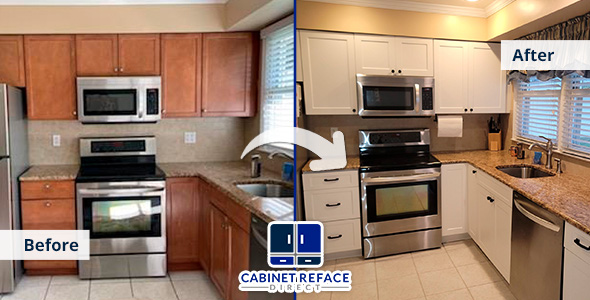
Image Source: www.cabinetrefacedirect.com
Deciphering Kitchen Cabinet Refacing Prices
When you’re looking to refresh your kitchen’s look without the hefty price tag of a full renovation, cabinet refacing often comes to mind. It’s a popular option that can dramatically change the appearance of your kitchen. But what exactly goes into the cost to reface kitchen cabinets? Let’s dive deep into the factors that influence these prices and what you can expect.
What is Cabinet Refacing?
Cabinet refacing, also known as cabinet resurfacing, is a process where the visible surfaces of your existing kitchen cabinets are updated. Instead of replacing the entire cabinet structure, the old doors and drawer fronts are removed and replaced with new ones. The exposed sides and frames of the cabinet boxes are then covered with a thin layer of wood veneer or laminate. This gives your kitchen cabinets a completely new look without the extensive labor and cost associated with full replacement. It’s a fantastic middle ground between a minor cosmetic update and a complete gut renovation.
The Benefits of Refacing
Before we delve into costs, it’s worth noting why people choose refacing:
- Cost-Effective: Significantly cheaper than full cabinet replacement.
- Less Disruptive: Minimizes the mess and downtime in your kitchen.
- Eco-Friendly: Reuses the existing cabinet boxes, reducing waste.
- Customizable: Offers a wide range of styles, colors, and materials for doors and drawer fronts.
- Improved Aesthetics: Transforms outdated cabinets into a modern, updated look.
Fathoming the Expenses: What Influences Cabinet Refacing Costs?
The cost of cabinet refacing isn’t a single, fixed number. Several elements contribute to the final price tag. Understanding these components can help you budget more accurately and make informed decisions.
Material Choices for Doors and Drawer Fronts
The most significant driver of cost is the material used for your new doors and drawer fronts.
Solid Wood Doors
- Types: Maple, cherry, oak, hickory, and alder are common choices.
- Pros: Durable, high-quality, can be stained or painted, offers a classic look.
- Cons: Most expensive option, can be susceptible to humidity changes.
- Cost Impact: Expect solid wood to add a premium to your kitchen cabinet refacing prices.
Thermofoil Doors
- Description: A vinyl film heat-applied to a medium-density fiberboard (MDF) core.
- Pros: Affordable, smooth finish, easy to clean, available in many colors and styles.
- Cons: Can chip or peel over time, especially with heat exposure (e.g., near ovens), difficult to repair if damaged.
- Cost Impact: This is typically one of the most budget-friendly options for a kitchen cabinet update cost.
Laminate Doors
- Description: Similar to thermofoil but uses a different application process; often more durable than thermofoil.
- Pros: Durable, resistant to moisture and stains, wide variety of patterns and colors.
- Cons: Can chip at edges, less “natural” look compared to wood.
- Cost Impact: Generally falls in the mid-range of material costs.
MDF (Medium-Density Fiberboard) Doors
- Description: Can be painted or covered with veneer.
- Pros: Stable, smooth surface for painting, less expensive than solid wood.
- Cons: Susceptible to moisture damage if not properly sealed or finished, can be heavier than solid wood.
- Cost Impact: A good mid-range to budget-friendly option, especially when painted.
Wood Veneer Doors
- Description: Thin slices of real wood applied over a substrate like plywood or MDF. This is often used for both the doors and for covering the cabinet boxes.
- Pros: Offers the look of solid wood at a lower price point, available in various wood species.
- Cons: Veneer can be damaged by gouges or deep scratches, repairs can be tricky.
- Cost Impact: The cabinet veneer cost itself is a factor, and it’s often bundled into the overall refacing package.
Cabinet Size and Quantity
The number of cabinets and their size directly affect the amount of material and labor required. More cabinets mean higher costs. Standard-sized cabinets are less expensive to reface than custom or unusually large units.
Complexity of Cabinet Design
- Style: Shaker, raised panel, recessed panel – some styles require more intricate manufacturing and installation, potentially increasing costs.
- Features: If you have specialty cabinets like corner units with lazy Susans or pull-out shelves that need new fronts, this can add to the complexity and cost.
Hardware and Finishes
- Knobs and Pulls: While often a separate purchase or an upgrade choice, the style and material of your new hardware can add to the overall kitchen cabinet renovation cost.
- Finishes: The type of stain or paint used on new doors and drawer fronts, as well as the finish on the applied veneer, can influence pricing. High-gloss finishes or custom paint colors might cost more.
Labor Costs
Labor is a significant part of the cabinet refacing cost. This includes:
- Removal of old doors and hardware.
- Preparation of cabinet boxes (cleaning, sanding).
- Application of veneers or laminate.
- Installation of new doors, drawer fronts, and hinges.
- Installation of new hardware.
Labor rates vary by region and the experience of the contractor. A skilled professional will ensure a high-quality finish, but their services will reflect that expertise.
Additional Features and Upgrades
- New Hinges: Replacing old hinges with new, soft-close ones is a common upgrade that adds to the cost but significantly improves functionality and feel.
- New Drawer Slides: Similar to hinges, upgrading drawer slides for smoother operation and better weight capacity is an option.
- Customizing Existing Boxes: Sometimes, you might want to add decorative elements to the visible sides of your existing cabinet boxes, such as decorative molding or end panels. This will increase the cabinet resurfacing cost.
Breaking Down the Typical Cabinet Refacing Cost
Let’s look at a more detailed breakdown of potential expenses. These are general estimates and can vary widely.
Material Costs (Doors, Drawer Fronts, Veneers)
This is where a significant portion of the budget goes.
- Veneer or Laminate for Cabinet Boxes: This typically costs between $20 to $50 per linear foot.
- New Doors and Drawer Fronts:
- Thermofoil/Laminate: $30 – $70 per door/drawer front.
- MDF (Painted): $50 – $100 per door/drawer front.
- Wood Veneer: $60 – $120 per door/drawer front.
- Solid Wood: $80 – $200+ per door/drawer front.
Consider an average kitchen might have 15-20 doors and 5-10 drawer fronts.
Hardware Costs
- Knobs: $2 – $15 each.
- Pulls: $3 – $25 each.
- Hinges: $5 – $15 per pair (basic), $15 – $30+ per pair (soft-close).
- Drawer Slides: $15 – $40+ per set (for full-extension, soft-close).
For a kitchen with 20 doors and 7 drawers, and assuming 2 knobs/pulls per door/drawer:
* Basic Hardware: (20 doors + 7 drawers) * 2 pulls/knobs * $5/pull = $270
* Upgraded Hardware: (20 doors + 7 drawers) * 2 pulls/knobs * $15/pull = $810
* New Hinges: 20 doors * 2 hinges/door * $10/hinge = $400
* New Drawer Slides: 7 drawers * $25/set = $175
Total Hardware Estimate: $845 – $1,385+
Labor Costs
Labor can account for 40-60% of the total cost to reface kitchen cabinets. This includes the skilled work of applying veneers, fitting new doors, and ensuring a professional finish.
- Installation of Veneers: $10 – $30 per linear foot.
- Installation of Doors/Drawer Fronts/Hardware: $50 – $100 per cabinet unit.
Estimating the Total Refacing Cost
Let’s put it together for a hypothetical medium-sized kitchen with 20 doors and 7 drawer fronts.
Scenario 1: Budget-Friendly (Thermofoil/Laminate Doors, Basic Veneers)
- Veneer/Laminate for Boxes: Assuming 40 linear feet of cabinet boxes at $30/foot = $1,200
- New Doors/Drawer Fronts:
- 20 doors @ $50 each = $1,000
- 7 drawer fronts @ $40 each = $280
- Hardware: $400 (basic knobs, pulls, and hinges)
- Labor (Installation):
- Veneer installation (40 ft @ $20/ft) = $800
- Doors/Drawer fronts/Hardware installation (27 units @ $75/unit) = $2,025
- Total Estimated Cost: $1,200 + $1,000 + $280 + $400 + $800 + $2,025 = $5,705
Scenario 2: Mid-Range (Painted MDF Doors, Wood Veneer)
- Wood Veneer for Boxes: Assuming 40 linear feet of cabinet boxes at $40/foot = $1,600
- New Doors/Drawer Fronts:
- 20 doors @ $75 each = $1,500
- 7 drawer fronts @ $60 each = $420
- Hardware: $700 (nicer pulls, soft-close hinges)
- Labor (Installation):
- Veneer installation (40 ft @ $25/ft) = $1,000
- Doors/Drawer fronts/Hardware installation (27 units @ $85/unit) = $2,295
- Total Estimated Cost: $1,600 + $1,500 + $420 + $700 + $1,000 + $2,295 = $7,515
Scenario 3: Premium (Solid Wood Doors, High-Quality Veneer)
- Premium Wood Veneer for Boxes: Assuming 40 linear feet of cabinet boxes at $50/foot = $2,000
- New Doors/Drawer Fronts:
- 20 doors @ $150 each = $3,000
- 7 drawer fronts @ $100 each = $700
- Hardware: $1,000 (premium pulls, soft-close hinges, maybe new slides)
- Labor (Installation):
- Veneer installation (40 ft @ $30/ft) = $1,200
- Doors/Drawer fronts/Hardware installation (27 units @ $100/unit) = $2,700
- Total Estimated Cost: $2,000 + $3,000 + $700 + $1,000 + $1,200 + $2,700 = $10,600
These scenarios illustrate how significantly material choices impact the average cabinet refacing cost. The cabinet door replacement cost alone can be a major factor.
Cabinet Refacing vs. Other Kitchen Update Options
It’s helpful to compare refacing with other popular kitchen renovation methods to understand its value.
Refacing vs. Refinishing (Painting/Staining Existing Cabinets)
- Refinishing: This involves cleaning, sanding, and applying a new coat of paint or stain to your existing cabinet doors, drawer fronts, and boxes.
- Cost: Typically much lower than refacing, ranging from $300 to $2,000 for DIY or professional services.
- Pros: Very affordable, can update the look significantly if cabinets are in good condition.
- Cons: Doesn’t change the style or layout of cabinets, results depend heavily on the skill of the painter/stainer, existing wear and tear remain.
- Refacing: As discussed, offers new doors and fronts, a new surface for boxes, and a more substantial aesthetic upgrade.
Refacing vs. Cabinet Door Replacement
- Cabinet Door Replacement: This involves only replacing the cabinet doors and drawer fronts, leaving the existing cabinet boxes and their visible surfaces as they are. This is sometimes referred to as a partial refacing.
- Cost: Can be similar to or slightly less than full refacing, depending on the finish applied to the existing boxes. You might spend $800 to $3,000 or more just on new doors and drawer fronts.
- Pros: Updates the look with new doors, less labor than full refacing if you’re okay with the current box appearance.
- Cons: The older, visible parts of the cabinet boxes remain, which might detract from the new look if they are worn or discolored. The cabinet door replacement cost is a major component here.
Refacing vs. Full Cabinet Replacement
- Full Replacement: This involves completely gutting your existing cabinets and installing brand-new ones.
- Cost: Significantly higher, typically ranging from $5,000 to $25,000 or more for a whole kitchen.
- Pros: Allows for layout changes, completely new structure and materials, best option for cabinets that are structurally unsound or if you want a major kitchen redesign.
- Cons: Most expensive and disruptive option.
Refacing vs. Cabinet Resurfacing (Laminate/Veneer Overlay)
Sometimes “cabinet resurfacing” is used interchangeably with refacing, but it can also refer to applying a very thin, high-tech laminate over the existing cabinet boxes and doors.
- Laminate Overlay: This is a modern approach using durable, pre-finished laminate sheets that adhere to the existing surfaces.
- Cost: Often falls within the lower to mid-range of refacing costs, around $1,500 to $4,000 for an average kitchen.
- Pros: Very durable, seamless finish, wide variety of modern looks, quick installation.
- Cons: Limited style options compared to custom doors, can be more expensive than basic thermofoil. The cabinet veneer cost for these advanced laminates can be higher than traditional veneers.
Getting Accurate Quotes for Cabinet Refacing
To get a realistic idea of the kitchen cabinet renovation cost for your home, you’ll need to get quotes from professionals.
What to Look For in a Quote:
- Detailed Breakdown: Ensure the quote clearly itemizes material costs (doors, drawer fronts, veneers), hardware, labor, and any other fees.
- Material Specifications: Confirm the exact type of wood, veneer, or laminate being used for doors, drawer fronts, and box coverings.
- Scope of Work: Does it include new hinges, drawer slides, hardware installation? Does it cover preparation of the existing boxes?
- Warranty: What kind of warranty is offered on materials and workmanship?
- Timeline: Get an estimated timeframe for completion.
Tips for Choosing a Contractor:
- Get Multiple Quotes: Aim for at least three quotes from different reputable companies.
- Check Reviews and References: Look for online reviews and ask for references from past clients.
- Verify Licensing and Insurance: Ensure the contractor is properly licensed and insured.
- Ask About Experience: How long have they been doing cabinet refacing?
DIY vs. Professional Cabinet Refacing
The decision to tackle cabinet refacing yourself or hire professionals is a significant one, impacting both cost and outcome.
DIY Cabinet Refacing
- Cost Savings: You can potentially save 30-50% on labor costs.
- What’s Involved: This requires a significant investment of time, patience, and skill. You’ll need to:
- Measure precisely for new doors and drawer fronts.
- Order materials.
- Carefully remove old doors and hardware.
- Prepare cabinet boxes (cleaning, sanding).
- Apply veneers or laminate with precision to avoid bubbles or tears.
- Install new doors, drawer fronts, hinges, and hardware.
- Potential Pitfalls: Mistakes in measuring, ordering the wrong materials, poor veneer application, or crookedly hung doors can be costly to fix and may result in a less professional look. The cost of cabinet refacing can unexpectedly rise if errors are made.
Professional Cabinet Refacing
- Higher Initial Cost: You pay for expertise and convenience.
- Benefits:
- Professionals have the tools, knowledge, and experience for a flawless finish.
- They can often source materials at better prices.
- They handle the entire process efficiently, minimizing disruption.
- Most reputable companies offer warranties on their work.
- Who is it for? Homeowners who want a guaranteed high-quality result and have the budget for it.
Frequently Asked Questions About Cabinet Refacing Costs
Q: How much does it typically cost to reface kitchen cabinets per linear foot?
A: Cabinet refacing costs per linear foot can range from $100 to $300 or more, depending heavily on the materials chosen for doors, drawer fronts, and the veneer applied to the cabinet boxes.
Q: Is refacing cabinets worth the money?
A: For kitchens with structurally sound cabinet boxes but outdated doors and finishes, refacing is often a very cost-effective way to update the space, offering a significant aesthetic improvement for a fraction of the cost of full replacement. The return on investment for a kitchen cabinet update cost like refacing is usually quite good.
Q: Can I reface my own cabinets?
A: Yes, it’s possible to DIY cabinet refacing, but it requires significant time, patience, precision, and the right tools. It’s best suited for those with good woodworking or DIY skills.
Q: What is the cheapest way to update kitchen cabinets?
A: The cheapest way to update kitchen cabinets is usually to repaint or restain the existing ones if they are in good condition. If you need new doors, the most budget-friendly option is typically thermofoil or laminate doors.
Q: How long does cabinet refacing usually take?
A: The process typically takes anywhere from 2 to 7 days, depending on the size of the kitchen, the complexity of the cabinets, and the contractor’s schedule.
Q: Does cabinet refacing include new hinges and hardware?
A: This depends on the quote. Many refacing services include basic hardware like hinges and handles in their package, while others offer them as an upgrade. Always clarify this when getting a quote.
Q: What is the difference between refacing and resurfacing cabinets?
A: The terms are often used interchangeably. Refacing generally implies replacing doors and drawer fronts and applying veneer to the cabinet boxes. Resurfacing can sometimes refer to just the application of new finishes (like veneer or laminate) to the existing surfaces, or it can encompass the full refacing process. The cabinet resurfacing cost is often aligned with refacing costs.
Q: How does the cost of cabinet refacing compare to cabinet door replacement?
A: Cabinet door replacement, which only swaps out doors and drawer fronts, can be slightly less expensive than full cabinet refacing if you plan to keep the existing cabinet box finishes. However, if the boxes are worn, the overall effect might be diminished.
Q: What factors affect the cabinet veneer cost?
A: The type of wood veneer (e.g., oak, maple, cherry), its thickness, and the complexity of its application all contribute to the cabinet veneer cost.
By carefully considering these costs and options, you can make an informed decision about whether cabinet refacing is the right choice for your kitchen renovation.